

Sausage, Berliner, pork, beef
Whole food · Sausages and Luncheon Meats
Berliner sausage is a robust, coarsely ground pork and beef link, a staple of German street food and home cooking. It boasts a savory, slightly smoky flavor with a firm, juicy bite from its natural casing, making it a hearty centerpiece for any meal. With 17.2g of fat and 15.27g of protein per 100g, it's a calorie-dense, protein-rich choice that provides substantial energy.
Calorie split: 27% protein · 5% carbs · 68% fat
↓ Full nutrition💚 Why it's loved
People adore its deep, meaty flavor and satisfying snap when bitten into, which pairs perfectly with tangy mustard and sauerkraut. It's a cultural icon of German cuisine, evoking the convivial atmosphere of a beer garden or a cozy family dinner.
⚠️ Watch-outs & how to enjoy it better
The high fat and sodium content can be a concern for those monitoring heart health or blood pressure. To counteract this, opt for smaller portions and pair it with fiber-rich sides like roasted vegetables or a large salad to balance the meal and slow digestion.
Key benefits
- High-quality protein source for muscle maintenance
- Provides essential B vitamins, especially B12 and niacin
- Contains minerals like iron and zinc from red meat
- Offers a quick and satisfying source of energy
- Versatile for grilling, boiling, or pan-frying
🍽️ Popular dishes
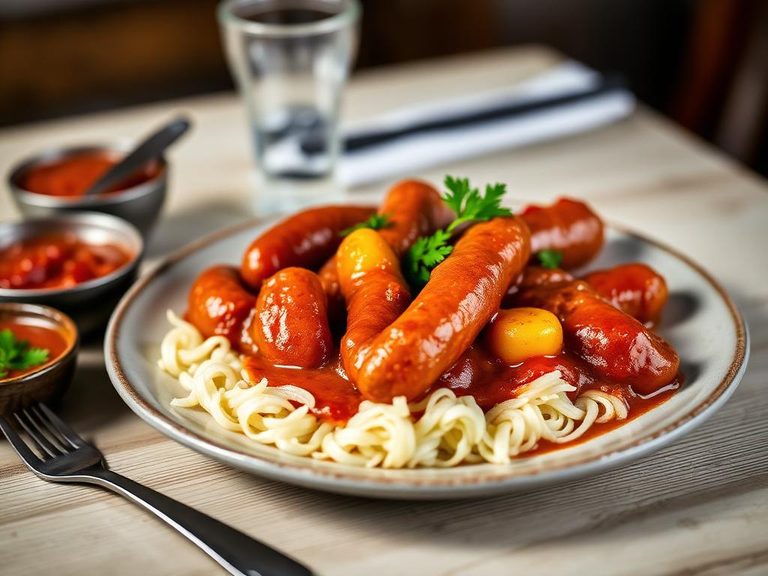
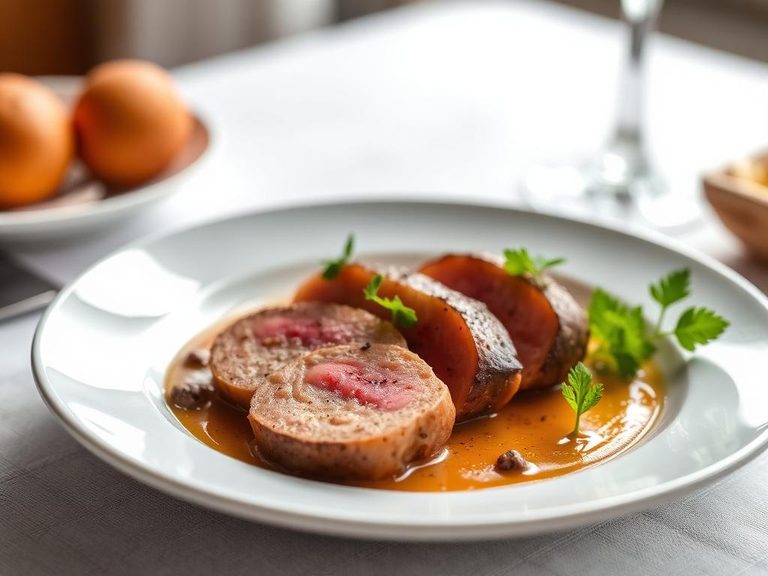
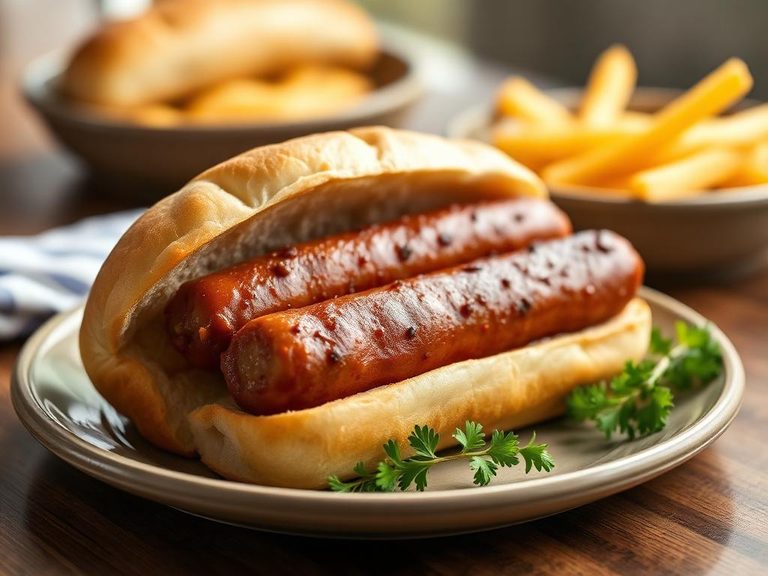
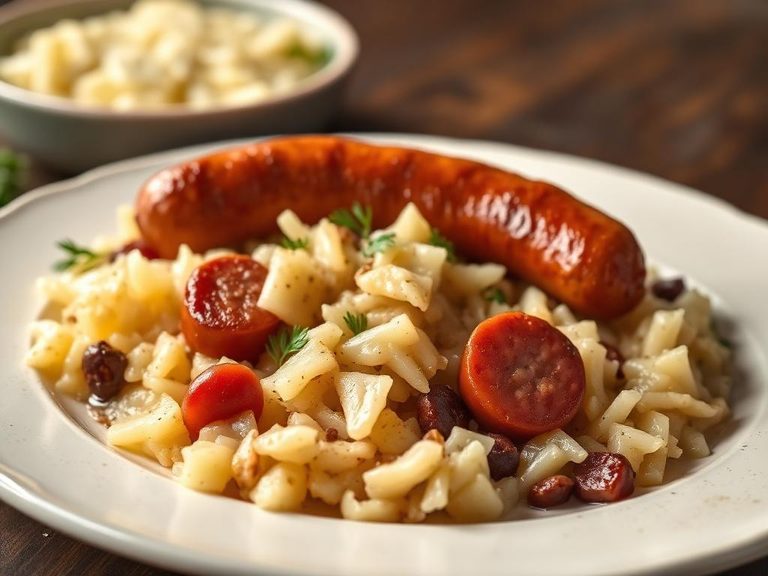
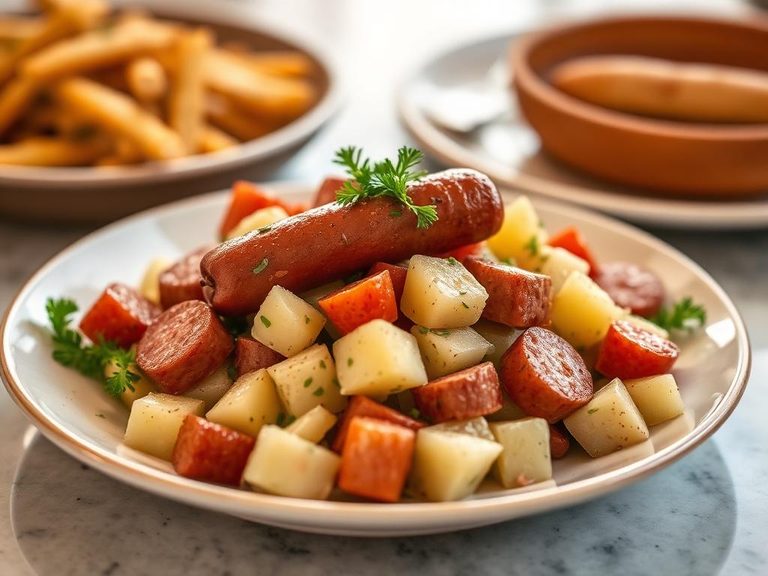
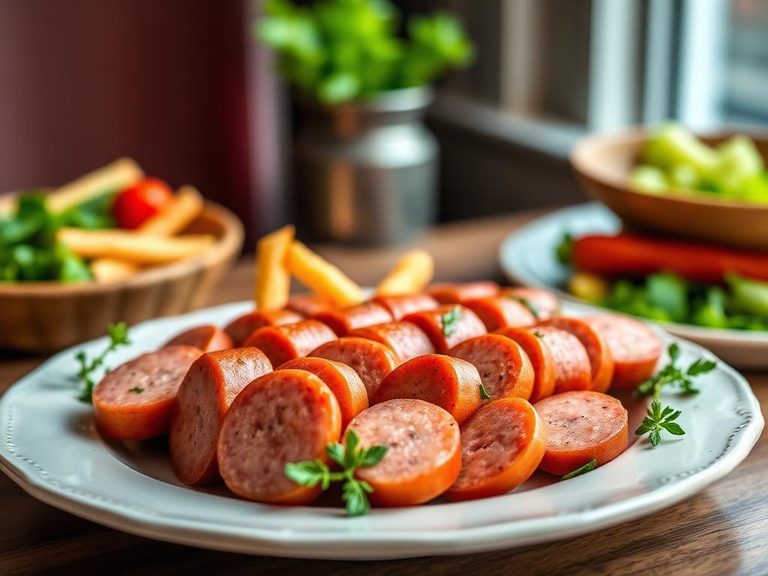
🌍 Where it's eaten
💡 Did you know?
The Berliner sausage is often confused with the Berliner Pfannkuchen (a jelly-filled doughnut), but in Berlin itself, the doughnut is simply called 'Pfannkuchen', while the sausage is a beloved street food staple.
Full nutrition (USDA data · scales with serving)
| Water | 61.0 g |
| Energy | 230 kcal |
| Energy | 964 kj |
| Protein | 15.3 g |
| Total lipid (fat) | 17.2 g |
| Ash | 4.0 g |
| Carbohydrate, by difference | 2.6 g |
| Fiber, total dietary | 0.00 g |
| Total Sugars | 2.4 g |
| Calcium, Ca | 12.0 mg |
| Iron, Fe | 1.1 mg |
| Magnesium, Mg | 15.0 mg |
| Phosphorus, P | 130 mg |
| Potassium, K | 283 mg |
| Sodium, Na | 1297 mg |
| Zinc, Zn | 2.5 mg |
| Copper, Cu | 0.08 mg |
| Manganese, Mn | 0.04 mg |
| Selenium, Se | 14.1 ug |
| Vitamin C, total ascorbic acid | 0.00 mg |
| Thiamin | 0.38 mg |
| Riboflavin | 0.21 mg |
| Niacin | 3.1 mg |
| Pantothenic acid | 0.69 mg |
| Vitamin B-6 | 0.20 mg |
| Folate, total | 5.0 ug |
| Folic acid | 0.00 ug |
| Folate, food | 5.0 ug |
| Folate, DFE | 5.0 ug |
| Vitamin B-12 | 2.7 ug |
| Vitamin A, RAE | 0.00 ug |
| Retinol | 0.00 ug |
| Carotene, beta | 0.00 ug |
| Carotene, alpha | 0.00 ug |
| Cryptoxanthin, beta | 0.00 ug |
| Vitamin A, IU | 0.00 iu |
| Lycopene | 0.00 ug |
| Lutein + zeaxanthin | 0.00 ug |
| Vitamin D (D2 + D3), International Units | 13.0 iu |
| Vitamin D (D2 + D3) | 0.30 ug |
| Vitamin K (phylloquinone) | 1.6 ug |
| Alcohol, ethyl | 0.00 g |
| Caffeine | 0.00 mg |
| Theobromine | 0.00 mg |
Fat & fatty acid profile (per 100g)
| Fatty acids, total saturated | 6.1 g |
| SFA 4:0 | 0.00 g |
| SFA 6:0 | 0.00 g |
| SFA 8:0 | 0.00 g |
| SFA 10:0 | 0.02 g |
| SFA 12:0 | 0.01 g |
| SFA 14:0 | 0.22 g |
| SFA 16:0 | 3.7 g |
| SFA 18:0 | 2.1 g |
| Fatty acids, total monounsaturated | 8.0 g |
| MUFA 16:1 | 0.66 g |
| MUFA 18:1 | 7.3 g |
| MUFA 20:1 | 0.00 g |
| MUFA 22:1 | 0.00 g |
| Fatty acids, total polyunsaturated | 1.6 g |
| PUFA 18:2 | 1.4 g |
| PUFA 18:3 | 0.18 g |
| PUFA 18:4 | 0.00 g |
| PUFA 20:4 | 0.00 g |
| PUFA 20:5 n-3 (EPA) | 0.00 g |
| PUFA 22:5 n-3 (DPA) | 0.00 g |
| PUFA 22:6 n-3 (DHA) | 0.00 g |
| Cholesterol | 46.0 mg |
| Phytosterols | 0.00 mg |
Amino acid profile (per 100g)
| Tryptophan | 0.11 g |
| Threonine | 0.47 g |
| Isoleucine | 0.48 g |
| Leucine | 0.81 g |
| Lysine | 0.90 g |
| Methionine | 0.36 g |
| Cystine | 0.10 g |
| Phenylalanine | 0.41 g |
| Tyrosine | 0.39 g |
| Valine | 0.46 g |
| Arginine | 0.77 g |
| Histidine | 0.40 g |
| Alanine | 0.77 g |
| Aspartic acid | 1.1 g |
| Glutamic acid | 2.0 g |
| Glycine | 0.86 g |
| Proline | 0.67 g |
| Serine | 0.51 g |
FAQ
What's the difference between a Berliner sausage and a regular bratwurst?
A Berliner sausage is typically a coarser grind of pork and beef, often smoked or boiled, with a more robust flavor. A bratwurst is usually a finer grind of pork or veal, seasoned with marjoram or caraway, and is primarily grilled or pan-fried.
Is Berliner sausage gluten-free?
While the meat itself is gluten-free, some commercial sausages may contain fillers or binders with gluten. Always check the ingredient list for wheat, rye, or barley derivatives if you have a gluten sensitivity.
How should I store leftover Berliner sausage?
Cooked sausages can be stored in an airtight container in the refrigerator for up to 3-4 days. For longer storage, freeze them for up to 2-3 months, though the texture may become slightly drier upon reheating.
Nutrient density (calculated · NRF9.3)
Nutrient Rich Foods index: beneficial nutrients (protein, fiber, vitamins, minerals) minus saturated fat, added sugar & sodium, per 100 kcal.
NRF9.3 index — Fulgoni, Keast & Drewnowski, 2009. Computed from USDA nutrients.
Weight-loss friendliness (composite index)
Energy density 2.30 kcal/g · 27% calories from protein · 0.0 g fiber · 2.4 g sugar per 100 g.
Composite of energy density (Rolls et al., 1999), protein & fiber satiety, minus sugar. A calculated heuristic — ranks satiety-per-calorie, not a clinical measure.
Dietary load (calculated from USDA values)
Potential renal acid load. Positive = acid-forming, negative = alkaline-forming.
Sodium-to-potassium ratio: 4.58 (lower is better — aim for ≤ 1)
Sodium:potassium per WHO potassium guidance. Computed from USDA nutrients.