

Eisbein
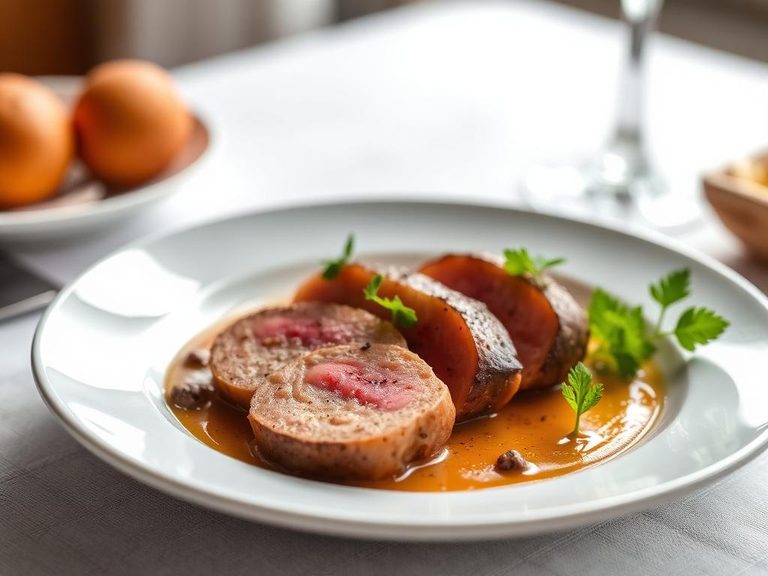
Eisbein is a traditional German dish featuring a cured and slowly simmered pork knuckle or ham hock, typically served with sauerkraut, mashed potatoes, and hearty mustard. It's a staple of German and Central European cuisine, especially popular in regions like Bavaria and Berlin.
🍳 View the full Eisbein recipe →
🍽️ Nutrition at a glance
This dish is high in protein and fat, providing a significant amount of calories—often around 800-1200 per serving depending on preparation and size. It's a rich source of B vitamins, iron, and collagen from the slow-cooked connective tissue.
Nutrition breakdown
| Calories | 1200 kcal |
| Protein | 45 g |
| Carbs | 5 g |
| Fat | 105 g |
| Fiber | 0 g |
| Sugar | 1 g |
| Sodium | 2800 mg |
| Vitamin B1 (Thiamine) | 1.2 mg |
| Vitamin B6 | 1.0 mg |
| Vitamin B12 | 2.5 mcg |
| Iron | 3.5 mg |
| Zinc | 8 mg |
| Phosphorus | 350 mg |
| Selenium | 55 mcg |
| Niacin (B3) | 12 mg |
Per 1 serving (approx. 400 g, including meat, fat, and skin) · estimated, varies by recipe
💡 What's interesting
Culturally, Eisbein is a beloved comfort food often enjoyed in beer gardens and during festive occasions like Oktoberfest. Nutritionally, the slow cooking process breaks down tough collagen into gelatin, which is beneficial for joint and digestive health.
🍽️ Related dishes
AI estimate may be inaccurate · Terms