

Sauerkraut, canned, solids and liquids
Whole food · Vegetables and Vegetable Products
Canned sauerkraut is finely shredded cabbage that has been fermented by lactic acid bacteria, resulting in a tangy, sour, and slightly salty flavor with a soft, tender texture. Nutritionally, it's a low-calorie powerhouse, providing nearly 3 grams of fiber per 100g serving, which is exceptional for a condiment. Its fermentation process also creates beneficial probiotics, though canning may reduce their potency compared to fresh, refrigerated varieties.
Calorie split: 17% protein · 78% carbs · 6% fat
↓ Full nutrition💚 Why it's loved
People love sauerkraut for its sharp, acidic punch that cuts through rich, fatty foods, making it a perfect counterpoint to sausages or pork. It's a deeply ingrained cultural staple in Central and Eastern European cuisines, offering a taste of tradition and preservation.
⚠️ Watch-outs & how to enjoy it better
The primary downside is its high sodium content, which can be problematic for those monitoring blood pressure. To counteract this, look for low-sodium varieties, rinse the sauerkraut before use, and pair it with potassium-rich foods like potatoes or beans. Its strong flavor can also be overwhelming, so start with small portions if you're new to it.
Key benefits
- Excellent source of dietary fiber (2.9g per 100g)
- Very low in calories (19 kcal per 100g)
- Naturally fat-free and cholesterol-free
- Contains vitamin C and vitamin K from cabbage
- Source of probiotics from fermentation
🍽️ Popular dishes
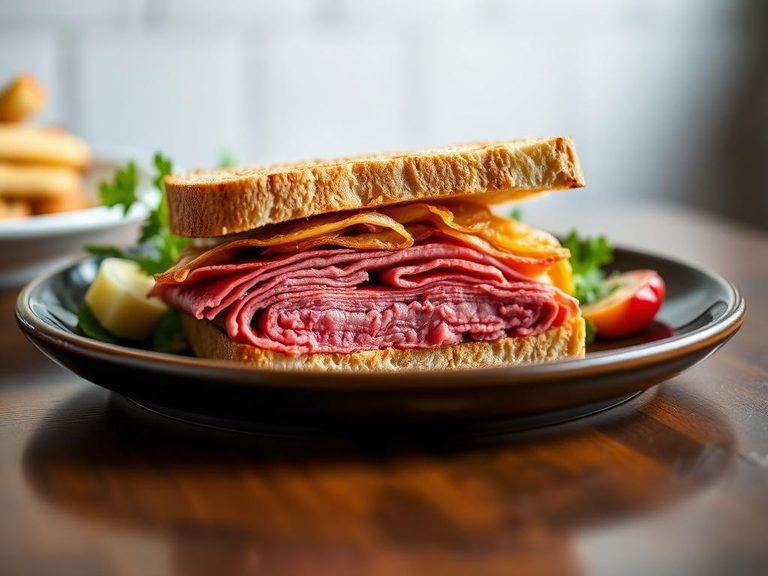


🌍 Where it's eaten
💡 Did you know?
Sauerkraut was a critical source of vitamin C for sailors on long voyages, helping to prevent scurvy before the widespread use of citrus fruits.
Full nutrition (USDA data · scales with serving)
| Water | 92.5 g |
| Energy | 19.0 kcal |
| Energy | 78.0 kj |
| Protein | 0.91 g |
| Total lipid (fat) | 0.14 g |
| Ash | 2.1 g |
| Carbohydrate, by difference | 4.3 g |
| Fiber, total dietary | 2.9 g |
| Total Sugars | 1.8 g |
| Glucose | 0.14 g |
| Fructose | 0.04 g |
| Calcium, Ca | 30.0 mg |
| Iron, Fe | 1.5 mg |
| Magnesium, Mg | 13.0 mg |
| Phosphorus, P | 20.0 mg |
| Potassium, K | 170 mg |
| Sodium, Na | 661 mg |
| Zinc, Zn | 0.19 mg |
| Copper, Cu | 0.10 mg |
| Manganese, Mn | 0.15 mg |
| Selenium, Se | 0.60 ug |
| Fluoride, F | 7.0 ug |
| Vitamin C, total ascorbic acid | 14.7 mg |
| Thiamin | 0.02 mg |
| Riboflavin | 0.02 mg |
| Niacin | 0.14 mg |
| Pantothenic acid | 0.09 mg |
| Vitamin B-6 | 0.13 mg |
| Folate, total | 24.0 ug |
| Folic acid | 0.00 ug |
| Folate, food | 24.0 ug |
| Folate, DFE | 24.0 ug |
| Choline, total | 10.4 mg |
| Betaine | 0.50 mg |
| Vitamin B-12 | 0.00 ug |
| Vitamin B-12, added | 0.00 ug |
| Vitamin A, RAE | 1.0 ug |
| Retinol | 0.00 ug |
| Carotene, beta | 8.0 ug |
| Carotene, alpha | 5.0 ug |
| Cryptoxanthin, beta | 0.00 ug |
| Vitamin A, IU | 18.0 iu |
| Lycopene | 0.00 ug |
| Lutein + zeaxanthin | 295 ug |
| Vitamin E (alpha-tocopherol) | 0.14 mg |
| Vitamin E, added | 0.00 mg |
| Vitamin D (D2 + D3), International Units | 0.00 iu |
| Vitamin D (D2 + D3) | 0.00 ug |
| Vitamin K (phylloquinone) | 13.0 ug |
| Alcohol, ethyl | 0.00 g |
| Caffeine | 0.00 mg |
| Theobromine | 0.00 mg |
Fat & fatty acid profile (per 100g)
| Fatty acids, total saturated | 0.03 g |
| SFA 4:0 | 0.00 g |
| SFA 6:0 | 0.00 g |
| SFA 8:0 | 0.00 g |
| SFA 10:0 | 0.00 g |
| SFA 12:0 | 0.00 g |
| SFA 14:0 | 0.00 g |
| SFA 16:0 | 0.03 g |
| SFA 18:0 | 0.00 g |
| Fatty acids, total monounsaturated | 0.01 g |
| MUFA 16:1 | 0.00 g |
| MUFA 18:1 | 0.01 g |
| MUFA 20:1 | 0.00 g |
| MUFA 22:1 | 0.00 g |
| Fatty acids, total polyunsaturated | 0.07 g |
| PUFA 18:2 | 0.03 g |
| PUFA 18:3 | 0.03 g |
| PUFA 18:4 | 0.00 g |
| PUFA 20:4 | 0.00 g |
| PUFA 20:5 n-3 (EPA) | 0.00 g |
| PUFA 22:5 n-3 (DPA) | 0.00 g |
| PUFA 22:6 n-3 (DHA) | 0.00 g |
| Fatty acids, total trans | 0.00 g |
| Cholesterol | 0.00 mg |
Amino acid profile (per 100g)
| Tryptophan | 0.01 g |
| Threonine | 0.03 g |
| Isoleucine | 0.02 g |
| Leucine | 0.03 g |
| Lysine | 0.03 g |
| Methionine | 0.01 g |
| Cystine | 0.01 g |
| Phenylalanine | 0.02 g |
| Tyrosine | 0.01 g |
| Valine | 0.03 g |
| Arginine | 0.05 g |
| Histidine | 0.02 g |
| Alanine | 0.03 g |
| Aspartic acid | 0.09 g |
| Glutamic acid | 0.21 g |
| Glycine | 0.02 g |
| Proline | 0.03 g |
| Serine | 0.04 g |
FAQ
Is canned sauerkraut as healthy as fresh, refrigerated sauerkraut?
Canned sauerkraut is still a good source of fiber and vitamins, but the canning process (heat pasteurization) kills most of the live probiotic bacteria. For probiotic benefits, choose fresh sauerkraut found in the refrigerated section.
How do I reduce the sodium in canned sauerkraut?
You can significantly reduce sodium by rinsing the sauerkraut under cold water for a minute or two. Also, look for brands labeled 'low sodium' or 'no salt added' if available.
What is the difference between sauerkraut and kimchi?
While both are fermented cabbage, sauerkraut is traditionally made with just cabbage and salt, resulting in a sour flavor. Kimchi is a Korean dish that includes additional seasonings like garlic, ginger, chili, and often other vegetables, giving it a more complex, spicy, and umami-rich profile.
Nutrient density (calculated · NRF9.3)
Nutrient Rich Foods index: beneficial nutrients (protein, fiber, vitamins, minerals) minus saturated fat, added sugar & sodium, per 100 kcal.
NRF9.3 index — Fulgoni, Keast & Drewnowski, 2009. Computed from USDA nutrients.
Weight-loss friendliness (composite index)
Energy density 0.19 kcal/g · 19% calories from protein · 2.9 g fiber · 1.8 g sugar per 100 g.
Composite of energy density (Rolls et al., 1999), protein & fiber satiety, minus sugar. A calculated heuristic — ranks satiety-per-calorie, not a clinical measure.
Dietary load (calculated from USDA values)
Potential renal acid load. Positive = acid-forming, negative = alkaline-forming.
Sodium-to-potassium ratio: 3.89 (lower is better — aim for ≤ 1)
Sodium:potassium per WHO potassium guidance. Computed from USDA nutrients.