

Tomatoes, red, ripe, raw, year round average
Whole food · Vegetables and Vegetable Products
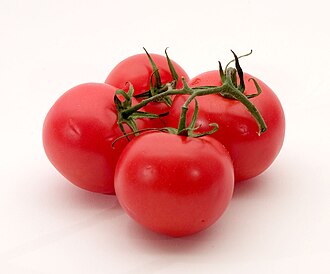
Photo: Wikipedia
The red, ripe tomato is a culinary cornerstone, offering a juicy, slightly acidic burst of flavor with a soft, seed-filled texture. Despite its vibrant color, it's remarkably low in calories, packing a nutritional punch with its high water content and fiber. It's a powerhouse of the antioxidant lycopene, which becomes more bioavailable when cooked.
Calorie split: 17% protein · 75% carbs · 9% fat
↓ Full nutrition💚 Why it's loved
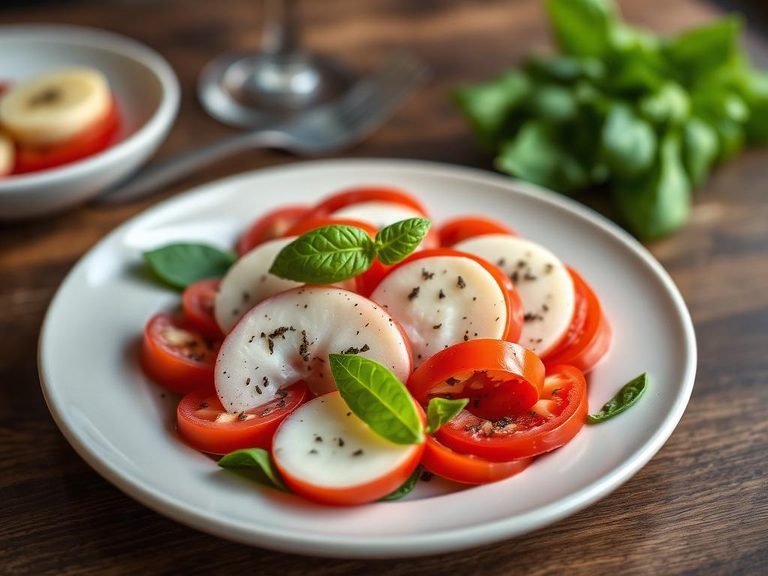
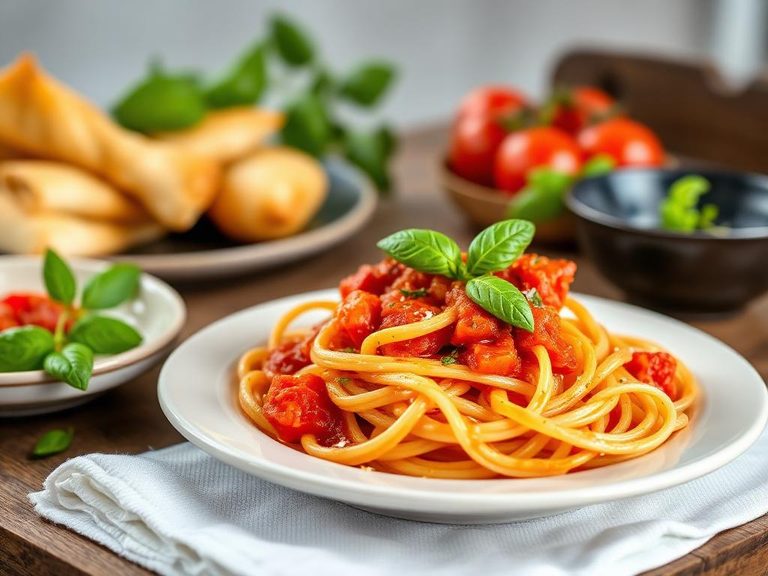
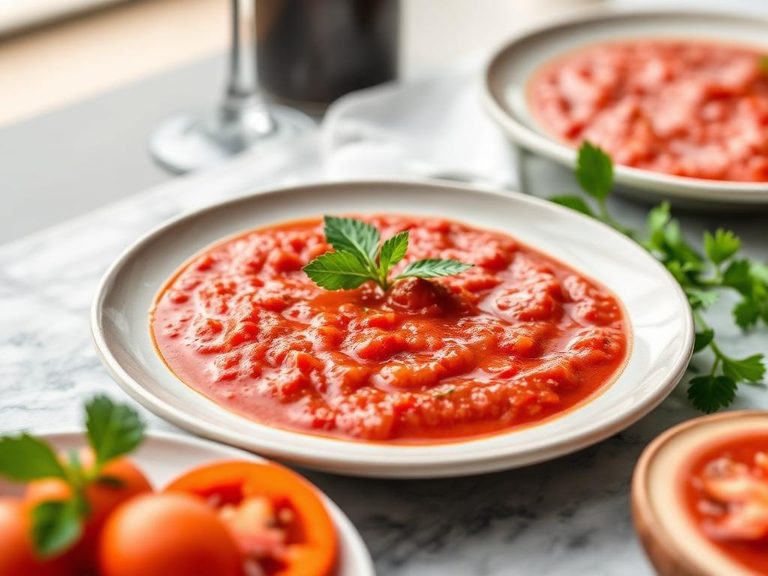
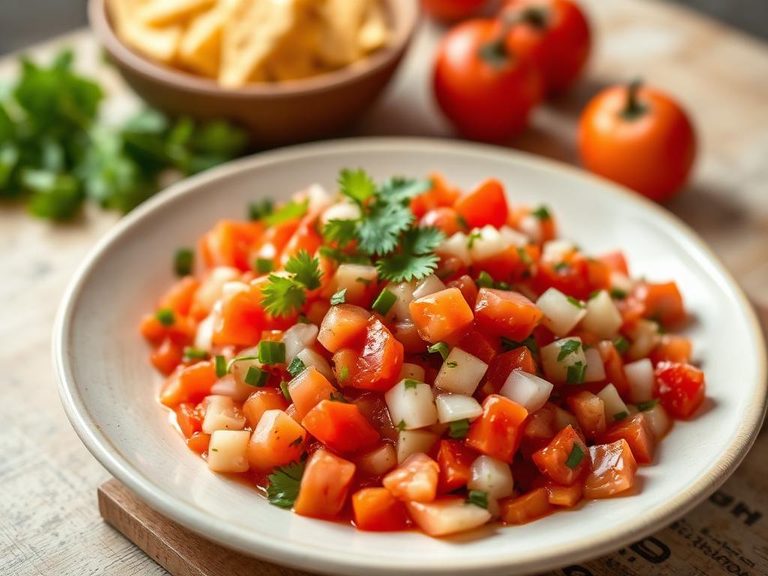
People adore the tomato for its unparalleled versatility—it can be the star of a simple caprese salad, the sweet base of a rich pasta sauce, or a fresh, acidic counterpoint in a salsa. Its bright, umami-rich flavor is foundational to countless cuisines worldwide, making it a beloved pantry staple.
⚠️ Watch-outs & how to enjoy it better
The tomato's acidity can trigger heartburn or acid reflux in sensitive individuals. Its seeds and skin contain lectins and oxalates, which may cause digestive discomfort for some. To counteract this, cooking tomatoes thoroughly can break down lectins, and pairing them with a healthy fat like olive oil can help mitigate acidity and improve nutrient absorption.
Key benefits
- Excellent source of vitamin C for immune support.
- Rich in potassium, which helps regulate blood pressure.
- High in lycopene, a potent antioxidant linked to heart health.
- Provides dietary fiber for digestive health.
- Very low in calories and fat, aiding weight management.
🍽️ Popular dishes

🌍 Where it's eaten
💡 Did you know?
Botanically, the tomato is a fruit—specifically a berry—but it's legally classified as a vegetable in the United States due to an 1893 Supreme Court ruling (Nix v. Hedden) for tariff purposes.
Full nutrition (USDA data · scales with serving)
| Water | 94.5 g |
| Energy | 18.0 kcal |
| Energy | 74.0 kj |
| Protein | 0.88 g |
| Total lipid (fat) | 0.20 g |
| Ash | 0.50 g |
| Carbohydrate, by difference | 3.9 g |
| Fiber, total dietary | 1.2 g |
| Total Sugars | 2.6 g |
| Sucrose | 0.00 g |
| Glucose | 1.3 g |
| Fructose | 1.4 g |
| Lactose | 0.00 g |
| Maltose | 0.00 g |
| Galactose | 0.00 g |
| Starch | 0.00 g |
| Calcium, Ca | 10.0 mg |
| Iron, Fe | 0.27 mg |
| Magnesium, Mg | 11.0 mg |
| Phosphorus, P | 24.0 mg |
| Potassium, K | 237 mg |
| Sodium, Na | 5.0 mg |
| Zinc, Zn | 0.17 mg |
| Copper, Cu | 0.06 mg |
| Manganese, Mn | 0.11 mg |
| Selenium, Se | 0.00 ug |
| Fluoride, F | 2.3 ug |
| Vitamin C, total ascorbic acid | 13.7 mg |
| Thiamin | 0.04 mg |
| Riboflavin | 0.02 mg |
| Niacin | 0.59 mg |
| Pantothenic acid | 0.09 mg |
| Vitamin B-6 | 0.08 mg |
| Folate, total | 15.0 ug |
| Folic acid | 0.00 ug |
| Folate, food | 15.0 ug |
| Folate, DFE | 15.0 ug |
| Choline, total | 6.7 mg |
| Betaine | 0.10 mg |
| Vitamin B-12 | 0.00 ug |
| Vitamin B-12, added | 0.00 ug |
| Vitamin A, RAE | 42.0 ug |
| Retinol | 0.00 ug |
| Carotene, beta | 449 ug |
| Carotene, alpha | 101 ug |
| Cryptoxanthin, beta | 0.00 ug |
| Vitamin A, IU | 833 iu |
| Lycopene | 2573 ug |
| Lutein + zeaxanthin | 123 ug |
| Vitamin E (alpha-tocopherol) | 0.54 mg |
| Vitamin E, added | 0.00 mg |
| Tocopherol, beta | 0.01 mg |
| Tocopherol, gamma | 0.12 mg |
| Tocopherol, delta | 0.00 mg |
| Tocotrienol, alpha | 0.01 mg |
| Tocotrienol, beta | 0.00 mg |
| Tocotrienol, gamma | 0.00 mg |
| Tocotrienol, delta | 0.00 mg |
| Vitamin D (D2 + D3), International Units | 0.00 iu |
| Vitamin D (D2 + D3) | 0.00 ug |
| Vitamin K (phylloquinone) | 7.9 ug |
| Vitamin K (Dihydrophylloquinone) | 0.00 ug |
| Alcohol, ethyl | 0.00 g |
| Caffeine | 0.00 mg |
| Theobromine | 0.00 mg |
Fat & fatty acid profile (per 100g)
| Fatty acids, total saturated | 0.03 g |
| SFA 4:0 | 0.00 g |
| SFA 6:0 | 0.00 g |
| SFA 8:0 | 0.00 g |
| SFA 10:0 | 0.00 g |
| SFA 12:0 | 0.00 g |
| SFA 14:0 | 0.00 g |
| SFA 16:0 | 0.02 g |
| SFA 18:0 | 0.01 g |
| Fatty acids, total monounsaturated | 0.03 g |
| MUFA 16:1 | 0.00 g |
| MUFA 18:1 | 0.03 g |
| MUFA 20:1 | 0.00 g |
| MUFA 22:1 | 0.00 g |
| Fatty acids, total polyunsaturated | 0.08 g |
| PUFA 18:2 | 0.08 g |
| PUFA 18:3 | 0.00 g |
| PUFA 18:4 | 0.00 g |
| PUFA 20:4 | 0.00 g |
| PUFA 20:5 n-3 (EPA) | 0.00 g |
| PUFA 22:5 n-3 (DPA) | 0.00 g |
| PUFA 22:6 n-3 (DHA) | 0.00 g |
| Fatty acids, total trans | 0.00 g |
| Cholesterol | 0.00 mg |
| Phytosterols | 7.0 mg |
Amino acid profile (per 100g)
| Tryptophan | 0.01 g |
| Threonine | 0.03 g |
| Isoleucine | 0.02 g |
| Leucine | 0.03 g |
| Lysine | 0.03 g |
| Methionine | 0.01 g |
| Cystine | 0.01 g |
| Phenylalanine | 0.03 g |
| Tyrosine | 0.01 g |
| Valine | 0.02 g |
| Arginine | 0.02 g |
| Histidine | 0.01 g |
| Alanine | 0.03 g |
| Aspartic acid | 0.14 g |
| Glutamic acid | 0.43 g |
| Glycine | 0.02 g |
| Proline | 0.01 g |
| Serine | 0.03 g |
FAQ
Are tomatoes a fruit or a vegetable?
Botanically, a tomato is the fruit of the plant Solanum lycopersicum, as it develops from a flower and contains seeds. However, for culinary and legal purposes, it is treated as a vegetable due to its savory flavor profile.
Why do cooked tomatoes have more available lycopene?
Cooking and processing tomatoes breaks down their thick cell walls, making the fat-soluble antioxidant lycopene easier for your body to absorb. This is why tomato paste and sauce are particularly potent sources.
How can I reduce the acidity of tomatoes in cooking?
You can balance tomato acidity by adding a small pinch of sugar, a grated carrot, or a splash of cream or milk. Simmering the sauce for a longer period also helps mellow the sharp, acidic notes.
Nutrient density (calculated · NRF9.3)
Nutrient Rich Foods index: beneficial nutrients (protein, fiber, vitamins, minerals) minus saturated fat, added sugar & sodium, per 100 kcal.
NRF9.3 index — Fulgoni, Keast & Drewnowski, 2009. Computed from USDA nutrients.
Weight-loss friendliness (composite index)
Energy density 0.18 kcal/g · 20% calories from protein · 1.2 g fiber · 2.6 g sugar per 100 g.
Composite of energy density (Rolls et al., 1999), protein & fiber satiety, minus sugar. A calculated heuristic — ranks satiety-per-calorie, not a clinical measure.
Dietary load (calculated from USDA values)
Potential renal acid load. Positive = acid-forming, negative = alkaline-forming.
Sodium-to-potassium ratio: 0.02 (lower is better — aim for ≤ 1)
Sodium:potassium per WHO potassium guidance. Computed from USDA nutrients.