

Potatoes, frozen, french fried, par fried, cottage-cut, prepared, heated in oven, with salt
Whole food · Vegetables and Vegetable Products
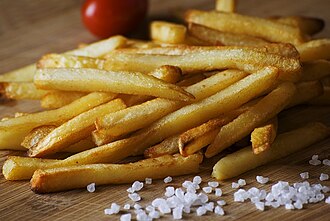
Photo: Wikipedia
These are cottage-cut potato fries, par-fried and then frozen, which are finished in the oven for a crispy exterior and fluffy interior. Each 100g serving delivers a solid 3.2g of fiber alongside a moderate 8.2g of fat, offering a more textured and rustic alternative to standard straight-cut fries.
Calorie split: 6% protein · 61% carbs · 33% fat
↓ Full nutrition💚 Why it's loved
People adore them for their perfect textural contrast—a crisp, golden shell giving way to a soft, steaming potato center. Their hearty, rustic shape and familiar salty flavor make them a beloved comfort food and a versatile side for countless meals.
⚠️ Watch-outs & how to enjoy it better
The par-frying process adds significant fat, and the final product can be high in sodium, which may concern those monitoring heart health or blood pressure. To counteract this, pair with a lean protein like grilled chicken and a large, vinegar-dressed salad to balance the meal and slow carbohydrate absorption.
Key benefits
- Good source of dietary fiber for digestive health
- Provides essential potassium for muscle function
- Convenient and quick to prepare from frozen
- Offers a satisfying, energy-dense carbohydrate source
🍽️ Popular dishes
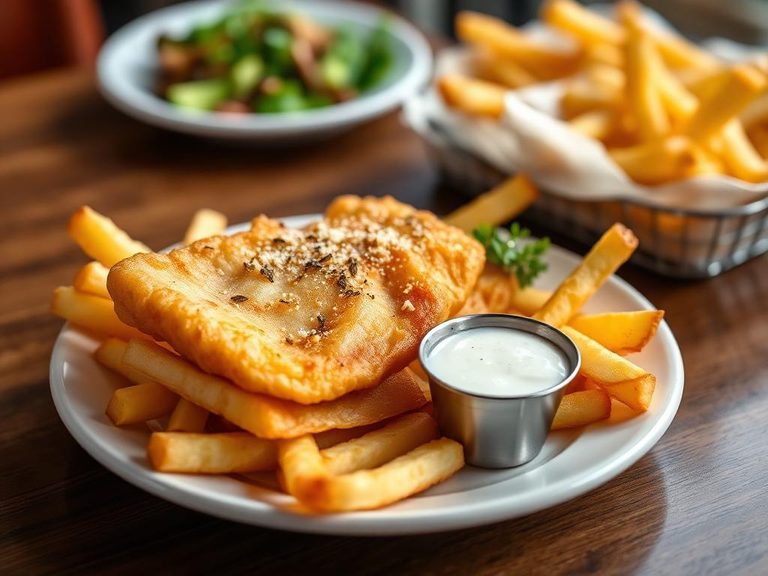
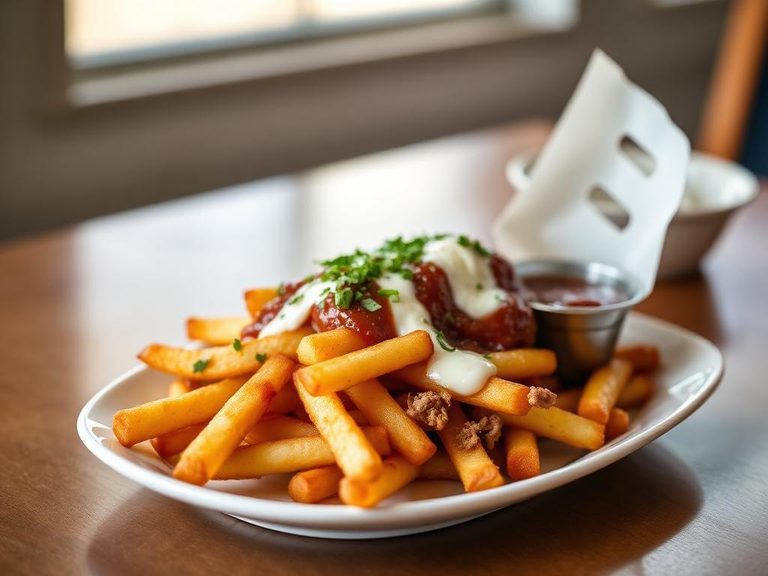
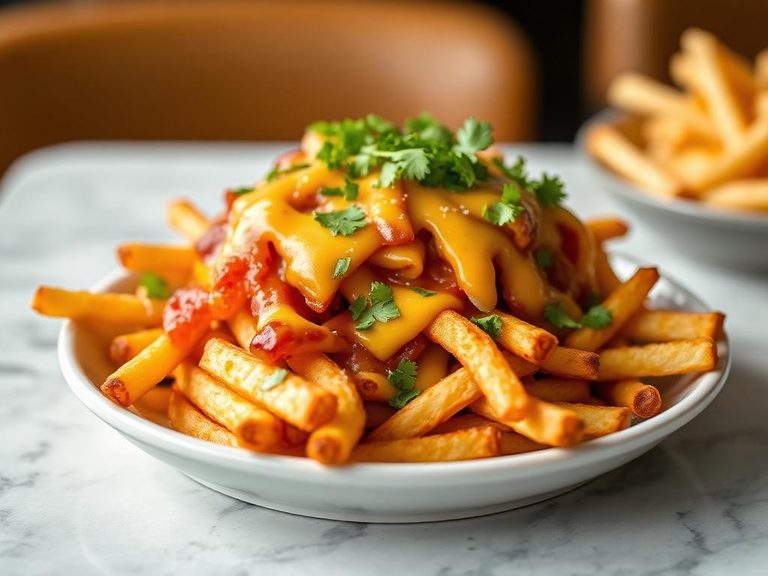
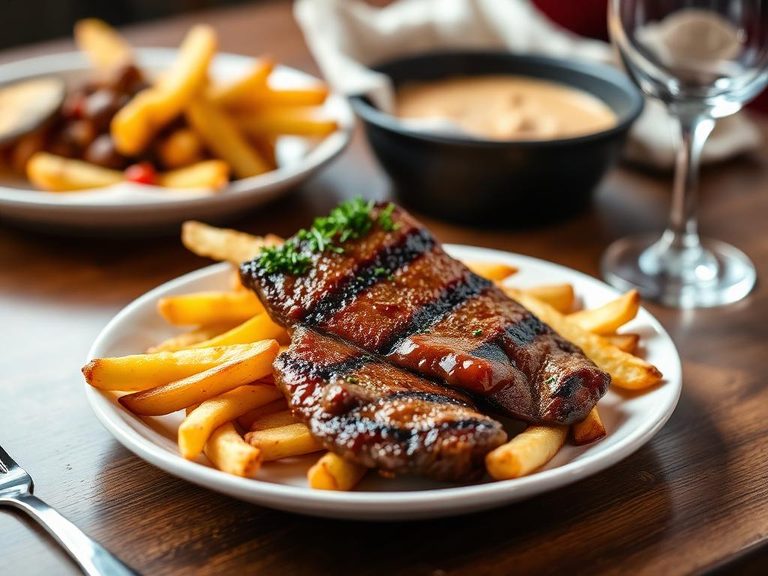
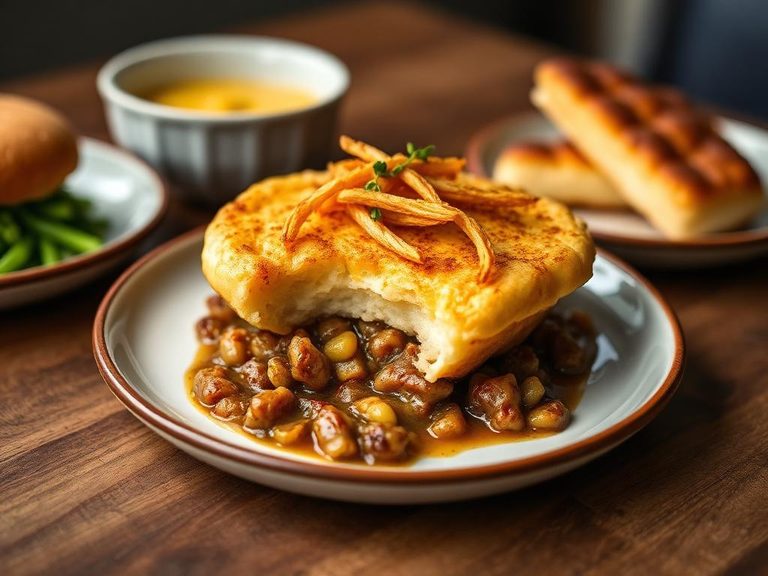
🌍 Where it's eaten
💡 Did you know?
The 'cottage-cut' or 'steak fry' shape is not just for aesthetics; its thicker profile creates a greater ratio of fluffy interior to crispy exterior compared to shoestring fries.
Full nutrition (USDA data · scales with serving)
| Water | 52.9 g |
| Energy | 218 kcal |
| Energy | 912 kj |
| Protein | 3.4 g |
| Total lipid (fat) | 8.2 g |
| Ash | 1.4 g |
| Carbohydrate, by difference | 34.0 g |
| Fiber, total dietary | 3.2 g |
| Calcium, Ca | 10.0 mg |
| Iron, Fe | 1.5 mg |
| Magnesium, Mg | 22.0 mg |
| Phosphorus, P | 65.0 mg |
| Potassium, K | 480 mg |
| Sodium, Na | 281 mg |
| Zinc, Zn | 0.41 mg |
| Copper, Cu | 0.20 mg |
| Manganese, Mn | 0.30 mg |
| Selenium, Se | 0.40 ug |
| Fluoride, F | 25.6 ug |
| Vitamin C, total ascorbic acid | 9.5 mg |
| Thiamin | 0.12 mg |
| Riboflavin | 0.03 mg |
| Niacin | 2.4 mg |
| Pantothenic acid | 0.69 mg |
| Vitamin B-6 | 0.24 mg |
| Folate, total | 17.0 ug |
| Folic acid | 0.00 ug |
| Folate, food | 17.0 ug |
| Folate, DFE | 17.0 ug |
| Vitamin B-12 | 0.00 ug |
| Vitamin A, RAE | 0.00 ug |
| Retinol | 0.00 ug |
| Vitamin A, IU | 0.00 iu |
| Vitamin D (D2 + D3), International Units | 0.00 iu |
| Vitamin D (D2 + D3) | 0.00 ug |
Fat & fatty acid profile (per 100g)
| Fatty acids, total saturated | 3.9 g |
| SFA 16:0 | 3.3 g |
| SFA 18:0 | 0.57 g |
| Fatty acids, total monounsaturated | 3.3 g |
| MUFA 18:1 | 3.3 g |
| Fatty acids, total polyunsaturated | 0.61 g |
| PUFA 18:2 | 0.61 g |
| Cholesterol | 0.00 mg |
Amino acid profile (per 100g)
| Tryptophan | 0.05 g |
| Threonine | 0.16 g |
| Isoleucine | 0.15 g |
| Leucine | 0.21 g |
| Lysine | 0.18 g |
| Methionine | 0.04 g |
| Cystine | 0.02 g |
| Phenylalanine | 0.15 g |
| Tyrosine | 0.09 g |
| Valine | 0.17 g |
| Arginine | 0.16 g |
| Histidine | 0.06 g |
| Alanine | 0.12 g |
| Aspartic acid | 0.80 g |
| Glutamic acid | 0.54 g |
| Glycine | 0.12 g |
| Proline | 0.11 g |
| Serine | 0.12 g |
FAQ
How do I get them extra crispy from the oven?
Preheat your baking sheet in the oven before adding the fries in a single layer, and avoid overcrowding. A light spritz of oil can also help.
Are these healthier than deep-fried restaurant fries?
They can be, as oven-baking uses less added fat than deep-frying. However, they are still a processed, par-fried product and should be enjoyed in moderation.
What's the best way to reheat leftover fries?
Avoid the microwave, which makes them soggy. Reheat in a hot oven or toaster oven for a few minutes to restore crispness.
Nutrient density (calculated · NRF9.3)
Nutrient Rich Foods index: beneficial nutrients (protein, fiber, vitamins, minerals) minus saturated fat, added sugar & sodium, per 100 kcal.
NRF9.3 index — Fulgoni, Keast & Drewnowski, 2009. Computed from USDA nutrients.
Weight-loss friendliness (composite index)
Energy density 2.18 kcal/g · 6% calories from protein · 3.2 g fiber · 0.0 g sugar per 100 g.
Composite of energy density (Rolls et al., 1999), protein & fiber satiety, minus sugar. A calculated heuristic — ranks satiety-per-calorie, not a clinical measure.
Dietary load (calculated from USDA values)
Potential renal acid load. Positive = acid-forming, negative = alkaline-forming.
Sodium-to-potassium ratio: 0.59 (lower is better — aim for ≤ 1)
Sodium:potassium per WHO potassium guidance. Computed from USDA nutrients.