

Fish and Chips
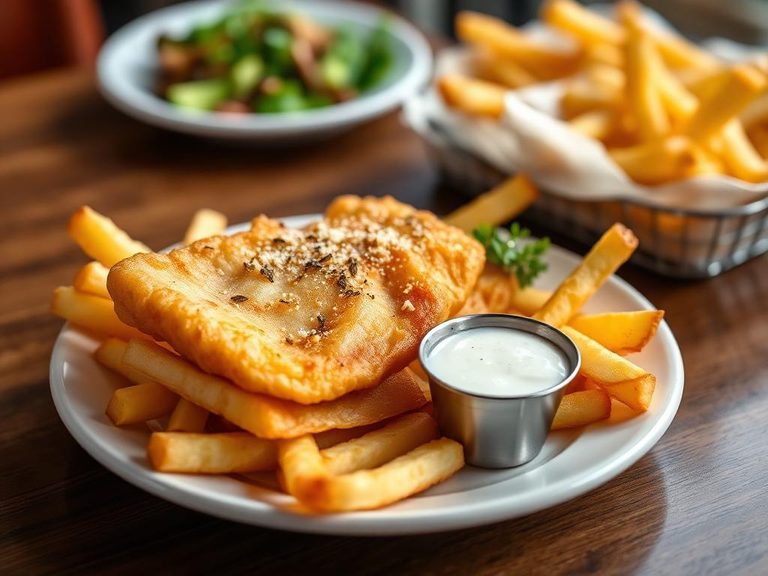
Fish and chips is a classic British dish consisting of battered, deep-fried white fish (typically cod or haddock) served with thick-cut, deep-fried potatoes. It originated in the United Kingdom in the mid-19th century, with its roots in the fusion of fried fish from Jewish immigrants and the British chip shop tradition.
🍳 View the full Fish and Chips recipe →
🍽️ Nutrition at a glance
This dish is high in both fat and carbohydrates due to the deep-frying process, while also providing a good source of protein from the fish. A typical serving from a chip shop can range from 800 to over 1,200 calories, with significant amounts of sodium.
Nutrition breakdown
| Calories | 838 kcal |
| Protein | 36 g |
| Carbs | 83 g |
| Fat | 39 g |
| Fiber | 5 g |
| Sugar | 4 g |
| Sodium | 1050 mg |
| Potassium | 650 mg |
| Phosphorus | 380 mg |
| Magnesium | 65 mg |
| Vitamin B12 | 2.5 µg |
| Niacin (B3) | 5.5 mg |
| Vitamin D | 1.5 µg |
| Iron | 2.8 mg |
| Zinc | 2.1 mg |
Per 1 typical serving (350 g) · estimated, varies by recipe
💡 What's interesting
Culturally, it became a staple of British working-class diet and a symbol of national identity, often wrapped in paper for takeaway. Nutritionally, while calorie-dense, the fish provides beneficial omega-3 fatty acids, and the traditional accompaniment of mushy peas adds fiber and vitamins.
🍽️ Related dishes








AI estimate may be inaccurate · Terms