

German Eisbein
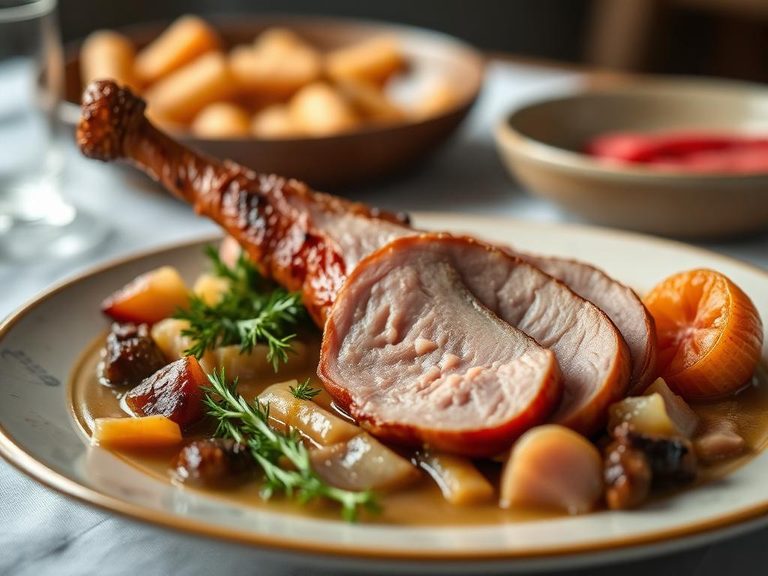
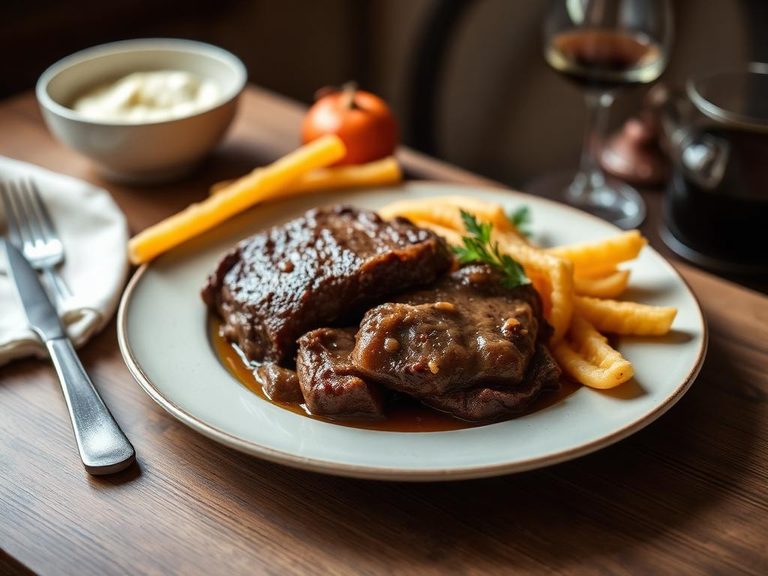
German Eisbein is a traditional dish featuring a cured or pickled pork knuckle, typically the hind leg, that is slow-simmered until the meat is tender and the skin becomes gelatinous. It is commonly seasoned with bay leaves, peppercorns, and allspice, and often served with sauerkraut, mashed potatoes, or bread. The dish is a hearty staple in German cuisine, particularly popular in regions like Bavaria and Berlin.
🍽️ Nutrition at a glance
Eisbein is a high-protein, high-fat dish with minimal carbohydrates, providing a substantial amount of calories—often around 500-700 per serving depending on preparation. It is rich in essential nutrients like iron, zinc, and B vitamins, but its high fat and sodium content means it is best enjoyed in moderation.
Nutrition breakdown
| Calories | 680 kcal |
| Protein | 42 g |
| Carbs | 0 g |
| Fat | 55 g |
| Fiber | 0 g |
| Sugar | 0 g |
| Sodium | 1800 mg |
| Potassium | 450 mg |
| Phosphorus | 350 mg |
| Niacin (B3) | 8 mg |
| Vitamin B6 | 0.6 mg |
| Vitamin B12 | 1.5 mcg |
| Zinc | 6 mg |
| Iron | 2 mg |
| Selenium | 45 mcg |
Per 1 serving (about 300 g, meat and fat) · estimated, varies by recipe
💡 What's interesting
Culturally, Eisbein is a beloved comfort food often associated with beer gardens and festive occasions, showcasing Germany's tradition of hearty, pork-centric dishes. Nutritionally, its gelatinous skin and connective tissue are a natural source of collagen, which supports joint and skin health—a unique aspect that aligns with traditional eating practices that utilize the whole animal.
🍽️ Related dishes
AI estimate may be inaccurate · Terms