

Beer
Common food

Photo: Wikipedia
Beer is a fermented alcoholic beverage made from cereal grains, typically malted barley, hops, water, and yeast. It ranges in color from pale gold to deep amber or black, with a flavor profile that can be crisp, bitter, sweet, or malty. Nutritionally, it is a low-fat, low-protein source of carbohydrates, primarily from residual sugars and alcohol.
Calorie split: 11% protein · 89% carbs · 0% fat
↓ Full nutrition💚 Why it's loved
People love beer for its vast diversity of flavors—from hoppy IPAs to smooth stouts—and its role as a social lubricant that complements food and fosters community.
⚠️ Watch-outs & how to enjoy it better
Beer's alcohol content can impair judgment and contribute to empty calories, potentially leading to weight gain; those with gluten intolerance or celiac disease must avoid most traditional beers. Opt for gluten-free varieties and practice strict portion control (e.g., a single 12-oz serving).
Key benefits
- Contains silicon, which may support bone health
- Provides B vitamins like niacin and riboflavin from yeast
- Polyphenols from hops and barley may have antioxidant properties
- Moderate consumption is linked to social and relaxation benefits
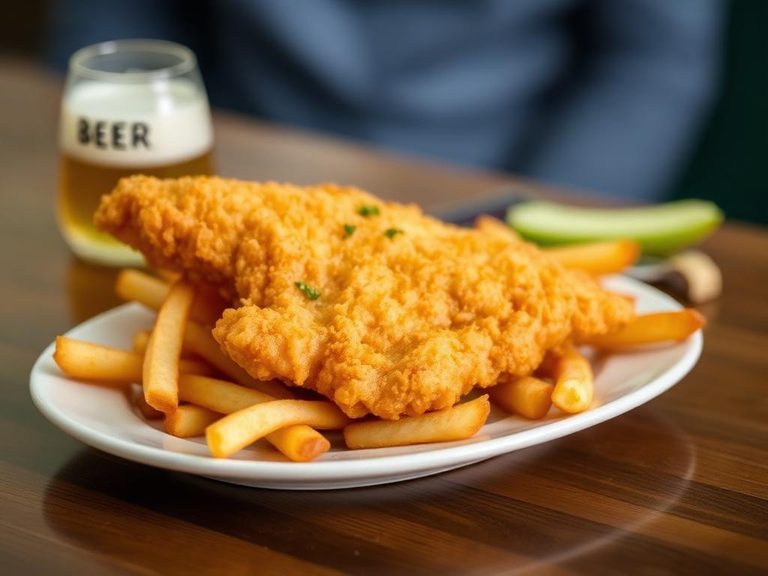
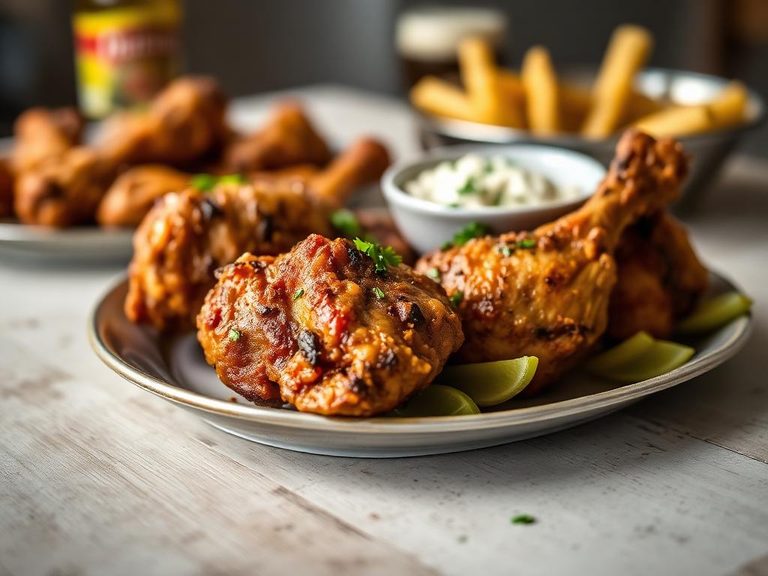
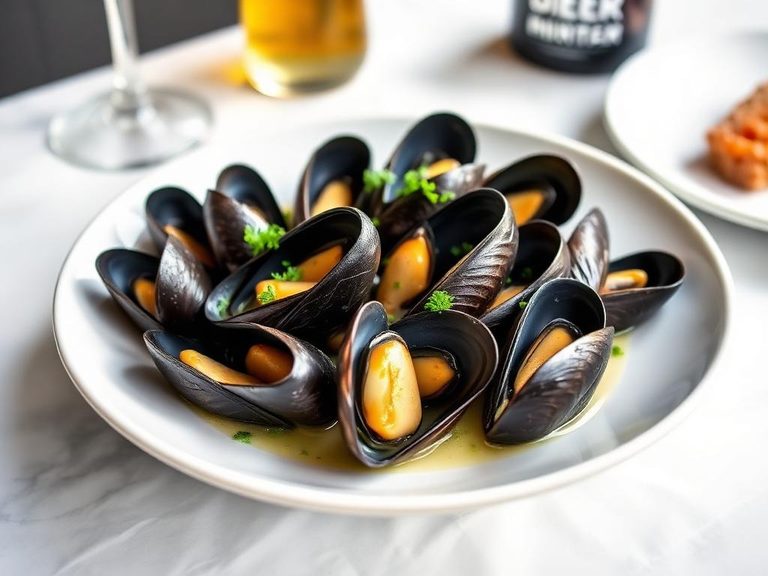
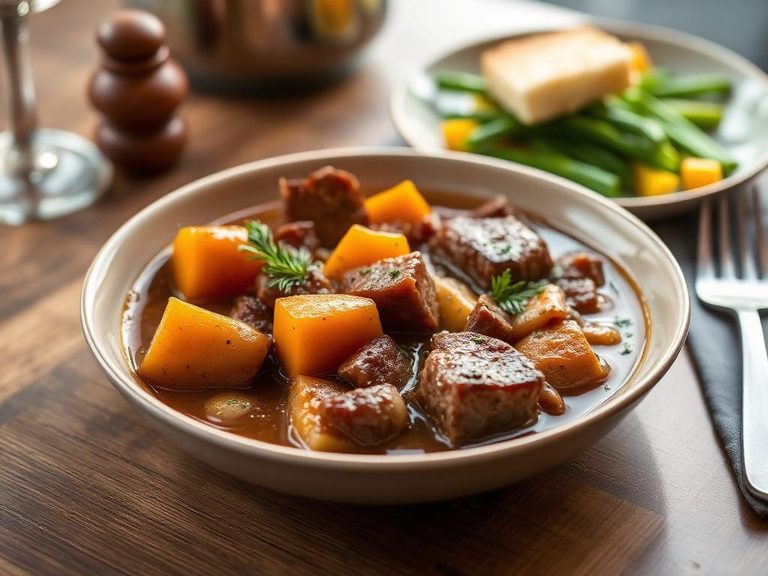
🍽️ Popular dishes


🌍 Where it's eaten
💡 Did you know?
The oldest known recipe for beer is a 4,000-year-old Sumerian poem dedicated to the goddess Ninkasi.
Full nutrition (USDA data · scales with serving)
| Water | 92.0 g |
| Energy | 43.0 kcal |
| Protein | 0.46 g |
| Total lipid (fat) | 0.00 g |
| Carbohydrate, by difference | 3.5 g |
| Fiber, total dietary | 0.00 g |
| Total Sugars | 0.00 g |
| Calcium, Ca | 4.0 mg |
| Iron, Fe | 0.02 mg |
| Magnesium, Mg | 6.0 mg |
| Phosphorus, P | 14.0 mg |
| Potassium, K | 27.0 mg |
| Sodium, Na | 4.0 mg |
| Zinc, Zn | 0.01 mg |
| Copper, Cu | 0.01 mg |
| Selenium, Se | 0.60 ug |
| Vitamin C, total ascorbic acid | 0.00 mg |
| Thiamin | 0.01 mg |
| Riboflavin | 0.03 mg |
| Niacin | 0.51 mg |
| Vitamin B-6 | 0.05 mg |
| Folate, total | 6.0 ug |
| Folic acid | 0.00 ug |
| Folate, food | 6.0 ug |
| Folate, DFE | 6.0 ug |
| Choline, total | 10.1 mg |
| Vitamin B-12 | 0.02 ug |
| Vitamin B-12, added | 0.00 ug |
| Vitamin A, RAE | 0.00 ug |
| Retinol | 0.00 ug |
| Carotene, beta | 0.00 ug |
| Carotene, alpha | 0.00 ug |
| Cryptoxanthin, beta | 0.00 ug |
| Lycopene | 0.00 ug |
| Lutein + zeaxanthin | 0.00 ug |
| Vitamin E (alpha-tocopherol) | 0.00 mg |
| Vitamin E, added | 0.00 mg |
| Vitamin D (D2 + D3) | 0.00 ug |
| Vitamin K (phylloquinone) | 0.00 ug |
| Alcohol, ethyl | 3.9 g |
| Caffeine | 0.00 mg |
| Theobromine | 0.00 mg |
Fat & fatty acid profile (per 100g)
| Fatty acids, total saturated | 0.00 g |
| SFA 4:0 | 0.00 g |
| SFA 6:0 | 0.00 g |
| SFA 8:0 | 0.00 g |
| SFA 10:0 | 0.00 g |
| SFA 12:0 | 0.00 g |
| SFA 14:0 | 0.00 g |
| SFA 16:0 | 0.00 g |
| SFA 18:0 | 0.00 g |
| Fatty acids, total monounsaturated | 0.00 g |
| MUFA 16:1 | 0.00 g |
| MUFA 18:1 | 0.00 g |
| MUFA 20:1 | 0.00 g |
| MUFA 22:1 | 0.00 g |
| Fatty acids, total polyunsaturated | 0.00 g |
| PUFA 18:2 | 0.00 g |
| PUFA 18:3 | 0.00 g |
| PUFA 18:4 | 0.00 g |
| PUFA 20:4 | 0.00 g |
| PUFA 20:5 n-3 (EPA) | 0.00 g |
| PUFA 22:5 n-3 (DPA) | 0.00 g |
| PUFA 22:6 n-3 (DHA) | 0.00 g |
| Cholesterol | 0.00 mg |
Amino acid profile (per 100g)
Estimated from Beerwurst, pork and beef — USDA does not publish this profile for Beer.
| Tryptophan | 0.17 g |
| Threonine | 0.67 g |
| Isoleucine | 0.68 g |
| Leucine | 1.2 g |
| Lysine | 1.3 g |
| Methionine | 0.39 g |
| Cystine | 0.18 g |
| Phenylalanine | 0.60 g |
| Tyrosine | 0.51 g |
| Valine | 0.77 g |
| Arginine | 0.98 g |
| Histidine | 0.54 g |
| Alanine | 0.92 g |
| Aspartic acid | 1.4 g |
| Glutamic acid | 2.3 g |
| Glycine | 0.88 g |
| Proline | 0.70 g |
| Serine | 0.60 g |
FAQ
Does beer contain gluten?
Most traditional beers are made from barley and therefore contain gluten. However, there are gluten-free beers made from sorghum, rice, or other grains.
Why does beer cause a 'beer belly'?
The 'beer belly' is a myth; abdominal fat gain is due to consuming excess calories from any source, including the carbohydrates and alcohol in beer, combined with a sedentary lifestyle.
Is dark beer higher in calories than light beer?
Generally, yes. Dark beers often have more residual sugars and a higher alcohol content, which increases calorie count compared to lighter lagers.
Nutrient density (calculated · NRF9.3)
Nutrient Rich Foods index: beneficial nutrients (protein, fiber, vitamins, minerals) minus saturated fat, added sugar & sodium, per 100 kcal.
NRF9.3 index — Fulgoni, Keast & Drewnowski, 2009. Computed from USDA nutrients.
Weight-loss friendliness (composite index)
Energy density 0.43 kcal/g · 4% calories from protein · 0.0 g fiber · 0.0 g sugar per 100 g.
Composite of energy density (Rolls et al., 1999), protein & fiber satiety, minus sugar. A calculated heuristic — ranks satiety-per-calorie, not a clinical measure.
Dietary load (calculated from USDA values)
Potential renal acid load. Positive = acid-forming, negative = alkaline-forming.
Sodium-to-potassium ratio: 0.15 (lower is better — aim for ≤ 1)
Sodium:potassium per WHO potassium guidance. Computed from USDA nutrients.