

Pork, cured, bacon, unprepared
Whole food · Pork Products
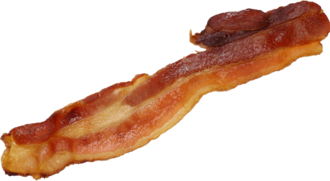
Photo: Wikipedia
Unprepared cured bacon is raw, salt-cured pork belly, prized for its intense smoky-savory flavor and the dramatic transformation it undergoes when cooked—rendering from a pliable, fatty slab into crisp, golden strips. It is a high-fat, zero-carb protein source, delivering a powerful punch of umami and satiety per bite.
Calorie split: 14% protein · 0% carbs · 86% fat
↓ Full nutrition💚 Why it's loved
People love bacon for its irresistible combination of salty, smoky, and savory flavors, which create a deep umami satisfaction. Its versatility makes it a beloved ingredient in everything from breakfast plates to salads and burgers, and it holds a strong cultural place in American, British, and European cuisines.
⚠️ Watch-outs & how to enjoy it better
Its high sodium and saturated fat content can be a concern for those with hypertension or heart health considerations. To counteract this, practice portion control (e.g., 1-2 slices per meal), pair it with fiber-rich vegetables like spinach or broccoli, and consider baking it on a rack to render out excess fat. Also, be mindful of nitrates/nitrites in cured meats.
Key benefits
- Excellent source of complete protein (13.66g per 100g)
- Zero carbohydrates, making it keto and low-carb friendly
- Rich in B vitamins, especially B1 (thiamine) and B12
- High in monounsaturated fats (oleic acid, also in olive oil)
- Provides essential minerals like selenium and phosphorus
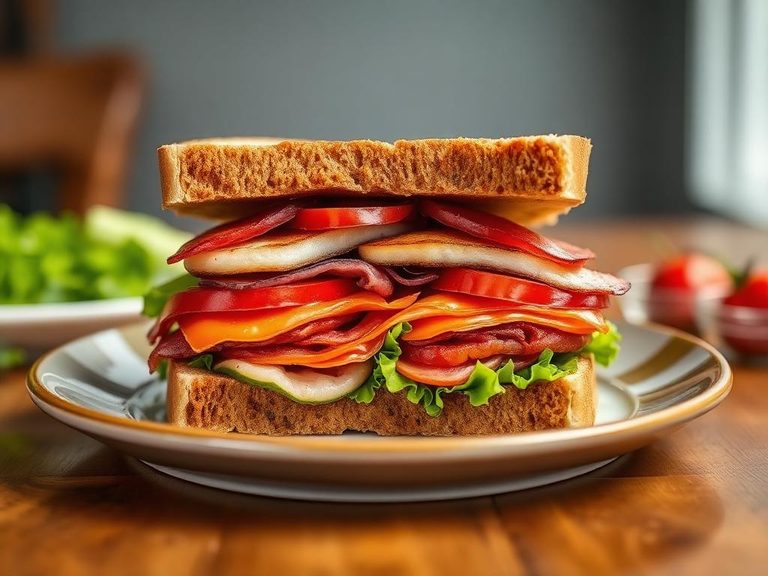
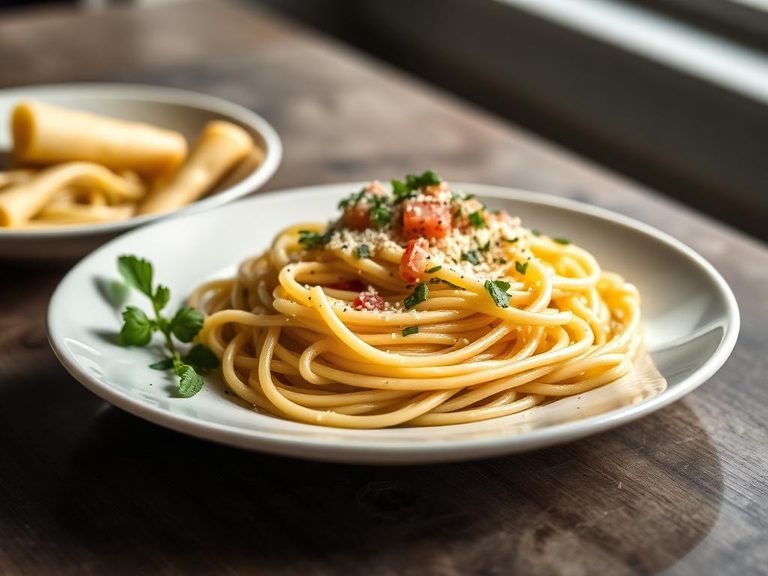
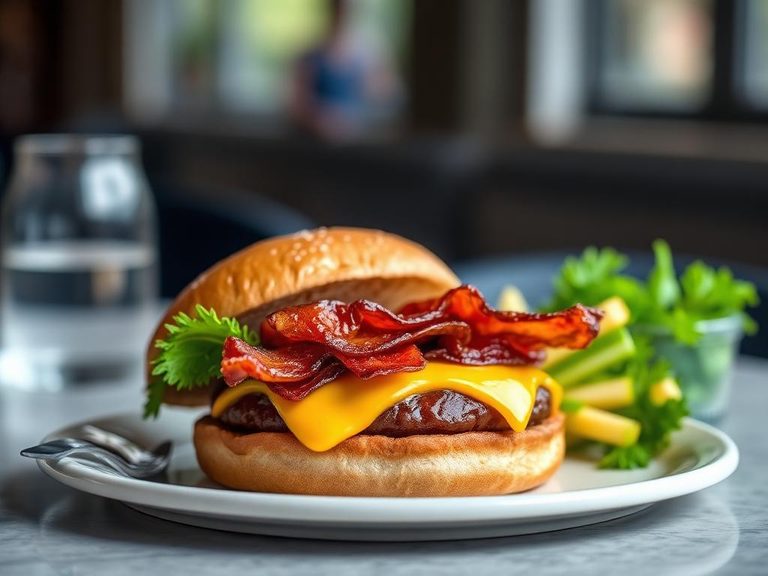
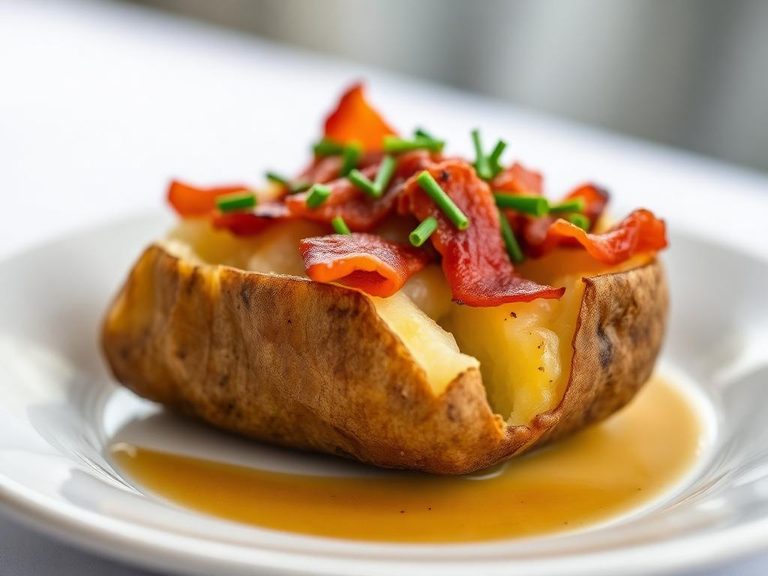
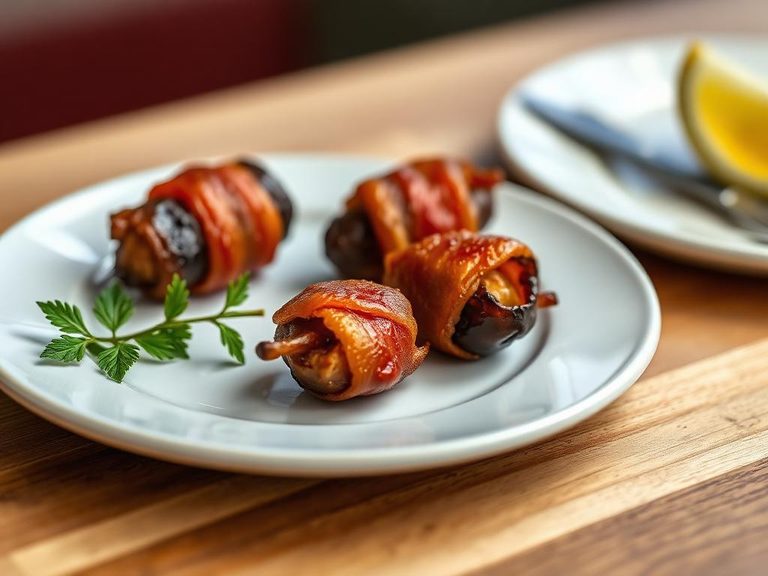
🍽️ Popular dishes

🌍 Where it's eaten
💡 Did you know?
The word 'bacon' comes from the Old High German 'bacho' meaning 'back,' and the ancient Romans were among the first to cure pork belly with salt, creating an early form of bacon.
Full nutrition (USDA data · scales with serving)
| Water | 46.7 g |
| Energy | 393 kcal |
| Energy | 1645 kj |
| Protein | 13.7 g |
| Total lipid (fat) | 37.1 g |
| Ash | 2.6 g |
| Carbohydrate, by difference | 0.00 g |
| Fiber, total dietary | 0.00 g |
| Total Sugars | 0.35 g |
| Sucrose | 0.00 g |
| Glucose | 0.35 g |
| Fructose | 0.00 g |
| Lactose | 0.00 g |
| Maltose | 0.00 g |
| Galactose | 0.00 g |
| Calcium, Ca | 6.0 mg |
| Iron, Fe | 0.38 mg |
| Magnesium, Mg | 13.0 mg |
| Phosphorus, P | 166 mg |
| Potassium, K | 201 mg |
| Sodium, Na | 751 mg |
| Zinc, Zn | 1.1 mg |
| Copper, Cu | 0.05 mg |
| Manganese, Mn | 0.01 mg |
| Selenium, Se | 20.1 ug |
| Vitamin C, total ascorbic acid | 0.00 mg |
| Thiamin | 0.28 mg |
| Riboflavin | 0.08 mg |
| Niacin | 4.0 mg |
| Pantothenic acid | 0.56 mg |
| Vitamin B-6 | 0.27 mg |
| Folate, total | 0.00 ug |
| Folic acid | 0.00 ug |
| Folate, food | 0.00 ug |
| Folate, DFE | 0.00 ug |
| Choline, total | 47.8 mg |
| Betaine | 3.7 mg |
| Vitamin B-12 | 0.50 ug |
| Vitamin B-12, added | 0.00 ug |
| Vitamin A, RAE | 11.0 ug |
| Retinol | 11.0 ug |
| Carotene, beta | 0.00 ug |
| Carotene, alpha | 0.00 ug |
| Cryptoxanthin, beta | 0.00 ug |
| Vitamin A, IU | 37.0 iu |
| Lycopene | 0.00 ug |
| Lutein + zeaxanthin | 0.00 ug |
| Vitamin E (alpha-tocopherol) | 0.43 mg |
| Vitamin E, added | 0.00 mg |
| Tocopherol, beta | 1.0 mg |
| Tocopherol, gamma | 0.65 mg |
| Tocopherol, delta | 0.01 mg |
| Tocotrienol, alpha | 0.03 mg |
| Tocotrienol, beta | 0.02 mg |
| Tocotrienol, gamma | 0.05 mg |
| Tocotrienol, delta | 0.00 mg |
| Vitamin D (D2 + D3), International Units | 16.0 iu |
| Vitamin D (D2 + D3) | 0.40 ug |
| Vitamin D3 (cholecalciferol) | 0.40 ug |
| Vitamin K (phylloquinone) | 0.00 ug |
| Alcohol, ethyl | 0.00 g |
| Caffeine | 0.00 mg |
| Theobromine | 0.00 mg |
Fat & fatty acid profile (per 100g)
| Fatty acids, total saturated | 12.6 g |
| SFA 4:0 | 0.01 g |
| SFA 6:0 | 0.00 g |
| SFA 8:0 | 0.00 g |
| SFA 10:0 | 0.03 g |
| SFA 12:0 | 0.03 g |
| SFA 14:0 | 0.47 g |
| SFA 15:0 | 0.02 g |
| SFA 16:0 | 7.9 g |
| SFA 17:0 | 0.09 g |
| SFA 18:0 | 4.0 g |
| SFA 20:0 | 0.07 g |
| SFA 22:0 | 0.01 g |
| SFA 24:0 | 0.00 g |
| Fatty acids, total monounsaturated | 15.9 g |
| MUFA 14:1 | 0.01 g |
| MUFA 15:1 | 0.00 g |
| MUFA 16:1 | 0.82 g |
| MUFA 16:1 c | 0.82 g |
| MUFA 17:1 | 0.09 g |
| MUFA 18:1 | 14.7 g |
| MUFA 18:1 c | 14.6 g |
| MUFA 20:1 | 0.29 g |
| MUFA 22:1 | 0.01 g |
| MUFA 22:1 c | 0.01 g |
| MUFA 24:1 c | 0.00 g |
| Fatty acids, total polyunsaturated | 5.8 g |
| PUFA 18:2 | 5.1 g |
| PUFA 18:2 n-6 c,c | 5.0 g |
| PUFA 18:2 CLAs | 0.05 g |
| PUFA 18:3 | 0.22 g |
| PUFA 18:3 n-3 c,c,c (ALA) | 0.22 g |
| PUFA 18:3 n-6 c,c,c | 0.00 g |
| PUFA 18:3i | 0.00 g |
| PUFA 18:4 | 0.00 g |
| PUFA 20:2 n-6 c,c | 0.21 g |
| PUFA 20:3 | 0.07 g |
| PUFA 20:3 n-3 | 0.03 g |
| PUFA 20:3 n-6 | 0.04 g |
| PUFA 20:4 | 0.11 g |
| PUFA 20:5 n-3 (EPA) | 0.00 g |
| PUFA 22:4 | 0.04 g |
| PUFA 22:5 n-3 (DPA) | 0.02 g |
| PUFA 22:6 n-3 (DHA) | 0.01 g |
| Fatty acids, total trans | 0.15 g |
| Fatty acids, total trans-monoenoic | 0.11 g |
| TFA 16:1 t | 0.01 g |
| TFA 18:1 t | 0.10 g |
| TFA 22:1 t | 0.00 g |
| TFA 18:2 t not further defined | 0.03 g |
| Fatty acids, total trans-polyenoic | 0.03 g |
| Cholesterol | 66.0 mg |
Amino acid profile (per 100g)
Estimated from Pork, cured, salt pork, raw — USDA does not publish this profile for Pork.
| Tryptophan | 0.02 g |
| Threonine | 0.17 g |
| Isoleucine | 0.13 g |
| Leucine | 0.35 g |
| Lysine | 0.42 g |
| Methionine | 0.07 g |
| Cystine | 0.04 g |
| Phenylalanine | 0.19 g |
| Tyrosine | 0.08 g |
| Valine | 0.24 g |
| Arginine | 0.52 g |
| Histidine | 0.06 g |
| Alanine | 0.28 g |
| Aspartic acid | 0.42 g |
| Glutamic acid | 0.69 g |
| Glycine | 0.36 g |
| Proline | 0.27 g |
| Serine | 0.19 g |
FAQ
What is the difference between cured and uncured bacon?
Cured bacon uses sodium nitrite or nitrate to preserve color and flavor, while 'uncured' bacon uses natural sources like celery juice (which contains nitrates) but is still processed and cured. Both are preserved meats.
Is bacon a good source of protein?
Yes, bacon provides about 13.66g of protein per 100g, but it is also very high in fat (37.13g), so it should be consumed in moderation as part of a balanced diet.
How should I store unprepared bacon?
Unopened bacon can be stored in the refrigerator for up to a week or frozen for 1-2 months. Once opened, wrap it tightly and use within 7 days, or freeze portions for longer storage.
Nutrient density (calculated · NRF9.3)
Nutrient Rich Foods index: beneficial nutrients (protein, fiber, vitamins, minerals) minus saturated fat, added sugar & sodium, per 100 kcal.
NRF9.3 index — Fulgoni, Keast & Drewnowski, 2009. Computed from USDA nutrients.
Weight-loss friendliness (composite index)
Energy density 3.93 kcal/g · 14% calories from protein · 0.0 g fiber · 0.3 g sugar per 100 g.
Composite of energy density (Rolls et al., 1999), protein & fiber satiety, minus sugar. A calculated heuristic — ranks satiety-per-calorie, not a clinical measure.
Dietary load (calculated from USDA values)
Potential renal acid load. Positive = acid-forming, negative = alkaline-forming.
Sodium-to-potassium ratio: 3.74 (lower is better — aim for ≤ 1)
Sodium:potassium per WHO potassium guidance. Computed from USDA nutrients.