

Pork, cured, bacon, cooked, restaurant
Whole food · Pork Products
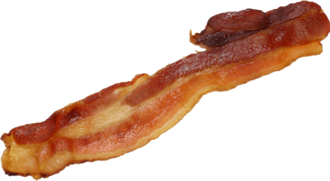
Photo: Wikipedia
This is the savory, smoky, and crisp result of curing and cooking pork belly, often served in restaurants for its rich, umami-packed flavor and satisfying crunch. Nutritionally, it's a protein-dense, high-fat food with virtually no carbohydrates, making it a staple in low-carb and ketogenic diets.
Calorie split: 33% protein · 2% carbs · 66% fat
↓ Full nutrition💚 Why it's loved
People adore it for its intoxicating combination of salty, smoky, and fatty flavors, and its versatile texture that can be crisp or chewy. It's a cultural icon, forming the heart of classic comfort foods from breakfast to dinner.
⚠️ Watch-outs & how to enjoy it better
Its high sodium and saturated fat content are concerns for those managing blood pressure or heart health. To mitigate, pair it with potassium-rich vegetables like spinach or avocado, use it as a flavorful garnish rather than the main protein, and practice strict portion control.
Key benefits
- Excellent source of complete protein
- Provides B vitamins like B1 (thiamine) and B12
- Contains minerals such as selenium and phosphorus
- High satiety from fat and protein content
- Zero carbohydrates, suitable for keto diets
🍽️ Popular dishes
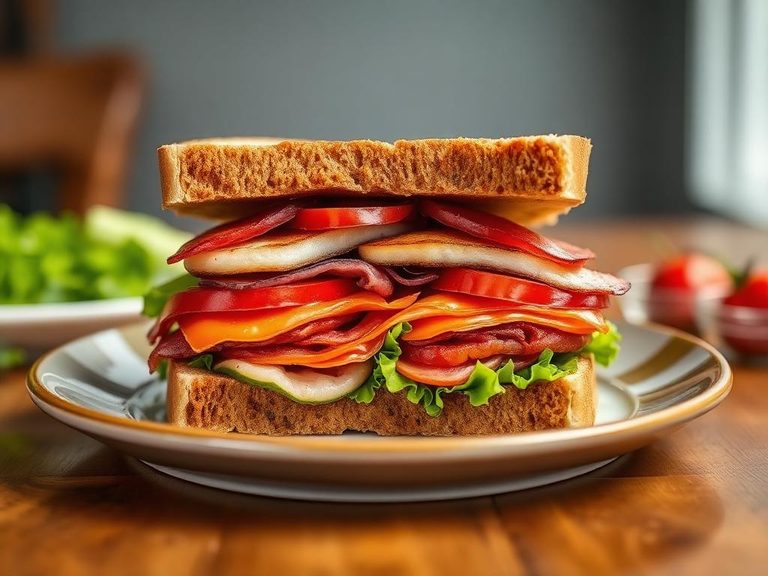
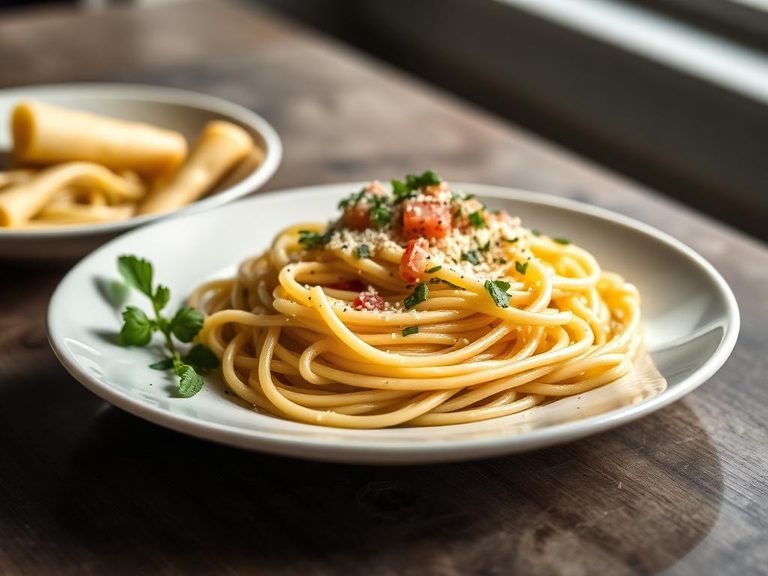
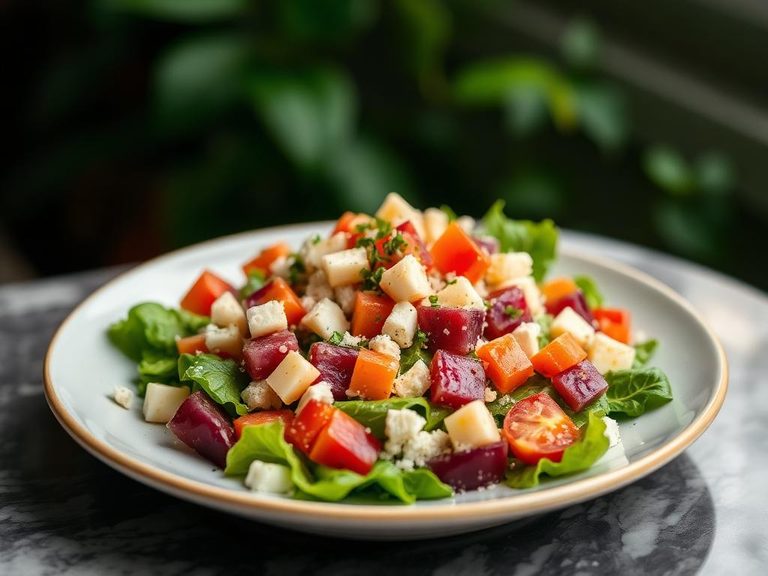


🌍 Where it's eaten
💡 Did you know?
The United States produces over 2 billion pounds of bacon annually, and the phrase 'bring home the bacon' dates back to a 12th-century English fair where a married man who could prove he hadn't argued with his wife for a year and a day won a side of bacon.
Full nutrition (USDA data · scales with serving)
| Water | 14.2 g |
| Energy (Atwater General Factors) | 501 kcal |
| Energy (Atwater Specific Factors) | 512 kcal |
| Energy | 500 kcal |
| Energy | 2090 kj |
| Nitrogen | 6.5 g |
| Protein | 40.9 g |
| Total lipid (fat) | 36.5 g |
| Total fat (NLEA) | 34.6 g |
| Ash | 6.3 g |
| Carbohydrate, by difference | 2.1 g |
| Sugars, Total | 3.1 g |
| Sucrose | 3.1 g |
| Glucose | 0.04 g |
| Fructose | 0.01 g |
| Lactose | 0.00 g |
| Maltose | 0.00 g |
| Galactose | 0.00 g |
| Calcium, Ca | 13.0 mg |
| Iron, Fe | 1.3 mg |
| Magnesium, Mg | 36.5 mg |
| Phosphorus, P | 415 mg |
| Potassium, K | 557 mg |
| Sodium, Na | 1830 mg |
| Zinc, Zn | 3.6 mg |
| Copper, Cu | 0.13 mg |
| Manganese, Mn | 0.02 mg |
Fat & fatty acid profile (per 100g)
| Fatty acids, total saturated | 12.6 g |
| SFA 4:0 | 0.00 g |
| SFA 5:0 | 0.00 g |
| SFA 6:0 | 0.00 g |
| SFA 7:0 | 0.00 g |
| SFA 8:0 | 0.01 g |
| SFA 9:0 | 0.00 g |
| SFA 10:0 | 0.03 g |
| SFA 11:0 | 0.00 g |
| SFA 12:0 | 0.03 g |
| SFA 14:0 | 0.48 g |
| SFA 15:0 | 0.02 g |
| SFA 16:0 | 7.9 g |
| SFA 17:0 | 0.10 g |
| SFA 18:0 | 3.9 g |
| SFA 20:0 | 0.07 g |
| SFA 21:0 | 0.00 g |
| SFA 22:0 | 0.01 g |
| SFA 23:0 | 0.00 g |
| SFA 24:0 | 0.00 g |
| Fatty acids, total monounsaturated | 15.8 g |
| MUFA 12:1 | 0.00 g |
| MUFA 14:1 c | 0.01 g |
| MUFA 15:1 | 0.00 g |
| MUFA 16:1 c | 0.84 g |
| MUFA 17:1 | 0.09 g |
| MUFA 17:1 c | 0.09 g |
| MUFA 18:1 c | 14.6 g |
| MUFA 20:1 c | 0.28 g |
| MUFA 22:1 c | 0.01 g |
| MUFA 22:1 n-9 | 0.01 g |
| MUFA 22:1 n-11 | 0.00 g |
| MUFA 24:1 c | 0.00 g |
| Fatty acids, total polyunsaturated | 6.0 g |
| PUFA 18:2 c | 5.3 g |
| PUFA 18:2 n-6 c,c | 5.2 g |
| PUFA 18:2 CLAs | 0.04 g |
| PUFA 18:3 c | 0.24 g |
| PUFA 18:3 n-3 c,c,c (ALA) | 0.23 g |
| PUFA 18:3 n-6 c,c,c | 0.01 g |
| PUFA 18:4 | 0.00 g |
| PUFA 20:2 c | 0.21 g |
| PUFA 20:2 n-6 c,c | 0.21 g |
| PUFA 20:3 c | 0.07 g |
| PUFA 20:3 n-3 | 0.03 g |
| PUFA 20:3 n-6 | 0.04 g |
| PUFA 20:3 n-9 | 0.00 g |
| PUFA 22:3 | 0.00 g |
| PUFA 20:4 | 0.16 g |
| PUFA 20:4c | 0.16 g |
| PUFA 20:5c | 0.00 g |
| PUFA 20:5 n-3 (EPA) | 0.00 g |
| PUFA 22:2 | 0.00 g |
| PUFA 22:5 c | 0.02 g |
| PUFA 22:4 | 0.05 g |
| PUFA 22:5 n-3 (DPA) | 0.02 g |
| PUFA 22:6 c | 0.01 g |
| PUFA 22:6 n-3 (DHA) | 0.01 g |
| Fatty acids, total trans | 0.15 g |
| Fatty acids, total trans-monoenoic | 0.13 g |
| TFA 14:1 t | 0.00 g |
| TFA 16:1 t | 0.01 g |
| TFA 18:1 t | 0.12 g |
| TFA 20:1 t | 0.00 g |
| TFA 22:1 t | 0.00 g |
| Fatty acids, total trans-dienoic | 0.02 g |
| TFA 18:2 t not further defined | 0.02 g |
| Fatty acids, total trans-polyenoic | 0.00 g |
| TFA 18:3 t | 0.00 g |
Amino acid profile (per 100g)
Estimated from Pork, cured, salt pork, raw — USDA does not publish this profile for Pork.
| Tryptophan | 0.02 g |
| Threonine | 0.17 g |
| Isoleucine | 0.13 g |
| Leucine | 0.35 g |
| Lysine | 0.42 g |
| Methionine | 0.07 g |
| Cystine | 0.04 g |
| Phenylalanine | 0.19 g |
| Tyrosine | 0.08 g |
| Valine | 0.24 g |
| Arginine | 0.52 g |
| Histidine | 0.06 g |
| Alanine | 0.28 g |
| Aspartic acid | 0.42 g |
| Glutamic acid | 0.69 g |
| Glycine | 0.36 g |
| Proline | 0.27 g |
| Serine | 0.19 g |
FAQ
Is cooked bacon a good source of protein?
Yes, it's very protein-dense, providing about 41 grams of protein per 100 grams, making it one of the highest-protein common foods.
Why is restaurant bacon often different from home-cooked?
Restaurants may use different cuts, curing methods (like applewood smoking), or cooking techniques (like baking on racks) to achieve a specific texture and flavor profile consistently at scale.
How can I reduce the fat when cooking bacon?
Baking it on a wire rack over a sheet pan allows excess fat to drip away. You can also blot cooked bacon with paper towels to remove surface grease.
Nutrient density (calculated · NRF9.3)
Nutrient Rich Foods index: beneficial nutrients (protein, fiber, vitamins, minerals) minus saturated fat, added sugar & sodium, per 100 kcal.
NRF9.3 index — Fulgoni, Keast & Drewnowski, 2009. Computed from USDA nutrients.
Weight-loss friendliness (composite index)
Energy density 5.00 kcal/g · 33% calories from protein · 0.0 g fiber · 0.0 g sugar per 100 g.
Composite of energy density (Rolls et al., 1999), protein & fiber satiety, minus sugar. A calculated heuristic — ranks satiety-per-calorie, not a clinical measure.
Dietary load (calculated from USDA values)
Potential renal acid load. Positive = acid-forming, negative = alkaline-forming.
Sodium-to-potassium ratio: 3.29 (lower is better — aim for ≤ 1)
Sodium:potassium per WHO potassium guidance. Computed from USDA nutrients.