German Rye Bread
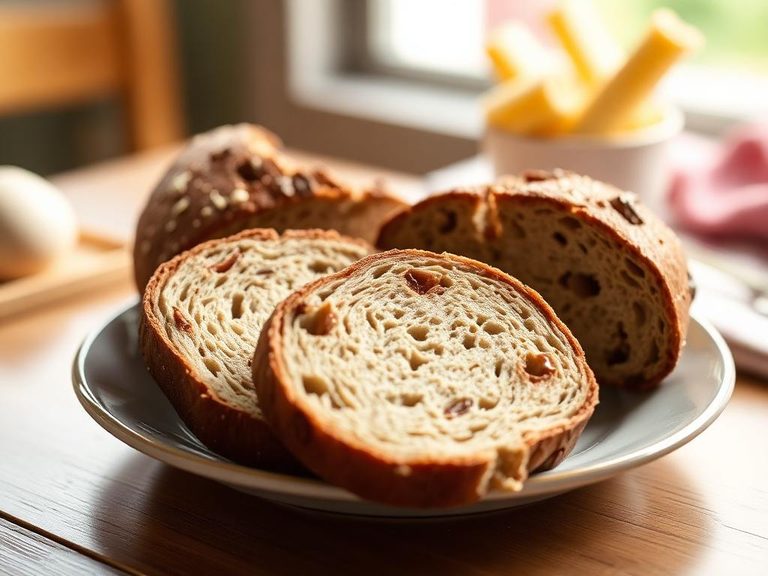
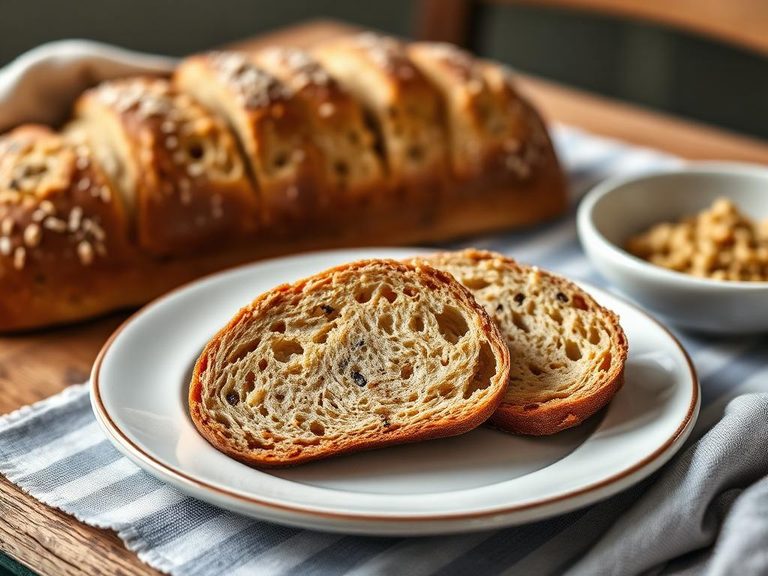
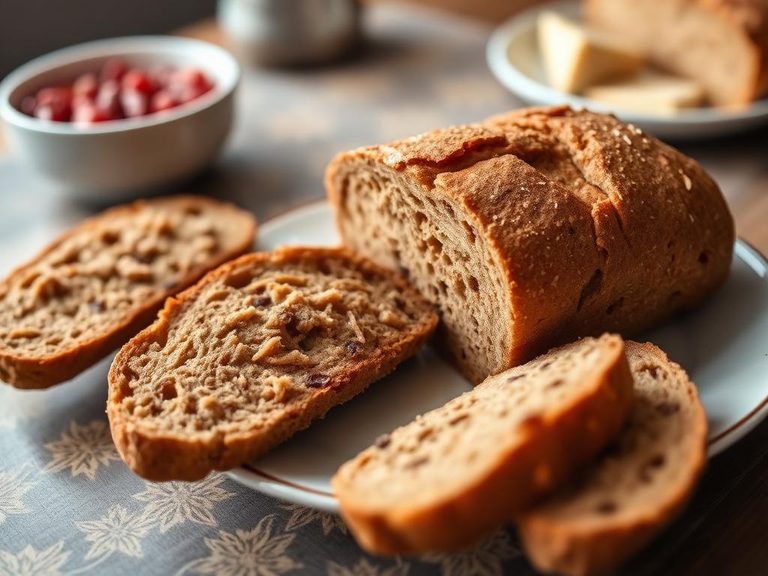
German Rye Bread, known as Roggenbrot, is a dense, flavorful bread traditionally made from rye flour, water, salt, and a sourdough starter. It originates from Germany, where it is a staple food with a history dating back centuries. The bread is often characterized by its dark color, moist texture, and tangy taste from fermentation.
🍽️ Nutrition at a glance
Roggenbrot is relatively high in complex carbohydrates and dietary fiber, while being low in fat and providing a moderate amount of plant-based protein. A typical slice (around 50-60g) offers about 120-150 calories, along with key nutrients like iron, magnesium, and B vitamins from the rye grain.
Nutrition breakdown
| Calories | 125 kcal |
| Protein | 3.5 g |
| Carbs | 24 g |
| Fat | 1 g |
| Fiber | 4.5 g |
| Sugar | 1.5 g |
| Sodium | 300 mg |
| Potassium | 150 mg |
| Magnesium | 35 mg |
| Phosphorus | 70 mg |
| Iron | 1.5 mg |
| Manganese | 0.7 mg |
| Selenium | 10 mcg |
| Thiamin (B1) | 0.1 mg |
| Niacin (B3) | 1.5 mg |
Per 1 slice (50 g) · estimated, varies by recipe
💡 What's interesting
Culturally, Roggenbrot is a cornerstone of German baking traditions, often enjoyed with meals like sausages, cheeses, or as part of a hearty breakfast. Nutritionally, its high fiber content supports digestive health and helps maintain steady blood sugar levels, making it a popular choice for sustained energy.