

Turkey, whole, meat and skin, with added solution, raw
Whole food · Poultry Products
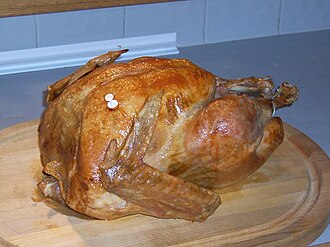
Photo: Wikipedia
This is a whole raw turkey, including its skin and the added solution used for moisture and preservation. The meat is lean and mild, while the skin adds richness; the solution can subtly enhance juiciness and flavor during cooking. Nutritionally, it's a powerhouse of high-quality protein with very low carbs.
Calorie split: 48% protein · 0% carbs · 52% fat
↓ Full nutrition💚 Why it's loved
People love it as the centerpiece of festive meals, especially Thanksgiving, symbolizing abundance and tradition. Its mild flavor makes it incredibly versatile for roasting, smoking, or grinding into lean ground turkey.
⚠️ Watch-outs & how to enjoy it better
The added solution often contains sodium or phosphates, which can increase salt intake; look for 'no added solution' or 'minimally processed' labels. The skin is high in saturated fat and calories; removing it before eating reduces fat intake. To counteract sodium, rinse the turkey before cooking and use herbs, spices, and citrus for flavor instead of salt.
Key benefits
- Excellent source of lean protein for muscle maintenance.
- Very low in carbohydrates, suitable for low-carb diets.
- Rich in B vitamins, especially niacin and B6, for energy metabolism.
- Contains minerals like selenium and phosphorus.
🍽️ Popular dishes
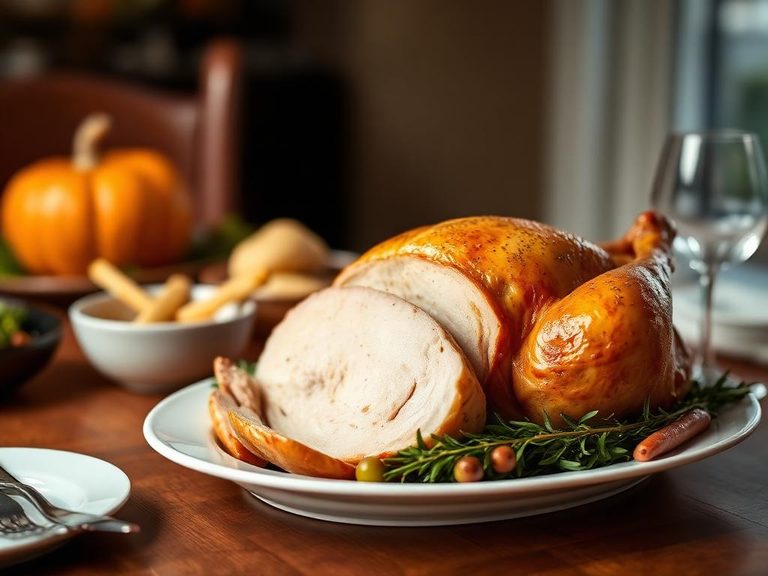
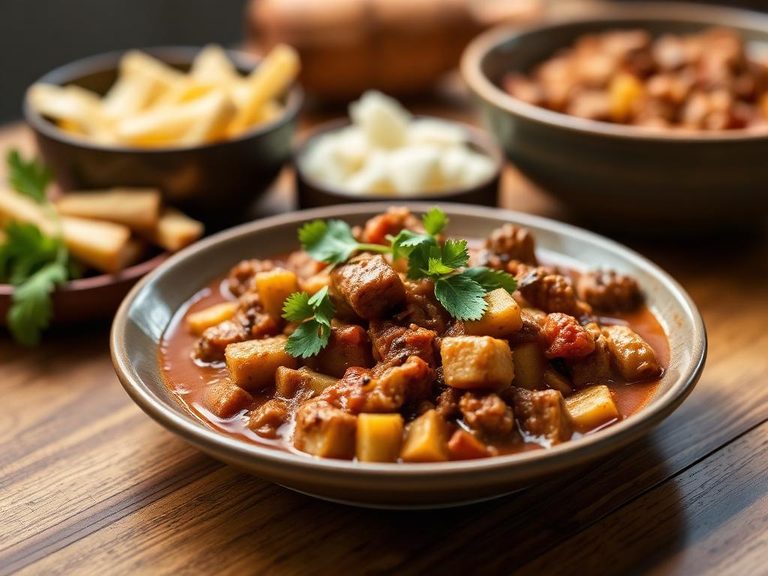
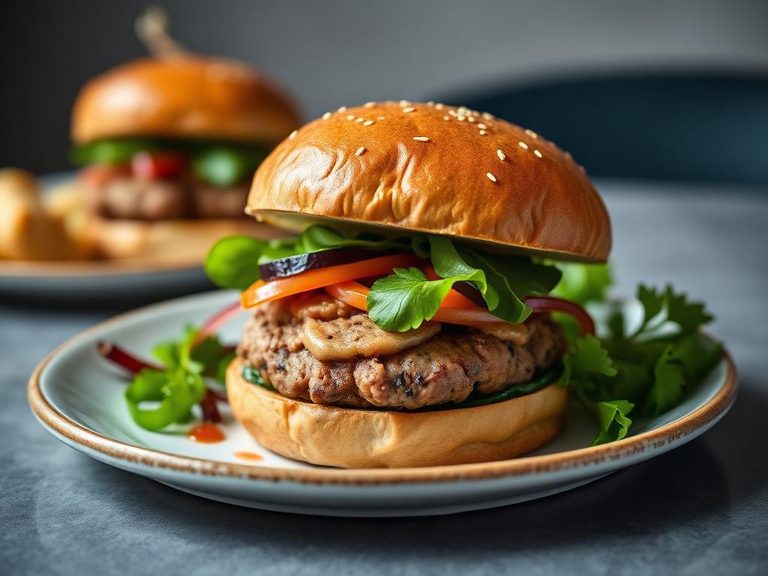
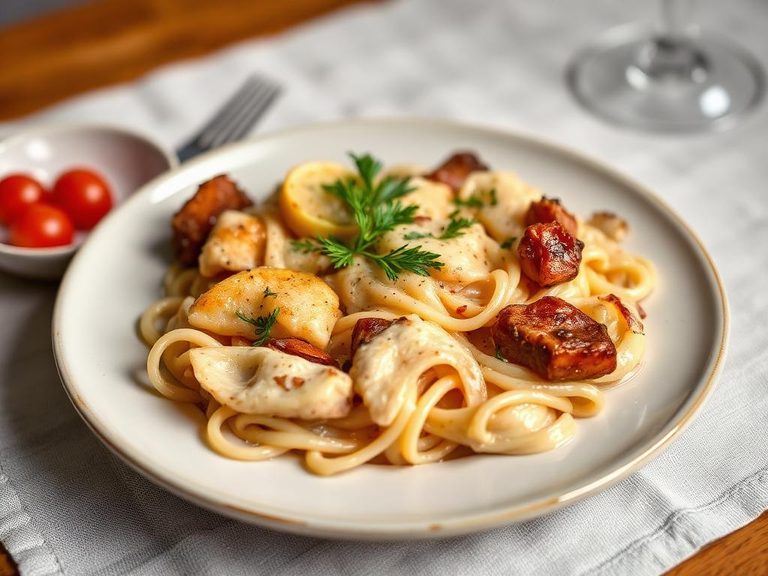

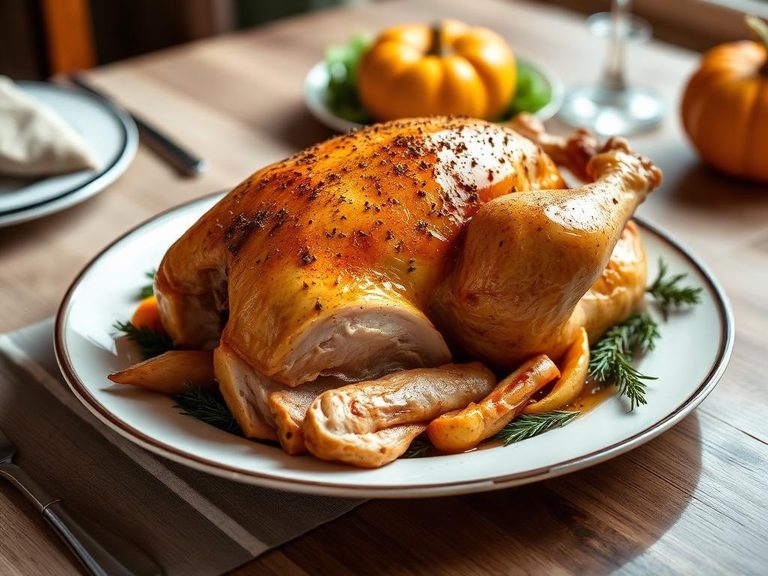
🌍 Where it's eaten
💡 Did you know?
The 'solution' added to many turkeys can account for up to 10-15% of the bird's weight, so a 12-pound turkey might actually contain less than 12 pounds of actual turkey meat.
Full nutrition (USDA data · scales with serving)
| Water | 71.3 g |
| Energy | 159 kcal |
| Energy | 664 kj |
| Protein | 19.0 g |
| Total lipid (fat) | 9.1 g |
| Ash | 1.2 g |
| Carbohydrate, by difference | 0.15 g |
| Fiber, total dietary | 0.00 g |
| Total Sugars | 0.08 g |
| Sucrose | 0.08 g |
| Glucose | 0.00 g |
| Fructose | 0.00 g |
| Lactose | 0.00 g |
| Maltose | 0.00 g |
| Galactose | 0.00 g |
| Starch | 0.07 g |
| Calcium, Ca | 14.0 mg |
| Iron, Fe | 0.67 mg |
| Magnesium, Mg | 21.0 mg |
| Phosphorus, P | 195 mg |
| Potassium, K | 211 mg |
| Sodium, Na | 180 mg |
| Zinc, Zn | 1.7 mg |
| Copper, Cu | 0.07 mg |
| Manganese, Mn | 0.01 mg |
| Selenium, Se | 20.2 ug |
| Vitamin C, total ascorbic acid | 0.00 mg |
| Thiamin | 0.04 mg |
| Riboflavin | 0.17 mg |
| Niacin | 7.2 mg |
| Pantothenic acid | 0.78 mg |
| Vitamin B-6 | 0.54 mg |
| Folate, total | 6.0 ug |
| Folate, food | 6.0 ug |
| Choline, total | 50.8 mg |
| Betaine | 4.0 mg |
| Vitamin B-12 | 1.2 ug |
| Vitamin B-12, added | 0.00 ug |
| Vitamin A, RAE | 23.0 ug |
| Retinol | 23.0 ug |
| Carotene, beta | 0.00 ug |
| Carotene, alpha | 0.00 ug |
| Cryptoxanthin, beta | 0.00 ug |
| Vitamin A, IU | 78.0 iu |
| Lycopene | 0.00 ug |
| Lutein + zeaxanthin | 0.00 ug |
| Vitamin E (alpha-tocopherol) | 0.09 mg |
| Vitamin E, added | 0.00 mg |
| Tocopherol, beta | 0.00 mg |
| Tocopherol, gamma | 0.02 mg |
| Tocopherol, delta | 0.00 mg |
| Tocotrienol, alpha | 0.00 mg |
| Tocotrienol, beta | 0.00 mg |
| Tocotrienol, gamma | 0.01 mg |
| Tocotrienol, delta | 0.00 mg |
| Vitamin D (D2 + D3), International Units | 15.0 iu |
| Vitamin D (D2 + D3) | 0.40 ug |
| Vitamin D3 (cholecalciferol) | 0.40 ug |
| Vitamin K (phylloquinone) | 0.00 ug |
| Alcohol, ethyl | 0.00 g |
| Caffeine | 0.00 mg |
| Theobromine | 0.00 mg |
Fat & fatty acid profile (per 100g)
| Fatty acids, total saturated | 1.7 g |
| SFA 4:0 | 0.00 g |
| SFA 6:0 | 0.00 g |
| SFA 8:0 | 0.00 g |
| SFA 10:0 | 0.00 g |
| SFA 12:0 | 0.02 g |
| SFA 14:0 | 0.06 g |
| SFA 15:0 | 0.01 g |
| SFA 16:0 | 1.2 g |
| SFA 17:0 | 0.02 g |
| SFA 18:0 | 0.42 g |
| SFA 20:0 | 0.01 g |
| SFA 22:0 | 0.00 g |
| SFA 24:0 | 0.00 g |
| Fatty acids, total monounsaturated | 3.9 g |
| MUFA 14:1 | 0.02 g |
| MUFA 15:1 | 0.00 g |
| MUFA 16:1 | 0.38 g |
| MUFA 16:1 c | 0.37 g |
| MUFA 17:1 | 0.02 g |
| MUFA 18:1 | 3.4 g |
| MUFA 18:1 c | 3.3 g |
| MUFA 20:1 | 0.05 g |
| MUFA 22:1 | 0.00 g |
| MUFA 22:1 c | 0.00 g |
| MUFA 24:1 c | 0.00 g |
| Fatty acids, total polyunsaturated | 3.5 g |
| PUFA 18:2 | 3.2 g |
| PUFA 18:2 n-6 c,c | 3.1 g |
| PUFA 18:2 CLAs | 0.02 g |
| PUFA 18:3 | 0.19 g |
| PUFA 18:3 n-3 c,c,c (ALA) | 0.19 g |
| PUFA 18:3 n-6 c,c,c | 0.01 g |
| PUFA 18:4 | 0.00 g |
| PUFA 20:2 n-6 c,c | 0.02 g |
| PUFA 20:3 | 0.02 g |
| PUFA 20:3 n-3 | 0.00 g |
| PUFA 20:3 n-6 | 0.02 g |
| PUFA 20:4 | 0.08 g |
| PUFA 20:5 n-3 (EPA) | 0.00 g |
| PUFA 22:4 | 0.02 g |
| PUFA 22:5 n-3 (DPA) | 0.01 g |
| PUFA 22:6 n-3 (DHA) | 0.01 g |
| Fatty acids, total trans | 0.16 g |
| Fatty acids, total trans-monoenoic | 0.12 g |
| TFA 16:1 t | 0.01 g |
| TFA 18:1 t | 0.12 g |
| TFA 22:1 t | 0.00 g |
| TFA 18:2 t not further defined | 0.04 g |
| Fatty acids, total trans-polyenoic | 0.04 g |
| Cholesterol | 70.0 mg |
Amino acid profile (per 100g)
| Tryptophan | 0.19 g |
| Threonine | 0.66 g |
| Isoleucine | 0.52 g |
| Leucine | 1.3 g |
| Lysine | 1.5 g |
| Methionine | 0.48 g |
| Cystine | 0.17 g |
| Phenylalanine | 0.60 g |
| Tyrosine | 0.54 g |
| Valine | 0.60 g |
| Arginine | 1.1 g |
| Histidine | 0.49 g |
| Alanine | 1.1 g |
| Aspartic acid | 1.5 g |
| Glutamic acid | 2.5 g |
| Glycine | 1.0 g |
| Proline | 1.1 g |
| Serine | 0.74 g |
| Hydroxyproline | 0.27 g |
FAQ
What does 'with added solution' mean?
It means the turkey has been injected or marinated with a mixture of water, salt, and sometimes other ingredients like phosphates or flavorings to increase juiciness and weight. Check the nutrition label for sodium content.
Is this different from a 'natural' turkey?
Yes. 'Natural' means minimally processed with no artificial ingredients, but it can still have an added solution. 'No added solution' or 'air-chilled' are better indicators of a turkey processed without extra liquid.
How should I store a whole raw turkey?
Keep it in its original packaging on the lowest shelf of the refrigerator for 1-2 days. For longer storage, freeze it immediately. Always thaw in the refrigerator, in cold water, or in the microwave, never on the counter.
Nutrient density (calculated · NRF9.3)
Nutrient Rich Foods index: beneficial nutrients (protein, fiber, vitamins, minerals) minus saturated fat, added sugar & sodium, per 100 kcal.
NRF9.3 index — Fulgoni, Keast & Drewnowski, 2009. Computed from USDA nutrients.
Weight-loss friendliness (composite index)
Energy density 1.59 kcal/g · 48% calories from protein · 0.0 g fiber · 0.1 g sugar per 100 g.
Composite of energy density (Rolls et al., 1999), protein & fiber satiety, minus sugar. A calculated heuristic — ranks satiety-per-calorie, not a clinical measure.
Dietary load (calculated from USDA values)
Potential renal acid load. Positive = acid-forming, negative = alkaline-forming.
Sodium-to-potassium ratio: 0.85 (lower is better — aim for ≤ 1)
Sodium:potassium per WHO potassium guidance. Computed from USDA nutrients.