

Rolls, hamburger or hot dog, whole wheat
Whole food · Baked Products
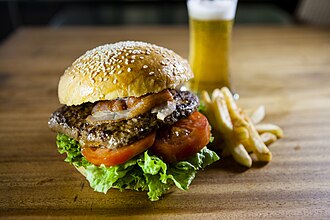
Photo: Wikipedia
A whole wheat hamburger or hot dog bun is a soft, slightly dense roll with a mild, nutty sweetness and a tender, chewy crumb. It's a fiber-rich alternative to white buns, offering a more substantial texture that holds up well to juicy fillings.
Calorie split: 18% protein · 67% carbs · 15% fat
↓ Full nutrition💚 Why it's loved
People love it for its comforting, familiar taste and the satisfying, hearty texture that elevates a simple burger or hot dog. It's a versatile staple that bridges casual weeknight meals and classic backyard cookouts.
⚠️ Watch-outs & how to enjoy it better
Its denser texture and nutty flavor aren't for everyone, and it can be higher in calories and carbs than lettuce wraps. Those monitoring blood sugar should pair it with protein and healthy fats (like a turkey burger with avocado) to blunt the glycemic response.
Key benefits
- Good source of dietary fiber (6.1g per 100g).
- Provides plant-based protein (12.38g per 100g).
- Whole grains may support digestive health.
- Lower glycemic index than refined white buns.
- Contains more micronutrients like B vitamins and iron.
🍽️ Popular dishes


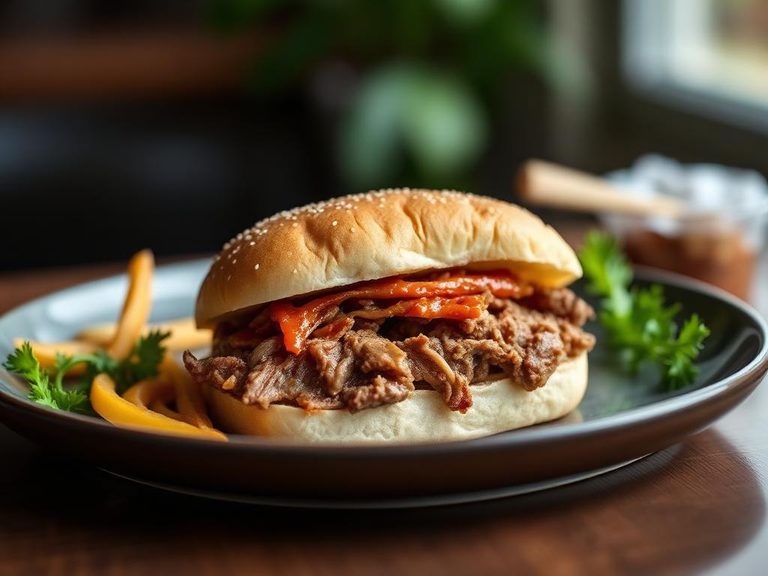

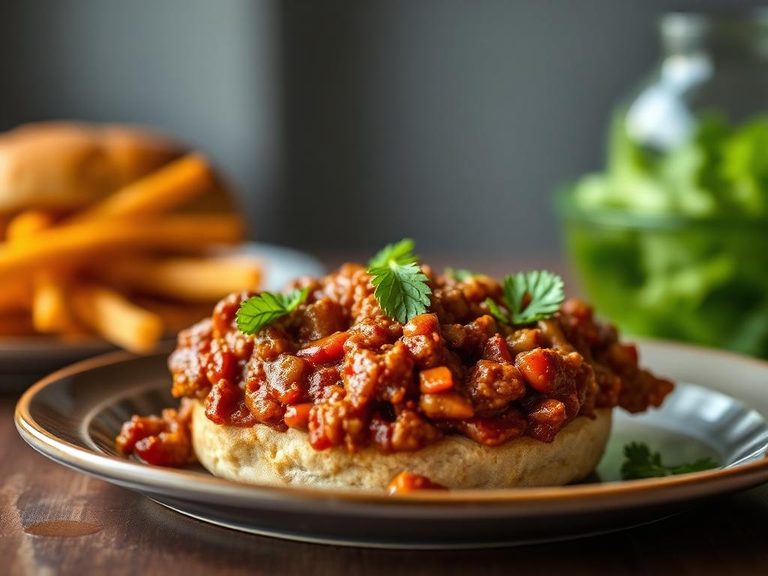
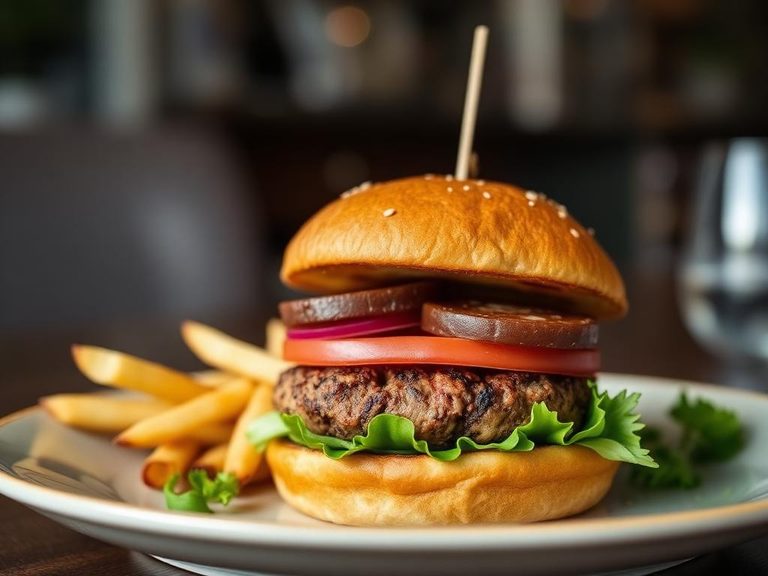
🌍 Where it's eaten
💡 Did you know?
The standard hamburger bun's soft, squishy texture is a relatively modern invention, popularized in the early 20th century to make the sandwich easier to eat without utensils.
Full nutrition (USDA data · scales with serving)
| Water | 35.9 g |
| Energy | 269 kcal |
| Energy | 1124 kj |
| Protein | 12.4 g |
| Total lipid (fat) | 4.4 g |
| Ash | 2.4 g |
| Carbohydrate, by difference | 44.9 g |
| Fiber, total dietary | 6.1 g |
| Total Sugars | 5.9 g |
| Sucrose | 0.00 g |
| Glucose | 2.0 g |
| Fructose | 2.4 g |
| Lactose | 0.00 g |
| Maltose | 1.4 g |
| Galactose | 0.00 g |
| Starch | 28.5 g |
| Calcium, Ca | 198 mg |
| Iron, Fe | 2.4 mg |
| Magnesium, Mg | 81.0 mg |
| Phosphorus, P | 217 mg |
| Potassium, K | 242 mg |
| Sodium, Na | 477 mg |
| Zinc, Zn | 1.7 mg |
| Copper, Cu | 0.24 mg |
| Manganese, Mn | 2.3 mg |
| Selenium, Se | 32.9 ug |
| Vitamin C, total ascorbic acid | 1.3 mg |
| Thiamin | 0.44 mg |
| Riboflavin | 0.19 mg |
| Niacin | 4.5 mg |
| Pantothenic acid | 0.84 mg |
| Vitamin B-6 | 0.19 mg |
| Folate, total | 42.0 ug |
| Folic acid | 0.00 ug |
| Folate, food | 42.0 ug |
| Folate, DFE | 42.0 ug |
| Choline, total | 14.1 mg |
| Vitamin B-12 | 0.19 ug |
| Vitamin B-12, added | 0.00 ug |
| Vitamin A, RAE | 33.0 ug |
| Retinol | 32.0 ug |
| Carotene, beta | 8.0 ug |
| Carotene, alpha | 0.00 ug |
| Cryptoxanthin, beta | 0.00 ug |
| Vitamin A, IU | 120 iu |
| Lycopene | 0.00 ug |
| Lutein + zeaxanthin | 7.0 ug |
| Vitamin E (alpha-tocopherol) | 0.41 mg |
| Vitamin E, added | 0.00 mg |
| Tocopherol, beta | 0.15 mg |
| Tocopherol, gamma | 1.2 mg |
| Tocopherol, delta | 0.37 mg |
| Tocotrienol, alpha | 0.00 mg |
| Tocotrienol, beta | 0.87 mg |
| Tocotrienol, gamma | 0.00 mg |
| Tocotrienol, delta | 0.00 mg |
| Vitamin D (D2 + D3), International Units | 0.00 iu |
| Vitamin D (D2 + D3) | 0.00 ug |
| Vitamin K (phylloquinone) | 4.5 ug |
| Vitamin K (Dihydrophylloquinone) | 0.00 ug |
| Vitamin K (Menaquinone-4) | 0.00 ug |
| Alcohol, ethyl | 0.00 g |
| Caffeine | 0.00 mg |
| Theobromine | 0.00 mg |
Fat & fatty acid profile (per 100g)
| Fatty acids, total saturated | 0.92 g |
| SFA 4:0 | 0.00 g |
| SFA 6:0 | 0.00 g |
| SFA 8:0 | 0.00 g |
| SFA 10:0 | 0.00 g |
| SFA 12:0 | 0.01 g |
| SFA 14:0 | 0.02 g |
| SFA 15:0 | 0.01 g |
| SFA 16:0 | 0.54 g |
| SFA 17:0 | 0.01 g |
| SFA 18:0 | 0.31 g |
| SFA 20:0 | 0.01 g |
| SFA 22:0 | 0.01 g |
| SFA 24:0 | 0.01 g |
| Fatty acids, total monounsaturated | 0.72 g |
| MUFA 14:1 | 0.00 g |
| MUFA 15:1 | 0.00 g |
| MUFA 16:1 | 0.02 g |
| MUFA 16:1 c | 0.02 g |
| MUFA 17:1 | 0.00 g |
| MUFA 18:1 | 0.68 g |
| MUFA 18:1 c | 0.66 g |
| MUFA 20:1 | 0.02 g |
| MUFA 22:1 | 0.00 g |
| MUFA 22:1 c | 0.00 g |
| MUFA 24:1 c | 0.00 g |
| Fatty acids, total polyunsaturated | 1.8 g |
| PUFA 18:2 | 1.6 g |
| PUFA 18:2 n-6 c,c | 1.6 g |
| PUFA 18:2 CLAs | 0.00 g |
| PUFA 18:3 | 0.17 g |
| PUFA 18:3 n-3 c,c,c (ALA) | 0.17 g |
| PUFA 18:3 n-6 c,c,c | 0.01 g |
| PUFA 18:3i | 0.00 g |
| PUFA 18:4 | 0.00 g |
| PUFA 20:2 n-6 c,c | 0.00 g |
| PUFA 20:3 | 0.00 g |
| PUFA 20:3 n-3 | 0.00 g |
| PUFA 20:3 n-6 | 0.00 g |
| PUFA 20:4 | 0.00 g |
| PUFA 20:5 n-3 (EPA) | 0.00 g |
| PUFA 22:4 | 0.00 g |
| PUFA 22:5 n-3 (DPA) | 0.00 g |
| PUFA 22:6 n-3 (DHA) | 0.00 g |
| Fatty acids, total trans | 0.02 g |
| Fatty acids, total trans-monoenoic | 0.02 g |
| TFA 16:1 t | 0.00 g |
| TFA 18:1 t | 0.02 g |
| TFA 22:1 t | 0.00 g |
| TFA 18:2 t not further defined | 0.01 g |
| Fatty acids, total trans-polyenoic | 0.01 g |
| Cholesterol | 0.00 mg |
Amino acid profile (per 100g)
Estimated from Rolls, dinner, wheat — USDA does not publish this profile for Rolls.
| Tryptophan | 0.12 g |
| Threonine | 0.24 g |
| Isoleucine | 0.32 g |
| Leucine | 0.59 g |
| Lysine | 0.20 g |
| Methionine | 0.14 g |
| Cystine | 0.20 g |
| Phenylalanine | 0.42 g |
| Tyrosine | 0.25 g |
| Valine | 0.38 g |
| Arginine | 0.35 g |
| Histidine | 0.19 g |
| Alanine | 0.29 g |
| Aspartic acid | 0.40 g |
| Glutamic acid | 2.9 g |
| Glycine | 0.32 g |
| Proline | 0.96 g |
| Serine | 0.42 g |
FAQ
Is a whole wheat bun healthier than a white bun?
Generally, yes. Whole wheat buns retain the bran and germ, providing more fiber, protein, and nutrients like magnesium and B vitamins compared to refined white buns.
Why does my whole wheat bun sometimes taste bitter?
The natural compounds in wheat bran can impart a slightly bitter or nutty taste. This is a characteristic of whole grains, not spoilage. The flavor often mellows when paired with savory, fatty, or sweet fillings.
How can I keep whole wheat buns from getting soggy?
Toast the cut sides lightly, or place a moisture barrier like a leaf of lettuce or a slice of cheese between the bun and wet ingredients like tomatoes or sauces.
Nutrient density (calculated · NRF9.3)
Nutrient Rich Foods index: beneficial nutrients (protein, fiber, vitamins, minerals) minus saturated fat, added sugar & sodium, per 100 kcal.
NRF9.3 index — Fulgoni, Keast & Drewnowski, 2009. Computed from USDA nutrients.
Weight-loss friendliness (composite index)
Energy density 2.69 kcal/g · 18% calories from protein · 6.1 g fiber · 5.9 g sugar per 100 g.
Composite of energy density (Rolls et al., 1999), protein & fiber satiety, minus sugar. A calculated heuristic — ranks satiety-per-calorie, not a clinical measure.
Dietary load (calculated from USDA values)
Potential renal acid load. Positive = acid-forming, negative = alkaline-forming.
Sodium-to-potassium ratio: 1.97 (lower is better — aim for ≤ 1)
Sodium:potassium per WHO potassium guidance. Computed from USDA nutrients.