

Veggie burger

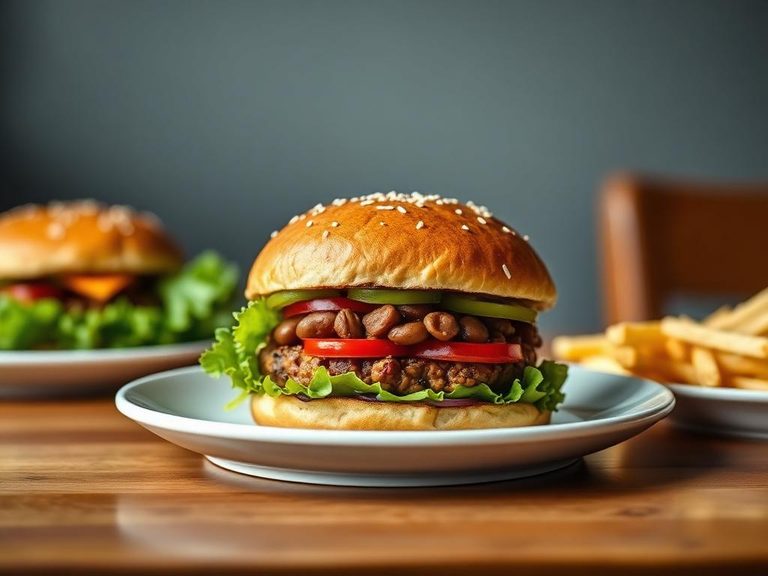
A veggie burger is a plant-based patty designed to mimic the experience of a traditional meat burger, typically made from ingredients like beans, lentils, soy, or grains, often bound with breadcrumbs and seasoned with herbs and spices. It originated in the United States as a vegetarian alternative and has since evolved into a global staple with countless regional variations.
🍳 View the full Veggie burger recipe →
🍽️ Nutrition at a glance
Veggie burgers are generally moderate in calories (around 150-250 per patty) and can be a good source of fiber and plant-based protein, though their carb and fat content varies widely depending on the base ingredients and added oils. They often provide key nutrients like iron, B vitamins, and antioxidants from vegetables and legumes.
Nutrition breakdown
| Calories | 190 kcal |
| Protein | 15 g |
| Carbs | 18 g |
| Fat | 7 g |
| Fiber | 4 g |
| Sugar | 3 g |
| Sodium | 380 mg |
| Iron | 3.5 mg |
| Potassium | 300 mg |
| Calcium | 60 mg |
| Vitamin A | 150 mcg RAE |
| Vitamin C | 6 mg |
| Vitamin B12 | 2.4 mcg |
| Folate | 120 mcg DFE |
| Phosphorus | 150 mg |
Per 1 burger patty (113 g) · estimated, varies by recipe
💡 What's interesting
Culturally, the veggie burger reflects a growing global shift towards sustainable and ethical eating, often serving as a gateway for people exploring plant-based diets. Nutritionally, it's unique because it can be tailored to meet diverse dietary needs, from high-protein for athletes to low-carb for specific health goals, making it a versatile canvas for culinary innovation.
🍽️ Related dishes







AI estimate may be inaccurate · Terms