

Rice, brown, long-grain, cooked (Includes foods for USDA's Food Distribution Program)
Whole food · Cereal Grains and Pasta
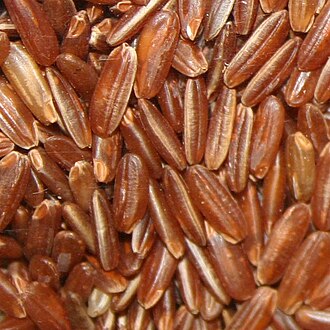
Photo: Wikipedia
Long-grain brown rice is a whole grain with a chewy, nutty texture and a subtle, earthy flavor that's more robust than white rice. Each 100g serving delivers a solid 2.7g of protein and 1.6g of fiber, making it a more satisfying and nutrient-dense staple. Its light, separate grains make it a versatile base for a wide variety of dishes.
Calorie split: 9% protein · 84% carbs · 7% fat
↓ Full nutrition💚 Why it's loved
People love its pleasant, chewy texture and nutty taste that adds depth to meals. It's a culinary workhorse, acting as a neutral canvas for bold sauces, spices, and stir-fries while holding its shape beautifully.
⚠️ Watch-outs & how to enjoy it better
The bran layer contains phytic acid, which can slightly reduce mineral absorption. To mitigate this, you can soak the rice before cooking or pair it with vitamin C-rich foods like bell peppers or tomatoes. Its chewy texture also requires a longer cooking time than white rice, which can be a downside for quick meals.
Key benefits
- Provides sustained energy due to complex carbs and fiber.
- Good source of plant-based protein for muscle maintenance.
- Contains essential minerals like magnesium and phosphorus.
- High in fiber to support digestive health.
- A whole grain that retains its bran and germ layers.
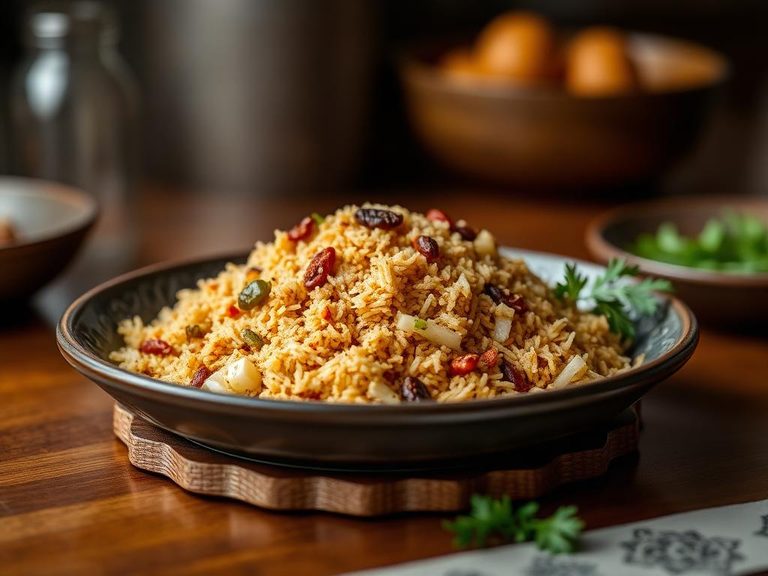
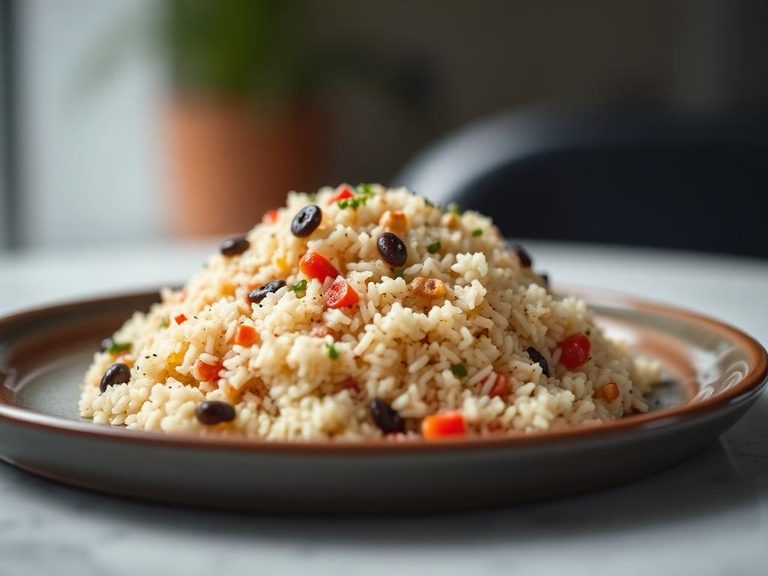
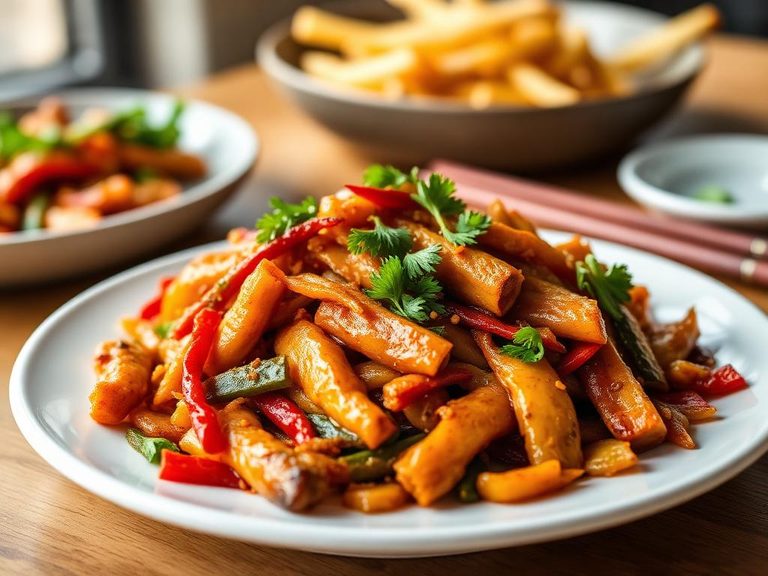
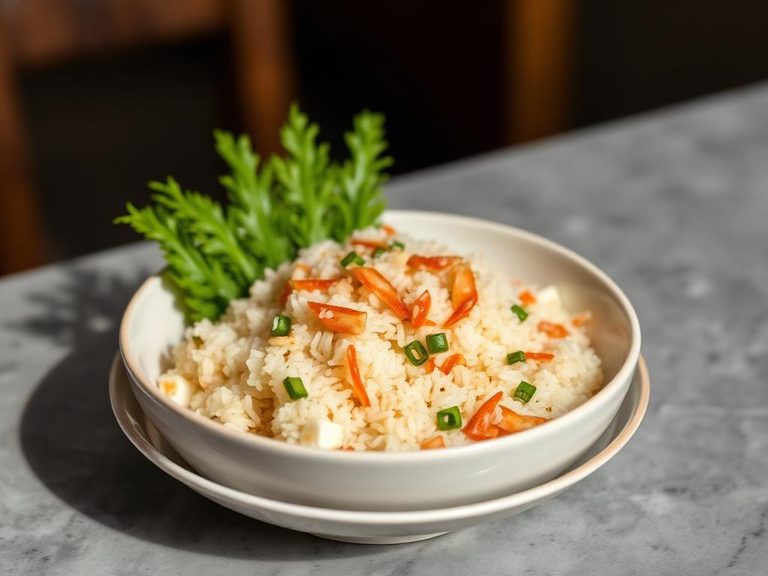
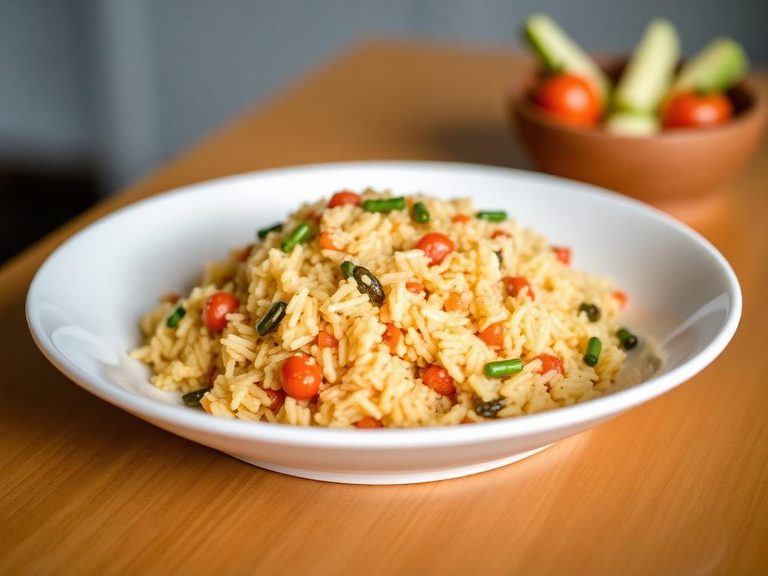
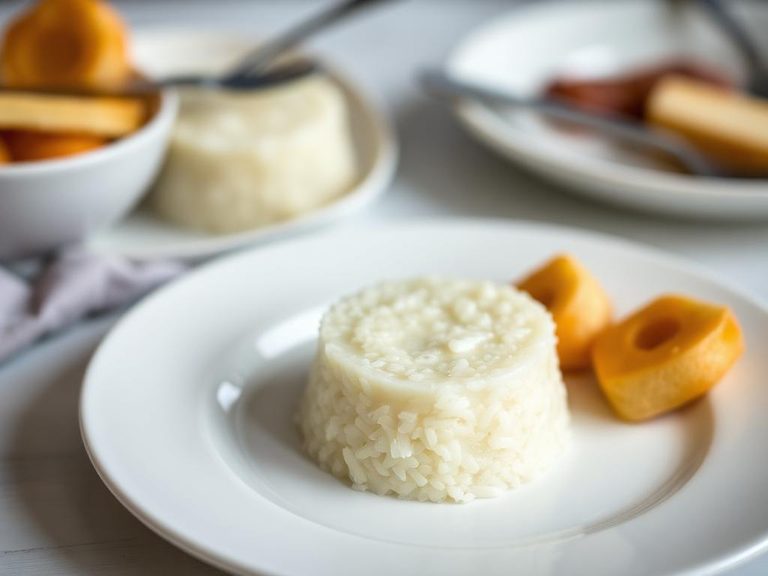
🍽️ Popular dishes
🌍 Where it's eaten
💡 Did you know?
Brown rice has a short shelf life compared to white rice because its natural oils in the bran can go rancid; it's best stored in the refrigerator or freezer for long-term freshness.
Full nutrition (USDA data · scales with serving)
| Water | 70.3 g |
| Energy | 123 kcal |
| Energy | 514 kj |
| Protein | 2.7 g |
| Total lipid (fat) | 0.97 g |
| Ash | 0.44 g |
| Carbohydrate, by difference | 25.6 g |
| Fiber, total dietary | 1.6 g |
| Total Sugars | 0.24 g |
| Sucrose | 0.24 g |
| Glucose | 0.00 g |
| Fructose | 0.00 g |
| Lactose | 0.00 g |
| Maltose | 0.00 g |
| Galactose | 0.00 g |
| Starch | 24.8 g |
| Calcium, Ca | 3.0 mg |
| Iron, Fe | 0.56 mg |
| Magnesium, Mg | 39.0 mg |
| Phosphorus, P | 103 mg |
| Potassium, K | 86.0 mg |
| Sodium, Na | 4.0 mg |
| Zinc, Zn | 0.71 mg |
| Copper, Cu | 0.11 mg |
| Manganese, Mn | 0.97 mg |
| Selenium, Se | 5.8 ug |
| Vitamin C, total ascorbic acid | 0.00 mg |
| Thiamin | 0.18 mg |
| Riboflavin | 0.07 mg |
| Niacin | 2.6 mg |
| Pantothenic acid | 0.38 mg |
| Vitamin B-6 | 0.12 mg |
| Folate, total | 9.0 ug |
| Folic acid | 0.00 ug |
| Folate, food | 9.0 ug |
| Folate, DFE | 9.0 ug |
| Choline, total | 9.2 mg |
| Betaine | 0.50 mg |
| Vitamin B-12 | 0.00 ug |
| Vitamin B-12, added | 0.00 ug |
| Vitamin A, RAE | 0.00 ug |
| Retinol | 0.00 ug |
| Carotene, beta | 0.00 ug |
| Carotene, alpha | 0.00 ug |
| Cryptoxanthin, beta | 0.00 ug |
| Vitamin A, IU | 0.00 iu |
| Lycopene | 0.00 ug |
| Lutein + zeaxanthin | 0.00 ug |
| Vitamin E (alpha-tocopherol) | 0.17 mg |
| Vitamin E, added | 0.00 mg |
| Tocopherol, beta | 0.00 mg |
| Tocopherol, gamma | 0.05 mg |
| Tocopherol, delta | 0.00 mg |
| Tocotrienol, alpha | 0.13 mg |
| Tocotrienol, beta | 0.06 mg |
| Tocotrienol, gamma | 0.46 mg |
| Tocotrienol, delta | 0.00 mg |
| Vitamin D (D2 + D3), International Units | 0.00 iu |
| Vitamin D (D2 + D3) | 0.00 ug |
| Vitamin K (phylloquinone) | 0.20 ug |
| Vitamin K (Dihydrophylloquinone) | 0.00 ug |
| Vitamin K (Menaquinone-4) | 0.00 ug |
| Alcohol, ethyl | 0.00 g |
| Caffeine | 0.00 mg |
| Theobromine | 0.00 mg |
Fat & fatty acid profile (per 100g)
| Fatty acids, total saturated | 0.26 g |
| SFA 4:0 | 0.00 g |
| SFA 6:0 | 0.00 g |
| SFA 8:0 | 0.00 g |
| SFA 10:0 | 0.01 g |
| SFA 12:0 | 0.00 g |
| SFA 14:0 | 0.01 g |
| SFA 15:0 | 0.00 g |
| SFA 16:0 | 0.20 g |
| SFA 17:0 | 0.00 g |
| SFA 18:0 | 0.02 g |
| SFA 20:0 | 0.00 g |
| SFA 22:0 | 0.00 g |
| SFA 24:0 | 0.01 g |
| Fatty acids, total monounsaturated | 0.37 g |
| MUFA 14:1 | 0.00 g |
| MUFA 15:1 | 0.00 g |
| MUFA 16:1 | 0.00 g |
| MUFA 16:1 c | 0.00 g |
| MUFA 17:1 | 0.00 g |
| MUFA 18:1 | 0.36 g |
| MUFA 18:1 c | 0.36 g |
| MUFA 20:1 | 0.00 g |
| MUFA 22:1 | 0.00 g |
| MUFA 22:1 c | 0.00 g |
| MUFA 24:1 c | 0.00 g |
| Fatty acids, total polyunsaturated | 0.37 g |
| PUFA 18:2 | 0.35 g |
| PUFA 18:2 n-6 c,c | 0.35 g |
| PUFA 18:2 CLAs | 0.00 g |
| PUFA 18:3 | 0.01 g |
| PUFA 18:3 n-3 c,c,c (ALA) | 0.01 g |
| PUFA 18:3 n-6 c,c,c | 0.00 g |
| PUFA 18:3i | 0.00 g |
| PUFA 18:4 | 0.00 g |
| PUFA 20:2 n-6 c,c | 0.00 g |
| PUFA 20:3 | 0.00 g |
| PUFA 20:3 n-3 | 0.00 g |
| PUFA 20:3 n-6 | 0.00 g |
| PUFA 20:4 | 0.00 g |
| PUFA 20:5 n-3 (EPA) | 0.00 g |
| PUFA 22:4 | 0.00 g |
| PUFA 22:5 n-3 (DPA) | 0.00 g |
| PUFA 22:6 n-3 (DHA) | 0.00 g |
| Fatty acids, total trans | 0.00 g |
| Fatty acids, total trans-monoenoic | 0.00 g |
| TFA 16:1 t | 0.00 g |
| TFA 18:1 t | 0.00 g |
| TFA 22:1 t | 0.00 g |
| TFA 18:2 t not further defined | 0.00 g |
| Fatty acids, total trans-polyenoic | 0.00 g |
| Cholesterol | 0.00 mg |
Amino acid profile (per 100g)
| Tryptophan | 0.03 g |
| Threonine | 0.10 g |
| Isoleucine | 0.11 g |
| Leucine | 0.21 g |
| Lysine | 0.10 g |
| Methionine | 0.06 g |
| Cystine | 0.03 g |
| Phenylalanine | 0.13 g |
| Tyrosine | 0.10 g |
| Valine | 0.15 g |
| Arginine | 0.20 g |
| Histidine | 0.07 g |
| Alanine | 0.15 g |
| Aspartic acid | 0.24 g |
| Glutamic acid | 0.53 g |
| Glycine | 0.13 g |
| Proline | 0.12 g |
| Serine | 0.13 g |
FAQ
How does brown rice differ nutritionally from white rice?
Brown rice is a whole grain, retaining its bran and germ, which gives it more fiber, protein, and nutrients like magnesium and B vitamins compared to refined white rice.
Why does brown rice take longer to cook?
The intact bran layer acts as a barrier, requiring more water and time to soften. Soaking it for 30 minutes can help reduce cooking time.
Is brown rice gluten-free?
Yes, brown rice is naturally gluten-free, making it a safe and nutritious grain option for people with celiac disease or gluten sensitivity.
Nutrient density (calculated · NRF9.3)
Nutrient Rich Foods index: beneficial nutrients (protein, fiber, vitamins, minerals) minus saturated fat, added sugar & sodium, per 100 kcal.
NRF9.3 index — Fulgoni, Keast & Drewnowski, 2009. Computed from USDA nutrients.
Weight-loss friendliness (composite index)
Energy density 1.23 kcal/g · 9% calories from protein · 1.6 g fiber · 0.2 g sugar per 100 g.
Composite of energy density (Rolls et al., 1999), protein & fiber satiety, minus sugar. A calculated heuristic — ranks satiety-per-calorie, not a clinical measure.
Dietary load (calculated from USDA values)
Potential renal acid load. Positive = acid-forming, negative = alkaline-forming.
Sodium-to-potassium ratio: 0.05 (lower is better — aim for ≤ 1)
Sodium:potassium per WHO potassium guidance. Computed from USDA nutrients.