

Potatoes, mashed, ready-to-eat
Whole food · Vegetables and Vegetable Products
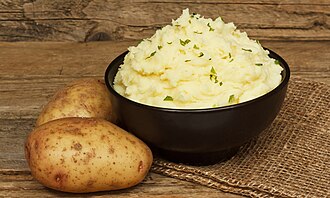
Photo: Wikipedia
A smooth, creamy puree of cooked potatoes, often enriched with butter and milk, offering a comforting, velvety texture and a mild, starchy flavor. Nutritionally, it provides a good source of energy from carbohydrates, with a modest amount of fat and minimal protein.
Calorie split: 7% protein · 50% carbs · 42% fat
↓ Full nutrition💚 Why it's loved
People love mashed potatoes for their comforting, creamy texture and mild flavor that acts as a perfect canvas for rich gravies, butter, or herbs. They are a cultural staple in many Western cuisines, symbolizing home cooking and holiday feasts.
⚠️ Watch-outs & how to enjoy it better
Commercial ready-to-eat versions can be high in sodium and may contain added fats, which could be a concern for those monitoring blood pressure or calorie intake. To counteract, look for low-sodium varieties, or mix with plain mashed potatoes; also, pair with a lean protein and non-starchy vegetables to balance the meal and moderate blood sugar response.
Key benefits
- Good source of energy from complex carbohydrates
- Contains dietary fiber, especially with skin included
- Versatile base for adding vitamins and minerals
- Comfort food that can support mood and satisfaction
- Easy to digest for most people
🍽️ Popular dishes
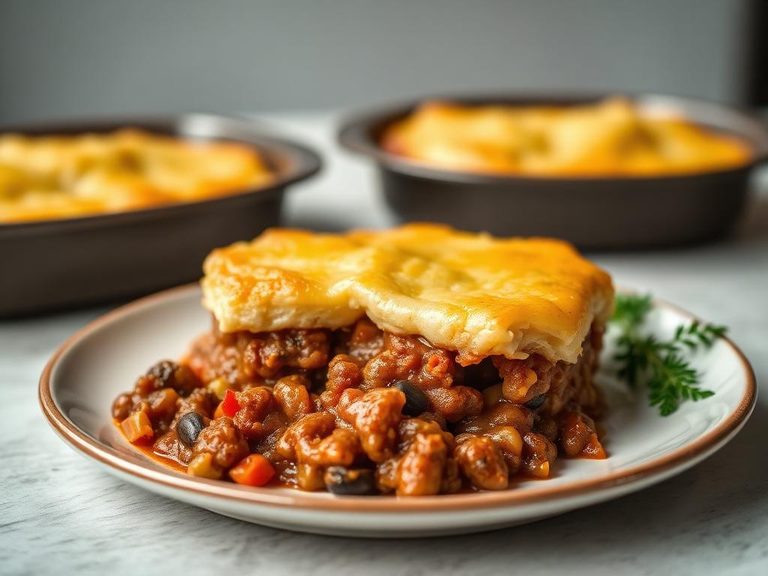
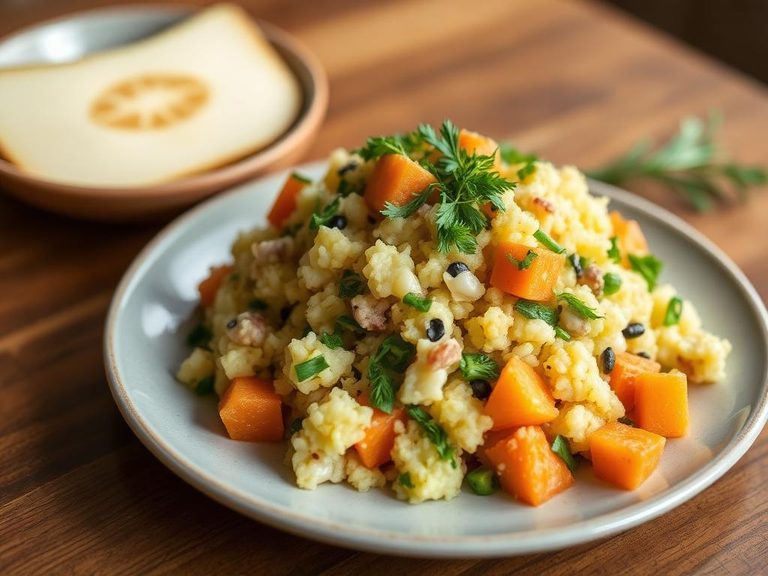
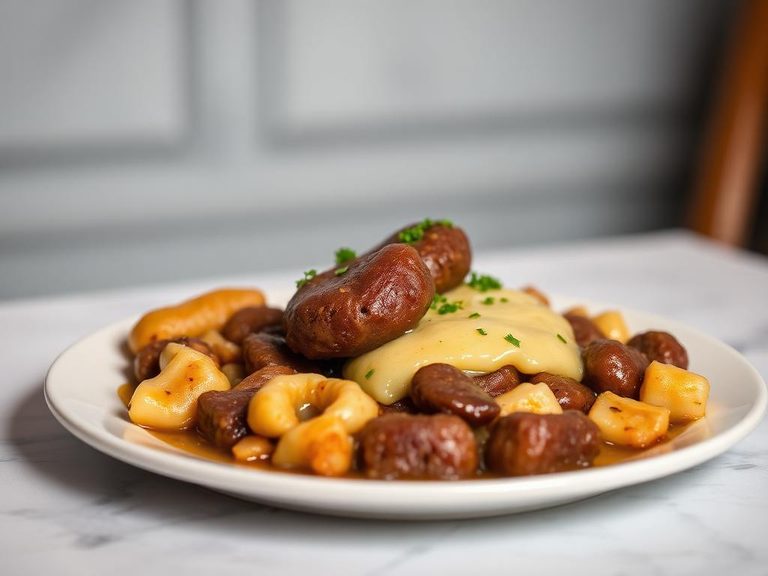
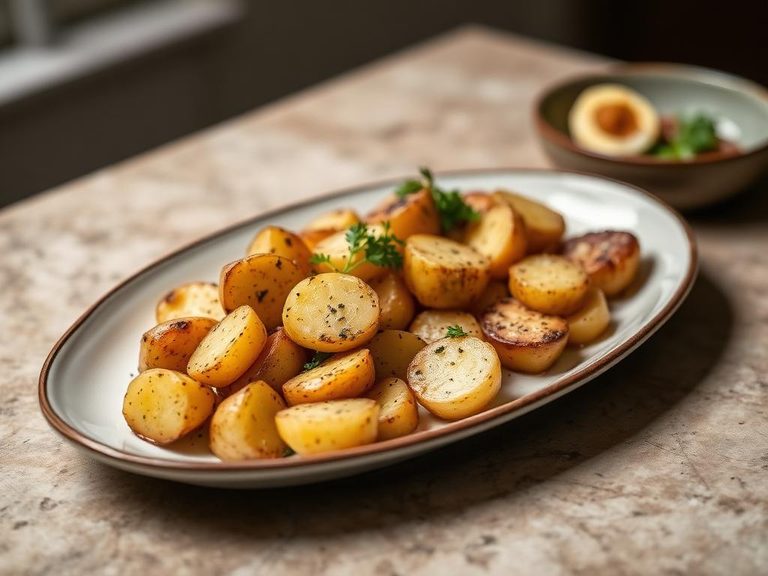
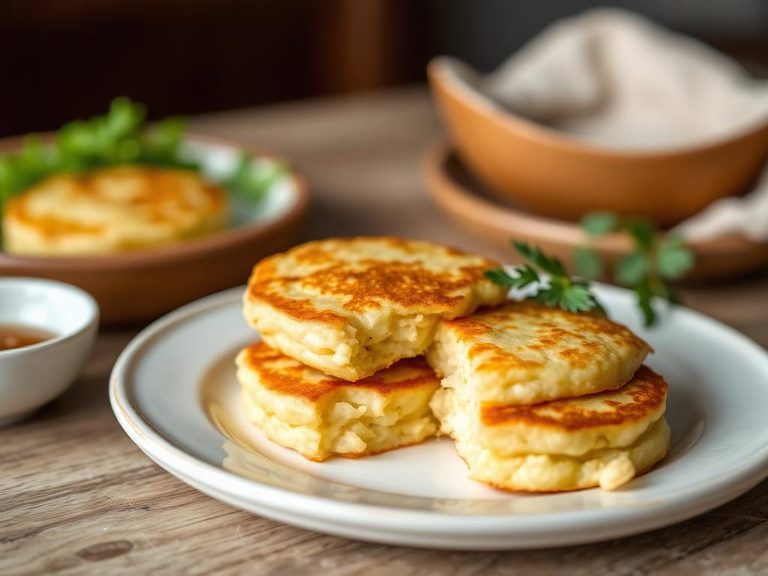
🌍 Where it's eaten
💡 Did you know?
The world record for the largest serving of mashed potatoes was set in 2010 in Wisconsin, USA, weighing over 1,800 pounds (about 816 kg).
Full nutrition (USDA data · scales with serving)
| Water | 78.3 g |
| Energy | 106 kcal |
| Energy | 444 kj |
| Protein | 2.0 g |
| Total lipid (fat) | 5.0 g |
| Ash | 1.5 g |
| Carbohydrate, by difference | 13.3 g |
| Fiber, total dietary | 1.9 g |
| Total Sugars | 1.8 g |
| Sucrose | 0.00 g |
| Glucose | 0.27 g |
| Fructose | 0.31 g |
| Lactose | 1.2 g |
| Maltose | 0.00 g |
| Galactose | 0.00 g |
| Starch | 7.8 g |
| Calcium, Ca | 34.0 mg |
| Iron, Fe | 0.27 mg |
| Magnesium, Mg | 14.0 mg |
| Phosphorus, P | 61.0 mg |
| Potassium, K | 274 mg |
| Sodium, Na | 298 mg |
| Zinc, Zn | 0.30 mg |
| Copper, Cu | 0.01 mg |
| Manganese, Mn | 0.09 mg |
| Selenium, Se | 26.9 ug |
| Vitamin C, total ascorbic acid | 0.10 mg |
| Thiamin | 0.09 mg |
| Riboflavin | 0.09 mg |
| Niacin | 1.0 mg |
| Pantothenic acid | 0.41 mg |
| Vitamin B-6 | 0.11 mg |
| Folate, total | 6.0 ug |
| Folic acid | 0.00 ug |
| Folate, food | 6.0 ug |
| Folate, DFE | 6.0 ug |
| Choline, total | 15.7 mg |
| Betaine | 0.30 mg |
| Vitamin B-12 | 0.22 ug |
| Vitamin B-12, added | 0.00 ug |
| Vitamin A, RAE | 53.0 ug |
| Retinol | 52.0 ug |
| Carotene, beta | 19.0 ug |
| Carotene, alpha | 0.00 ug |
| Cryptoxanthin, beta | 0.00 ug |
| Vitamin A, IU | 205 iu |
| Lycopene | 0.00 ug |
| Lutein + zeaxanthin | 0.00 ug |
| Vitamin E (alpha-tocopherol) | 0.29 mg |
| Vitamin E, added | 0.00 mg |
| Tocopherol, beta | 0.01 mg |
| Tocopherol, gamma | 0.92 mg |
| Tocopherol, delta | 0.32 mg |
| Tocotrienol, alpha | 0.00 mg |
| Tocotrienol, beta | 0.00 mg |
| Tocotrienol, gamma | 0.00 mg |
| Tocotrienol, delta | 0.00 mg |
| Vitamin D (D2 + D3), International Units | 2.0 iu |
| Vitamin D (D2 + D3) | 0.10 ug |
| Vitamin D3 (cholecalciferol) | 0.10 ug |
| Vitamin K (phylloquinone) | 2.4 ug |
| Vitamin K (Dihydrophylloquinone) | 0.00 ug |
| Vitamin K (Menaquinone-4) | 0.50 ug |
| Alcohol, ethyl | 0.00 g |
| Caffeine | 0.00 mg |
| Theobromine | 0.00 mg |
Fat & fatty acid profile (per 100g)
| Fatty acids, total saturated | 2.6 g |
| SFA 4:0 | 0.09 g |
| SFA 6:0 | 0.07 g |
| SFA 8:0 | 0.04 g |
| SFA 10:0 | 0.11 g |
| SFA 12:0 | 0.12 g |
| SFA 14:0 | 0.40 g |
| SFA 15:0 | 0.04 g |
| SFA 16:0 | 1.3 g |
| SFA 17:0 | 0.03 g |
| SFA 18:0 | 0.46 g |
| SFA 20:0 | 0.01 g |
| SFA 22:0 | 0.01 g |
| SFA 24:0 | 0.00 g |
| Fatty acids, total monounsaturated | 1.2 g |
| MUFA 14:1 | 0.04 g |
| MUFA 15:1 | 0.00 g |
| MUFA 16:1 | 0.08 g |
| MUFA 16:1 c | 0.07 g |
| MUFA 17:1 | 0.01 g |
| MUFA 18:1 | 1.1 g |
| MUFA 18:1 c | 1.0 g |
| MUFA 20:1 | 0.01 g |
| MUFA 22:1 | 0.00 g |
| MUFA 22:1 c | 0.00 g |
| MUFA 24:1 c | 0.00 g |
| Fatty acids, total polyunsaturated | 0.68 g |
| PUFA 18:2 | 0.57 g |
| PUFA 18:2 n-6 c,c | 0.53 g |
| PUFA 18:2 CLAs | 0.02 g |
| PUFA 18:3 | 0.09 g |
| PUFA 18:3 n-3 c,c,c (ALA) | 0.09 g |
| PUFA 18:3 n-6 c,c,c | 0.00 g |
| PUFA 18:3i | 0.00 g |
| PUFA 18:4 | 0.00 g |
| PUFA 20:2 n-6 c,c | 0.00 g |
| PUFA 20:3 | 0.01 g |
| PUFA 20:3 n-3 | 0.00 g |
| PUFA 20:3 n-6 | 0.01 g |
| PUFA 20:4 | 0.01 g |
| PUFA 20:5 n-3 (EPA) | 0.00 g |
| PUFA 22:4 | 0.00 g |
| PUFA 22:5 n-3 (DPA) | 0.00 g |
| PUFA 22:6 n-3 (DHA) | 0.00 g |
| Fatty acids, total trans | 0.13 g |
| Fatty acids, total trans-monoenoic | 0.10 g |
| TFA 16:1 t | 0.01 g |
| TFA 18:1 t | 0.09 g |
| TFA 22:1 t | 0.00 g |
| TFA 18:2 t not further defined | 0.03 g |
| Fatty acids, total trans-polyenoic | 0.03 g |
| Cholesterol | 13.0 mg |
Amino acid profile (per 100g)
| Tryptophan | 0.03 g |
| Threonine | 0.10 g |
| Isoleucine | 0.12 g |
| Leucine | 0.20 g |
| Lysine | 0.18 g |
| Methionine | 0.05 g |
| Cystine | 0.02 g |
| Phenylalanine | 0.12 g |
| Tyrosine | 0.11 g |
| Valine | 0.15 g |
| Arginine | 0.09 g |
| Histidine | 0.07 g |
| Alanine | 0.08 g |
| Aspartic acid | 0.36 g |
| Glutamic acid | 0.50 g |
| Glycine | 0.06 g |
| Proline | 0.18 g |
| Serine | 0.13 g |
FAQ
Is mashed potato healthy?
It can be part of a healthy diet, providing energy and some nutrients. Healthiness depends on preparation—homemade versions with minimal added salt and fat are generally better than highly processed, high-sodium ready-to-eat products.
How should I store leftover mashed potatoes?
Refrigerate in an airtight container for up to 3-4 days. For longer storage, freeze for up to 10-12 months, though texture may become slightly grainy upon thawing.
Can I make mashed potatoes without dairy?
Yes, you can use olive oil, vegetable broth, or plant-based milks and butter substitutes to achieve a creamy texture without dairy.
Nutrient density (calculated · NRF9.3)
Nutrient Rich Foods index: beneficial nutrients (protein, fiber, vitamins, minerals) minus saturated fat, added sugar & sodium, per 100 kcal.
NRF9.3 index — Fulgoni, Keast & Drewnowski, 2009. Computed from USDA nutrients.
Weight-loss friendliness (composite index)
Energy density 1.06 kcal/g · 7% calories from protein · 1.9 g fiber · 1.8 g sugar per 100 g.
Composite of energy density (Rolls et al., 1999), protein & fiber satiety, minus sugar. A calculated heuristic — ranks satiety-per-calorie, not a clinical measure.
Dietary load (calculated from USDA values)
Potential renal acid load. Positive = acid-forming, negative = alkaline-forming.
Sodium-to-potassium ratio: 1.09 (lower is better — aim for ≤ 1)
Sodium:potassium per WHO potassium guidance. Computed from USDA nutrients.