

Meatballs, frozen, Italian style
Whole food · Sausages and Luncheon Meats

Photo: Wikipedia
These are pre-cooked, breadcrumb-bound ground meat spheres, typically beef or a pork-beef blend, seasoned with garlic, parsley, and Italian herbs. They offer a savory, meaty bite with a tender interior and a slightly firmer exterior, often browned before freezing. Nutritionally, they are a dense source of protein and fat, providing substantial energy.
Calorie split: 20% protein · 11% carbs · 69% fat
↓ Full nutrition💚 Why it's loved
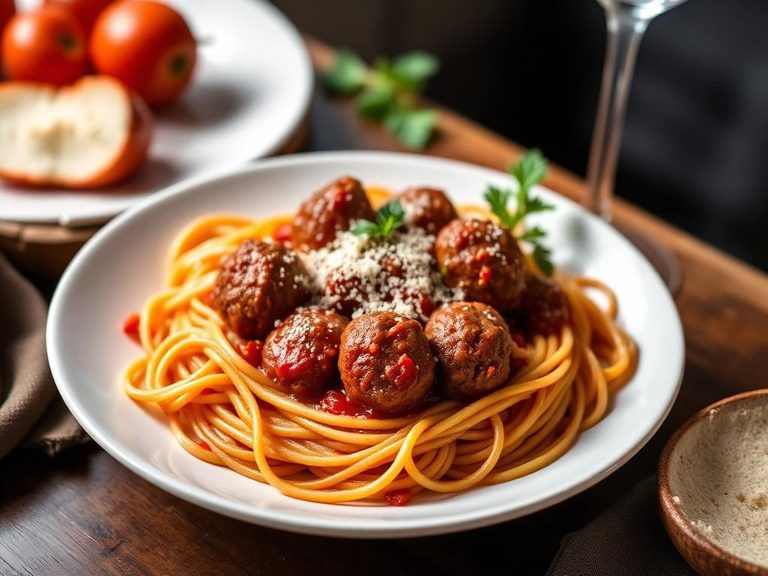
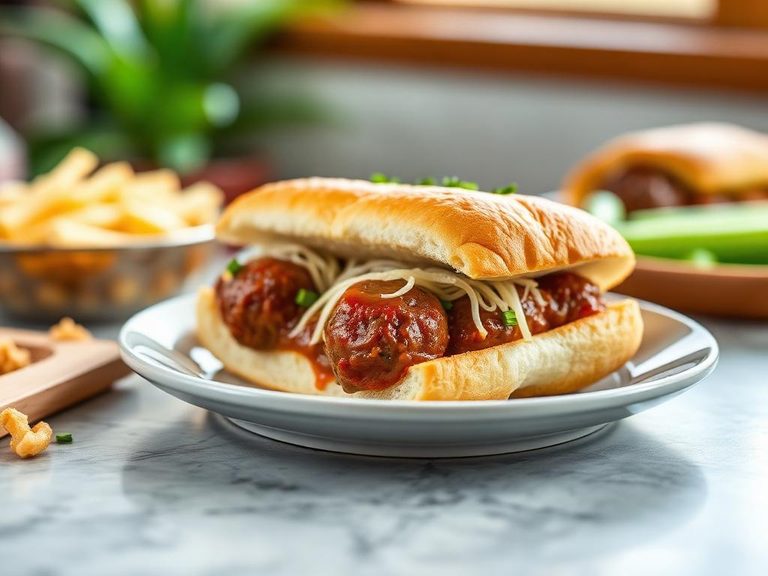
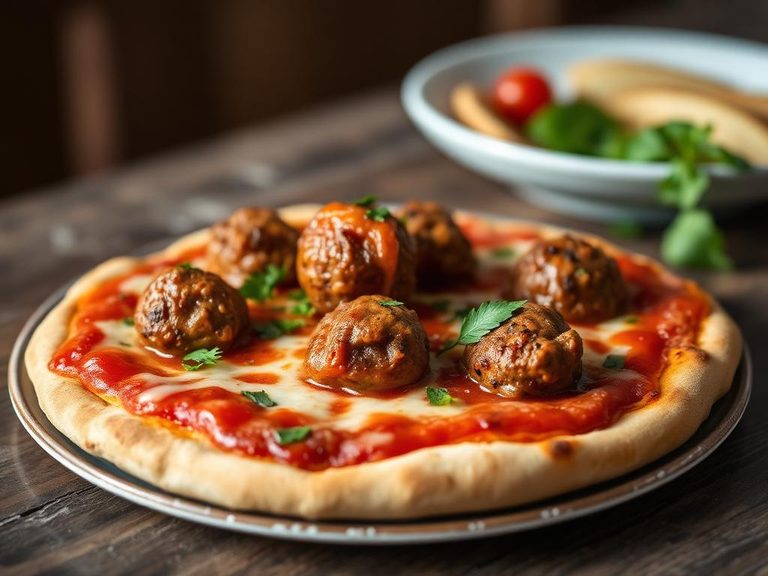
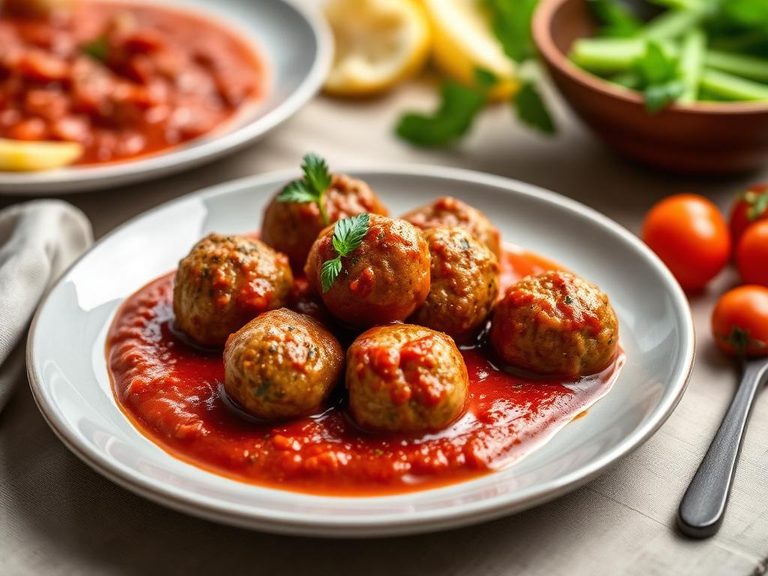
People love them for their comforting, savory flavor and the sheer versatility they bring to weeknight dinners, from simmering in tomato sauce to topping spaghetti. They are a staple of Italian-American home cooking, representing a hearty, satisfying, and familiar meal.
⚠️ Watch-outs & how to enjoy it better
They can be high in sodium and saturated fat, which may be a concern for heart health or blood pressure management. To counteract this, choose low-sodium varieties, pair them with fiber-rich vegetables like roasted broccoli or a large salad, and practice portion control by enjoying 3-4 meatballs as part of a balanced plate rather than a heaping pile.
Key benefits
- High in complete protein for muscle maintenance.
- Provides a quick, energy-dense meal component.
- Source of B vitamins like B12 from the meat.
- Convenient base for numerous quick-cook meals.
- Can be a good source of iron and zinc.
🍽️ Popular dishes
🌍 Where it's eaten
💡 Did you know?
The classic Italian-American 'Spaghetti and Meatballs' is not a traditional dish from Italy; it was invented by Italian immigrants in the United States who had more access to meat than their relatives back home.
Full nutrition (USDA data · scales with serving)
| Water | 53.7 g |
| Energy | 286 kcal |
| Energy | 1196 kj |
| Protein | 14.4 g |
| Total lipid (fat) | 22.2 g |
| Ash | 2.6 g |
| Carbohydrate, by difference | 8.1 g |
| Fiber, total dietary | 2.3 g |
| Total Sugars | 3.5 g |
| Sucrose | 0.48 g |
| Glucose | 1.6 g |
| Fructose | 0.21 g |
| Lactose | 0.87 g |
| Maltose | 0.27 g |
| Galactose | 0.04 g |
| Starch | 2.3 g |
| Calcium, Ca | 80.0 mg |
| Iron, Fe | 1.8 mg |
| Magnesium, Mg | 31.0 mg |
| Phosphorus, P | 239 mg |
| Potassium, K | 296 mg |
| Sodium, Na | 666 mg |
| Zinc, Zn | 1.7 mg |
| Copper, Cu | 0.12 mg |
| Manganese, Mn | 0.28 mg |
| Selenium, Se | 15.3 ug |
| Vitamin C, total ascorbic acid | 0.00 mg |
| Thiamin | 0.14 mg |
| Riboflavin | 0.23 mg |
| Niacin | 3.1 mg |
| Pantothenic acid | 0.92 mg |
| Vitamin B-6 | 0.20 mg |
| Folate, total | 36.0 ug |
| Folic acid | 0.00 ug |
| Folate, food | 36.0 ug |
| Folate, DFE | 36.0 ug |
| Choline, total | 45.2 mg |
| Vitamin B-12 | 1.0 ug |
| Vitamin B-12, added | 0.00 ug |
| Vitamin A, RAE | 22.0 ug |
| Retinol | 22.0 ug |
| Carotene, beta | 0.00 ug |
| Carotene, alpha | 0.00 ug |
| Cryptoxanthin, beta | 0.00 ug |
| Vitamin A, IU | 73.0 iu |
| Lycopene | 0.00 ug |
| Lutein + zeaxanthin | 0.00 ug |
| Vitamin E (alpha-tocopherol) | 0.42 mg |
| Vitamin E, added | 0.00 mg |
| Tocopherol, beta | 0.15 mg |
| Tocopherol, gamma | 0.25 mg |
| Tocopherol, delta | 0.04 mg |
| Tocotrienol, alpha | 0.00 mg |
| Tocotrienol, beta | 0.00 mg |
| Tocotrienol, gamma | 0.00 mg |
| Tocotrienol, delta | 0.00 mg |
| Vitamin D (D2 + D3), International Units | 2.0 iu |
| Vitamin D (D2 + D3) | 0.10 ug |
| Vitamin D3 (cholecalciferol) | 0.10 ug |
| Vitamin K (phylloquinone) | 8.2 ug |
| Vitamin K (Dihydrophylloquinone) | 0.00 ug |
| Vitamin K (Menaquinone-4) | 28.1 ug |
| Alcohol, ethyl | 0.00 g |
| Caffeine | 0.00 mg |
| Theobromine | 0.00 mg |
Fat & fatty acid profile (per 100g)
| Fatty acids, total saturated | 7.6 g |
| SFA 4:0 | 0.01 g |
| SFA 6:0 | 0.00 g |
| SFA 8:0 | 0.01 g |
| SFA 10:0 | 0.03 g |
| SFA 12:0 | 0.02 g |
| SFA 14:0 | 0.38 g |
| SFA 15:0 | 0.05 g |
| SFA 16:0 | 4.6 g |
| SFA 17:0 | 0.13 g |
| SFA 18:0 | 2.4 g |
| SFA 20:0 | 0.03 g |
| SFA 22:0 | 0.01 g |
| SFA 24:0 | 0.00 g |
| Fatty acids, total monounsaturated | 9.2 g |
| MUFA 14:1 | 0.08 g |
| MUFA 15:1 | 0.00 g |
| MUFA 16:1 | 0.63 g |
| MUFA 16:1 c | 0.59 g |
| MUFA 17:1 | 0.09 g |
| MUFA 18:1 | 8.3 g |
| MUFA 18:1 c | 7.8 g |
| MUFA 20:1 | 0.13 g |
| MUFA 22:1 | 0.00 g |
| MUFA 22:1 c | 0.00 g |
| MUFA 24:1 c | 0.00 g |
| Fatty acids, total polyunsaturated | 3.3 g |
| PUFA 18:2 | 3.0 g |
| PUFA 18:2 n-6 c,c | 2.8 g |
| PUFA 18:2 CLAs | 0.07 g |
| PUFA 18:3 | 0.17 g |
| PUFA 18:3 n-3 c,c,c (ALA) | 0.16 g |
| PUFA 18:3 n-6 c,c,c | 0.01 g |
| PUFA 18:3i | 0.00 g |
| PUFA 18:4 | 0.00 g |
| PUFA 20:2 n-6 c,c | 0.07 g |
| PUFA 20:3 | 0.03 g |
| PUFA 20:3 n-3 | 0.01 g |
| PUFA 20:3 n-6 | 0.02 g |
| PUFA 20:4 | 0.07 g |
| PUFA 20:5 n-3 (EPA) | 0.01 g |
| PUFA 22:4 | 0.02 g |
| PUFA 22:5 n-3 (DPA) | 0.01 g |
| PUFA 22:6 n-3 (DHA) | 0.00 g |
| Fatty acids, total trans | 0.58 g |
| Fatty acids, total trans-monoenoic | 0.50 g |
| TFA 16:1 t | 0.03 g |
| TFA 18:1 t | 0.46 g |
| TFA 22:1 t | 0.00 g |
| TFA 18:2 t not further defined | 0.08 g |
| Fatty acids, total trans-polyenoic | 0.08 g |
| Cholesterol | 66.0 mg |
Amino acid profile (per 100g)
Estimated from Restaurant, family style, spaghetti and meatballs — USDA does not publish this profile for Meatballs.
| Tryptophan | 0.09 g |
| Threonine | 0.33 g |
| Isoleucine | 0.37 g |
| Leucine | 0.71 g |
| Lysine | 0.56 g |
| Methionine | 0.19 g |
| Cystine | 0.14 g |
| Phenylalanine | 0.40 g |
| Tyrosine | 0.25 g |
| Valine | 0.45 g |
| Arginine | 0.50 g |
| Histidine | 0.27 g |
| Alanine | 0.44 g |
| Aspartic acid | 0.69 g |
| Glutamic acid | 2.2 g |
| Glycine | 0.46 g |
| Proline | 0.79 g |
| Serine | 0.39 g |
| Hydroxyproline | 0.06 g |
FAQ
How do I cook frozen Italian-style meatballs?
You can bake them on a sheet pan at 400°F (200°C) for 20-25 minutes, simmer them directly in a sauce until heated through, or pan-fry them in a little oil for a crispier exterior.
Are frozen meatballs as nutritious as homemade?
They can be comparable, but often contain more sodium and preservatives for shelf life. Homemade versions allow you to control the meat lean ratio, salt, and filler content.
What's the best way to reheat leftover cooked meatballs?
Gently reheat in a covered pan with a splash of water or sauce to prevent drying out, or use a microwave at 50% power to warm evenly without toughening the exterior.
Nutrient density (calculated · NRF9.3)
Nutrient Rich Foods index: beneficial nutrients (protein, fiber, vitamins, minerals) minus saturated fat, added sugar & sodium, per 100 kcal.
NRF9.3 index — Fulgoni, Keast & Drewnowski, 2009. Computed from USDA nutrients.
Weight-loss friendliness (composite index)
Energy density 2.86 kcal/g · 20% calories from protein · 2.3 g fiber · 3.5 g sugar per 100 g.
Composite of energy density (Rolls et al., 1999), protein & fiber satiety, minus sugar. A calculated heuristic — ranks satiety-per-calorie, not a clinical measure.
Dietary load (calculated from USDA values)
Potential renal acid load. Positive = acid-forming, negative = alkaline-forming.
Sodium-to-potassium ratio: 2.25 (lower is better — aim for ≤ 1)
Sodium:potassium per WHO potassium guidance. Computed from USDA nutrients.