

Gravy, chicken, canned or bottled, ready-to-serve
Whole food · Soups, Sauces, and Gravies

Photo: Wikipedia
This is a savory, ready-to-serve sauce made from chicken drippings, stock, and a thickener, offering a rich, umami flavor and a smooth, pourable texture. Nutritionally, it's a low-calorie, low-protein condiment primarily composed of carbohydrates and fats. It serves as a classic flavor enhancer for a wide variety of dishes.
Calorie split: 6% protein · 44% carbs · 50% fat
↓ Full nutrition💚 Why it's loved
People love it for its deep, savory flavor that instantly elevates simple meals like mashed potatoes or roasted chicken, and its incredible versatility as a base or topping. It's a cornerstone of comfort food in many Western cuisines.
⚠️ Watch-outs & how to enjoy it better
Commercial versions can be high in sodium, which may be a concern for those monitoring salt intake. To counteract this, look for low-sodium varieties, use it sparingly as a flavor accent rather than a main sauce, and pair it with fresh herbs or a squeeze of lemon to boost flavor without added salt.
Key benefits
- Adds significant savory flavor with minimal calories
- Provides a quick and easy sauce for meals
- Can enhance the palatability of lean proteins and vegetables
- A staple for creating comforting, classic dishes
🍽️ Popular dishes
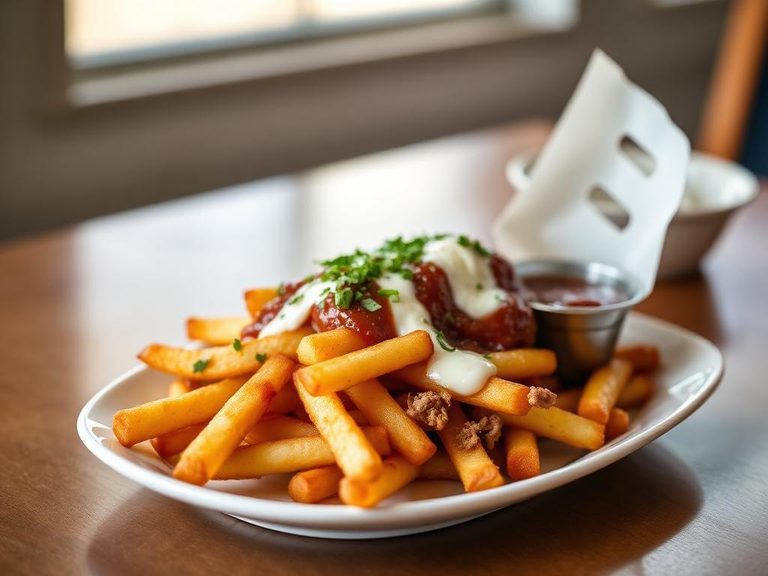

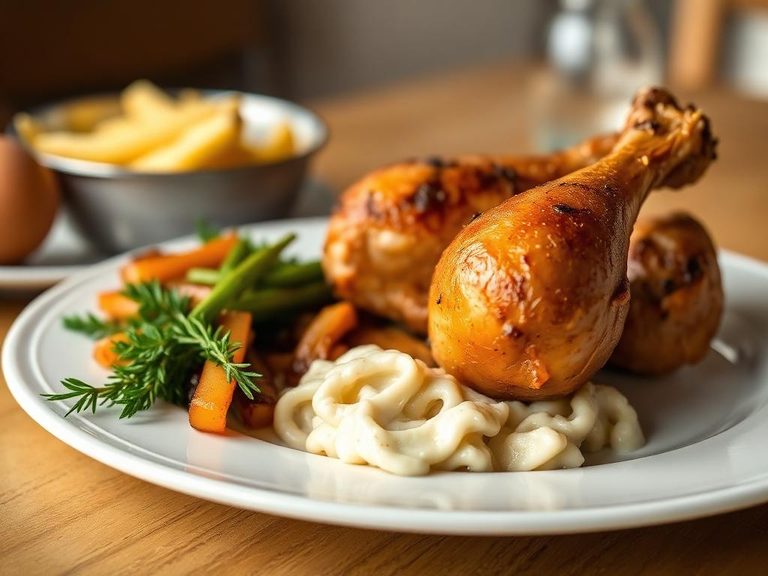
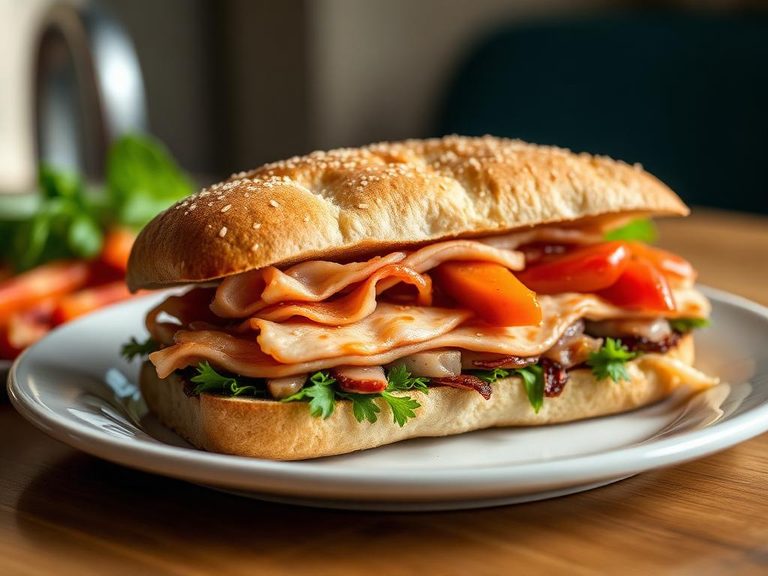
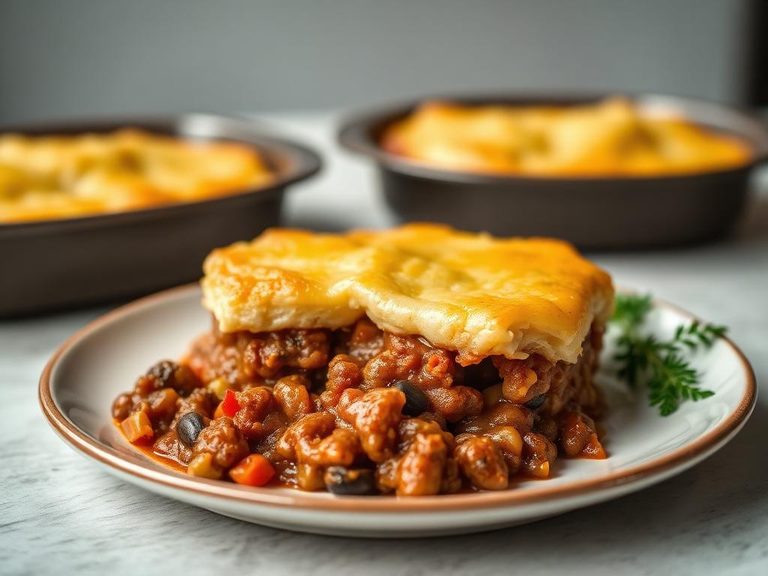

🌍 Where it's eaten
💡 Did you know?
The word 'gravy' is believed to derive from the French word 'grain' (referring to spices) or possibly from the Celtic word 'fles' (meaning broth), highlighting its ancient roots as a spiced meat juice.
Full nutrition (USDA data · scales with serving)
| Water | 90.3 g |
| Energy | 48.0 kcal |
| Energy | 199 kj |
| Protein | 0.71 g |
| Total lipid (fat) | 2.6 g |
| Ash | 1.1 g |
| Carbohydrate, by difference | 5.3 g |
| Fiber, total dietary | 0.10 g |
| Total Sugars | 0.30 g |
| Sucrose | 0.00 g |
| Glucose | 0.00 g |
| Fructose | 0.00 g |
| Lactose | 0.30 g |
| Maltose | 0.00 g |
| Galactose | 0.00 g |
| Starch | 4.9 g |
| Calcium, Ca | 10.0 mg |
| Iron, Fe | 0.09 mg |
| Magnesium, Mg | 3.0 mg |
| Phosphorus, P | 20.0 mg |
| Potassium, K | 42.0 mg |
| Sodium, Na | 389 mg |
| Zinc, Zn | 0.08 mg |
| Copper, Cu | 0.02 mg |
| Manganese, Mn | 0.01 mg |
| Selenium, Se | 0.40 ug |
| Vitamin C, total ascorbic acid | 0.00 mg |
| Thiamin | 0.02 mg |
| Riboflavin | 0.05 mg |
| Niacin | 0.28 mg |
| Pantothenic acid | 0.14 mg |
| Vitamin B-6 | 0.03 mg |
| Folate, total | 2.0 ug |
| Folic acid | 0.00 ug |
| Folate, food | 2.0 ug |
| Folate, DFE | 2.0 ug |
| Choline, total | 3.7 mg |
| Vitamin B-12 | 0.00 ug |
| Vitamin B-12, added | 0.00 ug |
| Vitamin A, RAE | 1.0 ug |
| Retinol | 1.0 ug |
| Carotene, beta | 0.00 ug |
| Carotene, alpha | 0.00 ug |
| Cryptoxanthin, beta | 0.00 ug |
| Vitamin A, IU | 3.0 iu |
| Lycopene | 0.00 ug |
| Lutein + zeaxanthin | 1.0 ug |
| Vitamin E (alpha-tocopherol) | 0.10 mg |
| Vitamin E, added | 0.00 mg |
| Tocopherol, beta | 0.00 mg |
| Tocopherol, gamma | 0.06 mg |
| Tocopherol, delta | 0.00 mg |
| Tocotrienol, alpha | 0.00 mg |
| Tocotrienol, beta | 0.00 mg |
| Tocotrienol, gamma | 0.00 mg |
| Tocotrienol, delta | 0.00 mg |
| Vitamin D (D2 + D3), International Units | 0.00 iu |
| Vitamin D (D2 + D3) | 0.00 ug |
| Vitamin K (phylloquinone) | 0.60 ug |
| Vitamin K (Dihydrophylloquinone) | 0.00 ug |
| Vitamin K (Menaquinone-4) | 2.7 ug |
| Alcohol, ethyl | 0.00 g |
| Caffeine | 0.00 mg |
| Theobromine | 0.00 mg |
Fat & fatty acid profile (per 100g)
| Fatty acids, total saturated | 0.64 g |
| SFA 4:0 | 0.00 g |
| SFA 6:0 | 0.00 g |
| SFA 8:0 | 0.00 g |
| SFA 10:0 | 0.00 g |
| SFA 12:0 | 0.00 g |
| SFA 14:0 | 0.01 g |
| SFA 15:0 | 0.00 g |
| SFA 16:0 | 0.49 g |
| SFA 17:0 | 0.00 g |
| SFA 18:0 | 0.13 g |
| SFA 20:0 | 0.00 g |
| SFA 22:0 | 0.00 g |
| SFA 24:0 | 0.00 g |
| Fatty acids, total monounsaturated | 1.0 g |
| MUFA 14:1 | 0.00 g |
| MUFA 15:1 | 0.00 g |
| MUFA 16:1 | 0.12 g |
| MUFA 16:1 c | 0.12 g |
| MUFA 17:1 | 0.00 g |
| MUFA 18:1 | 0.89 g |
| MUFA 18:1 c | 0.88 g |
| MUFA 20:1 | 0.01 g |
| MUFA 22:1 | 0.00 g |
| MUFA 22:1 c | 0.00 g |
| MUFA 24:1 c | 0.00 g |
| Fatty acids, total polyunsaturated | 0.41 g |
| PUFA 18:2 | 0.38 g |
| PUFA 18:2 n-6 c,c | 0.38 g |
| PUFA 18:2 CLAs | 0.00 g |
| PUFA 18:3 | 0.02 g |
| PUFA 18:3 n-3 c,c,c (ALA) | 0.02 g |
| PUFA 18:3 n-6 c,c,c | 0.00 g |
| PUFA 18:3i | 0.00 g |
| PUFA 18:4 | 0.00 g |
| PUFA 20:2 n-6 c,c | 0.00 g |
| PUFA 20:3 | 0.00 g |
| PUFA 20:3 n-3 | 0.00 g |
| PUFA 20:3 n-6 | 0.00 g |
| PUFA 20:4 | 0.00 g |
| PUFA 20:5 n-3 (EPA) | 0.00 g |
| PUFA 22:4 | 0.00 g |
| PUFA 22:5 n-3 (DPA) | 0.00 g |
| PUFA 22:6 n-3 (DHA) | 0.00 g |
| Fatty acids, total trans | 0.01 g |
| Fatty acids, total trans-monoenoic | 0.01 g |
| TFA 16:1 t | 0.00 g |
| TFA 18:1 t | 0.01 g |
| TFA 22:1 t | 0.00 g |
| TFA 18:2 t not further defined | 0.00 g |
| Fatty acids, total trans-polyenoic | 0.00 g |
| Cholesterol | 5.0 mg |
Amino acid profile (per 100g)
Estimated from Gravy, HEINZ Home Style, savory beef — USDA does not publish this profile for Gravy.
| Tryptophan | 0.01 g |
| Threonine | 0.03 g |
| Isoleucine | 0.03 g |
| Leucine | 0.06 g |
| Lysine | 0.05 g |
| Methionine | 0.01 g |
| Cystine | 0.01 g |
| Phenylalanine | 0.03 g |
| Tyrosine | 0.02 g |
| Valine | 0.04 g |
| Arginine | 0.06 g |
| Histidine | 0.02 g |
| Alanine | 0.06 g |
| Aspartic acid | 0.07 g |
| Glutamic acid | 0.44 g |
| Glycine | 0.10 g |
| Proline | 0.08 g |
| Serine | 0.04 g |
| Hydroxyproline | 0.04 g |
FAQ
How is canned chicken gravy different from homemade?
Canned gravy offers convenience and consistent flavor, but may contain more sodium and additives for preservation. Homemade gravy allows control over ingredients, using fresh drippings and stock for a potentially richer, more complex flavor.
Can I use this gravy on anything besides meat and potatoes?
Absolutely. It's excellent over biscuits, as a base for pot pies, a sauce for savory crepes, or even as a flavorful addition to a breakfast hash.
Is this a good source of protein?
No. With only about 0.7g of protein per 100g, it is not a significant source. Its primary role is as a flavor and moisture enhancer, not a protein provider.
Nutrient density (calculated · NRF9.3)
Nutrient Rich Foods index: beneficial nutrients (protein, fiber, vitamins, minerals) minus saturated fat, added sugar & sodium, per 100 kcal.
NRF9.3 index — Fulgoni, Keast & Drewnowski, 2009. Computed from USDA nutrients.
Weight-loss friendliness (composite index)
Energy density 0.48 kcal/g · 6% calories from protein · 0.1 g fiber · 0.3 g sugar per 100 g.
Composite of energy density (Rolls et al., 1999), protein & fiber satiety, minus sugar. A calculated heuristic — ranks satiety-per-calorie, not a clinical measure.
Dietary load (calculated from USDA values)
Potential renal acid load. Positive = acid-forming, negative = alkaline-forming.
Sodium-to-potassium ratio: 9.26 (lower is better — aim for ≤ 1)
Sodium:potassium per WHO potassium guidance. Computed from USDA nutrients.