

Frankfurter, meat and poultry, cooked, boiled
Whole food · Sausages and Luncheon Meats

Photo: Wikipedia
A boiled frankfurter is a smooth, finely emulsified sausage with a snappy casing and a savory, smoky, and slightly salty flavor. Nutritionally, it is a dense source of protein and fat, with a very low carbohydrate content, making it a quick, energy-dense meal component.
Calorie split: 14% protein · 7% carbs · 79% fat
↓ Full nutrition💚 Why it's loved
People love its classic, comforting smoky flavor and satisfying snap, which makes it a nostalgic favorite. Its incredible versatility means it can be the star of a simple meal or a quick addition to countless dishes.
⚠️ Watch-outs & how to enjoy it better
Its high fat and sodium content can be a concern for heart health and blood pressure, and it's a common allergen. To balance this, pair it with fiber-rich sides like sauerkraut or a fresh salad, and practice portion control by using it as a flavor accent rather than the main protein.
Key benefits
- High-quality protein for muscle maintenance
- Convenient, pre-cooked source of energy
- Very low in carbohydrates and sugars
- Long shelf life when properly stored
- Versatile base for many quick meals
🍽️ Popular dishes

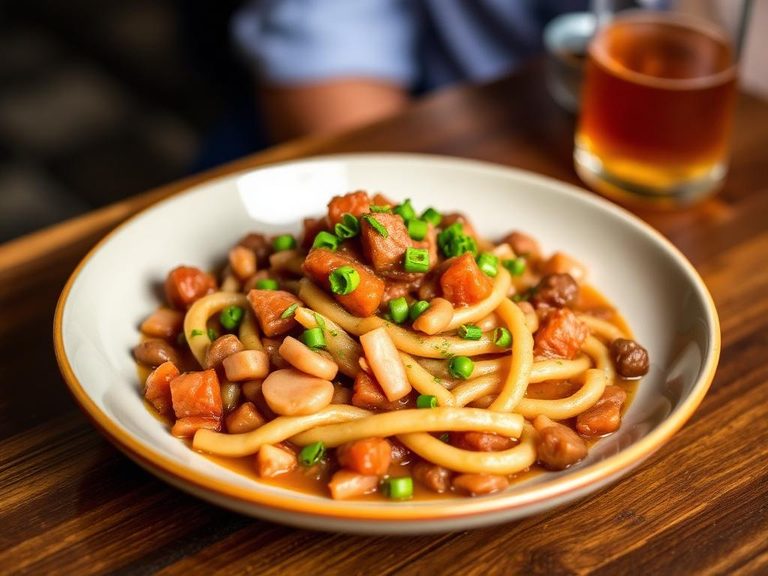
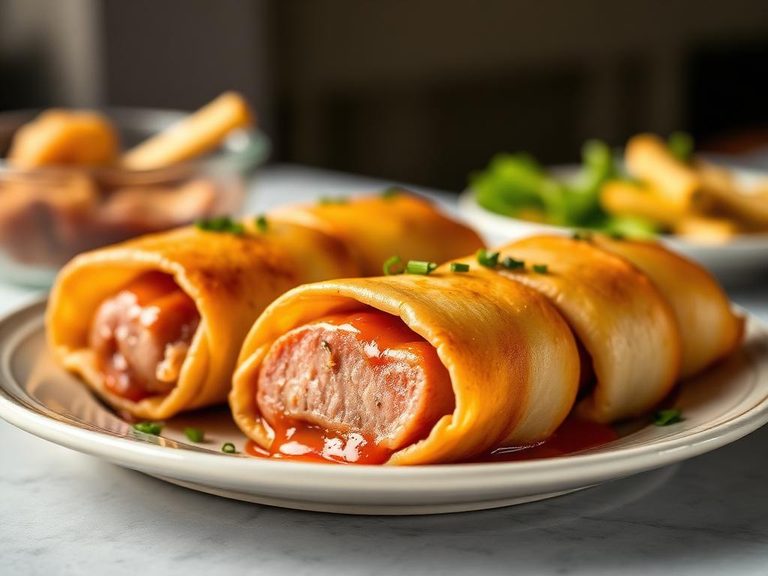

🌍 Where it's eaten
💡 Did you know?
The name 'frankfurter' comes from Frankfurt, Germany, where a similar sausage was first documented in 1487, while its rival, the 'wiener,' is named for Vienna (Wien), Austria.
Full nutrition (USDA data · scales with serving)
| Water | 55.2 g |
| Energy | 298 kcal |
| Energy | 1245 kj |
| Protein | 10.3 g |
| Total lipid (fat) | 26.3 g |
| Ash | 3.3 g |
| Carbohydrate, by difference | 5.0 g |
| Fiber, total dietary | 0.00 g |
| Total Sugars | 2.7 g |
| Sucrose | 0.00 g |
| Glucose | 2.4 g |
| Fructose | 0.00 g |
| Lactose | 0.00 g |
| Maltose | 0.29 g |
| Galactose | 0.00 g |
| Calcium, Ca | 107 mg |
| Iron, Fe | 1.1 mg |
| Magnesium, Mg | 11.0 mg |
| Phosphorus, P | 180 mg |
| Potassium, K | 323 mg |
| Sodium, Na | 914 mg |
| Zinc, Zn | 1.3 mg |
| Copper, Cu | 0.04 mg |
| Manganese, Mn | 0.02 mg |
| Selenium, Se | 13.3 ug |
| Vitamin C, total ascorbic acid | 19.4 mg |
| Thiamin | 0.04 mg |
| Riboflavin | 0.14 mg |
| Niacin | 2.7 mg |
| Pantothenic acid | 0.55 mg |
| Vitamin B-6 | 0.07 mg |
| Folate, total | 6.0 ug |
| Folic acid | 0.00 ug |
| Folate, food | 9.0 ug |
| Folate, DFE | 9.0 ug |
| Choline, total | 54.3 mg |
| Betaine | 4.1 mg |
| Vitamin B-12 | 0.69 ug |
| Vitamin B-12, added | 0.00 ug |
| Vitamin A, RAE | 31.0 ug |
| Retinol | 31.0 ug |
| Carotene, beta | 0.00 ug |
| Carotene, alpha | 0.00 ug |
| Cryptoxanthin, beta | 0.00 ug |
| Vitamin A, IU | 103 iu |
| Lycopene | 0.00 ug |
| Lutein + zeaxanthin | 0.00 ug |
| Vitamin E (alpha-tocopherol) | 0.45 mg |
| Vitamin E, added | 0.00 mg |
| Tocopherol, beta | 0.00 mg |
| Tocopherol, gamma | 0.18 mg |
| Tocopherol, delta | 0.01 mg |
| Tocotrienol, alpha | 0.02 mg |
| Tocotrienol, beta | 0.00 mg |
| Tocotrienol, gamma | 0.02 mg |
| Tocotrienol, delta | 0.01 mg |
| Vitamin D (D2 + D3), International Units | 26.0 iu |
| Vitamin D (D2 + D3) | 0.60 ug |
| Vitamin D3 (cholecalciferol) | 0.60 ug |
| Vitamin K (phylloquinone) | 1.7 ug |
| Alcohol, ethyl | 0.00 g |
| Caffeine | 0.00 mg |
| Theobromine | 0.00 mg |
Fat & fatty acid profile (per 100g)
| Fatty acids, total saturated | 8.2 g |
| SFA 4:0 | 0.00 g |
| SFA 6:0 | 0.00 g |
| SFA 8:0 | 0.00 g |
| SFA 10:0 | 0.02 g |
| SFA 12:0 | 0.03 g |
| SFA 14:0 | 0.28 g |
| SFA 15:0 | 0.03 g |
| SFA 16:0 | 5.5 g |
| SFA 17:0 | 0.08 g |
| SFA 18:0 | 2.2 g |
| SFA 20:0 | 0.04 g |
| SFA 22:0 | 0.01 g |
| SFA 24:0 | 0.00 g |
| Fatty acids, total monounsaturated | 10.8 g |
| MUFA 14:1 | 0.04 g |
| MUFA 15:1 | 0.00 g |
| MUFA 16:1 | 0.81 g |
| MUFA 16:1 c | 0.80 g |
| MUFA 17:1 | 0.06 g |
| MUFA 18:1 | 9.7 g |
| MUFA 18:1 c | 9.5 g |
| MUFA 20:1 | 0.18 g |
| MUFA 22:1 | 0.01 g |
| MUFA 22:1 c | 0.01 g |
| MUFA 24:1 c | 0.00 g |
| Fatty acids, total polyunsaturated | 5.7 g |
| PUFA 18:2 | 5.1 g |
| PUFA 18:2 n-6 c,c | 5.0 g |
| PUFA 18:2 CLAs | 0.04 g |
| PUFA 18:3 | 0.26 g |
| PUFA 18:3 n-3 c,c,c (ALA) | 0.25 g |
| PUFA 18:3 n-6 c,c,c | 0.01 g |
| PUFA 18:3i | 0.00 g |
| PUFA 18:4 | 0.00 g |
| PUFA 20:2 n-6 c,c | 0.11 g |
| PUFA 20:3 | 0.05 g |
| PUFA 20:3 n-3 | 0.02 g |
| PUFA 20:3 n-6 | 0.03 g |
| PUFA 20:4 | 0.11 g |
| PUFA 20:5 n-3 (EPA) | 0.00 g |
| PUFA 22:4 | 0.03 g |
| PUFA 22:5 n-3 (DPA) | 0.02 g |
| PUFA 22:6 n-3 (DHA) | 0.01 g |
| Fatty acids, total trans | 0.24 g |
| Fatty acids, total trans-monoenoic | 0.19 g |
| TFA 16:1 t | 0.01 g |
| TFA 18:1 t | 0.18 g |
| TFA 22:1 t | 0.00 g |
| TFA 18:2 t not further defined | 0.05 g |
| Fatty acids, total trans-polyenoic | 0.05 g |
| Cholesterol | 84.0 mg |
Amino acid profile (per 100g)
| Tryptophan | 0.11 g |
| Threonine | 0.37 g |
| Isoleucine | 0.42 g |
| Leucine | 0.78 g |
| Lysine | 0.76 g |
| Methionine | 0.25 g |
| Cystine | 0.14 g |
| Phenylalanine | 0.38 g |
| Tyrosine | 0.30 g |
| Valine | 0.48 g |
| Arginine | 0.67 g |
| Histidine | 0.30 g |
| Alanine | 0.65 g |
| Aspartic acid | 0.91 g |
| Glutamic acid | 1.5 g |
| Glycine | 0.69 g |
| Proline | 0.73 g |
| Serine | 0.43 g |
| Hydroxyproline | 0.24 g |
FAQ
What is the difference between a frankfurter and a hot dog?
Technically, a 'frankfurter' refers to the specific style of sausage originating from Frankfurt, while 'hot dog' is the more general term for the sausage served in a sliced bun. In common usage, the terms are often interchangeable.
Are boiled frankfurters fully cooked?
Yes, traditional frankfurters are pre-cooked and smoked during manufacturing. Boiling is primarily a reheating method to heat them through and enhance their plumpness and snap.
Why do frankfurters sometimes split open when boiled?
This is often due to a rapid temperature change or boiling them too vigorously. To prevent splitting, bring them to a gentle simmer rather than a rolling boil, and avoid boiling for excessively long periods.
Nutrient density (calculated · NRF9.3)
Nutrient Rich Foods index: beneficial nutrients (protein, fiber, vitamins, minerals) minus saturated fat, added sugar & sodium, per 100 kcal.
NRF9.3 index — Fulgoni, Keast & Drewnowski, 2009. Computed from USDA nutrients.
Weight-loss friendliness (composite index)
Energy density 2.98 kcal/g · 14% calories from protein · 0.0 g fiber · 2.7 g sugar per 100 g.
Composite of energy density (Rolls et al., 1999), protein & fiber satiety, minus sugar. A calculated heuristic — ranks satiety-per-calorie, not a clinical measure.
Dietary load (calculated from USDA values)
Potential renal acid load. Positive = acid-forming, negative = alkaline-forming.
Sodium-to-potassium ratio: 2.83 (lower is better — aim for ≤ 1)
Sodium:potassium per WHO potassium guidance. Computed from USDA nutrients.