

Fish, flatfish (flounder and sole species), raw
Whole food · Finfish and Shellfish Products

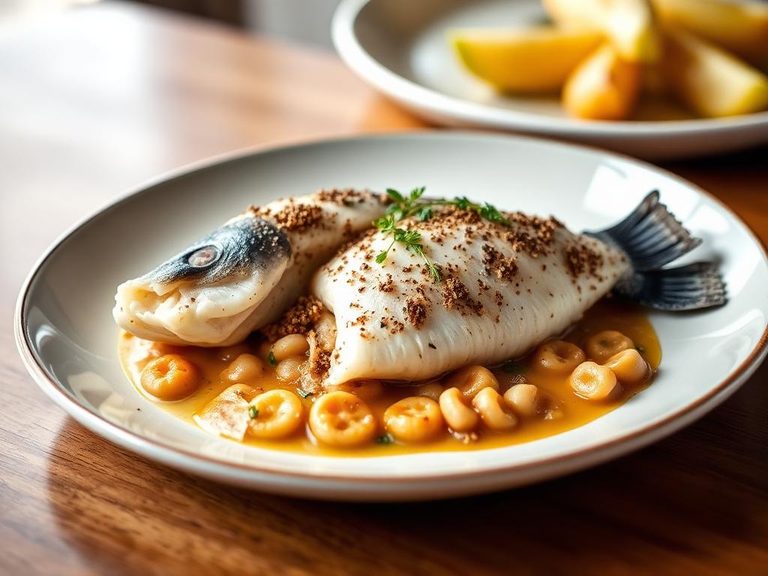
Photo: Wikipedia
Flatfish like flounder and sole are delicate, lean white fish with a mild, slightly sweet flavor and a tender, flaky texture that cooks in minutes. With just 70 calories and over 12g of protein per 100g, they are a powerhouse of lean nutrition. Their subtle taste makes them a blank canvas for a variety of seasonings and preparations.
Calorie split: 74% protein · 0% carbs · 26% fat
↓ Full nutrition💚 Why it's loved
People love flatfish for its delicate, buttery texture and clean, non-fishy taste that pairs beautifully with lemon, butter, and herbs. Its versatility allows it to be pan-fried, baked, or poached, making it a staple in both home kitchens and fine dining.
⚠️ Watch-outs & how to enjoy it better
The flesh is very delicate and can easily overcook or fall apart, which can be frustrating for beginners. As a common allergen, those with fish allergies must avoid it entirely; to counteract its low fat, pair it with a healthy fat like olive oil or avocado to enhance nutrient absorption.
Key benefits
- Extremely low in calories and fat, ideal for weight management.
- Excellent source of high-quality, complete protein for muscle repair.
- Rich in essential nutrients like selenium and vitamin B12.
- Mild flavor makes it highly palatable for children and picky eaters.
- Quick-cooking, making it perfect for fast weeknight meals.
🍽️ Popular dishes
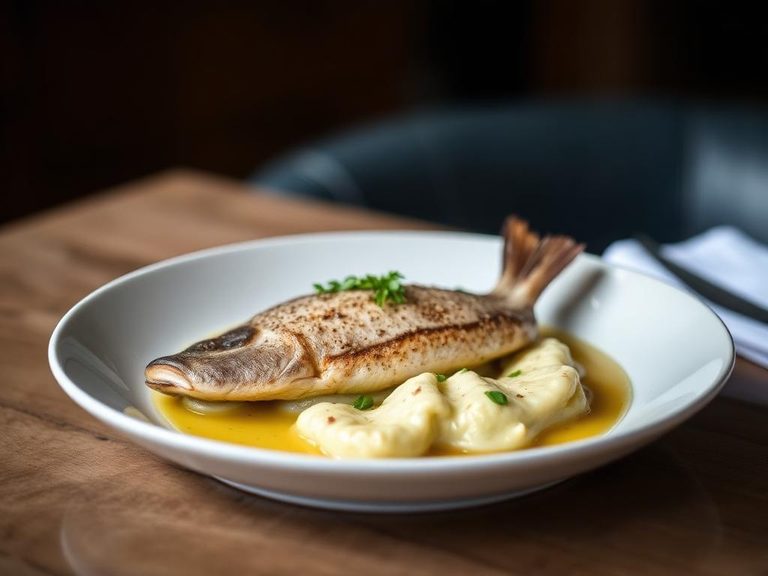
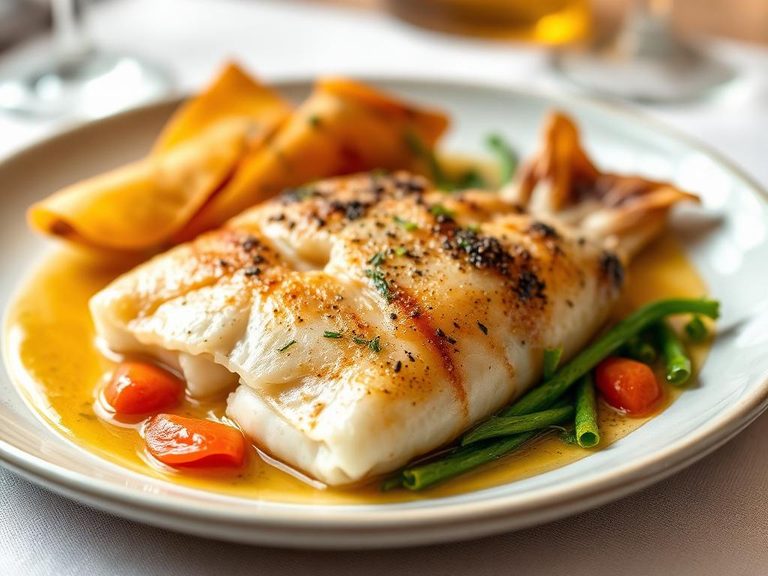
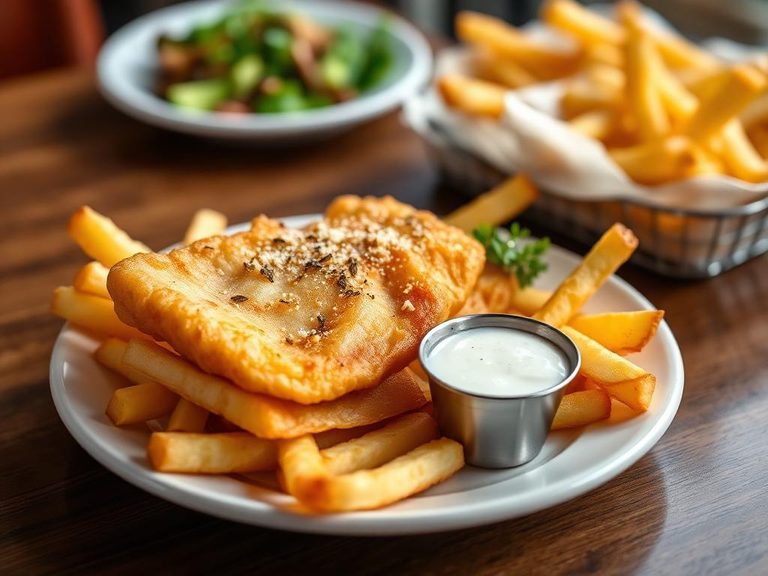
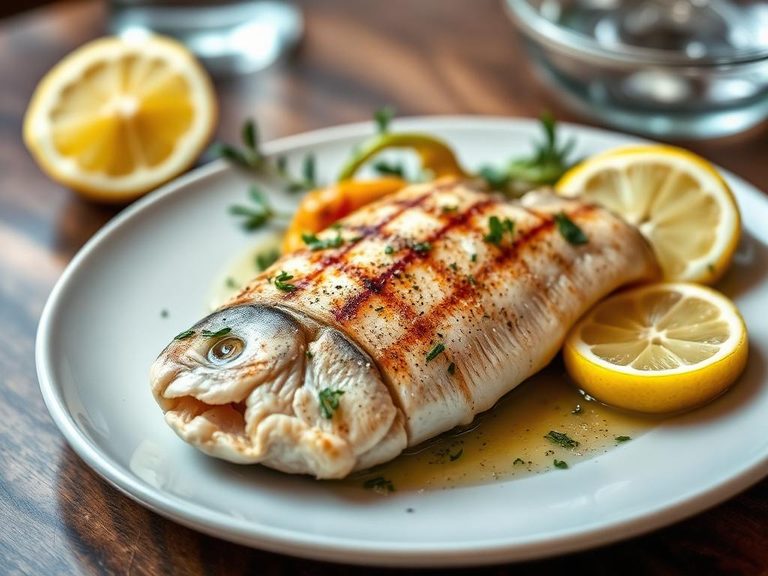

🌍 Where it's eaten
💡 Did you know?
Flatfish like flounder are born as normal, symmetrical fish, but one eye migrates to the other side of their head as they mature, allowing them to lie flat on the ocean floor.
Full nutrition (USDA data · scales with serving)
| Water | 84.6 g |
| Energy | 70.0 kcal |
| Energy | 294 kj |
| Protein | 12.4 g |
| Total lipid (fat) | 1.9 g |
| Ash | 1.2 g |
| Carbohydrate, by difference | 0.00 g |
| Fiber, total dietary | 0.00 g |
| Total Sugars | 0.00 g |
| Sucrose | 0.00 g |
| Glucose | 0.00 g |
| Fructose | 0.00 g |
| Lactose | 0.00 g |
| Maltose | 0.00 g |
| Galactose | 0.00 g |
| Starch | 0.00 g |
| Calcium, Ca | 21.0 mg |
| Iron, Fe | 0.18 mg |
| Magnesium, Mg | 18.0 mg |
| Phosphorus, P | 252 mg |
| Potassium, K | 160 mg |
| Sodium, Na | 296 mg |
| Zinc, Zn | 0.32 mg |
| Copper, Cu | 0.02 mg |
| Manganese, Mn | 0.01 mg |
| Selenium, Se | 26.6 ug |
| Vitamin C, total ascorbic acid | 0.00 mg |
| Thiamin | 0.02 mg |
| Riboflavin | 0.02 mg |
| Niacin | 1.0 mg |
| Pantothenic acid | 0.18 mg |
| Vitamin B-6 | 0.10 mg |
| Folate, total | 5.0 ug |
| Folic acid | 0.00 ug |
| Folate, food | 5.0 ug |
| Folate, DFE | 5.0 ug |
| Choline, total | 65.0 mg |
| Vitamin B-12 | 1.1 ug |
| Vitamin B-12, added | 0.00 ug |
| Vitamin A, RAE | 10.0 ug |
| Retinol | 10.0 ug |
| Carotene, beta | 0.00 ug |
| Carotene, alpha | 0.00 ug |
| Cryptoxanthin, beta | 0.00 ug |
| Vitamin A, IU | 33.0 iu |
| Lycopene | 0.00 ug |
| Lutein + zeaxanthin | 0.00 ug |
| Vitamin E (alpha-tocopherol) | 0.63 mg |
| Vitamin E, added | 0.00 mg |
| Tocopherol, beta | 0.01 mg |
| Tocopherol, gamma | 0.01 mg |
| Tocopherol, delta | 0.26 mg |
| Tocotrienol, alpha | 0.00 mg |
| Tocotrienol, beta | 0.00 mg |
| Tocotrienol, gamma | 0.00 mg |
| Tocotrienol, delta | 0.00 mg |
| Vitamin D (D2 + D3), International Units | 113 iu |
| Vitamin D (D2 + D3) | 2.8 ug |
| Vitamin D3 (cholecalciferol) | 2.8 ug |
| Vitamin K (phylloquinone) | 0.10 ug |
| Vitamin K (Dihydrophylloquinone) | 0.00 ug |
| Vitamin K (Menaquinone-4) | 0.20 ug |
| Alcohol, ethyl | 0.00 g |
| Caffeine | 0.00 mg |
| Theobromine | 0.00 mg |
Fat & fatty acid profile (per 100g)
| Fatty acids, total saturated | 0.44 g |
| SFA 4:0 | 0.00 g |
| SFA 6:0 | 0.00 g |
| SFA 8:0 | 0.00 g |
| SFA 10:0 | 0.00 g |
| SFA 12:0 | 0.01 g |
| SFA 14:0 | 0.09 g |
| SFA 15:0 | 0.01 g |
| SFA 16:0 | 0.28 g |
| SFA 17:0 | 0.00 g |
| SFA 18:0 | 0.05 g |
| SFA 20:0 | 0.00 g |
| SFA 22:0 | 0.00 g |
| SFA 24:0 | 0.00 g |
| Fatty acids, total monounsaturated | 0.54 g |
| MUFA 14:1 | 0.00 g |
| MUFA 15:1 | 0.00 g |
| MUFA 16:1 | 0.09 g |
| MUFA 16:1 c | 0.09 g |
| MUFA 17:1 | 0.03 g |
| MUFA 18:1 | 0.36 g |
| MUFA 18:1 c | 0.35 g |
| MUFA 20:1 | 0.06 g |
| MUFA 22:1 | 0.00 g |
| MUFA 22:1 c | 0.00 g |
| MUFA 24:1 c | 0.00 g |
| Fatty acids, total polyunsaturated | 0.37 g |
| PUFA 18:2 | 0.04 g |
| PUFA 18:2 n-6 c,c | 0.04 g |
| PUFA 18:2 CLAs | 0.00 g |
| PUFA 18:3 | 0.02 g |
| PUFA 18:3 n-3 c,c,c (ALA) | 0.02 g |
| PUFA 18:3 n-6 c,c,c | 0.00 g |
| PUFA 18:4 | 0.01 g |
| PUFA 20:2 n-6 c,c | 0.01 g |
| PUFA 20:3 | 0.01 g |
| PUFA 20:3 n-3 | 0.01 g |
| PUFA 20:3 n-6 | 0.00 g |
| PUFA 20:4 | 0.01 g |
| PUFA 20:5 n-3 (EPA) | 0.14 g |
| PUFA 22:4 | 0.00 g |
| PUFA 22:5 n-3 (DPA) | 0.03 g |
| PUFA 22:6 n-3 (DHA) | 0.11 g |
| Fatty acids, total trans | 0.01 g |
| Fatty acids, total trans-monoenoic | 0.01 g |
| TFA 16:1 t | 0.00 g |
| TFA 18:1 t | 0.01 g |
| TFA 22:1 t | 0.00 g |
| TFA 18:2 t not further defined | 0.00 g |
| Fatty acids, total trans-polyenoic | 0.00 g |
| Cholesterol | 45.0 mg |
Amino acid profile (per 100g)
| Tryptophan | 0.16 g |
| Threonine | 0.58 g |
| Isoleucine | 0.61 g |
| Leucine | 1.1 g |
| Lysine | 1.3 g |
| Methionine | 0.46 g |
| Cystine | 0.15 g |
| Phenylalanine | 0.51 g |
| Tyrosine | 0.48 g |
| Valine | 0.65 g |
| Arginine | 0.90 g |
| Histidine | 0.30 g |
| Alanine | 0.77 g |
| Aspartic acid | 1.4 g |
| Glutamic acid | 2.1 g |
| Glycine | 0.64 g |
| Proline | 0.49 g |
| Serine | 0.58 g |
FAQ
How do I know when flatfish is cooked?
The flesh will turn from translucent to opaque white and flake easily with a fork. It should reach an internal temperature of 145°F (63°C).
What is the difference between flounder and sole?
They are both flatfish with similar mild flavors and textures, though sole is often considered slightly firmer and sweeter. In the US, 'sole' may also refer to flounder.
Can I eat flatfish raw?
Yes, but it must be sushi-grade and extremely fresh to avoid parasites. It is commonly used in sashimi or crudo preparations.
Nutrient density (calculated · NRF9.3)
Nutrient Rich Foods index: beneficial nutrients (protein, fiber, vitamins, minerals) minus saturated fat, added sugar & sodium, per 100 kcal.
NRF9.3 index — Fulgoni, Keast & Drewnowski, 2009. Computed from USDA nutrients.
Weight-loss friendliness (composite index)
Energy density 0.70 kcal/g · 71% calories from protein · 0.0 g fiber · 0.0 g sugar per 100 g.
Composite of energy density (Rolls et al., 1999), protein & fiber satiety, minus sugar. A calculated heuristic — ranks satiety-per-calorie, not a clinical measure.
Dietary load (calculated from USDA values)
Potential renal acid load. Positive = acid-forming, negative = alkaline-forming.
Sodium-to-potassium ratio: 1.85 (lower is better — aim for ≤ 1)
Sodium:potassium per WHO potassium guidance. Computed from USDA nutrients.