

Peas, green, split, mature seeds, raw
Whole food · Legumes and Legume Products

Photo: Wikipedia
These are mature green peas that have been split and dried, revealing their vibrant, starchy interior. They cook into a soft, creamy texture with a mild, earthy sweetness, forming the base for hearty soups and stews. Nutritionally, they are a powerhouse, offering exceptional plant-based protein and fiber with minimal fat.
Calorie split: 25% protein · 66% carbs · 9% fat
↓ Full nutrition💚 Why it's loved
People love split peas for their comforting, hearty flavor and the way they naturally thicken soups into a creamy consistency without dairy. They are a versatile, affordable staple in cuisines worldwide, from Indian dals to European pea soups.
⚠️ Watch-outs & how to enjoy it better
The high fiber and protein content can cause digestive discomfort (gas, bloating) for some, especially if not accustomed to legumes. To counteract this, introduce them gradually, ensure thorough cooking, and consider soaking dried peas overnight. Their high carbohydrate content may also affect blood sugar, so pairing with non-starchy vegetables or a small amount of healthy fat can help moderate the glycemic response.
Key benefits
- Excellent source of plant-based protein (23g per 100g dry).
- Very high in dietary fiber (22g per 100g), supporting digestion.
- Rich in complex carbohydrates for sustained energy.
- Low in fat and contains no cholesterol.
- Good source of essential minerals like iron and folate.
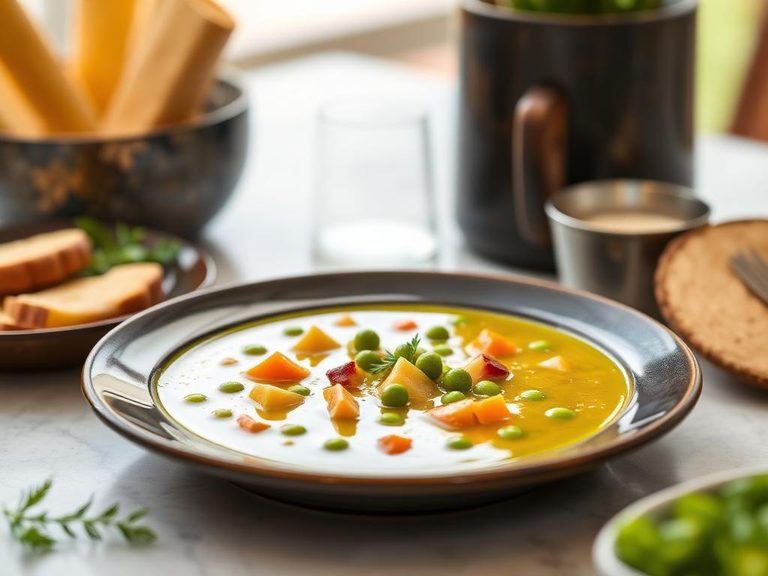
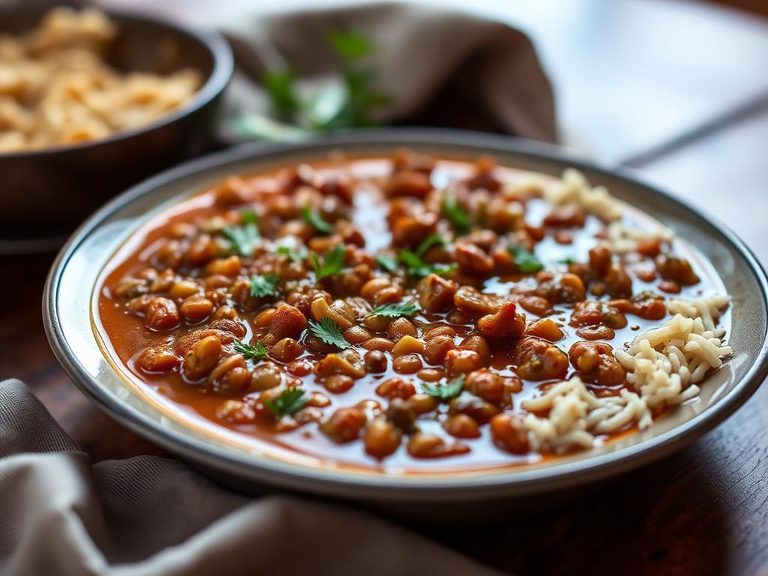
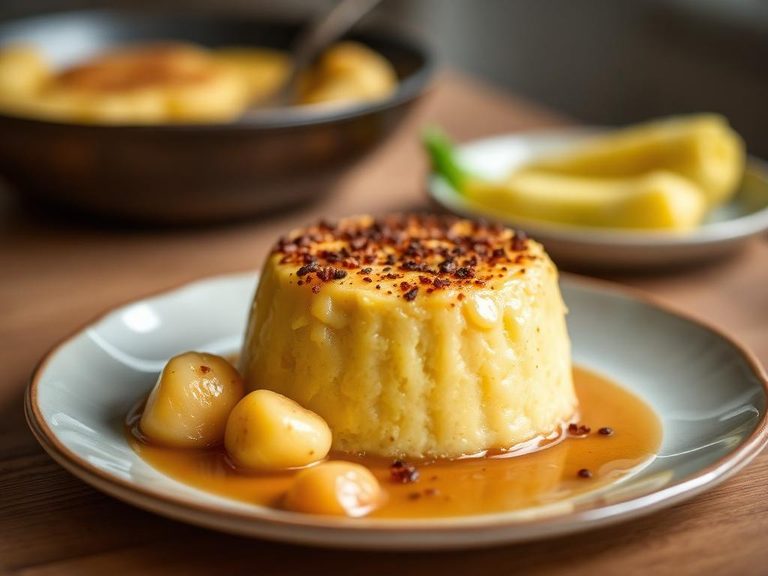
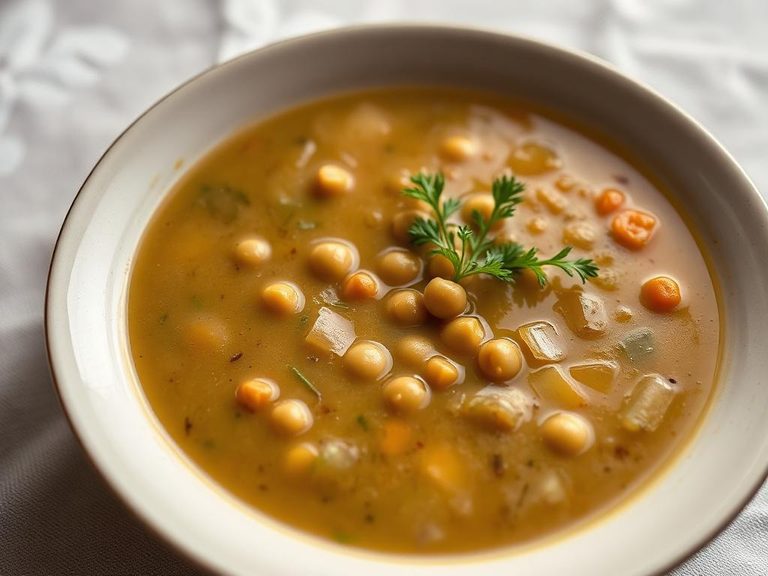
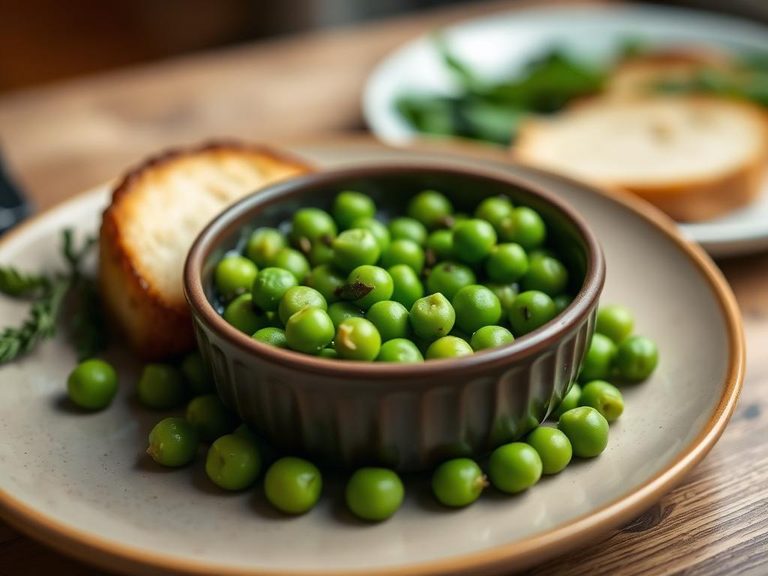
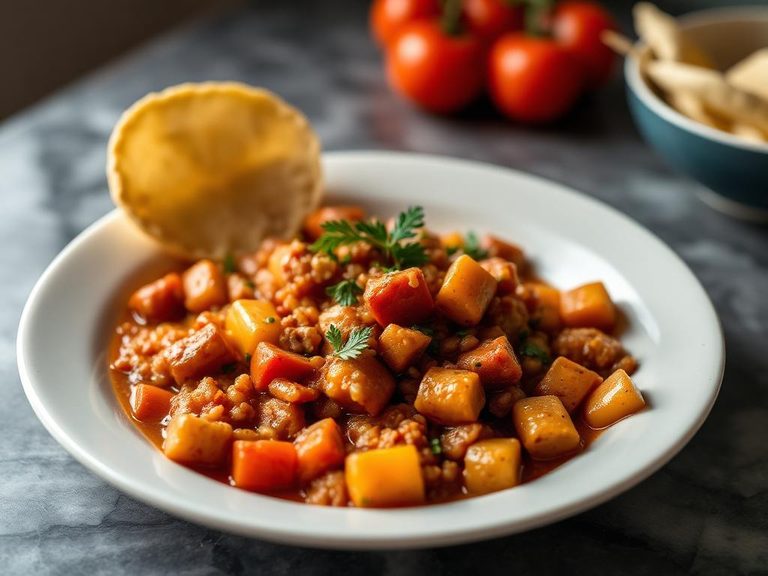
🍽️ Popular dishes
🌍 Where it's eaten
💡 Did you know?
The term 'pease' in 'pease pudding' is actually the original singular form of the word 'pea,' which was later mistaken for a plural.
Full nutrition (USDA data · scales with serving)
| Water | 8.7 g |
| Energy | 364 kcal |
| Energy | 1521 kj |
| Protein | 23.1 g |
| Total lipid (fat) | 3.9 g |
| Ash | 2.7 g |
| Carbohydrate, by difference | 61.6 g |
| Fiber, total dietary | 22.2 g |
| Total Sugars | 3.1 g |
| Sucrose | 2.7 g |
| Glucose | 0.44 g |
| Fructose | 0.00 g |
| Lactose | 0.00 g |
| Maltose | 0.00 g |
| Galactose | 0.00 g |
| Calcium, Ca | 46.0 mg |
| Iron, Fe | 4.7 mg |
| Magnesium, Mg | 63.0 mg |
| Phosphorus, P | 334 mg |
| Potassium, K | 852 mg |
| Sodium, Na | 5.0 mg |
| Zinc, Zn | 3.5 mg |
| Copper, Cu | 0.81 mg |
| Manganese, Mn | 1.2 mg |
| Selenium, Se | 10.7 ug |
| Vitamin C, total ascorbic acid | 1.8 mg |
| Thiamin | 0.72 mg |
| Riboflavin | 0.24 mg |
| Niacin | 3.6 mg |
| Pantothenic acid | 0.96 mg |
| Vitamin B-6 | 0.14 mg |
| Folate, total | 15.0 ug |
| Folic acid | 0.00 ug |
| Folate, food | 15.0 ug |
| Folate, DFE | 15.0 ug |
| Choline, total | 157 mg |
| Betaine | 0.60 mg |
| Vitamin B-12 | 0.00 ug |
| Vitamin B-12, added | 0.00 ug |
| Vitamin A, RAE | 7.0 ug |
| Retinol | 0.00 ug |
| Carotene, beta | 89.0 ug |
| Carotene, alpha | 0.00 ug |
| Cryptoxanthin, beta | 0.00 ug |
| Vitamin A, IU | 149 iu |
| Lycopene | 0.00 ug |
| Lutein + zeaxanthin | 0.00 ug |
| Vitamin E (alpha-tocopherol) | 0.12 mg |
| Vitamin E, added | 0.00 mg |
| Tocopherol, beta | 0.00 mg |
| Tocopherol, gamma | 5.8 mg |
| Tocopherol, delta | 0.14 mg |
| Tocotrienol, alpha | 0.00 mg |
| Tocotrienol, beta | 0.00 mg |
| Tocotrienol, gamma | 0.00 mg |
| Tocotrienol, delta | 0.00 mg |
| Vitamin D (D2 + D3), International Units | 0.00 iu |
| Vitamin D (D2 + D3) | 0.00 ug |
| Vitamin K (phylloquinone) | 15.9 ug |
| Vitamin K (Dihydrophylloquinone) | 0.00 ug |
| Vitamin K (Menaquinone-4) | 0.00 ug |
| Alcohol, ethyl | 0.00 g |
| Caffeine | 0.00 mg |
| Theobromine | 0.00 mg |
Fat & fatty acid profile (per 100g)
| Fatty acids, total saturated | 0.41 g |
| SFA 4:0 | 0.00 g |
| SFA 6:0 | 0.00 g |
| SFA 8:0 | 0.00 g |
| SFA 10:0 | 0.00 g |
| SFA 12:0 | 0.00 g |
| SFA 14:0 | 0.01 g |
| SFA 15:0 | 0.01 g |
| SFA 16:0 | 0.27 g |
| SFA 17:0 | 0.01 g |
| SFA 18:0 | 0.10 g |
| SFA 20:0 | 0.01 g |
| SFA 22:0 | 0.00 g |
| SFA 24:0 | 0.01 g |
| Fatty acids, total monounsaturated | 0.61 g |
| MUFA 14:1 | 0.00 g |
| MUFA 15:1 | 0.00 g |
| MUFA 16:1 | 0.00 g |
| MUFA 16:1 c | 0.00 g |
| MUFA 17:1 | 0.00 g |
| MUFA 18:1 | 0.60 g |
| MUFA 18:1 c | 0.60 g |
| MUFA 20:1 | 0.01 g |
| MUFA 22:1 | 0.00 g |
| MUFA 22:1 c | 0.00 g |
| MUFA 24:1 c | 0.00 g |
| Fatty acids, total polyunsaturated | 1.0 g |
| PUFA 18:2 | 0.86 g |
| PUFA 18:2 n-6 c,c | 0.85 g |
| PUFA 18:2 CLAs | 0.00 g |
| PUFA 18:3 | 0.16 g |
| PUFA 18:3 n-3 c,c,c (ALA) | 0.16 g |
| PUFA 18:3 n-6 c,c,c | 0.00 g |
| PUFA 18:3i | 0.00 g |
| PUFA 18:4 | 0.00 g |
| PUFA 20:2 n-6 c,c | 0.00 g |
| PUFA 20:3 | 0.00 g |
| PUFA 20:3 n-3 | 0.00 g |
| PUFA 20:3 n-6 | 0.00 g |
| PUFA 20:4 | 0.00 g |
| PUFA 20:5 n-3 (EPA) | 0.00 g |
| PUFA 22:4 | 0.00 g |
| PUFA 22:5 n-3 (DPA) | 0.00 g |
| PUFA 22:6 n-3 (DHA) | 0.00 g |
| Fatty acids, total trans | 0.00 g |
| Fatty acids, total trans-monoenoic | 0.00 g |
| TFA 16:1 t | 0.00 g |
| TFA 18:1 t | 0.00 g |
| TFA 22:1 t | 0.00 g |
| TFA 18:2 t not further defined | 0.00 g |
| Fatty acids, total trans-polyenoic | 0.00 g |
| Cholesterol | 0.00 mg |
Amino acid profile (per 100g)
| Tryptophan | 0.16 g |
| Threonine | 0.81 g |
| Isoleucine | 0.98 g |
| Leucine | 1.7 g |
| Lysine | 1.8 g |
| Methionine | 0.20 g |
| Cystine | 0.27 g |
| Phenylalanine | 1.2 g |
| Tyrosine | 0.52 g |
| Valine | 1.0 g |
| Arginine | 1.9 g |
| Histidine | 0.59 g |
| Alanine | 1.0 g |
| Aspartic acid | 2.5 g |
| Glutamic acid | 3.9 g |
| Glycine | 1.0 g |
| Proline | 1.0 g |
| Serine | 1.1 g |
| Hydroxyproline | 0.00 g |
FAQ
Do I need to soak dried split peas before cooking?
Soaking is not strictly necessary as split peas cook relatively quickly (30-60 minutes), but soaking for 4-8 hours can reduce cooking time and may help reduce compounds that cause digestive gas.
What's the difference between green and yellow split peas?
They come from different varieties of pea. Green split peas have a slightly more earthy, savory flavor, while yellow split peas are milder and sweeter. They can often be used interchangeably in recipes.
How do I store cooked split peas?
Cooked split peas can be refrigerated in an airtight container for up to 5 days or frozen for up to 3 months. They may thicken upon cooling; simply add a splash of water when reheating.
Nutrient density (calculated · NRF9.3)
Nutrient Rich Foods index: beneficial nutrients (protein, fiber, vitamins, minerals) minus saturated fat, added sugar & sodium, per 100 kcal.
NRF9.3 index — Fulgoni, Keast & Drewnowski, 2009. Computed from USDA nutrients.
Weight-loss friendliness (composite index)
Energy density 3.64 kcal/g · 25% calories from protein · 22.2 g fiber · 3.1 g sugar per 100 g.
Composite of energy density (Rolls et al., 1999), protein & fiber satiety, minus sugar. A calculated heuristic — ranks satiety-per-calorie, not a clinical measure.
Dietary load (calculated from USDA values)
Potential renal acid load. Positive = acid-forming, negative = alkaline-forming.
Sodium-to-potassium ratio: 0.01 (lower is better — aim for ≤ 1)
Sodium:potassium per WHO potassium guidance. Computed from USDA nutrients.