

Turkey, retail parts, wing, meat and skin, raw
Whole food · Poultry Products

Photo: Wikipedia
Turkey wings are a robust, flavorful cut, prized for their rich, dark meat and skin that crisps up beautifully when roasted or braised. Nutritionally, they are a powerhouse of protein with a significant fat content, making them a satisfying and energy-dense choice for meat lovers.
Calorie split: 39% protein · 0% carbs · 61% fat
↓ Full nutrition💚 Why it's loved
People love turkey wings for their deep, savory flavor and the satisfying contrast between tender meat and crispy skin. They are a versatile centerpiece for hearty meals, often associated with festive gatherings and comfort food.
⚠️ Watch-outs & how to enjoy it better
The high fat content, especially from the skin, can be a concern for those monitoring calorie or saturated fat intake. To mitigate this, you can remove the skin before eating or choose cooking methods like braising where excess fat renders out. Pairing with fiber-rich vegetables can also help balance the meal.
Key benefits
- Excellent source of complete protein for muscle maintenance and repair.
- Rich in B vitamins like niacin and B6 for energy metabolism.
- Contains minerals like selenium and phosphorus for immune and bone health.
- Provides a good source of iron, particularly when eaten with the skin.
🍽️ Popular dishes
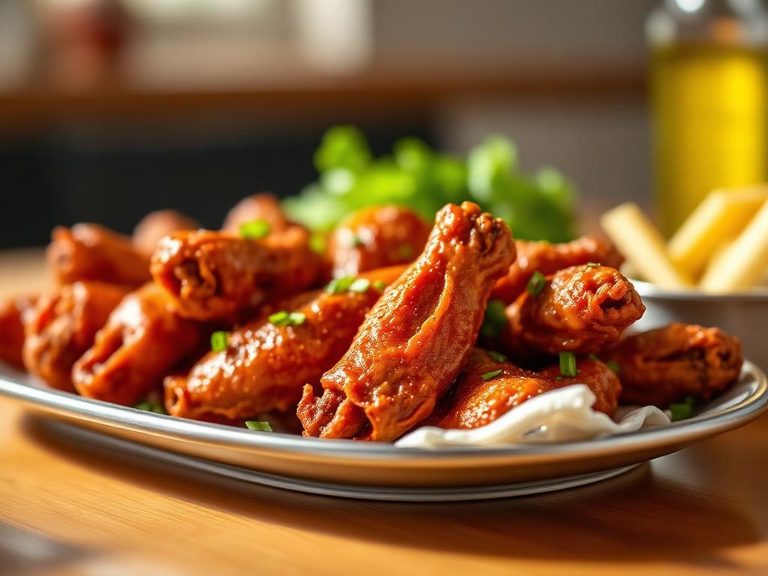

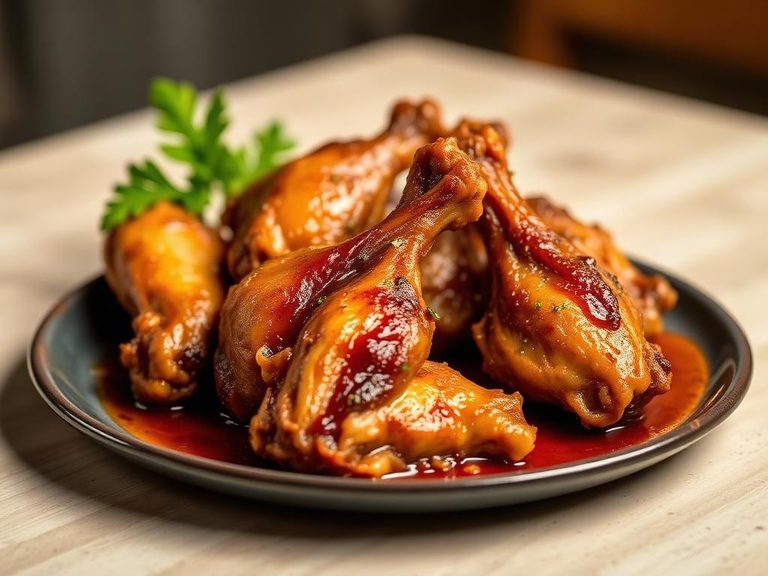
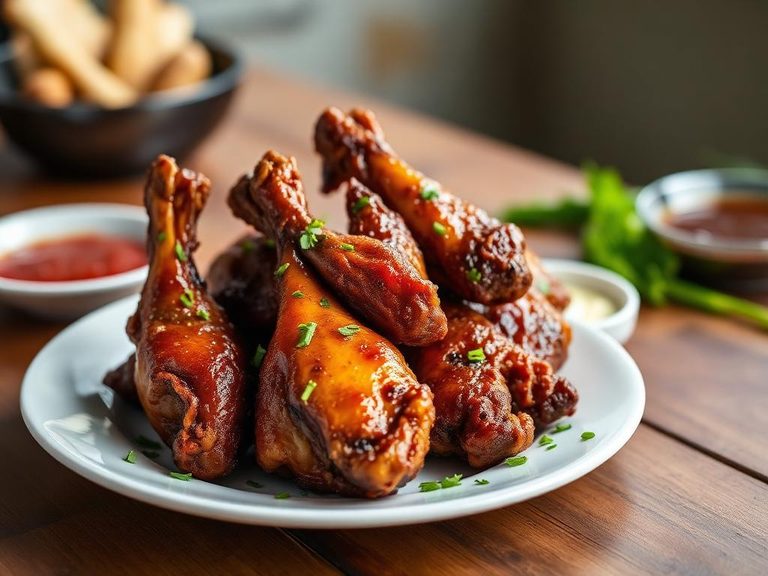

🌍 Where it's eaten
💡 Did you know?
A single turkey wing, meat and skin, contains more than a day's recommended intake of the essential amino acid tryptophan, which is a precursor to the sleep-regulating hormone melatonin.
Full nutrition (USDA data · scales with serving)
| Water | 66.8 g |
| Energy | 202 kcal |
| Energy | 846 kj |
| Protein | 19.5 g |
| Total lipid (fat) | 13.8 g |
| Ash | 0.81 g |
| Carbohydrate, by difference | 0.05 g |
| Fiber, total dietary | 0.00 g |
| Total Sugars | 0.03 g |
| Sucrose | 0.03 g |
| Glucose | 0.00 g |
| Fructose | 0.00 g |
| Lactose | 0.00 g |
| Maltose | 0.00 g |
| Galactose | 0.00 g |
| Starch | 0.02 g |
| Calcium, Ca | 8.0 mg |
| Iron, Fe | 0.68 mg |
| Magnesium, Mg | 17.0 mg |
| Phosphorus, P | 139 mg |
| Potassium, K | 192 mg |
| Sodium, Na | 67.0 mg |
| Zinc, Zn | 2.1 mg |
| Copper, Cu | 0.05 mg |
| Manganese, Mn | 0.01 mg |
| Selenium, Se | 18.0 ug |
| Vitamin C, total ascorbic acid | 0.00 mg |
| Thiamin | 0.03 mg |
| Riboflavin | 0.12 mg |
| Niacin | 5.6 mg |
| Pantothenic acid | 0.62 mg |
| Vitamin B-6 | 0.54 mg |
| Folate, total | 6.0 ug |
| Folic acid | 0.00 ug |
| Folate, food | 6.0 ug |
| Folate, DFE | 6.0 ug |
| Choline, total | 46.1 mg |
| Vitamin B-12 | 0.91 ug |
| Vitamin B-12, added | 0.00 ug |
| Vitamin A, RAE | 30.0 ug |
| Retinol | 30.0 ug |
| Carotene, beta | 0.00 ug |
| Carotene, alpha | 0.00 ug |
| Cryptoxanthin, beta | 0.00 ug |
| Vitamin A, IU | 100 iu |
| Lycopene | 0.00 ug |
| Lutein + zeaxanthin | 0.00 ug |
| Vitamin E (alpha-tocopherol) | 0.10 mg |
| Vitamin E, added | 0.00 mg |
| Tocopherol, beta | 0.00 mg |
| Tocopherol, gamma | 0.00 mg |
| Tocopherol, delta | 0.00 mg |
| Tocotrienol, alpha | 0.00 mg |
| Tocotrienol, beta | 0.00 mg |
| Tocotrienol, gamma | 0.01 mg |
| Tocotrienol, delta | 0.00 mg |
| Vitamin D (D2 + D3), International Units | 19.0 iu |
| Vitamin D (D2 + D3) | 0.50 ug |
| Vitamin D3 (cholecalciferol) | 0.50 ug |
| Vitamin K (phylloquinone) | 0.00 ug |
| Alcohol, ethyl | 0.00 g |
| Caffeine | 0.00 mg |
| Theobromine | 0.00 mg |
Fat & fatty acid profile (per 100g)
| Fatty acids, total saturated | 3.5 g |
| SFA 4:0 | 0.00 g |
| SFA 6:0 | 0.00 g |
| SFA 8:0 | 0.00 g |
| SFA 10:0 | 0.01 g |
| SFA 12:0 | 0.04 g |
| SFA 14:0 | 0.13 g |
| SFA 15:0 | 0.02 g |
| SFA 16:0 | 2.4 g |
| SFA 17:0 | 0.03 g |
| SFA 18:0 | 0.85 g |
| SFA 20:0 | 0.01 g |
| SFA 22:0 | 0.01 g |
| SFA 24:0 | 0.00 g |
| Fatty acids, total monounsaturated | 4.6 g |
| MUFA 14:1 | 0.02 g |
| MUFA 15:1 | 0.00 g |
| MUFA 16:1 | 0.46 g |
| MUFA 16:1 c | 0.45 g |
| MUFA 17:1 | 0.02 g |
| MUFA 18:1 | 4.1 g |
| MUFA 18:1 c | 3.9 g |
| MUFA 20:1 | 0.06 g |
| MUFA 22:1 | 0.00 g |
| MUFA 22:1 c | 0.00 g |
| MUFA 24:1 c | 0.00 g |
| Fatty acids, total polyunsaturated | 3.7 g |
| PUFA 18:2 | 3.3 g |
| PUFA 18:2 n-6 c,c | 3.3 g |
| PUFA 18:2 CLAs | 0.03 g |
| PUFA 18:3 | 0.21 g |
| PUFA 18:3 n-3 c,c,c (ALA) | 0.20 g |
| PUFA 18:3 n-6 c,c,c | 0.01 g |
| PUFA 18:4 | 0.00 g |
| PUFA 20:2 n-6 c,c | 0.02 g |
| PUFA 20:3 | 0.01 g |
| PUFA 20:3 n-3 | 0.00 g |
| PUFA 20:3 n-6 | 0.01 g |
| PUFA 20:4 | 0.08 g |
| PUFA 20:5 n-3 (EPA) | 0.01 g |
| PUFA 22:4 | 0.02 g |
| PUFA 22:5 n-3 (DPA) | 0.01 g |
| PUFA 22:6 n-3 (DHA) | 0.01 g |
| Fatty acids, total trans | 0.19 g |
| Fatty acids, total trans-monoenoic | 0.14 g |
| TFA 16:1 t | 0.01 g |
| TFA 18:1 t | 0.13 g |
| TFA 22:1 t | 0.00 g |
| TFA 18:2 t not further defined | 0.04 g |
| Fatty acids, total trans-polyenoic | 0.04 g |
| Cholesterol | 84.0 mg |
Amino acid profile (per 100g)
| Tryptophan | 0.21 g |
| Threonine | 0.77 g |
| Isoleucine | 0.63 g |
| Leucine | 1.5 g |
| Lysine | 1.8 g |
| Methionine | 0.50 g |
| Cystine | 0.18 g |
| Phenylalanine | 0.66 g |
| Tyrosine | 0.60 g |
| Valine | 0.69 g |
| Arginine | 1.2 g |
| Histidine | 0.54 g |
| Alanine | 1.2 g |
| Aspartic acid | 1.7 g |
| Glutamic acid | 2.8 g |
| Glycine | 1.2 g |
| Proline | 1.1 g |
| Serine | 0.79 g |
| Hydroxyproline | 0.28 g |
FAQ
How do I get crispy skin on turkey wings?
Pat the wings completely dry with paper towels, season generously, and roast on a rack at a high temperature (400-425°F / 200-220°C) to allow air circulation and fat rendering.
Are turkey wings a good source of collagen?
Yes, the skin, connective tissue, and bones are rich in collagen. Slow-cooking methods like braising or making broth help break it down into gelatin, which is beneficial for joint and gut health.
What's the best way to cook tough turkey wings?
Low and slow cooking methods are ideal. Braising in liquid, slow-roasting, or smoking for several hours will break down the connective tissue, resulting in tender, fall-off-the-bone meat.
Nutrient density (calculated · NRF9.3)
Nutrient Rich Foods index: beneficial nutrients (protein, fiber, vitamins, minerals) minus saturated fat, added sugar & sodium, per 100 kcal.
NRF9.3 index — Fulgoni, Keast & Drewnowski, 2009. Computed from USDA nutrients.
Weight-loss friendliness (composite index)
Energy density 2.02 kcal/g · 39% calories from protein · 0.0 g fiber · 0.0 g sugar per 100 g.
Composite of energy density (Rolls et al., 1999), protein & fiber satiety, minus sugar. A calculated heuristic — ranks satiety-per-calorie, not a clinical measure.
Dietary load (calculated from USDA values)
Potential renal acid load. Positive = acid-forming, negative = alkaline-forming.
Sodium-to-potassium ratio: 0.35 (lower is better — aim for ≤ 1)
Sodium:potassium per WHO potassium guidance. Computed from USDA nutrients.