

Turkey, breast, from whole bird, meat only, with added solution, raw
Whole food · Poultry Products
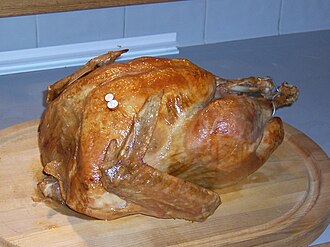
Photo: Wikipedia
This is raw, boneless turkey breast from a whole bird, enhanced with a solution for moisture and tenderness. Its flavor is mild and subtly sweet, with a lean, fine-grained texture that becomes tender and juicy when cooked properly. Nutritionally, it is a powerhouse of high-quality protein with virtually no fat, carbs, or fiber.
Calorie split: 85% protein · 1% carbs · 15% fat
↓ Full nutrition💚 Why it's loved
People love it for its neutral flavor that readily absorbs marinades and spices, making it a blank canvas for global cuisines. It's also a cultural staple for holiday meals like Thanksgiving in the United States, symbolizing family gatherings and tradition.
⚠️ Watch-outs & how to enjoy it better
The added solution often contains sodium and phosphates, which can be a concern for those monitoring salt intake. To counteract this, rinse the meat briefly under cold water before cooking and opt for low-sodium seasonings. Its extreme leanness can lead to dryness if overcooked; brining or using a meat thermometer to cook to 165°F (74°C) helps ensure juiciness.
Key benefits
- Excellent source of lean, complete protein for muscle maintenance.
- Very low in fat and calories, supporting weight management.
- Naturally free of carbohydrates and sugars.
- Versatile base for countless healthy recipes.
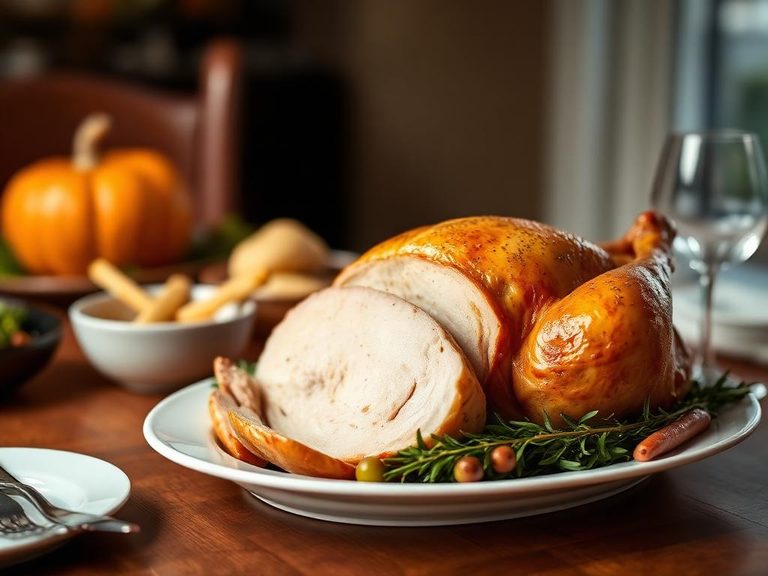
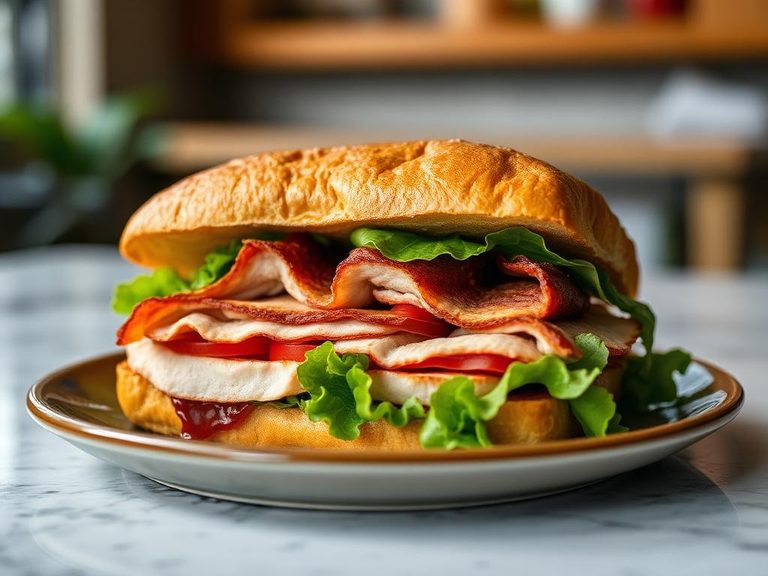
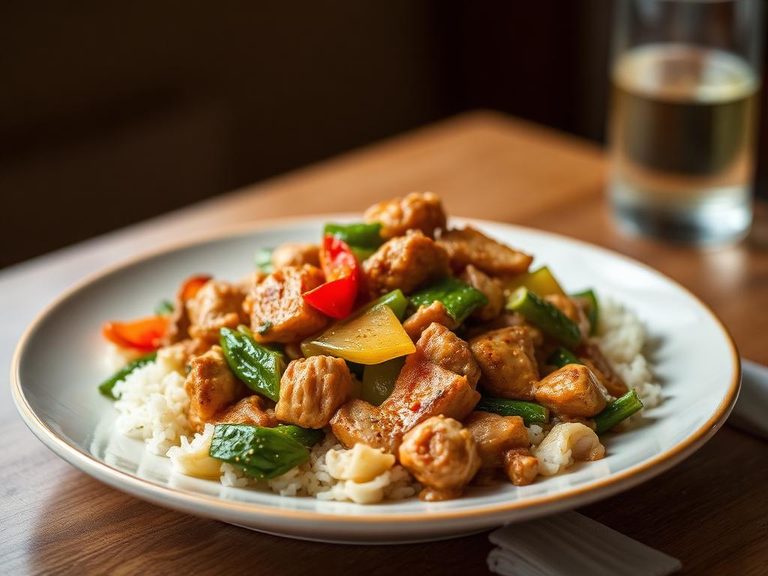
🍽️ Popular dishes

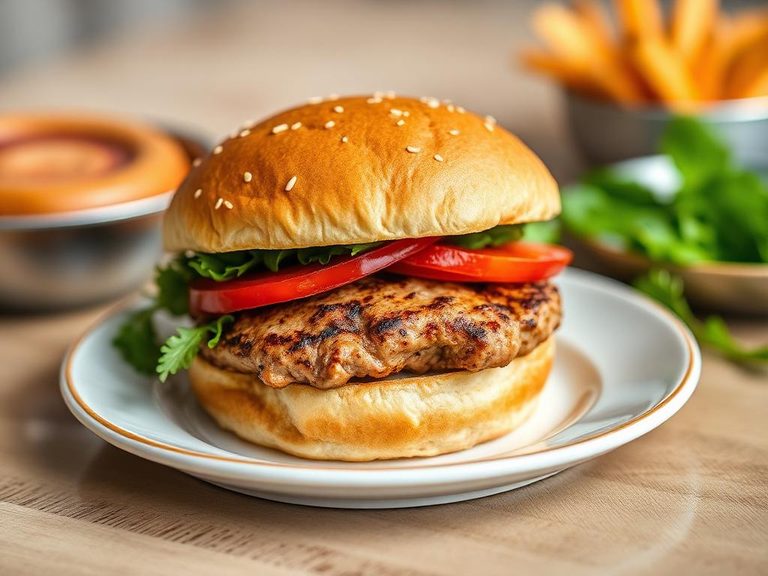
🌍 Where it's eaten
💡 Did you know?
The added solution (often a mix of water, salt, and broth) can increase the bird's weight by up to 15%, which helps keep it moist during cooking but also means you're paying for more liquid.
Full nutrition (USDA data · scales with serving)
| Water | 76.4 g |
| Energy | 102 kcal |
| Energy | 425 kj |
| Protein | 21.5 g |
| Total lipid (fat) | 1.7 g |
| Ash | 1.4 g |
| Carbohydrate, by difference | 0.14 g |
| Fiber, total dietary | 0.00 g |
| Total Sugars | 0.05 g |
| Sucrose | 0.05 g |
| Glucose | 0.00 g |
| Fructose | 0.00 g |
| Lactose | 0.00 g |
| Maltose | 0.00 g |
| Galactose | 0.00 g |
| Starch | 0.09 g |
| Calcium, Ca | 14.0 mg |
| Iron, Fe | 0.54 mg |
| Magnesium, Mg | 25.0 mg |
| Phosphorus, P | 236 mg |
| Potassium, K | 242 mg |
| Sodium, Na | 206 mg |
| Zinc, Zn | 1.3 mg |
| Copper, Cu | 0.05 mg |
| Manganese, Mn | 0.01 mg |
| Selenium, Se | 22.7 ug |
| Vitamin C, total ascorbic acid | 0.00 mg |
| Thiamin | 0.03 mg |
| Riboflavin | 0.14 mg |
| Niacin | 9.9 mg |
| Pantothenic acid | 0.78 mg |
| Vitamin B-6 | 0.78 mg |
| Folate, total | 7.0 ug |
| Folate, food | 7.0 ug |
| Choline, total | 48.3 mg |
| Betaine | 2.5 mg |
| Vitamin B-12 | 0.63 ug |
| Vitamin B-12, added | 0.00 ug |
| Vitamin A, RAE | 6.0 ug |
| Retinol | 6.0 ug |
| Carotene, beta | 0.00 ug |
| Carotene, alpha | 0.00 ug |
| Cryptoxanthin, beta | 0.00 ug |
| Vitamin A, IU | 20.0 iu |
| Lycopene | 0.00 ug |
| Lutein + zeaxanthin | 0.00 ug |
| Vitamin E (alpha-tocopherol) | 0.06 mg |
| Vitamin E, added | 0.00 mg |
| Tocopherol, beta | 0.00 mg |
| Tocopherol, gamma | 0.01 mg |
| Tocopherol, delta | 0.00 mg |
| Tocotrienol, alpha | 0.00 mg |
| Tocotrienol, beta | 0.00 mg |
| Tocotrienol, gamma | 0.00 mg |
| Tocotrienol, delta | 0.00 mg |
| Vitamin D (D2 + D3), International Units | 5.0 iu |
| Vitamin D (D2 + D3) | 0.10 ug |
| Vitamin D3 (cholecalciferol) | 0.10 ug |
| Vitamin K (phylloquinone) | 0.00 ug |
| Alcohol, ethyl | 0.00 g |
| Caffeine | 0.00 mg |
| Theobromine | 0.00 mg |
Fat & fatty acid profile (per 100g)
| Fatty acids, total saturated | 0.54 g |
| SFA 4:0 | 0.00 g |
| SFA 6:0 | 0.00 g |
| SFA 8:0 | 0.00 g |
| SFA 10:0 | 0.01 g |
| SFA 12:0 | 0.01 g |
| SFA 14:0 | 0.01 g |
| SFA 15:0 | 0.00 g |
| SFA 16:0 | 0.33 g |
| SFA 17:0 | 0.01 g |
| SFA 18:0 | 0.17 g |
| SFA 20:0 | 0.00 g |
| SFA 22:0 | 0.00 g |
| SFA 24:0 | 0.00 g |
| Fatty acids, total monounsaturated | 0.49 g |
| MUFA 14:1 | 0.00 g |
| MUFA 15:1 | 0.00 g |
| MUFA 16:1 | 0.04 g |
| MUFA 16:1 c | 0.04 g |
| MUFA 17:1 | 0.00 g |
| MUFA 18:1 | 0.44 g |
| MUFA 18:1 c | 0.42 g |
| MUFA 20:1 | 0.01 g |
| MUFA 22:1 | 0.00 g |
| MUFA 22:1 c | 0.00 g |
| MUFA 24:1 c | 0.00 g |
| Fatty acids, total polyunsaturated | 0.48 g |
| PUFA 18:2 | 0.37 g |
| PUFA 18:2 n-6 c,c | 0.36 g |
| PUFA 18:2 CLAs | 0.00 g |
| PUFA 18:3 | 0.02 g |
| PUFA 18:3 n-3 c,c,c (ALA) | 0.02 g |
| PUFA 18:3 n-6 c,c,c | 0.00 g |
| PUFA 18:4 | 0.00 g |
| PUFA 20:2 n-6 c,c | 0.01 g |
| PUFA 20:3 | 0.01 g |
| PUFA 20:3 n-3 | 0.00 g |
| PUFA 20:3 n-6 | 0.01 g |
| PUFA 20:4 | 0.05 g |
| PUFA 20:5 n-3 (EPA) | 0.00 g |
| PUFA 22:4 | 0.02 g |
| PUFA 22:5 n-3 (DPA) | 0.01 g |
| PUFA 22:6 n-3 (DHA) | 0.00 g |
| Fatty acids, total trans | 0.02 g |
| Fatty acids, total trans-monoenoic | 0.02 g |
| TFA 16:1 t | 0.00 g |
| TFA 18:1 t | 0.02 g |
| TFA 22:1 t | 0.00 g |
| TFA 18:2 t not further defined | 0.01 g |
| Fatty acids, total trans-polyenoic | 0.01 g |
| Cholesterol | 54.0 mg |
Amino acid profile (per 100g)
| Tryptophan | 0.23 g |
| Threonine | 0.78 g |
| Isoleucine | 0.62 g |
| Leucine | 1.5 g |
| Lysine | 1.8 g |
| Methionine | 0.56 g |
| Cystine | 0.20 g |
| Phenylalanine | 0.69 g |
| Tyrosine | 0.64 g |
| Valine | 0.69 g |
| Arginine | 1.2 g |
| Histidine | 0.58 g |
| Alanine | 1.2 g |
| Aspartic acid | 1.7 g |
| Glutamic acid | 2.9 g |
| Glycine | 0.92 g |
| Proline | 1.2 g |
| Serine | 0.85 g |
| Hydroxyproline | 0.11 g |
FAQ
What does 'with added solution' mean?
It means the turkey has been injected or marinated with a liquid mixture (usually water, salt, and sometimes broth or flavorings) to enhance moisture and tenderness during cooking.
How do I keep turkey breast from drying out?
Avoid overcooking by using a meat thermometer to check for an internal temperature of 165°F (74°C). Brining the meat beforehand or cooking it with a bit of fat (like olive oil or butter) can also help retain moisture.
Is turkey breast healthier than chicken breast?
Both are very lean, high-protein options. Turkey breast is slightly lower in calories and fat per 100g, while chicken breast is often more affordable and widely available. Nutritionally, they are quite similar.
Nutrient density (calculated · NRF9.3)
Nutrient Rich Foods index: beneficial nutrients (protein, fiber, vitamins, minerals) minus saturated fat, added sugar & sodium, per 100 kcal.
NRF9.3 index — Fulgoni, Keast & Drewnowski, 2009. Computed from USDA nutrients.
Weight-loss friendliness (composite index)
Energy density 1.02 kcal/g · 84% calories from protein · 0.0 g fiber · 0.1 g sugar per 100 g.
Composite of energy density (Rolls et al., 1999), protein & fiber satiety, minus sugar. A calculated heuristic — ranks satiety-per-calorie, not a clinical measure.
Dietary load (calculated from USDA values)
Potential renal acid load. Positive = acid-forming, negative = alkaline-forming.
Sodium-to-potassium ratio: 0.85 (lower is better — aim for ≤ 1)
Sodium:potassium per WHO potassium guidance. Computed from USDA nutrients.