

Rice, brown, parboiled, dry, UNCLE BEN'S
Whole food · Cereal Grains and Pasta

Photo: Wikipedia
Uncle Ben's parboiled brown rice is a long-grain rice that's been partially boiled in its husk before milling, giving it a distinctive light tan color and a firm, separate texture when cooked. It offers a nutty, slightly earthy flavor that's more robust than white rice but milder than some whole grains. Nutritionally, it's a solid source of complex carbohydrates and provides a good amount of fiber and plant-based protein per serving.
Calorie split: 8% protein · 85% carbs · 7% fat
↓ Full nutrition💚 Why it's loved
People love it for its reliable, fluffy texture that doesn't clump, making it perfect for pilafs and side dishes. Its mild, nutty flavor pairs beautifully with everything from bold curries to simple stir-fries, and it's a staple in many cultures for its comforting, wholesome quality.
⚠️ Watch-outs & how to enjoy it better
The chewy texture and longer cooking time can be a drawback for those used to quick-cooking white rice. Its high carbohydrate content means individuals managing blood sugar should be mindful of portion sizes. To counteract this, pair it with protein (like beans or chicken) and healthy fats (like avocado or olive oil) to slow digestion and moderate the glycemic response.
Key benefits
- High in fiber (3.5g per 100g dry) for digestive health and satiety.
- Good source of plant-based protein (7.6g per 100g dry).
- Parboiling process helps retain more B vitamins and minerals compared to regular milling.
- Complex carbohydrates provide sustained energy release.
- Low in fat (2.75g per 100g dry) and contains no sugar.
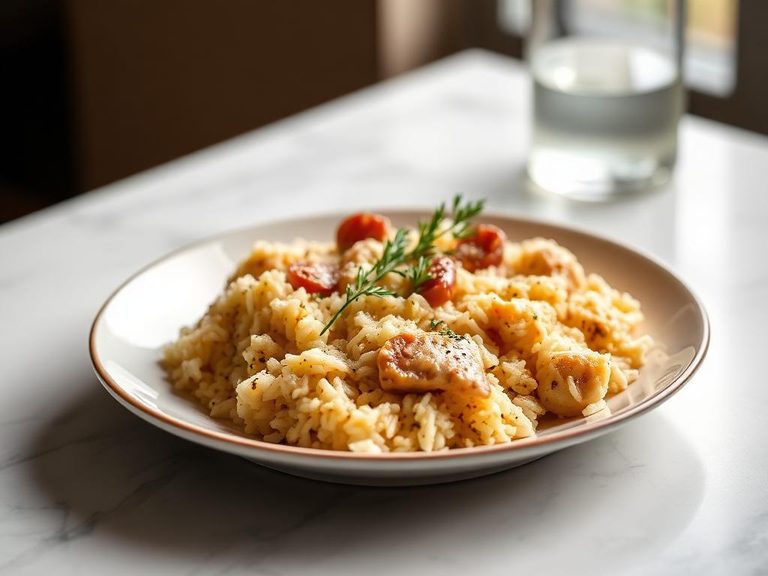
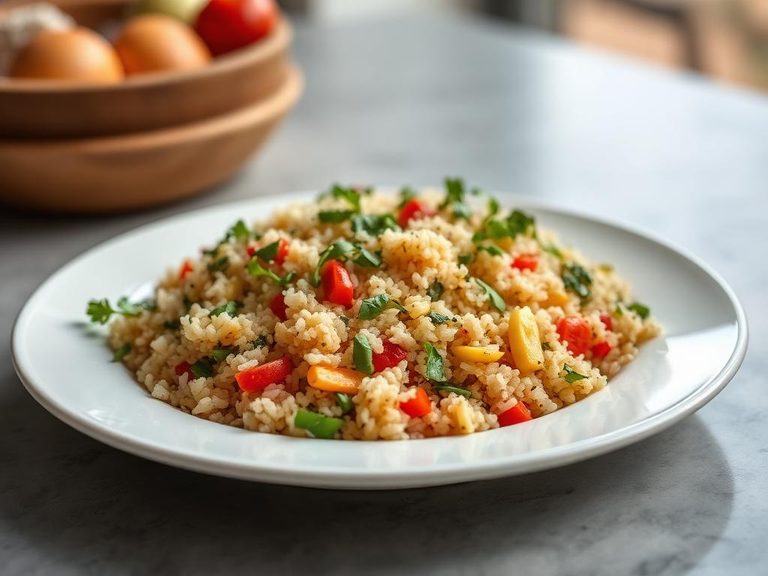
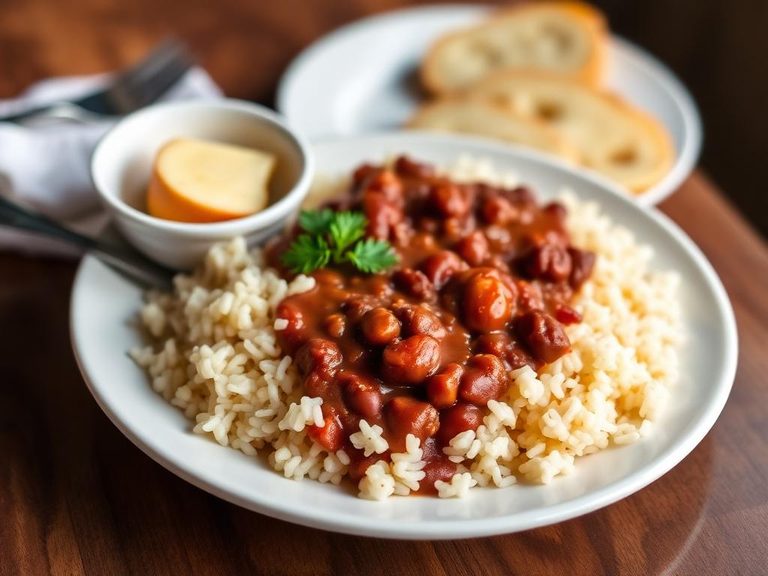
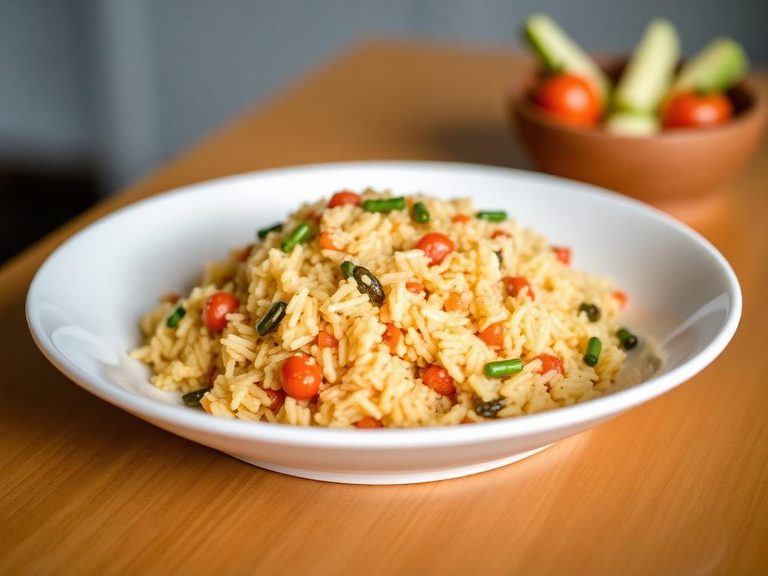
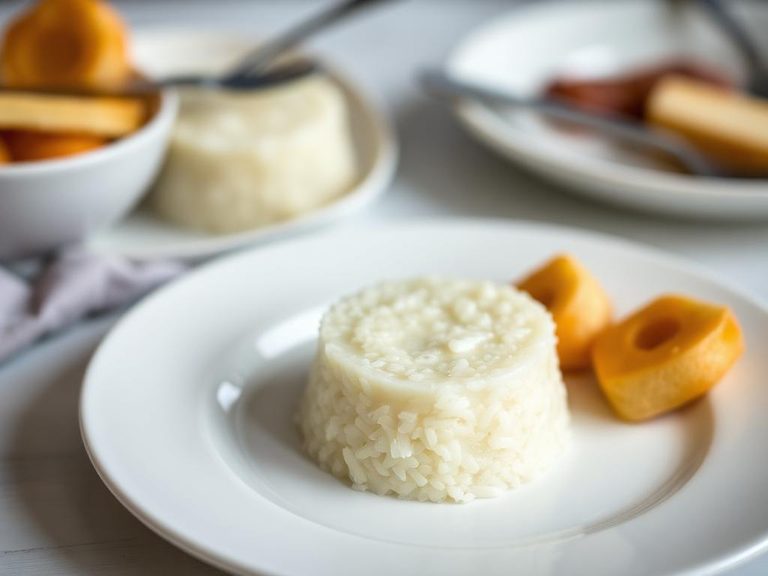
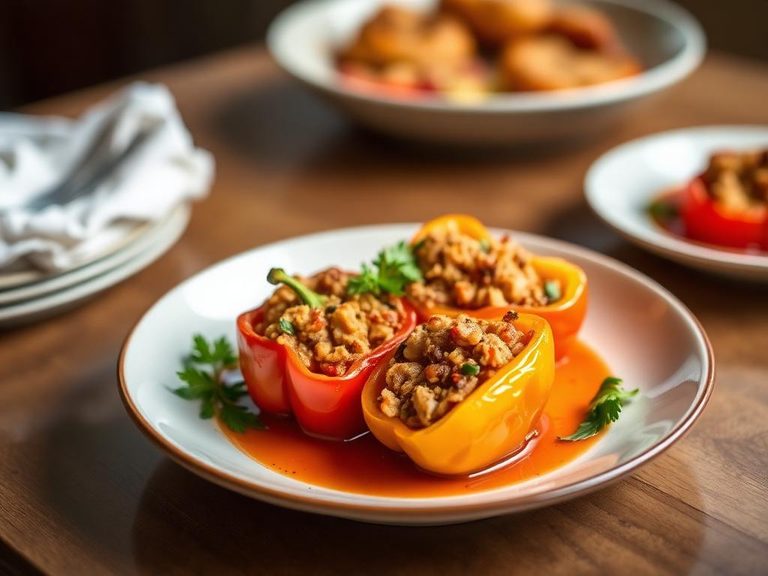
🍽️ Popular dishes
🌍 Where it's eaten
💡 Did you know?
The parboiling process, which involves soaking and steaming the rice paddy before milling, forces some nutrients from the bran into the starchy endosperm, making the final grain more nutritious than standard brown rice.
Full nutrition (USDA data · scales with serving)
| Water | 9.8 g |
| Energy | 370 kcal |
| Energy | 1547 kj |
| Protein | 7.6 g |
| Total lipid (fat) | 2.8 g |
| Ash | 1.2 g |
| Carbohydrate, by difference | 78.7 g |
| Fiber, total dietary | 3.5 g |
| Total Sugars | 0.50 g |
| Sucrose | 0.50 g |
| Glucose | 0.00 g |
| Fructose | 0.00 g |
| Lactose | 0.00 g |
| Maltose | 0.00 g |
| Galactose | 0.00 g |
| Starch | 73.8 g |
| Calcium, Ca | 8.0 mg |
| Iron, Fe | 1.2 mg |
| Magnesium, Mg | 98.0 mg |
| Phosphorus, P | 275 mg |
| Potassium, K | 219 mg |
| Sodium, Na | 6.0 mg |
| Zinc, Zn | 2.0 mg |
| Copper, Cu | 0.33 mg |
| Manganese, Mn | 3.0 mg |
| Selenium, Se | 25.2 ug |
| Vitamin C, total ascorbic acid | 0.00 mg |
| Thiamin | 0.28 mg |
| Riboflavin | 0.09 mg |
| Niacin | 5.0 mg |
| Pantothenic acid | 0.90 mg |
| Vitamin B-6 | 0.41 mg |
| Folate, total | 14.0 ug |
| Folic acid | 0.00 ug |
| Folate, food | 14.0 ug |
| Folate, DFE | 14.0 ug |
| Choline, total | 9.1 mg |
| Vitamin B-12 | 0.00 ug |
| Vitamin A, RAE | 0.00 ug |
| Retinol | 0.00 ug |
| Carotene, beta | 0.00 ug |
| Carotene, alpha | 0.00 ug |
| Cryptoxanthin, beta | 0.00 ug |
| Vitamin A, IU | 0.00 iu |
| Lycopene | 0.00 ug |
| Lutein + zeaxanthin | 0.00 ug |
| Vitamin E (alpha-tocopherol) | 0.09 mg |
| Tocopherol, beta | 0.00 mg |
| Tocopherol, gamma | 0.20 mg |
| Tocopherol, delta | 0.00 mg |
| Tocotrienol, alpha | 0.18 mg |
| Tocotrienol, beta | 0.00 mg |
| Tocotrienol, gamma | 0.79 mg |
| Tocotrienol, delta | 0.00 mg |
| Vitamin D (D2 + D3), International Units | 0.00 iu |
| Vitamin D (D2 + D3) | 0.00 ug |
| Vitamin K (phylloquinone) | 0.90 ug |
| Vitamin K (Dihydrophylloquinone) | 0.00 ug |
| Vitamin K (Menaquinone-4) | 0.00 ug |
| Alcohol, ethyl | 0.00 g |
| Caffeine | 0.00 mg |
| Theobromine | 0.00 mg |
Fat & fatty acid profile (per 100g)
| Fatty acids, total saturated | 0.48 g |
| SFA 4:0 | 0.00 g |
| SFA 6:0 | 0.00 g |
| SFA 8:0 | 0.00 g |
| SFA 10:0 | 0.01 g |
| SFA 12:0 | 0.00 g |
| SFA 14:0 | 0.01 g |
| SFA 15:0 | 0.00 g |
| SFA 16:0 | 0.38 g |
| SFA 17:0 | 0.00 g |
| SFA 18:0 | 0.05 g |
| SFA 20:0 | 0.01 g |
| SFA 22:0 | 0.00 g |
| SFA 24:0 | 0.01 g |
| Fatty acids, total monounsaturated | 1.0 g |
| MUFA 14:1 | 0.00 g |
| MUFA 15:1 | 0.00 g |
| MUFA 16:1 | 0.00 g |
| MUFA 16:1 c | 0.00 g |
| MUFA 17:1 | 0.00 g |
| MUFA 18:1 | 1.0 g |
| MUFA 18:1 c | 1.0 g |
| MUFA 20:1 | 0.01 g |
| MUFA 22:1 | 0.00 g |
| MUFA 22:1 c | 0.00 g |
| MUFA 24:1 c | 0.00 g |
| Fatty acids, total polyunsaturated | 0.84 g |
| PUFA 18:2 | 0.81 g |
| PUFA 18:2 n-6 c,c | 0.81 g |
| PUFA 18:2 CLAs | 0.00 g |
| PUFA 18:3 | 0.03 g |
| PUFA 18:3 n-3 c,c,c (ALA) | 0.03 g |
| PUFA 18:3 n-6 c,c,c | 0.00 g |
| PUFA 18:3i | 0.00 g |
| PUFA 18:4 | 0.00 g |
| PUFA 20:2 n-6 c,c | 0.00 g |
| PUFA 20:3 | 0.00 g |
| PUFA 20:3 n-3 | 0.00 g |
| PUFA 20:3 n-6 | 0.00 g |
| PUFA 20:4 | 0.00 g |
| PUFA 20:5 n-3 (EPA) | 0.00 g |
| PUFA 22:4 | 0.00 g |
| PUFA 22:5 n-3 (DPA) | 0.00 g |
| PUFA 22:6 n-3 (DHA) | 0.00 g |
| Fatty acids, total trans | 0.00 g |
| Fatty acids, total trans-monoenoic | 0.00 g |
| TFA 16:1 t | 0.00 g |
| TFA 18:1 t | 0.00 g |
| TFA 22:1 t | 0.00 g |
| TFA 18:2 t not further defined | 0.00 g |
| Fatty acids, total trans-polyenoic | 0.00 g |
| Cholesterol | 0.00 mg |
Amino acid profile (per 100g)
Estimated from Rice, brown, medium-grain, cooked (Includes foods for USDA's Food Distribution Program) — USDA does not publish this profile for Rice.
| Tryptophan | 0.03 g |
| Threonine | 0.09 g |
| Isoleucine | 0.10 g |
| Leucine | 0.19 g |
| Lysine | 0.09 g |
| Methionine | 0.05 g |
| Cystine | 0.03 g |
| Phenylalanine | 0.12 g |
| Tyrosine | 0.09 g |
| Valine | 0.14 g |
| Arginine | 0.17 g |
| Histidine | 0.06 g |
| Alanine | 0.14 g |
| Aspartic acid | 0.22 g |
| Glutamic acid | 0.47 g |
| Glycine | 0.11 g |
| Proline | 0.11 g |
| Serine | 0.12 g |
FAQ
What's the difference between parboiled brown rice and regular brown rice?
Parboiled rice is partially boiled in the husk before milling, which gelatinizes the starch and drives nutrients inward. This results in a firmer texture, faster cooking time, and better nutrient retention compared to regular brown rice, which is simply milled to remove the husk.
How do I cook it to get the best texture?
Use a 1:2.25 rice-to-water ratio. Bring to a boil, then simmer covered for about 40-45 minutes. Let it stand, covered, for 10 minutes after cooking, then fluff with a fork. This method ensures separate, fluffy grains.
Is it suitable for a low-sodium diet?
Yes, plain dry rice contains no sodium. However, always check the nutrition label if using a pre-seasoned or instant version, as those can contain added salt.
Nutrient density (calculated · NRF9.3)
Nutrient Rich Foods index: beneficial nutrients (protein, fiber, vitamins, minerals) minus saturated fat, added sugar & sodium, per 100 kcal.
NRF9.3 index — Fulgoni, Keast & Drewnowski, 2009. Computed from USDA nutrients.
Weight-loss friendliness (composite index)
Energy density 3.70 kcal/g · 8% calories from protein · 3.5 g fiber · 0.5 g sugar per 100 g.
Composite of energy density (Rolls et al., 1999), protein & fiber satiety, minus sugar. A calculated heuristic — ranks satiety-per-calorie, not a clinical measure.
Dietary load (calculated from USDA values)
Potential renal acid load. Positive = acid-forming, negative = alkaline-forming.
Sodium-to-potassium ratio: 0.03 (lower is better — aim for ≤ 1)
Sodium:potassium per WHO potassium guidance. Computed from USDA nutrients.