

Refried beans, canned, fat-free
Whole food · Legumes and Legume Products
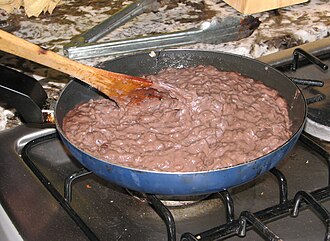
Photo: Wikipedia
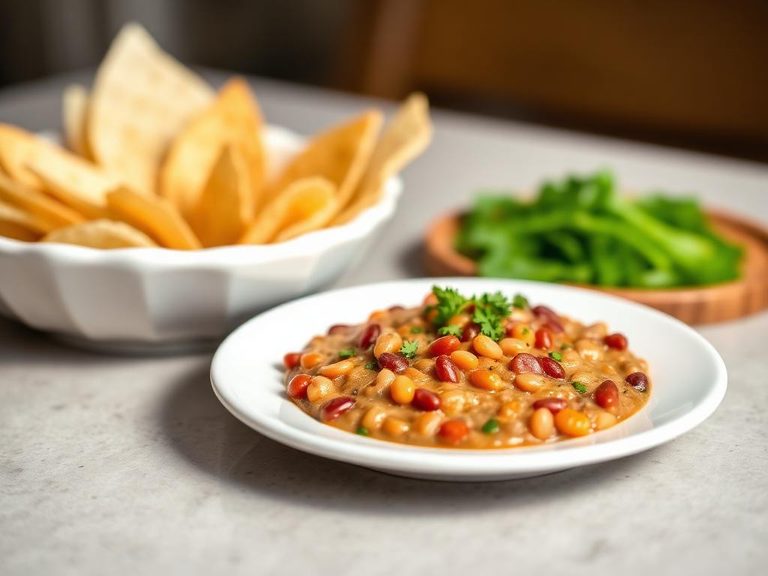
Refried beans, canned and fat-free, are a smooth, savory paste made from cooked and mashed pinto beans, offering a creamy texture with a mild, earthy flavor. This convenient pantry staple packs a notable protein and fiber punch for very few calories, making it a filling and nutritious base for countless meals.
Calorie split: 27% protein · 68% carbs · 5% fat
↓ Full nutrition💚 Why it's loved
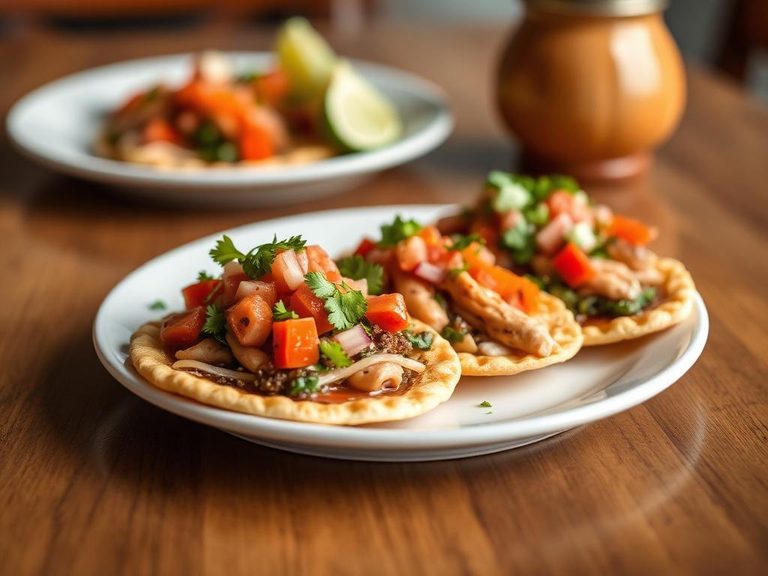
People love canned refried beans for their incredible convenience and comforting, savory flavor that serves as a perfect canvas for toppings like cheese, salsa, and sour cream. They are a beloved staple in Mexican and Tex-Mex cuisine, forming the heart of dishes from breakfast burritos to classic bean dip.
⚠️ Watch-outs & how to enjoy it better
The primary concern is often the high sodium content in many canned varieties, which can be problematic for those monitoring blood pressure. To counteract this, look for 'no salt added' versions or rinse the beans thoroughly. Additionally, the high fiber content may cause digestive discomfort for some; starting with a small portion and drinking plenty of water can help.
Key benefits
- Excellent source of plant-based protein (5.34g per 100g)
- High in dietary fiber (4.7g per 100g) for digestive health
- Very low in fat (0.45g per 100g) and calories (79 kcal)
- Provides complex carbohydrates for sustained energy
- Convenient, shelf-stable source of essential nutrients
🍽️ Popular dishes
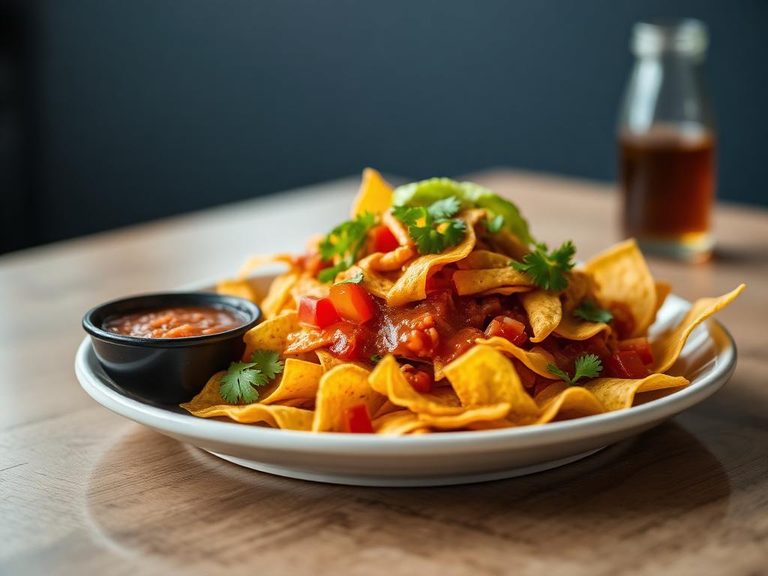
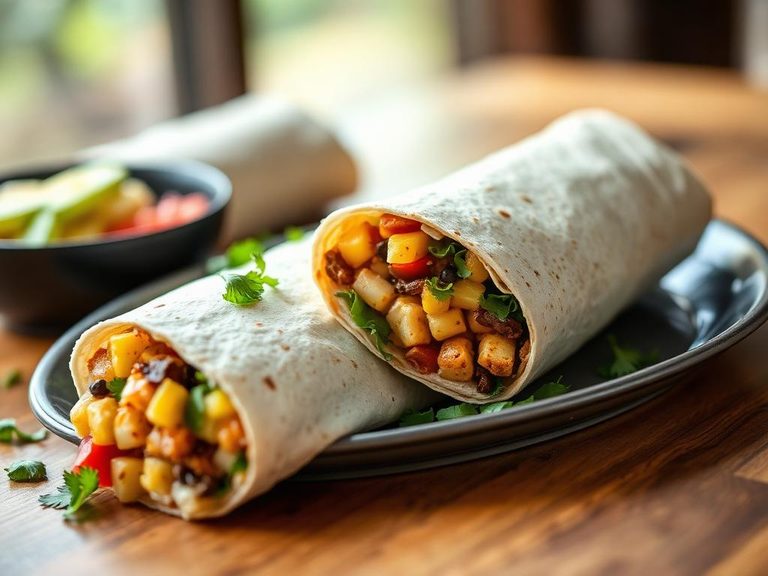
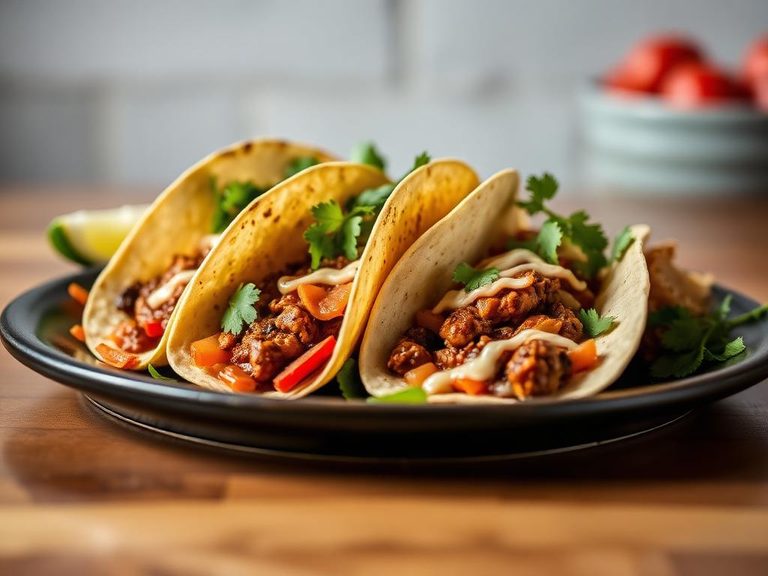

🌍 Where it's eaten
💡 Did you know?
The name 'refried' is a misleading translation from the Spanish 'frijoles refritos,' which actually means 'well-fried beans'—they are typically mashed and fried just once.
Full nutrition (USDA data · scales with serving)
| Water | 78.7 g |
| Energy | 79.0 kcal |
| Energy | 332 kj |
| Protein | 5.3 g |
| Total lipid (fat) | 0.45 g |
| Ash | 2.0 g |
| Carbohydrate, by difference | 13.5 g |
| Fiber, total dietary | 4.7 g |
| Total Sugars | 0.61 g |
| Sucrose | 0.61 g |
| Glucose | 0.00 g |
| Fructose | 0.00 g |
| Lactose | 0.00 g |
| Maltose | 0.00 g |
| Galactose | 0.00 g |
| Starch | 8.7 g |
| Calcium, Ca | 34.0 mg |
| Iron, Fe | 1.6 mg |
| Magnesium, Mg | 38.0 mg |
| Phosphorus, P | 111 mg |
| Potassium, K | 344 mg |
| Sodium, Na | 350 mg |
| Zinc, Zn | 0.65 mg |
| Copper, Cu | 0.16 mg |
| Manganese, Mn | 0.33 mg |
| Selenium, Se | 5.7 ug |
| Vitamin C, total ascorbic acid | 0.90 mg |
| Thiamin | 0.03 mg |
| Riboflavin | 0.01 mg |
| Niacin | 0.36 mg |
| Pantothenic acid | 0.20 mg |
| Vitamin B-6 | 0.11 mg |
| Folate, total | 57.0 ug |
| Folic acid | 0.00 ug |
| Folate, food | 57.0 ug |
| Folate, DFE | 57.0 ug |
| Choline, total | 20.3 mg |
| Vitamin B-12 | 0.00 ug |
| Vitamin B-12, added | 0.00 ug |
| Vitamin A, RAE | 0.00 ug |
| Retinol | 0.00 ug |
| Carotene, beta | 0.00 ug |
| Carotene, alpha | 0.00 ug |
| Cryptoxanthin, beta | 0.00 ug |
| Vitamin A, IU | 0.00 iu |
| Lycopene | 0.00 ug |
| Lutein + zeaxanthin | 0.00 ug |
| Vitamin E (alpha-tocopherol) | 0.04 mg |
| Vitamin E, added | 0.00 mg |
| Tocopherol, beta | 0.00 mg |
| Tocopherol, gamma | 0.99 mg |
| Tocopherol, delta | 0.05 mg |
| Tocotrienol, alpha | 0.02 mg |
| Tocotrienol, beta | 0.00 mg |
| Tocotrienol, gamma | 0.01 mg |
| Tocotrienol, delta | 0.00 mg |
| Vitamin D (D2 + D3), International Units | 0.00 iu |
| Vitamin D (D2 + D3) | 0.00 ug |
| Vitamin K (phylloquinone) | 2.0 ug |
| Alcohol, ethyl | 0.00 g |
| Caffeine | 0.00 mg |
| Theobromine | 0.00 mg |
Fat & fatty acid profile (per 100g)
| Fatty acids, total saturated | 0.09 g |
| SFA 4:0 | 0.00 g |
| SFA 6:0 | 0.00 g |
| SFA 8:0 | 0.00 g |
| SFA 10:0 | 0.00 g |
| SFA 12:0 | 0.00 g |
| SFA 14:0 | 0.00 g |
| SFA 15:0 | 0.00 g |
| SFA 16:0 | 0.07 g |
| SFA 17:0 | 0.00 g |
| SFA 18:0 | 0.01 g |
| SFA 20:0 | 0.00 g |
| SFA 22:0 | 0.00 g |
| SFA 24:0 | 0.00 g |
| Fatty acids, total monounsaturated | 0.04 g |
| MUFA 14:1 | 0.00 g |
| MUFA 15:1 | 0.00 g |
| MUFA 16:1 | 0.00 g |
| MUFA 16:1 c | 0.00 g |
| MUFA 17:1 | 0.00 g |
| MUFA 18:1 | 0.04 g |
| MUFA 18:1 c | 0.04 g |
| MUFA 20:1 | 0.00 g |
| MUFA 22:1 | 0.00 g |
| MUFA 22:1 c | 0.00 g |
| MUFA 24:1 c | 0.00 g |
| Fatty acids, total polyunsaturated | 0.29 g |
| PUFA 18:2 | 0.13 g |
| PUFA 18:2 n-6 c,c | 0.13 g |
| PUFA 18:2 CLAs | 0.00 g |
| PUFA 18:3 | 0.15 g |
| PUFA 18:3 n-3 c,c,c (ALA) | 0.15 g |
| PUFA 18:3 n-6 c,c,c | 0.00 g |
| PUFA 18:4 | 0.00 g |
| PUFA 20:2 n-6 c,c | 0.00 g |
| PUFA 20:3 | 0.00 g |
| PUFA 20:3 n-3 | 0.00 g |
| PUFA 20:3 n-6 | 0.00 g |
| PUFA 20:4 | 0.00 g |
| PUFA 20:5 n-3 (EPA) | 0.00 g |
| PUFA 22:4 | 0.00 g |
| PUFA 22:5 n-3 (DPA) | 0.00 g |
| PUFA 22:6 n-3 (DHA) | 0.00 g |
| Fatty acids, total trans | 0.00 g |
| Fatty acids, total trans-monoenoic | 0.00 g |
| TFA 16:1 t | 0.00 g |
| TFA 18:1 t | 0.00 g |
| TFA 22:1 t | 0.00 g |
| TFA 18:2 t not further defined | 0.00 g |
| Fatty acids, total trans-polyenoic | 0.00 g |
| Cholesterol | 0.00 mg |
Amino acid profile (per 100g)
Estimated from Refried beans, canned, traditional style — USDA does not publish this profile for Refried beans.
| Tryptophan | 0.07 g |
| Threonine | 0.23 g |
| Isoleucine | 0.24 g |
| Leucine | 0.44 g |
| Lysine | 0.38 g |
| Methionine | 0.08 g |
| Cystine | 0.06 g |
| Phenylalanine | 0.30 g |
| Tyrosine | 0.15 g |
| Valine | 0.29 g |
| Arginine | 0.34 g |
| Histidine | 0.15 g |
| Alanine | 0.23 g |
| Aspartic acid | 0.66 g |
| Glutamic acid | 0.84 g |
| Glycine | 0.21 g |
| Proline | 0.23 g |
| Serine | 0.30 g |
FAQ
Are canned refried beans as healthy as homemade?
Canned versions are very convenient and nutritious but often contain added sodium and may have a slightly different texture. Homemade allows you to control salt and fat content precisely, but canned is a fantastic, time-saving alternative.
Can I eat refried beans straight from the can?
Yes, they are fully cooked. However, they are almost always heated before serving to enhance flavor and texture. You can microwave them or warm them in a saucepan.
What's the difference between traditional and fat-free refried beans?
Traditional refried beans are mashed and fried in lard or oil, giving them a richer flavor and higher fat content. Fat-free canned versions use no added fat, resulting in a lower calorie and fat count while maintaining the classic texture.
Nutrient density (calculated · NRF9.3)
Nutrient Rich Foods index: beneficial nutrients (protein, fiber, vitamins, minerals) minus saturated fat, added sugar & sodium, per 100 kcal.
NRF9.3 index — Fulgoni, Keast & Drewnowski, 2009. Computed from USDA nutrients.
Weight-loss friendliness (composite index)
Energy density 0.79 kcal/g · 27% calories from protein · 4.7 g fiber · 0.6 g sugar per 100 g.
Composite of energy density (Rolls et al., 1999), protein & fiber satiety, minus sugar. A calculated heuristic — ranks satiety-per-calorie, not a clinical measure.
Dietary load (calculated from USDA values)
Potential renal acid load. Positive = acid-forming, negative = alkaline-forming.
Sodium-to-potassium ratio: 1.02 (lower is better — aim for ≤ 1)
Sodium:potassium per WHO potassium guidance. Computed from USDA nutrients.