Refried beans, canned, traditional style
Whole food · Legumes and Legume Products

Photo: Wikipedia
Canned traditional refried beans are a thick, savory paste of mashed pinto beans, cooked down with lard or oil until rich and creamy. They have a hearty, earthy flavor with a smooth, dense texture that holds up well on a plate or as a dip. Nutritionally, they are a solid source of plant-based protein and dietary fiber, making them a satisfying, low-calorie staple.
💚 Why it's loved
People love refried beans for their deep, savory flavor and creamy texture that pairs perfectly with tortillas, rice, or as a dip. They are a cultural cornerstone in Mexican and Tex-Mex cuisine, often evoking a sense of comfort and home-cooked tradition.
⚠️ Watch-outs & how to enjoy it better
Canned versions can be high in sodium, which may be a concern for those monitoring blood pressure. To counteract this, rinse the beans before heating or choose a low-sodium variety. They also contain moderate carbohydrates, so pairing with a protein like cheese or a healthy fat like avocado can help stabilize blood sugar levels.
Key benefits
- High in plant-based protein for muscle maintenance.
- Rich in dietary fiber to support digestion.
- Low in calories, making it a filling, weight-friendly option.
- Provides a good source of iron and folate.
- Versatile base for many meals and snacks.
🍽️ Popular dishes
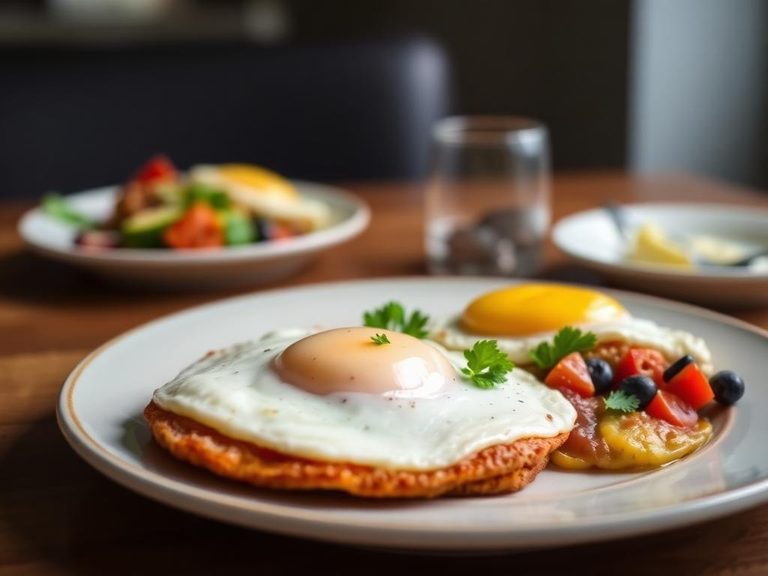
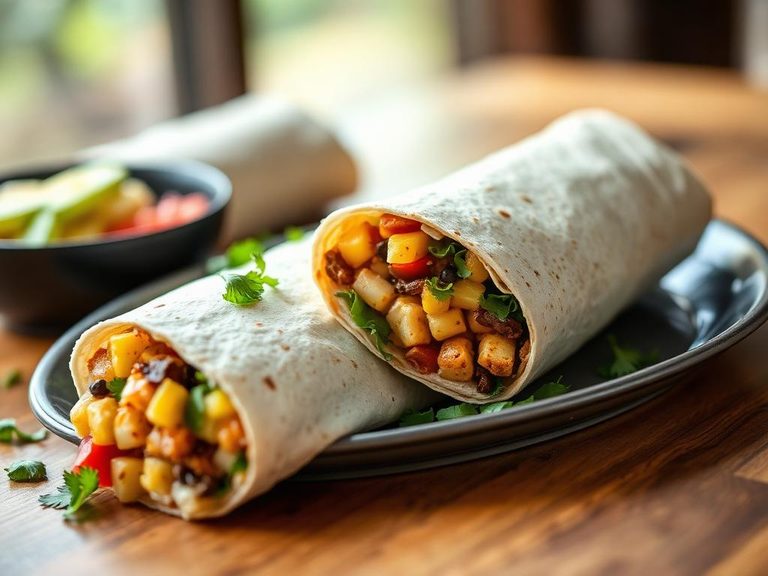
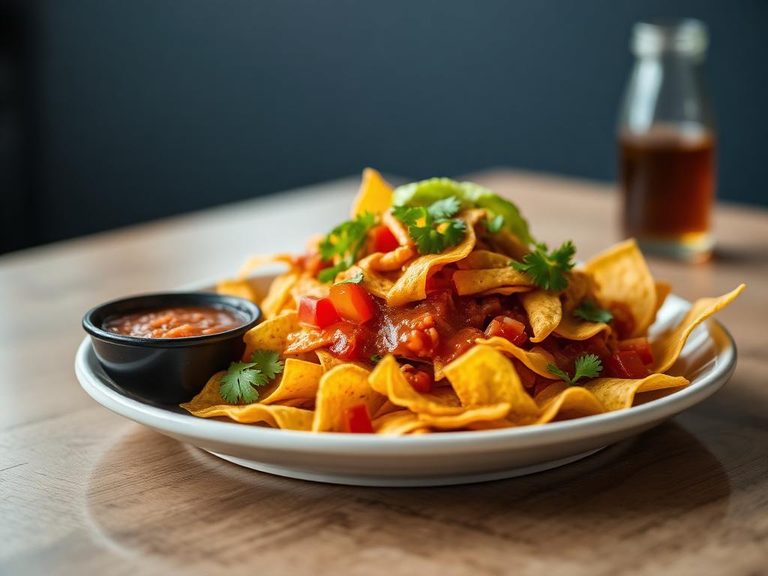
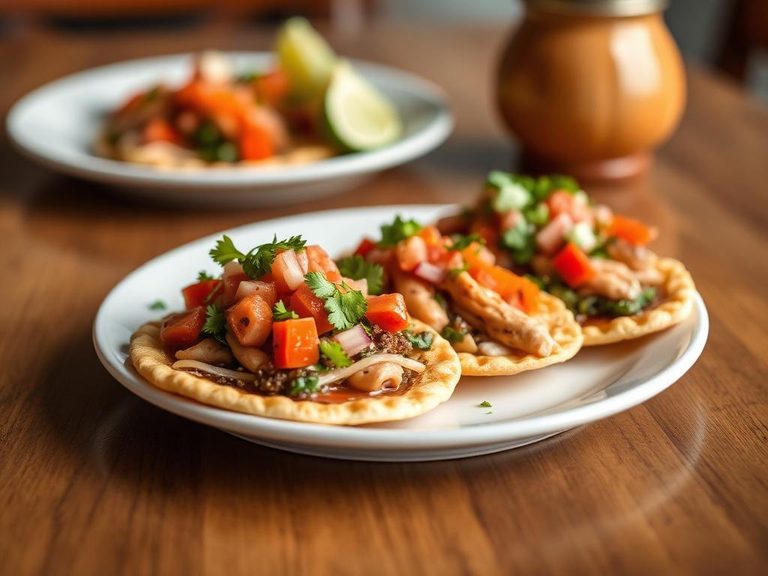
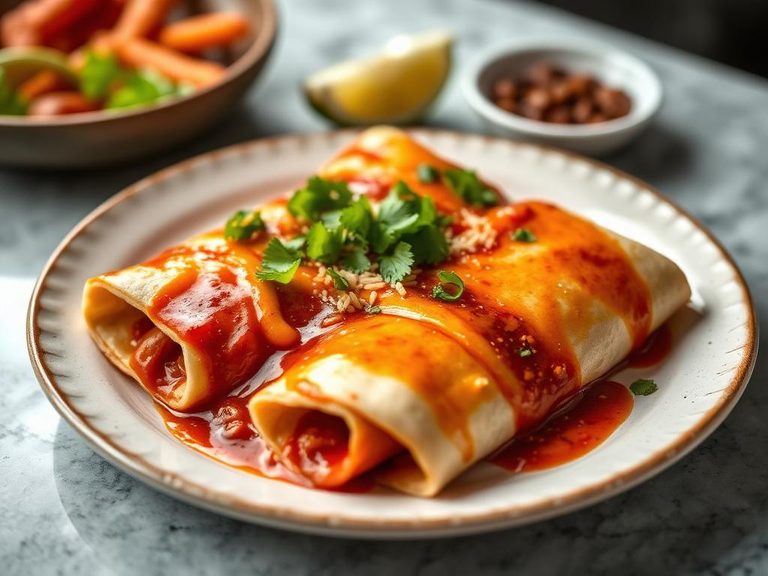
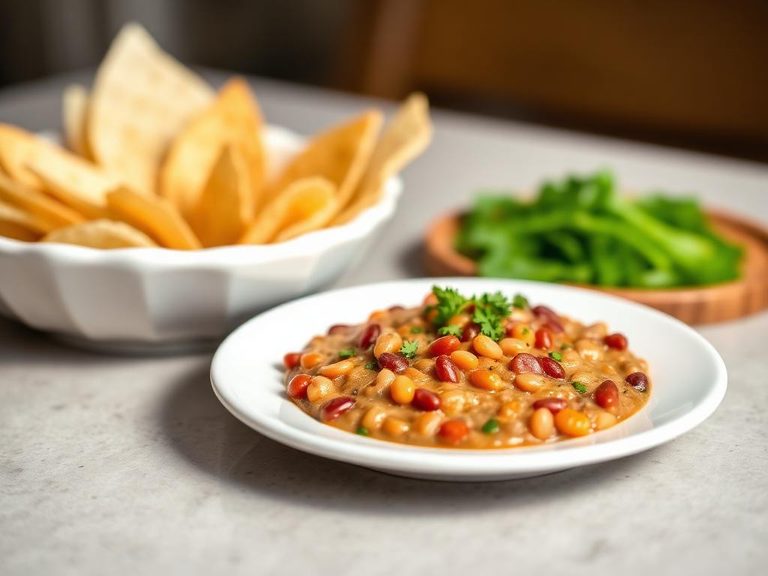
🌍 Where it's eaten
💡 Did you know?
The term 'refried' is a mistranslation of the Spanish 'frijoles refritos,' which actually means 'well-fried' or 'fried again,' not that they are fried twice.
Full nutrition (scales with serving)
| Water | 77.8 g |
| Energy | 90.0 kcal |
| Energy | 379 kj |
| Protein | 5.0 g |
| Total lipid (fat) | 2.0 g |
| Ash | 1.7 g |
| Carbohydrate, by difference | 13.6 g |
| Fiber, total dietary | 3.7 g |
| Total Sugars | 0.54 g |
| Sucrose | 0.54 g |
| Glucose | 0.00 g |
| Fructose | 0.00 g |
| Lactose | 0.00 g |
| Maltose | 0.00 g |
| Galactose | 0.00 g |
| Starch | 7.4 g |
| Calcium, Ca | 29.0 mg |
| Iron, Fe | 1.4 mg |
| Magnesium, Mg | 35.0 mg |
| Phosphorus, P | 92.0 mg |
| Potassium, K | 319 mg |
| Sodium, Na | 370 mg |
| Zinc, Zn | 0.58 mg |
| Copper, Cu | 0.13 mg |
| Manganese, Mn | 0.29 mg |
| Selenium, Se | 5.8 ug |
| Vitamin C, total ascorbic acid | 6.0 mg |
| Thiamin | 0.08 mg |
| Riboflavin | 0.08 mg |
| Niacin | 0.37 mg |
| Pantothenic acid | 0.19 mg |
| Vitamin B-6 | 0.10 mg |
| Folate, total | 11.0 ug |
| Folic acid | 0.00 ug |
| Folate, food | 11.0 ug |
| Folate, DFE | 11.0 ug |
| Choline, total | 21.2 mg |
| Vitamin B-12 | 0.00 ug |
| Vitamin B-12, added | 0.00 ug |
| Vitamin A, RAE | 0.00 ug |
| Retinol | 0.00 ug |
| Carotene, beta | 0.00 ug |
| Carotene, alpha | 0.00 ug |
| Cryptoxanthin, beta | 0.00 ug |
| Vitamin A, IU | 0.00 iu |
| Lycopene | 0.00 ug |
| Lutein + zeaxanthin | 0.00 ug |
| Vitamin E (alpha-tocopherol) | 0.09 mg |
| Vitamin E, added | 0.00 mg |
| Tocopherol, beta | 0.00 mg |
| Tocopherol, gamma | 0.81 mg |
| Tocopherol, delta | 0.00 mg |
| Tocotrienol, alpha | 0.00 mg |
| Tocotrienol, beta | 0.00 mg |
| Tocotrienol, gamma | 0.08 mg |
| Tocotrienol, delta | 0.00 mg |
| Vitamin D (D2 + D3), International Units | 0.00 iu |
| Vitamin D (D2 + D3) | 0.00 ug |
| Vitamin K (phylloquinone) | 2.1 ug |
| Alcohol, ethyl | 0.00 g |
| Caffeine | 0.00 mg |
| Theobromine | 0.00 mg |
Fat & fatty acid profile (per 100g)
| Fatty acids, total saturated | 0.63 g |
| SFA 4:0 | 0.00 g |
| SFA 6:0 | 0.00 g |
| SFA 8:0 | 0.00 g |
| SFA 10:0 | 0.00 g |
| SFA 12:0 | 0.00 g |
| SFA 14:0 | 0.02 g |
| SFA 15:0 | 0.00 g |
| SFA 16:0 | 0.39 g |
| SFA 17:0 | 0.01 g |
| SFA 18:0 | 0.19 g |
| SFA 20:0 | 0.00 g |
| SFA 22:0 | 0.00 g |
| SFA 24:0 | 0.00 g |
| Fatty acids, total monounsaturated | 0.60 g |
| MUFA 14:1 | 0.00 g |
| MUFA 15:1 | 0.00 g |
| MUFA 16:1 | 0.02 g |
| MUFA 16:1 c | 0.02 g |
| MUFA 17:1 | 0.00 g |
| MUFA 18:1 | 0.56 g |
| MUFA 18:1 c | 0.55 g |
| MUFA 20:1 | 0.01 g |
| MUFA 22:1 | 0.00 g |
| MUFA 22:1 c | 0.00 g |
| MUFA 24:1 c | 0.00 g |
| Fatty acids, total polyunsaturated | 0.54 g |
| PUFA 18:2 | 0.36 g |
| PUFA 18:2 n-6 c,c | 0.36 g |
| PUFA 18:2 CLAs | 0.00 g |
| PUFA 18:3 | 0.17 g |
| PUFA 18:3 n-3 c,c,c (ALA) | 0.17 g |
| PUFA 18:3 n-6 c,c,c | 0.00 g |
| PUFA 18:4 | 0.00 g |
| PUFA 20:2 n-6 c,c | 0.01 g |
| PUFA 20:3 | 0.00 g |
| PUFA 20:3 n-3 | 0.00 g |
| PUFA 20:3 n-6 | 0.00 g |
| PUFA 20:4 | 0.00 g |
| PUFA 20:5 n-3 (EPA) | 0.00 g |
| PUFA 22:4 | 0.00 g |
| PUFA 22:5 n-3 (DPA) | 0.00 g |
| PUFA 22:6 n-3 (DHA) | 0.00 g |
| Fatty acids, total trans | 0.02 g |
| Fatty acids, total trans-monoenoic | 0.01 g |
| TFA 16:1 t | 0.00 g |
| TFA 18:1 t | 0.01 g |
| TFA 22:1 t | 0.00 g |
| TFA 18:2 t not further defined | 0.00 g |
| Fatty acids, total trans-polyenoic | 0.00 g |
| Cholesterol | 0.00 mg |
Amino acid profile (per 100g)
| Tryptophan | 0.07 g |
| Threonine | 0.23 g |
| Isoleucine | 0.24 g |
| Leucine | 0.44 g |
| Lysine | 0.38 g |
| Methionine | 0.08 g |
| Cystine | 0.06 g |
| Phenylalanine | 0.30 g |
| Tyrosine | 0.15 g |
| Valine | 0.29 g |
| Arginine | 0.34 g |
| Histidine | 0.15 g |
| Alanine | 0.23 g |
| Aspartic acid | 0.66 g |
| Glutamic acid | 0.84 g |
| Glycine | 0.21 g |
| Proline | 0.23 g |
| Serine | 0.30 g |
FAQ
Are refried beans healthy?
Yes, they are a good source of protein and fiber, but canned versions can be high in sodium. Opt for low-sodium or rinse them to reduce salt content.
Can I eat refried beans if I'm vegan?
Traditional refried beans often use lard, but many canned or restaurant versions are made with vegetable oil. Check labels or ask for vegan options.
How do I reduce the sodium in canned refried beans?
Rinse the beans thoroughly under water before heating, or choose a low-sodium brand. You can also dilute with water or add extra spices to compensate for flavor.