

Pork sausage, link/patty, cooked, pan-fried
Whole food · Sausages and Luncheon Meats
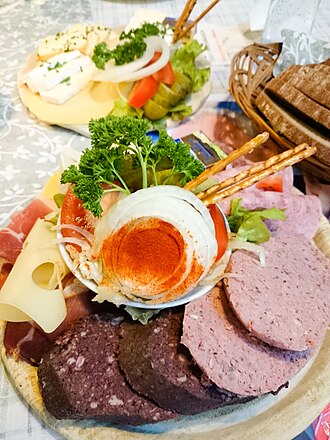
Photo: Wikipedia
A pan-fried pork sausage link or patty is a savory, juicy staple, offering a satisfying snap or crumbly texture with a rich, seasoned meatiness. Nutritionally, it's a dense source of protein and fat, providing substantial energy in a small serving.
Calorie split: 23% protein · 2% carbs · 75% fat
↓ Full nutrition💚 Why it's loved
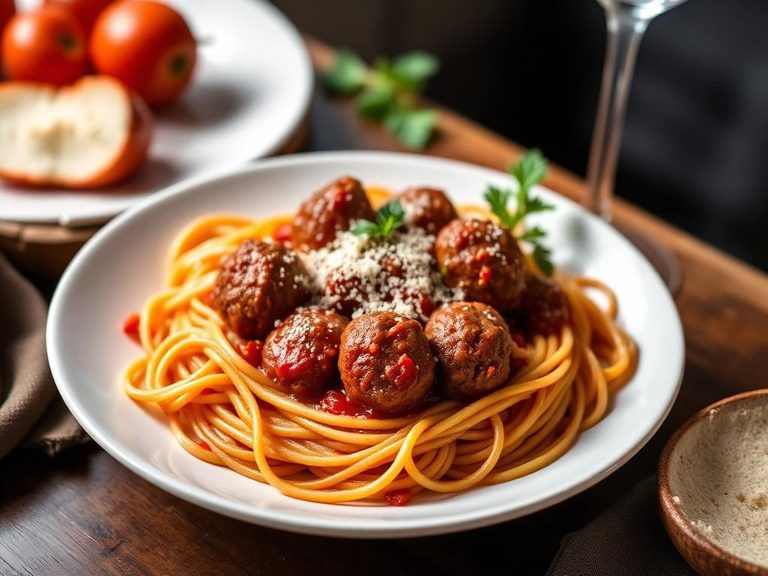
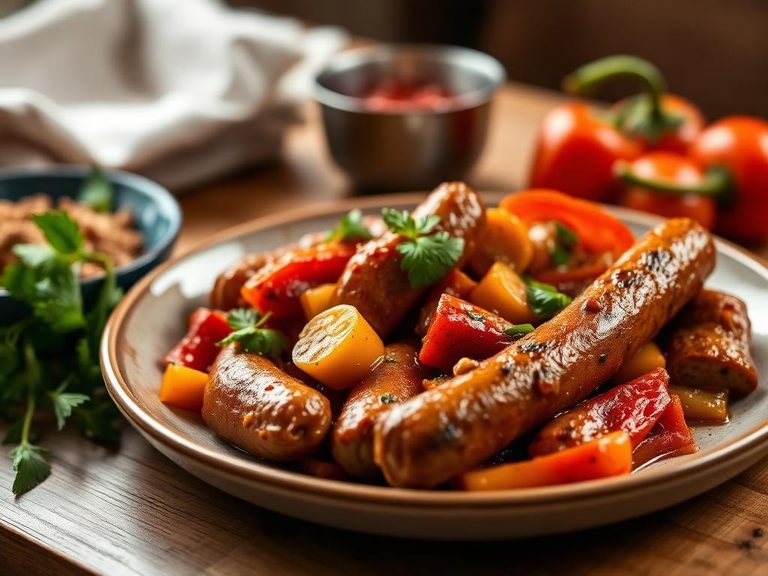
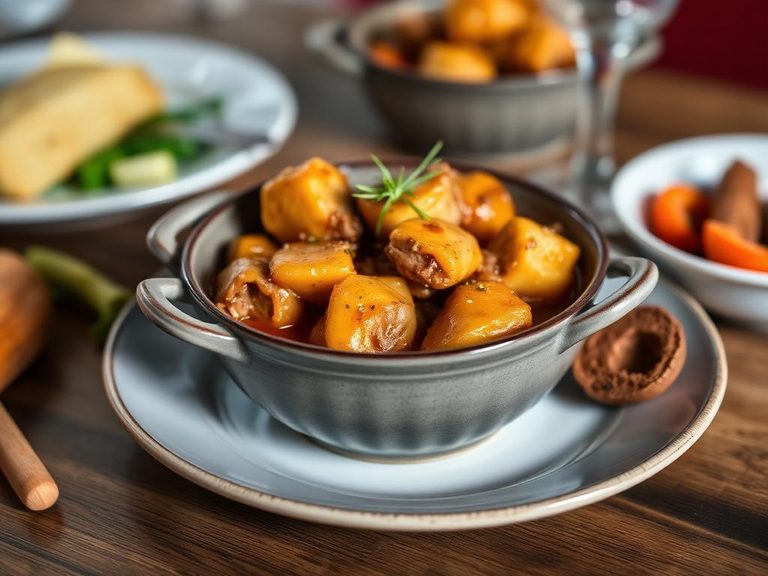
People adore its deep, savory umami flavor and the satisfying sizzle and aroma it brings to a meal. It's incredibly versatile, serving as a hearty centerpiece for breakfast, a protein boost in pasta, or a flavorful addition to soups and stews.
⚠️ Watch-outs & how to enjoy it better
Its high saturated fat and calorie density can be a concern for heart health and weight management if consumed excessively. The cooking method (pan-frying) can also add extra fat; to counteract this, consider baking or grilling to render out fat, and pair it with high-fiber vegetables or whole grains to balance the meal.
Key benefits
- High in complete protein for muscle maintenance.
- Provides quick, calorie-dense energy.
- Source of B vitamins like B12 and niacin.
- Contains minerals such as zinc and selenium.
🍽️ Popular dishes


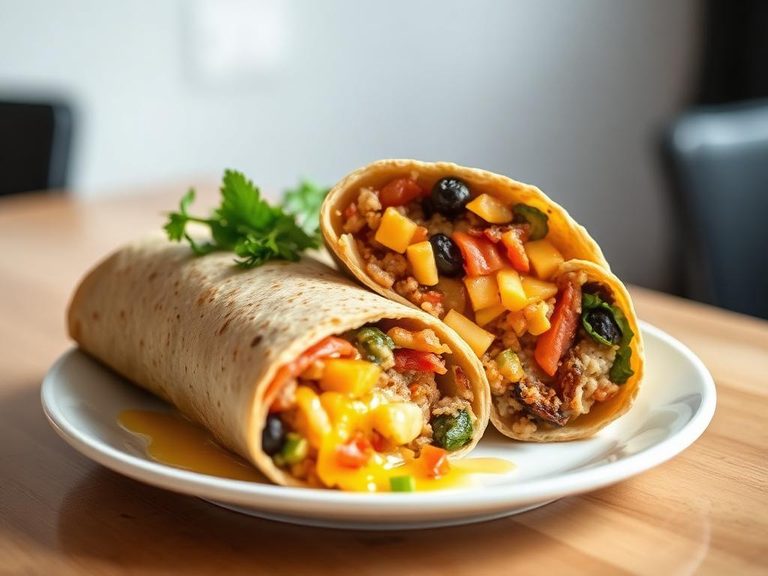
🌍 Where it's eaten
💡 Did you know?
The 'snap' of a good sausage casing comes from natural intestines that have been carefully cleaned, salted, and stuffed; it's a texture prized by sausage makers worldwide.
Full nutrition (USDA data · scales with serving)
| Water | 49.9 g |
| Energy | 325 kcal |
| Energy | 1360 kj |
| Protein | 18.5 g |
| Total lipid (fat) | 27.3 g |
| Ash | 2.9 g |
| Carbohydrate, by difference | 1.4 g |
| Fiber, total dietary | 0.00 g |
| Total Sugars | 1.1 g |
| Sucrose | 0.13 g |
| Glucose | 0.64 g |
| Fructose | 0.00 g |
| Lactose | 0.00 g |
| Maltose | 0.33 g |
| Galactose | 0.00 g |
| Calcium, Ca | 9.0 mg |
| Iron, Fe | 1.2 mg |
| Magnesium, Mg | 16.0 mg |
| Phosphorus, P | 149 mg |
| Potassium, K | 342 mg |
| Sodium, Na | 814 mg |
| Zinc, Zn | 2.5 mg |
| Copper, Cu | 0.07 mg |
| Manganese, Mn | 0.02 mg |
| Selenium, Se | 20.7 ug |
| Vitamin C, total ascorbic acid | 0.00 mg |
| Thiamin | 0.26 mg |
| Riboflavin | 0.18 mg |
| Niacin | 6.1 mg |
| Pantothenic acid | 0.81 mg |
| Vitamin B-6 | 0.20 mg |
| Folate, total | 1.0 ug |
| Folic acid | 0.00 ug |
| Folate, food | 1.0 ug |
| Folate, DFE | 1.0 ug |
| Choline, total | 62.3 mg |
| Vitamin B-12 | 0.98 ug |
| Vitamin B-12, added | 0.00 ug |
| Vitamin A, RAE | 28.0 ug |
| Retinol | 28.0 ug |
| Carotene, beta | 0.00 ug |
| Carotene, alpha | 0.00 ug |
| Cryptoxanthin, beta | 0.00 ug |
| Vitamin A, IU | 93.0 iu |
| Lycopene | 0.00 ug |
| Lutein + zeaxanthin | 0.00 ug |
| Vitamin E (alpha-tocopherol) | 0.90 mg |
| Vitamin E, added | 0.00 mg |
| Tocopherol, beta | 0.02 mg |
| Tocopherol, gamma | 0.05 mg |
| Tocopherol, delta | 0.00 mg |
| Tocotrienol, alpha | 0.03 mg |
| Tocotrienol, beta | 0.00 mg |
| Tocotrienol, gamma | 0.06 mg |
| Tocotrienol, delta | 0.00 mg |
| Vitamin D (D2 + D3), International Units | 58.0 iu |
| Vitamin D (D2 + D3) | 1.4 ug |
| Vitamin D2 (ergocalciferol) | 0.00 ug |
| Vitamin D3 (cholecalciferol) | 1.4 ug |
| Vitamin K (phylloquinone) | 0.00 ug |
| Alcohol, ethyl | 0.00 g |
| Caffeine | 0.00 mg |
| Theobromine | 0.00 mg |
Fat & fatty acid profile (per 100g)
| Fatty acids, total saturated | 8.8 g |
| SFA 4:0 | 0.00 g |
| SFA 6:0 | 0.00 g |
| SFA 8:0 | 0.00 g |
| SFA 10:0 | 0.02 g |
| SFA 12:0 | 0.02 g |
| SFA 14:0 | 0.32 g |
| SFA 15:0 | 0.01 g |
| SFA 16:0 | 5.5 g |
| SFA 17:0 | 0.07 g |
| SFA 18:0 | 2.7 g |
| SFA 20:0 | 0.07 g |
| SFA 22:0 | 0.01 g |
| SFA 24:0 | 0.00 g |
| Fatty acids, total monounsaturated | 11.5 g |
| MUFA 14:1 | 0.01 g |
| MUFA 15:1 | 0.00 g |
| MUFA 16:1 | 0.56 g |
| MUFA 16:1 c | 0.55 g |
| MUFA 17:1 | 0.06 g |
| MUFA 18:1 | 10.6 g |
| MUFA 18:1 c | 10.5 g |
| MUFA 20:1 | 0.33 g |
| MUFA 22:1 | 0.01 g |
| MUFA 22:1 c | 0.01 g |
| MUFA 24:1 c | 0.00 g |
| Fatty acids, total polyunsaturated | 5.1 g |
| PUFA 18:2 | 4.4 g |
| PUFA 18:2 n-6 c,c | 4.4 g |
| PUFA 18:2 CLAs | 0.03 g |
| PUFA 18:3 | 0.15 g |
| PUFA 18:3 n-3 c,c,c (ALA) | 0.14 g |
| PUFA 18:3 n-6 c,c,c | 0.01 g |
| PUFA 18:3i | 0.00 g |
| PUFA 18:4 | 0.00 g |
| PUFA 20:2 n-6 c,c | 0.25 g |
| PUFA 20:3 | 0.07 g |
| PUFA 20:3 n-3 | 0.03 g |
| PUFA 20:3 n-6 | 0.04 g |
| PUFA 20:4 | 0.12 g |
| PUFA 20:5 n-3 (EPA) | 0.00 g |
| PUFA 22:4 | 0.05 g |
| PUFA 22:5 n-3 (DPA) | 0.03 g |
| PUFA 22:6 n-3 (DHA) | 0.00 g |
| Fatty acids, total trans | 0.12 g |
| Fatty acids, total trans-monoenoic | 0.09 g |
| TFA 16:1 t | 0.01 g |
| TFA 18:1 t | 0.08 g |
| TFA 22:1 t | 0.00 g |
| TFA 18:2 t not further defined | 0.03 g |
| Fatty acids, total trans-polyenoic | 0.03 g |
| Cholesterol | 86.0 mg |
Amino acid profile (per 100g)
| Tryptophan | 0.18 g |
| Threonine | 0.61 g |
| Isoleucine | 0.74 g |
| Leucine | 1.4 g |
| Lysine | 1.2 g |
| Methionine | 0.43 g |
| Cystine | 0.24 g |
| Phenylalanine | 0.66 g |
| Tyrosine | 0.52 g |
| Valine | 0.88 g |
| Arginine | 1.2 g |
| Histidine | 0.54 g |
| Alanine | 1.1 g |
| Aspartic acid | 1.6 g |
| Glutamic acid | 2.8 g |
| Glycine | 1.3 g |
| Proline | 1.2 g |
| Serine | 0.77 g |
| Hydroxyproline | 0.43 g |
FAQ
Is this sausage pre-cooked?
The data is for 'cooked' sausage. Most fresh sausages sold in links or patties are raw and must be cooked thoroughly to an internal temperature of 160°F (71°C). Some varieties, like breakfast links, may be sold pre-cooked and just need reheating.
How does pan-frying affect the nutrition?
Pan-frying can add a small amount of additional fat if oil is used, but it also allows some of the sausage's own fat to render out into the pan, which can be drained off. Baking or grilling are often considered slightly leaner cooking methods.
Can I use this in place of ground beef?
Yes, in many recipes like pasta sauce, meatloaf, or stuffed peppers, it can be a flavorful substitute. Be aware it will add a distinct seasoned taste and may release more fat than lean ground beef.
Nutrient density (calculated · NRF9.3)
Nutrient Rich Foods index: beneficial nutrients (protein, fiber, vitamins, minerals) minus saturated fat, added sugar & sodium, per 100 kcal.
NRF9.3 index — Fulgoni, Keast & Drewnowski, 2009. Computed from USDA nutrients.
Weight-loss friendliness (composite index)
Energy density 3.25 kcal/g · 23% calories from protein · 0.0 g fiber · 1.1 g sugar per 100 g.
Composite of energy density (Rolls et al., 1999), protein & fiber satiety, minus sugar. A calculated heuristic — ranks satiety-per-calorie, not a clinical measure.
Dietary load (calculated from USDA values)
Potential renal acid load. Positive = acid-forming, negative = alkaline-forming.
Sodium-to-potassium ratio: 2.38 (lower is better — aim for ≤ 1)
Sodium:potassium per WHO potassium guidance. Computed from USDA nutrients.