

Orange juice, frozen concentrate, unsweetened, undiluted, with added calcium
Whole food · Fruits and Fruit Juices
This is a thick, intensely flavored, deep-orange paste made from concentrated orange juice, fortified with calcium. It has a smooth, syrupy texture and a potent, sweet-tart citrus punch that is far more concentrated than regular juice. Nutritionally, it's a powerhouse of vitamin C and calcium, but its undiluted form packs a significant sugar load.
Calorie split: 7% protein · 92% carbs · 2% fat
↓ Full nutrition💚 Why it's loved
People love it for its intense, pure orange flavor that can instantly brighten recipes, smoothies, or a glass of water. It's a nostalgic pantry staple for many, offering the taste of fresh-squeezed juice year-round with unmatched convenience.
⚠️ Watch-outs & how to enjoy it better
Its high natural sugar content (nearly 30g per 100g undiluted) can cause rapid blood sugar spikes if consumed undiluted or in large portions. To mitigate this, always dilute it with water as directed, pair it with a source of protein or healthy fat (like yogurt or nuts), and stick to recommended serving sizes. Those monitoring blood sugar should be particularly cautious.
Key benefits
- Excellent source of vitamin C for immune support.
- Fortified with calcium for bone health.
- Provides potassium for heart and muscle function.
- Concentrated source of antioxidants like flavonoids.
- Long shelf life and convenient for quick use.
🍽️ Popular dishes
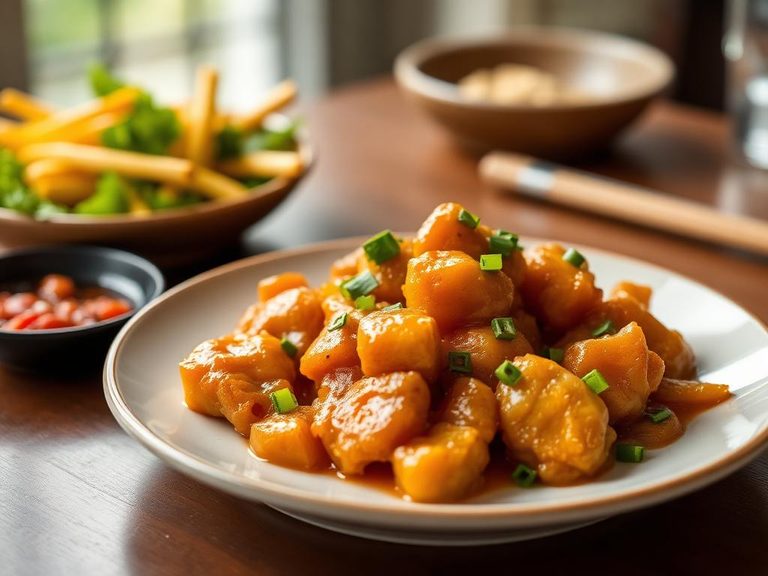
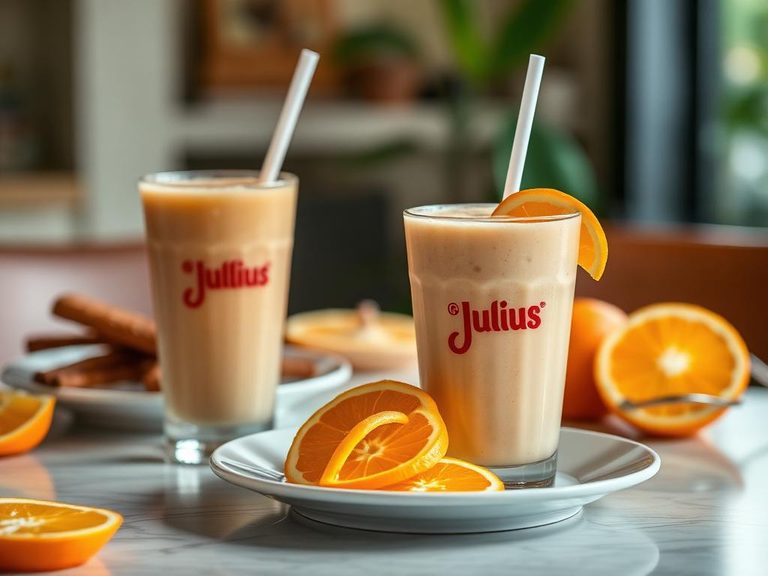
🌍 Where it's eaten
💡 Did you know?
The calcium added to this concentrate is often in the form of calcium citrate, which is well-absorbed and doesn't cause the chalky texture that some other calcium supplements can.
Full nutrition (USDA data · scales with serving)
| Water | 60.6 g |
| Energy | 147 kcal |
| Energy | 616 kj |
| Protein | 2.4 g |
| Total lipid (fat) | 0.25 g |
| Ash | 2.9 g |
| Carbohydrate, by difference | 33.9 g |
| Fiber, total dietary | 1.0 g |
| Total Sugars | 29.7 g |
| Sucrose | 15.6 g |
| Glucose | 6.6 g |
| Fructose | 7.5 g |
| Lactose | 0.00 g |
| Maltose | 0.00 g |
| Galactose | 0.00 g |
| Starch | 0.00 g |
| Calcium, Ca | 578 mg |
| Iron, Fe | 0.33 mg |
| Magnesium, Mg | 35.0 mg |
| Phosphorus, P | 313 mg |
| Potassium, K | 629 mg |
| Sodium, Na | 7.0 mg |
| Zinc, Zn | 0.16 mg |
| Copper, Cu | 0.06 mg |
| Manganese, Mn | 0.12 mg |
| Selenium, Se | 0.40 ug |
| Fluoride, F | 19.8 ug |
| Vitamin C, total ascorbic acid | 145 mg |
| Thiamin | 0.28 mg |
| Riboflavin | 0.17 mg |
| Niacin | 1.1 mg |
| Pantothenic acid | 0.73 mg |
| Vitamin B-6 | 0.26 mg |
| Folate, total | 77.0 ug |
| Folic acid | 0.00 ug |
| Folate, food | 77.0 ug |
| Folate, DFE | 77.0 ug |
| Choline, total | 20.0 mg |
| Betaine | 0.50 mg |
| Vitamin B-12 | 0.00 ug |
| Vitamin B-12, added | 0.00 ug |
| Vitamin A, RAE | 13.0 ug |
| Retinol | 0.00 ug |
| Carotene, beta | 53.0 ug |
| Carotene, alpha | 19.0 ug |
| Cryptoxanthin, beta | 191 ug |
| Vitamin A, IU | 264 iu |
| Lycopene | 1.0 ug |
| Lutein + zeaxanthin | 333 ug |
| Vitamin E (alpha-tocopherol) | 0.60 mg |
| Vitamin E, added | 0.00 mg |
| Tocopherol, beta | 0.00 mg |
| Tocopherol, gamma | 0.00 mg |
| Tocopherol, delta | 0.00 mg |
| Tocotrienol, alpha | 0.00 mg |
| Tocotrienol, beta | 0.00 mg |
| Tocotrienol, gamma | 0.00 mg |
| Tocotrienol, delta | 0.00 mg |
| Vitamin D (D2 + D3), International Units | 0.00 iu |
| Vitamin D (D2 + D3) | 0.00 ug |
| Vitamin K (phylloquinone) | 0.40 ug |
| Vitamin K (Dihydrophylloquinone) | 0.00 ug |
| Alcohol, ethyl | 0.00 g |
| Caffeine | 0.00 mg |
| Theobromine | 0.00 mg |
Fat & fatty acid profile (per 100g)
| Fatty acids, total saturated | 0.06 g |
| SFA 4:0 | 0.00 g |
| SFA 6:0 | 0.00 g |
| SFA 8:0 | 0.00 g |
| SFA 10:0 | 0.00 g |
| SFA 12:0 | 0.00 g |
| SFA 14:0 | 0.00 g |
| SFA 15:0 | 0.00 g |
| SFA 16:0 | 0.04 g |
| SFA 17:0 | 0.00 g |
| SFA 18:0 | 0.01 g |
| SFA 20:0 | 0.00 g |
| SFA 22:0 | 0.00 g |
| SFA 24:0 | 0.00 g |
| Fatty acids, total monounsaturated | 0.05 g |
| MUFA 14:1 | 0.00 g |
| MUFA 15:1 | 0.00 g |
| MUFA 16:1 | 0.01 g |
| MUFA 16:1 c | 0.01 g |
| MUFA 17:1 | 0.00 g |
| MUFA 18:1 | 0.04 g |
| MUFA 18:1 c | 0.04 g |
| MUFA 20:1 | 0.00 g |
| MUFA 22:1 | 0.00 g |
| MUFA 22:1 c | 0.00 g |
| MUFA 24:1 c | 0.00 g |
| Fatty acids, total polyunsaturated | 0.06 g |
| PUFA 18:2 | 0.05 g |
| PUFA 18:2 n-6 c,c | 0.05 g |
| PUFA 18:2 CLAs | 0.00 g |
| PUFA 18:3 | 0.02 g |
| PUFA 18:3 n-3 c,c,c (ALA) | 0.02 g |
| PUFA 18:3 n-6 c,c,c | 0.00 g |
| PUFA 18:3i | 0.00 g |
| PUFA 18:4 | 0.00 g |
| PUFA 20:2 n-6 c,c | 0.00 g |
| PUFA 20:3 | 0.00 g |
| PUFA 20:3 n-3 | 0.00 g |
| PUFA 20:3 n-6 | 0.00 g |
| PUFA 20:4 | 0.00 g |
| PUFA 20:5 n-3 (EPA) | 0.00 g |
| PUFA 22:4 | 0.00 g |
| PUFA 22:5 n-3 (DPA) | 0.00 g |
| PUFA 22:6 n-3 (DHA) | 0.00 g |
| Fatty acids, total trans | 0.00 g |
| Fatty acids, total trans-monoenoic | 0.00 g |
| TFA 16:1 t | 0.00 g |
| TFA 18:1 t | 0.00 g |
| TFA 22:1 t | 0.00 g |
| TFA 18:2 t not further defined | 0.00 g |
| Fatty acids, total trans-polyenoic | 0.00 g |
| Cholesterol | 0.00 mg |
Amino acid profile (per 100g)
| Tryptophan | 0.01 g |
| Threonine | 0.04 g |
| Isoleucine | 0.03 g |
| Leucine | 0.05 g |
| Lysine | 0.06 g |
| Methionine | 0.01 g |
| Cystine | 0.01 g |
| Phenylalanine | 0.04 g |
| Tyrosine | 0.02 g |
| Valine | 0.05 g |
| Arginine | 0.31 g |
| Histidine | 0.02 g |
| Alanine | 0.07 g |
| Aspartic acid | 0.44 g |
| Glutamic acid | 0.15 g |
| Glycine | 0.04 g |
| Proline | 0.38 g |
| Serine | 0.08 g |
| Hydroxyproline | 0.00 g |
FAQ
How do I use this concentrate?
Always dilute it with cold water according to the can's instructions (typically a 1:3 or 1:4 ratio of concentrate to water) before drinking. It can also be used undiluted as a potent flavoring in sauces, glazes, marinades, and baking.
Is it healthy?
It's a good source of vitamins and minerals, especially vitamin C and calcium. However, due to its high sugar concentration, it should be consumed in moderation and always diluted. It's a better choice than soda but not a substitute for whole fruit.
How does it differ from regular orange juice?
This is a frozen, undiluted paste with a much higher density of flavor, sugar, and nutrients per gram. Regular orange juice is pre-diluted and ready to drink. The concentrate allows you to control the strength and sugar content of your final beverage.
Nutrient density (calculated · NRF9.3)
Nutrient Rich Foods index: beneficial nutrients (protein, fiber, vitamins, minerals) minus saturated fat, added sugar & sodium, per 100 kcal.
NRF9.3 index — Fulgoni, Keast & Drewnowski, 2009. Computed from USDA nutrients.
Weight-loss friendliness (composite index)
Energy density 1.47 kcal/g · 7% calories from protein · 1.0 g fiber · 29.7 g sugar per 100 g.
Composite of energy density (Rolls et al., 1999), protein & fiber satiety, minus sugar. A calculated heuristic — ranks satiety-per-calorie, not a clinical measure.
Dietary load (calculated from USDA values)
Potential renal acid load. Positive = acid-forming, negative = alkaline-forming.
Sodium-to-potassium ratio: 0.01 (lower is better — aim for ≤ 1)
Sodium:potassium per WHO potassium guidance. Computed from USDA nutrients.