

Doughnuts, cake-type, plain (includes unsugared, old-fashioned)
Whole food · Baked Products
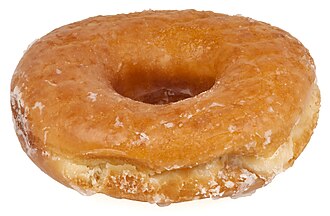
Photo: Wikipedia
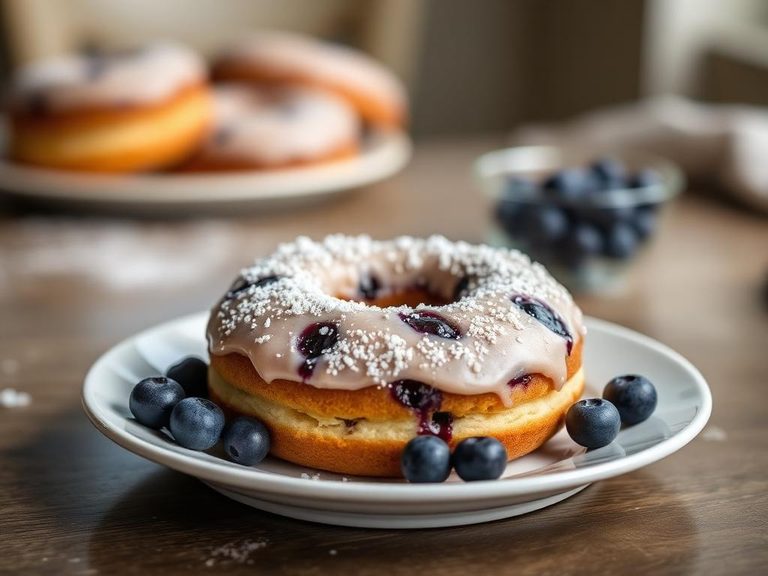
A dense, cake-like doughnut with a tender, crumbly interior and a golden-brown, slightly crisp exterior, often unglazed or lightly dusted. Its flavor is subtly sweet and buttery, with a comforting, home-style quality distinct from airy yeast doughnuts. Nutritionally, it's a calorie-dense treat, providing quick energy primarily from fats and refined carbohydrates.
Calorie split: 5% protein · 43% carbs · 52% fat
↓ Full nutrition💚 Why it's loved
People love its satisfying, substantial texture and straightforward, not-too-sweet flavor that pairs perfectly with coffee or milk. It's a nostalgic comfort food, evoking memories of homemade baking and simple, hearty indulgence.
⚠️ Watch-outs & how to enjoy it better
Its high calorie density and refined carbs can lead to rapid blood sugar spikes and subsequent energy crashes, making it a poor choice for those managing diabetes or seeking sustained energy. To counteract this, pair a small portion with a source of protein (like Greek yogurt) or healthy fat (like a handful of nuts) to slow digestion and moderate the glycemic response.
Key benefits
- Quick source of energy from carbohydrates and fats
- Contains small amounts of protein and dietary fiber
- Often made with simple, pantry-staple ingredients
- Provides a comforting, nostalgic sensory experience
🍽️ Popular dishes
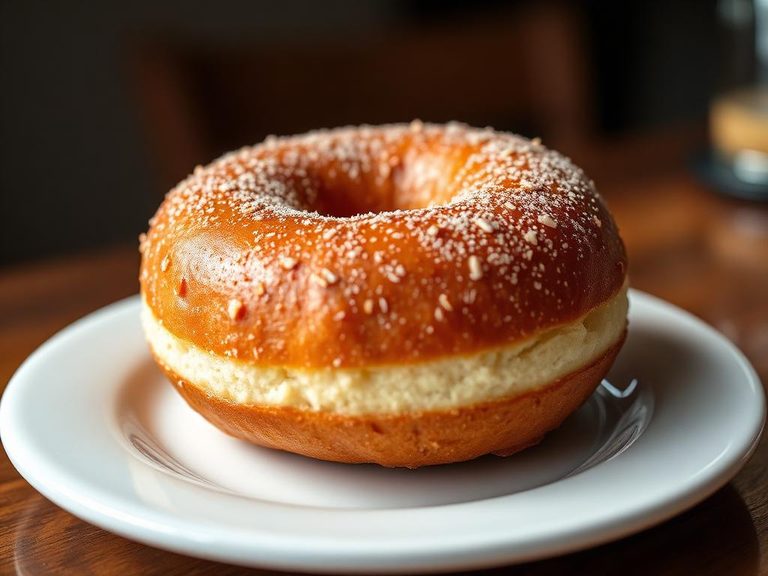
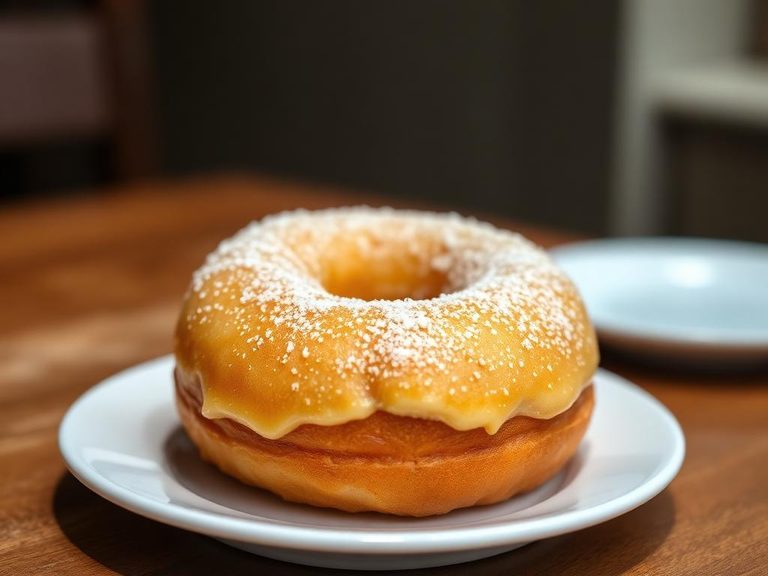

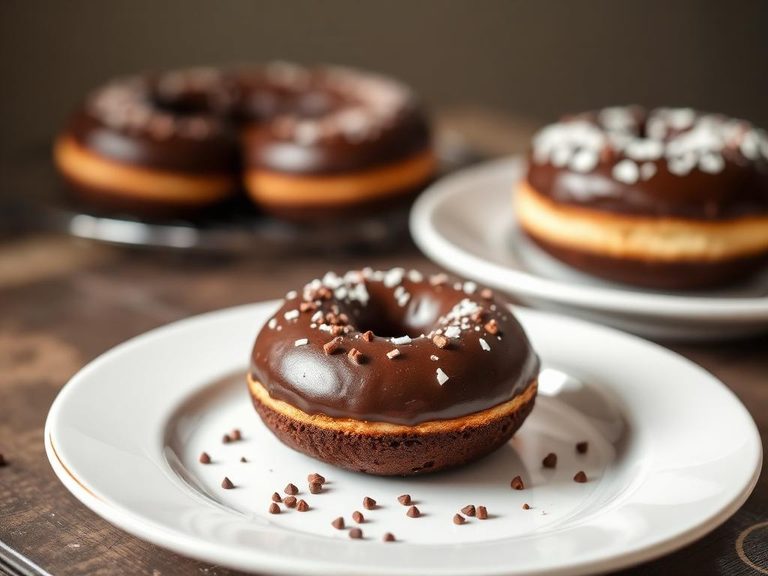
🌍 Where it's eaten
💡 Did you know?
The 'old-fashioned' style is defined by its irregular, cracked surface, which is created by the dough's higher fat content and the frying process, giving it more nooks to catch glaze or sugar.
Full nutrition (USDA data · scales with serving)
| Water | 20.8 g |
| Energy | 434 kcal |
| Energy | 1815 kj |
| Protein | 5.3 g |
| Total lipid (fat) | 24.9 g |
| Ash | 1.9 g |
| Carbohydrate, by difference | 47.1 g |
| Fiber, total dietary | 1.7 g |
| Total Sugars | 18.1 g |
| Sucrose | 16.0 g |
| Glucose | 0.67 g |
| Fructose | 0.00 g |
| Lactose | 0.93 g |
| Maltose | 0.54 g |
| Galactose | 0.00 g |
| Starch | 25.9 g |
| Calcium, Ca | 40.0 mg |
| Iron, Fe | 2.5 mg |
| Magnesium, Mg | 17.0 mg |
| Phosphorus, P | 260 mg |
| Potassium, K | 134 mg |
| Sodium, Na | 477 mg |
| Zinc, Zn | 0.50 mg |
| Copper, Cu | 0.09 mg |
| Manganese, Mn | 0.33 mg |
| Selenium, Se | 10.1 ug |
| Vitamin C, total ascorbic acid | 0.00 mg |
| Thiamin | 0.39 mg |
| Riboflavin | 0.30 mg |
| Niacin | 2.9 mg |
| Pantothenic acid | 0.38 mg |
| Vitamin B-6 | 0.05 mg |
| Folate, total | 92.0 ug |
| Folic acid | 76.0 ug |
| Folate, food | 16.0 ug |
| Folate, DFE | 145 ug |
| Choline, total | 37.3 mg |
| Betaine | 63.4 mg |
| Vitamin B-12 | 0.06 ug |
| Vitamin B-12, added | 0.00 ug |
| Vitamin A, RAE | 4.0 ug |
| Retinol | 3.0 ug |
| Carotene, beta | 1.0 ug |
| Carotene, alpha | 0.00 ug |
| Cryptoxanthin, beta | 0.00 ug |
| Vitamin A, IU | 14.0 iu |
| Lycopene | 0.00 ug |
| Lutein + zeaxanthin | 19.0 ug |
| Vitamin E (alpha-tocopherol) | 2.0 mg |
| Vitamin E, added | 0.00 mg |
| Tocopherol, beta | 0.14 mg |
| Tocopherol, gamma | 2.5 mg |
| Tocopherol, delta | 0.77 mg |
| Tocotrienol, alpha | 1.2 mg |
| Tocotrienol, beta | 0.63 mg |
| Tocotrienol, gamma | 1.5 mg |
| Tocotrienol, delta | 0.20 mg |
| Vitamin D (D2 + D3), International Units | 0.00 iu |
| Vitamin D (D2 + D3) | 0.00 ug |
| Vitamin K (phylloquinone) | 9.8 ug |
| Vitamin K (Dihydrophylloquinone) | 0.00 ug |
| Vitamin K (Menaquinone-4) | 0.00 ug |
| Alcohol, ethyl | 0.00 g |
| Caffeine | 0.00 mg |
| Theobromine | 0.00 mg |
Fat & fatty acid profile (per 100g)
| Fatty acids, total saturated | 11.1 g |
| SFA 4:0 | 0.00 g |
| SFA 6:0 | 0.00 g |
| SFA 8:0 | 0.01 g |
| SFA 10:0 | 0.03 g |
| SFA 12:0 | 0.12 g |
| SFA 14:0 | 0.24 g |
| SFA 15:0 | 0.01 g |
| SFA 16:0 | 9.4 g |
| SFA 17:0 | 0.02 g |
| SFA 18:0 | 1.1 g |
| SFA 20:0 | 0.08 g |
| SFA 22:0 | 0.03 g |
| SFA 24:0 | 0.02 g |
| Fatty acids, total monounsaturated | 8.5 g |
| MUFA 14:1 | 0.00 g |
| MUFA 15:1 | 0.00 g |
| MUFA 16:1 | 0.04 g |
| MUFA 16:1 c | 0.04 g |
| MUFA 17:1 | 0.01 g |
| MUFA 18:1 | 8.4 g |
| MUFA 18:1 c | 8.4 g |
| MUFA 20:1 | 0.05 g |
| MUFA 22:1 | 0.00 g |
| MUFA 22:1 c | 0.00 g |
| MUFA 24:1 c | 0.00 g |
| Fatty acids, total polyunsaturated | 3.9 g |
| PUFA 18:2 | 3.6 g |
| PUFA 18:2 n-6 c,c | 3.6 g |
| PUFA 18:2 CLAs | 0.01 g |
| PUFA 18:3 | 0.26 g |
| PUFA 18:3 n-3 c,c,c (ALA) | 0.24 g |
| PUFA 18:3 n-6 c,c,c | 0.02 g |
| PUFA 18:3i | 0.00 g |
| PUFA 18:4 | 0.00 g |
| PUFA 20:2 n-6 c,c | 0.01 g |
| PUFA 20:3 | 0.00 g |
| PUFA 20:3 n-3 | 0.00 g |
| PUFA 20:3 n-6 | 0.00 g |
| PUFA 20:4 | 0.01 g |
| PUFA 20:5 n-3 (EPA) | 0.00 g |
| PUFA 22:4 | 0.00 g |
| PUFA 22:5 n-3 (DPA) | 0.00 g |
| PUFA 22:6 n-3 (DHA) | 0.00 g |
| Fatty acids, total trans-monoenoic | 0.06 g |
| TFA 16:1 t | 0.00 g |
| TFA 18:1 t | 0.06 g |
| TFA 22:1 t | 0.00 g |
| TFA 18:2 t not further defined | 0.05 g |
| Fatty acids, total trans-polyenoic | 0.05 g |
| Cholesterol | 10.0 mg |
Amino acid profile (per 100g)
Estimated from Doughnuts, french crullers, glazed — USDA does not publish this profile for Doughnuts.
| Tryptophan | 0.04 g |
| Threonine | 0.11 g |
| Isoleucine | 0.13 g |
| Leucine | 0.23 g |
| Lysine | 0.15 g |
| Methionine | 0.06 g |
| Cystine | 0.06 g |
| Phenylalanine | 0.15 g |
| Tyrosine | 0.10 g |
| Valine | 0.15 g |
| Arginine | 0.14 g |
| Histidine | 0.07 g |
| Alanine | 0.11 g |
| Aspartic acid | 0.19 g |
| Glutamic acid | 0.89 g |
| Glycine | 0.10 g |
| Proline | 0.30 g |
| Serine | 0.17 g |
FAQ
What's the difference between a cake doughnut and a yeast doughnut?
Cake doughnuts use chemical leaveners (baking powder/soda) for a dense, crumbly texture, while yeast doughnuts use biological leavening (yeast) for a light, airy, and chewy texture.
Why is it called 'old-fashioned'?
The term refers to the traditional, pre-yeast doughnut recipe that results in a denser, more biscuit-like texture. The characteristic cracked surface is a hallmark of this style.
Can I bake it instead of frying to make it healthier?
Yes, baking is a common alternative. While it reduces fat content significantly, the texture becomes more like a muffin or cake and loses the distinctive crispy exterior of the fried version.
Nutrient density (calculated · NRF9.3)
Nutrient Rich Foods index: beneficial nutrients (protein, fiber, vitamins, minerals) minus saturated fat, added sugar & sodium, per 100 kcal.
NRF9.3 index — Fulgoni, Keast & Drewnowski, 2009. Computed from USDA nutrients.
Weight-loss friendliness (composite index)
Energy density 4.34 kcal/g · 5% calories from protein · 1.7 g fiber · 18.1 g sugar per 100 g.
Composite of energy density (Rolls et al., 1999), protein & fiber satiety, minus sugar. A calculated heuristic — ranks satiety-per-calorie, not a clinical measure.
Dietary load (calculated from USDA values)
Potential renal acid load. Positive = acid-forming, negative = alkaline-forming.
Sodium-to-potassium ratio: 3.56 (lower is better — aim for ≤ 1)
Sodium:potassium per WHO potassium guidance. Computed from USDA nutrients.