

Cereals, farina, enriched, assorted brands including CREAM OF WHEAT, quick (1-3 minutes), dry
Whole food · Breakfast Cereals
This is a quick-cooking, iron-rich breakfast porridge made from finely ground durum wheat semolina. When cooked, it transforms from a gritty powder into a smooth, creamy, and comforting cereal with a mild, toasty wheat flavor. Its standout nutritional feature is its exceptional iron content, often providing over 50% of the daily value per serving due to enrichment.
Calorie split: 13% protein · 83% carbs · 4% fat
↓ Full nutrition💚 Why it's loved
It's cherished as a nostalgic, gentle comfort food, often associated with childhood and sick days due to its smooth, easy-to-digest texture. Its neutral flavor makes it a perfect blank canvas for both sweet and savory toppings.
⚠️ Watch-outs & how to enjoy it better
As a refined grain, it can cause a quicker blood sugar spike compared to whole-grain cereals, which may be a concern for some. To counteract this, pair it with a source of protein and fat (like nuts, seeds, or a dollop of Greek yogurt) and consider adding fiber-rich fruit to slow digestion.
Key benefits
- Excellent source of iron (enriched)
- Good source of B vitamins like folate and thiamin
- Provides sustained energy from complex carbohydrates
- Low in fat and naturally cholesterol-free
- Quick-cooking convenience for busy mornings
🍽️ Popular dishes

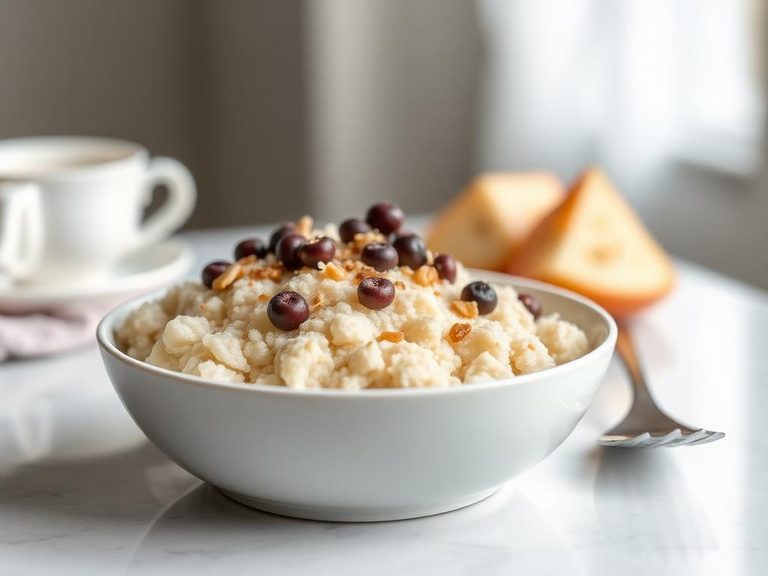
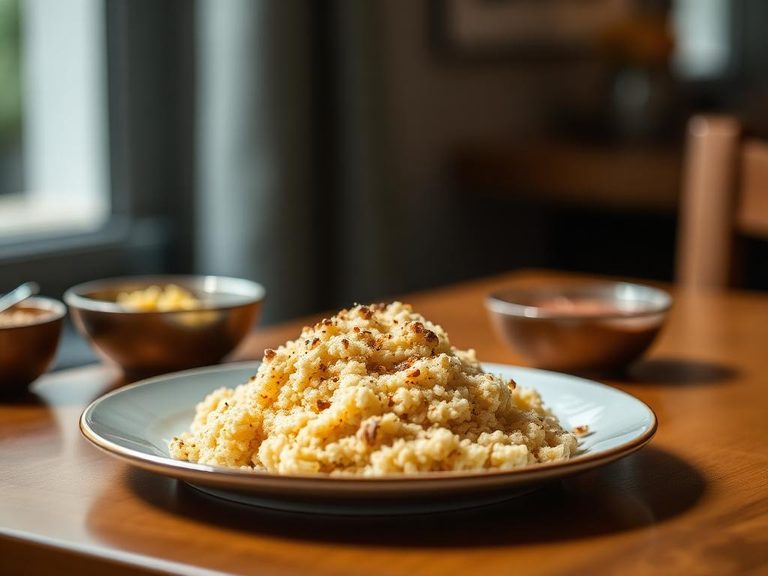
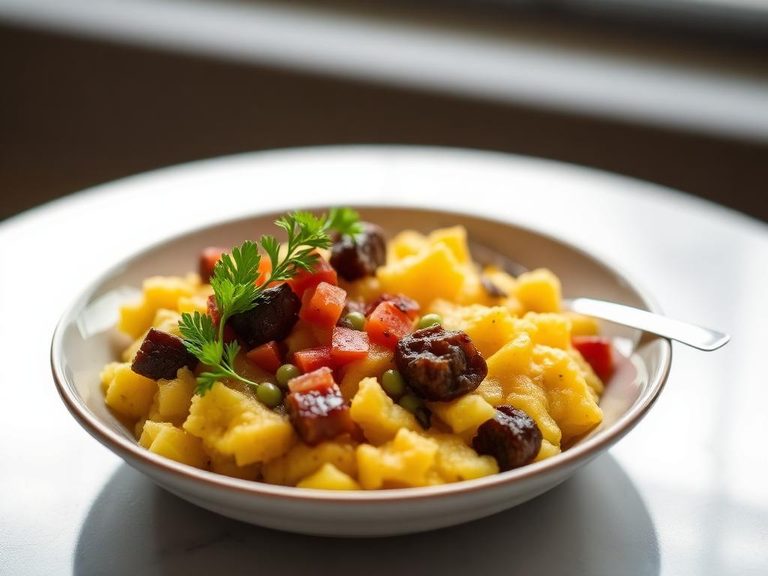
🌍 Where it's eaten
💡 Did you know?
The 'quick' version is pre-cooked and then dried, which is why it only needs 1-3 minutes to rehydrate, unlike traditional farina which can take 10-20 minutes to cook.
Full nutrition (USDA data · scales with serving)
| Water | 11.1 g |
| Energy | 360 kcal |
| Energy | 1508 kj |
| Protein | 11.6 g |
| Total lipid (fat) | 1.4 g |
| Ash | 2.7 g |
| Carbohydrate, by difference | 73.2 g |
| Fiber, total dietary | 4.2 g |
| Total Sugars | 0.56 g |
| Sucrose | 0.42 g |
| Glucose | 0.00 g |
| Fructose | 0.00 g |
| Lactose | 0.00 g |
| Maltose | 0.14 g |
| Galactose | 0.00 g |
| Starch | 67.3 g |
| Calcium, Ca | 711 mg |
| Iron, Fe | 33.4 mg |
| Magnesium, Mg | 45.0 mg |
| Phosphorus, P | 252 mg |
| Potassium, K | 153 mg |
| Sodium, Na | 124 mg |
| Zinc, Zn | 1.3 mg |
| Copper, Cu | 0.20 mg |
| Manganese, Mn | 1.3 mg |
| Selenium, Se | 20.0 ug |
| Vitamin C, total ascorbic acid | 0.00 mg |
| Thiamin | 1.0 mg |
| Riboflavin | 0.56 mg |
| Niacin | 13.7 mg |
| Pantothenic acid | 0.61 mg |
| Vitamin B-6 | 0.46 mg |
| Folate, total | 121 ug |
| Folic acid | 87.0 ug |
| Folate, food | 34.0 ug |
| Folate, DFE | 182 ug |
| Choline, total | 23.1 mg |
| Vitamin B-12 | 0.00 ug |
| Vitamin B-12, added | 0.00 ug |
| Vitamin A, RAE | 0.00 ug |
| Retinol | 0.00 ug |
| Carotene, beta | 0.00 ug |
| Carotene, alpha | 0.00 ug |
| Cryptoxanthin, beta | 0.00 ug |
| Vitamin A, IU | 0.00 iu |
| Lycopene | 0.00 ug |
| Lutein + zeaxanthin | 16.0 ug |
| Vitamin E (alpha-tocopherol) | 0.33 mg |
| Vitamin E, added | 0.00 mg |
| Tocopherol, beta | 0.10 mg |
| Tocopherol, gamma | 1.1 mg |
| Tocopherol, delta | 0.00 mg |
| Tocotrienol, alpha | 0.10 mg |
| Tocotrienol, beta | 0.00 mg |
| Tocotrienol, gamma | 0.01 mg |
| Tocotrienol, delta | 0.00 mg |
| Vitamin D (D2 + D3), International Units | 0.00 iu |
| Vitamin D (D2 + D3) | 0.00 ug |
| Vitamin K (phylloquinone) | 0.00 ug |
| Vitamin K (Dihydrophylloquinone) | 0.00 ug |
| Vitamin K (Menaquinone-4) | 0.00 ug |
| Alcohol, ethyl | 0.00 g |
| Caffeine | 0.00 mg |
| Theobromine | 0.00 mg |
Fat & fatty acid profile (per 100g)
| Fatty acids, total saturated | 0.23 g |
| SFA 4:0 | 0.00 g |
| SFA 6:0 | 0.00 g |
| SFA 8:0 | 0.00 g |
| SFA 10:0 | 0.00 g |
| SFA 12:0 | 0.00 g |
| SFA 14:0 | 0.00 g |
| SFA 15:0 | 0.00 g |
| SFA 16:0 | 0.20 g |
| SFA 17:0 | 0.00 g |
| SFA 18:0 | 0.02 g |
| SFA 20:0 | 0.00 g |
| SFA 22:0 | 0.00 g |
| SFA 24:0 | 0.00 g |
| Fatty acids, total monounsaturated | 0.15 g |
| MUFA 14:1 | 0.00 g |
| MUFA 15:1 | 0.00 g |
| MUFA 16:1 | 0.00 g |
| MUFA 16:1 c | 0.00 g |
| MUFA 17:1 | 0.00 g |
| MUFA 18:1 | 0.14 g |
| MUFA 18:1 c | 0.14 g |
| MUFA 20:1 | 0.01 g |
| MUFA 22:1 | 0.00 g |
| MUFA 22:1 c | 0.00 g |
| MUFA 24:1 c | 0.00 g |
| Fatty acids, total polyunsaturated | 0.63 g |
| PUFA 18:2 | 0.59 g |
| PUFA 18:2 n-6 c,c | 0.59 g |
| PUFA 18:2 CLAs | 0.00 g |
| PUFA 18:3 | 0.04 g |
| PUFA 18:3 n-3 c,c,c (ALA) | 0.04 g |
| PUFA 18:3 n-6 c,c,c | 0.00 g |
| PUFA 18:4 | 0.00 g |
| PUFA 20:2 n-6 c,c | 0.00 g |
| PUFA 20:3 | 0.00 g |
| PUFA 20:3 n-3 | 0.00 g |
| PUFA 20:3 n-6 | 0.00 g |
| PUFA 20:4 | 0.00 g |
| PUFA 20:5 n-3 (EPA) | 0.00 g |
| PUFA 22:4 | 0.00 g |
| PUFA 22:5 n-3 (DPA) | 0.00 g |
| PUFA 22:6 n-3 (DHA) | 0.00 g |
| Fatty acids, total trans | 0.00 g |
| Fatty acids, total trans-monoenoic | 0.00 g |
| TFA 18:1 t | 0.00 g |
| TFA 22:1 t | 0.00 g |
| TFA 18:2 t not further defined | 0.00 g |
| Fatty acids, total trans-polyenoic | 0.00 g |
| Cholesterol | 0.00 mg |
Amino acid profile (per 100g)
| Tryptophan | 0.11 g |
| Threonine | 0.22 g |
| Isoleucine | 0.42 g |
| Leucine | 0.85 g |
| Lysine | 0.29 g |
| Methionine | 0.18 g |
| Cystine | 0.16 g |
| Phenylalanine | 0.56 g |
| Tyrosine | 0.17 g |
| Valine | 0.52 g |
| Arginine | 0.46 g |
| Histidine | 0.25 g |
| Alanine | 0.37 g |
| Aspartic acid | 0.54 g |
| Glutamic acid | 4.1 g |
| Glycine | 0.46 g |
| Proline | 1.8 g |
| Serine | 0.60 g |
| Hydroxyproline | 0.00 g |
FAQ
What's the difference between Cream of Wheat and regular farina?
Cream of Wheat is a brand name for a specific type of enriched farina made from ground durum wheat. 'Farina' is the general term for this type of cereal, which can be made from other grains like wheat, rice, or corn.
Is it gluten-free?
No. It is made from wheat and contains gluten, making it unsuitable for people with celiac disease or gluten sensitivity.
Why is it so high in iron?
The iron content is very high because the cereal is 'enriched.' During processing, certain nutrients like iron and B vitamins are lost, so manufacturers add them back in, often at levels higher than the original grain.
Nutrient density (calculated · NRF9.3)
Nutrient Rich Foods index: beneficial nutrients (protein, fiber, vitamins, minerals) minus saturated fat, added sugar & sodium, per 100 kcal.
NRF9.3 index — Fulgoni, Keast & Drewnowski, 2009. Computed from USDA nutrients.
Weight-loss friendliness (composite index)
Energy density 3.60 kcal/g · 13% calories from protein · 4.2 g fiber · 0.6 g sugar per 100 g.
Composite of energy density (Rolls et al., 1999), protein & fiber satiety, minus sugar. A calculated heuristic — ranks satiety-per-calorie, not a clinical measure.
Dietary load (calculated from USDA values)
Potential renal acid load. Positive = acid-forming, negative = alkaline-forming.
Sodium-to-potassium ratio: 0.81 (lower is better — aim for ≤ 1)
Sodium:potassium per WHO potassium guidance. Computed from USDA nutrients.