

Cake, yellow, commercially prepared, with chocolate frosting, in-store bakery
Whole food · Baked Products
This is a classic, golden-yellow sponge cake slathered with a thick, sweet layer of chocolate frosting, the kind you'd find in a bakery display case. Its texture is soft, moist, and tender, offering a comforting, buttery vanilla flavor that contrasts with the rich, fudgy chocolate topping. Nutritionally, it's a high-energy treat, primarily composed of simple carbohydrates from sugar and refined flour.
Calorie split: 3% protein · 56% carbs · 41% fat
↓ Full nutrition💚 Why it's loved
People love it for its nostalgic, celebratory appeal and the perfect balance of light, fluffy cake with decadent chocolate frosting. It's a versatile crowd-pleaser, suitable for birthdays, office parties, or a simple afternoon treat.
⚠️ Watch-outs & how to enjoy it better
The high sugar and refined carbohydrate content can lead to rapid blood-sugar spikes and subsequent crashes, making it a poor choice for those managing diabetes or seeking sustained energy. To mitigate this, pair a small slice with a source of protein (like Greek yogurt) or healthy fat (like nuts) to slow sugar absorption, and practice strict portion control. It also contains common allergens like wheat, eggs, and often dairy.
Key benefits
- Quick source of energy from carbohydrates
- Provides a small amount of protein from eggs and flour
- Contains some dietary fat for satiety
- A familiar comfort food that can boost mood
- Convenient, pre-made option for celebrations
🍽️ Popular dishes

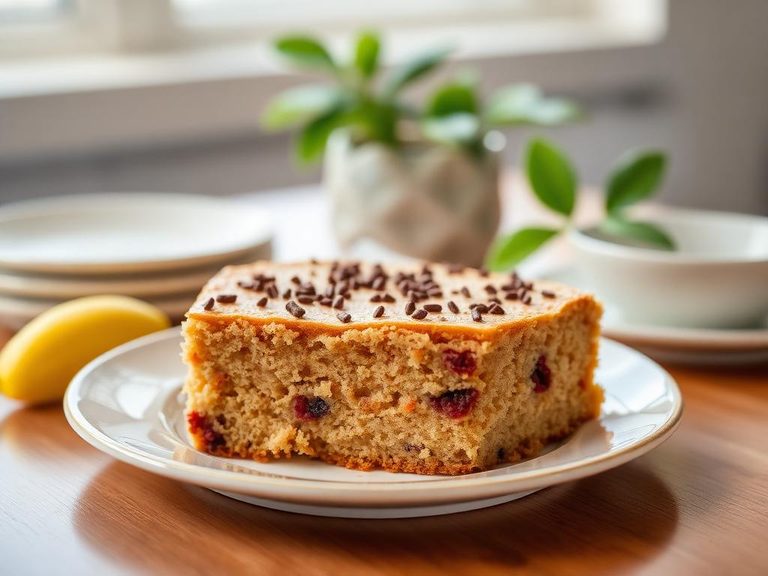
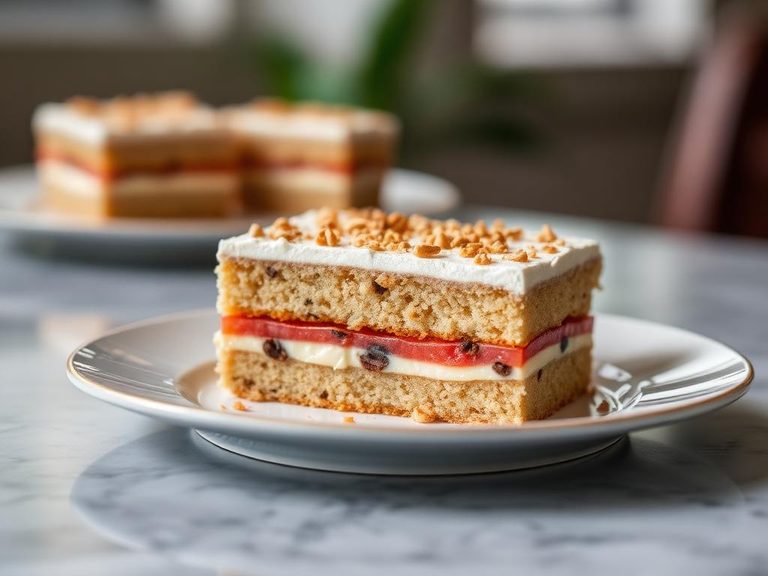

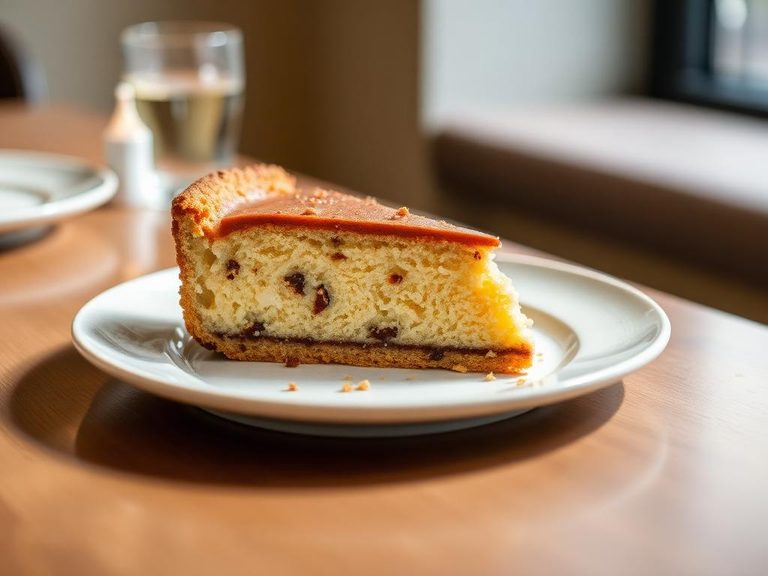
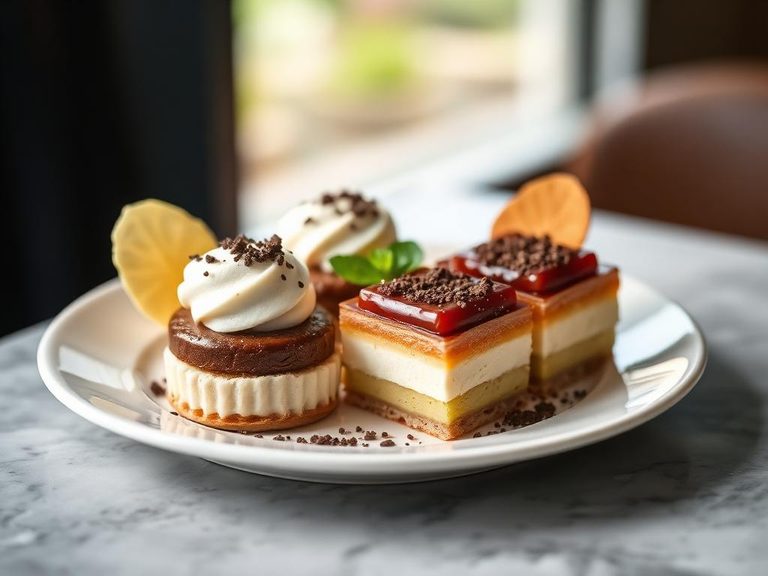
🌍 Where it's eaten
💡 Did you know?
The yellow color in this cake often comes from added food coloring (like Yellow 5) rather than just egg yolks, a practice popularized in the mid-20th century to achieve a more vibrant, consistent appearance.
Full nutrition (USDA data · scales with serving)
| Water | 22.4 g |
| Energy | 379 kcal |
| Energy | 1584 kj |
| Protein | 3.2 g |
| Total lipid (fat) | 17.8 g |
| Ash | 1.4 g |
| Carbohydrate, by difference | 55.4 g |
| Fiber, total dietary | 1.5 g |
| Total Sugars | 39.2 g |
| Sucrose | 36.5 g |
| Glucose | 1.3 g |
| Fructose | 0.62 g |
| Lactose | 0.59 g |
| Maltose | 0.21 g |
| Galactose | 0.00 g |
| Starch | 8.6 g |
| Calcium, Ca | 32.0 mg |
| Iron, Fe | 2.0 mg |
| Magnesium, Mg | 20.0 mg |
| Phosphorus, P | 138 mg |
| Potassium, K | 187 mg |
| Sodium, Na | 310 mg |
| Zinc, Zn | 0.42 mg |
| Copper, Cu | 0.16 mg |
| Manganese, Mn | 0.22 mg |
| Selenium, Se | 5.9 ug |
| Vitamin C, total ascorbic acid | 0.00 mg |
| Thiamin | 0.04 mg |
| Riboflavin | 0.09 mg |
| Niacin | 0.80 mg |
| Pantothenic acid | 0.17 mg |
| Vitamin B-6 | 0.00 mg |
| Folate, total | 22.0 ug |
| Folic acid | 14.0 ug |
| Folate, food | 8.0 ug |
| Folate, DFE | 32.0 ug |
| Choline, total | 17.4 mg |
| Betaine | 6.7 mg |
| Vitamin B-12 | 0.00 ug |
| Vitamin B-12, added | 0.00 ug |
| Vitamin A, RAE | 7.0 ug |
| Retinol | 7.0 ug |
| Carotene, beta | 0.00 ug |
| Carotene, alpha | 0.00 ug |
| Cryptoxanthin, beta | 0.00 ug |
| Vitamin A, IU | 26.0 iu |
| Lycopene | 0.00 ug |
| Lutein + zeaxanthin | 14.0 ug |
| Vitamin E (alpha-tocopherol) | 4.5 mg |
| Vitamin E, added | 0.00 mg |
| Tocopherol, beta | 0.14 mg |
| Tocopherol, gamma | 7.7 mg |
| Tocopherol, delta | 2.1 mg |
| Tocotrienol, alpha | 0.50 mg |
| Tocotrienol, beta | 0.05 mg |
| Tocotrienol, gamma | 0.79 mg |
| Tocotrienol, delta | 0.28 mg |
| Vitamin D (D2 + D3), International Units | 6.0 iu |
| Vitamin D (D2 + D3) | 0.20 ug |
| Vitamin K (phylloquinone) | 25.1 ug |
| Vitamin K (Dihydrophylloquinone) | 12.8 ug |
| Alcohol, ethyl | 0.00 g |
| Caffeine | 0.00 mg |
| Theobromine | 0.00 mg |
Fat & fatty acid profile (per 100g)
| Fatty acids, total saturated | 5.8 g |
| SFA 4:0 | 0.01 g |
| SFA 6:0 | 0.01 g |
| SFA 8:0 | 0.02 g |
| SFA 10:0 | 0.03 g |
| SFA 12:0 | 0.14 g |
| SFA 14:0 | 0.15 g |
| SFA 15:0 | 0.01 g |
| SFA 16:0 | 3.5 g |
| SFA 17:0 | 0.02 g |
| SFA 18:0 | 1.8 g |
| SFA 20:0 | 0.07 g |
| SFA 22:0 | 0.04 g |
| SFA 24:0 | 0.02 g |
| Fatty acids, total monounsaturated | 7.2 g |
| MUFA 14:1 | 0.00 g |
| MUFA 15:1 | 0.00 g |
| MUFA 16:1 | 0.04 g |
| MUFA 16:1 c | 0.03 g |
| MUFA 17:1 | 0.01 g |
| MUFA 18:1 | 7.1 g |
| MUFA 18:1 c | 6.0 g |
| MUFA 20:1 | 0.05 g |
| MUFA 22:1 | 0.01 g |
| MUFA 22:1 c | 0.00 g |
| MUFA 24:1 c | 0.00 g |
| Fatty acids, total polyunsaturated | 4.7 g |
| PUFA 18:2 | 4.2 g |
| PUFA 18:2 n-6 c,c | 4.0 g |
| PUFA 18:2 CLAs | 0.02 g |
| PUFA 18:3 | 0.50 g |
| PUFA 18:3 n-3 c,c,c (ALA) | 0.47 g |
| PUFA 18:3 n-6 c,c,c | 0.03 g |
| PUFA 18:4 | 0.00 g |
| PUFA 20:2 n-6 c,c | 0.00 g |
| PUFA 20:3 | 0.00 g |
| PUFA 20:3 n-3 | 0.00 g |
| PUFA 20:3 n-6 | 0.00 g |
| PUFA 20:4 | 0.01 g |
| PUFA 20:5 n-3 (EPA) | 0.00 g |
| PUFA 22:4 | 0.00 g |
| PUFA 22:5 n-3 (DPA) | 0.00 g |
| PUFA 22:6 n-3 (DHA) | 0.00 g |
| Fatty acids, total trans | 1.3 g |
| Fatty acids, total trans-monoenoic | 1.1 g |
| TFA 16:1 t | 0.00 g |
| TFA 18:1 t | 1.1 g |
| TFA 22:1 t | 0.00 g |
| TFA 18:2 t not further defined | 0.20 g |
| Fatty acids, total trans-polyenoic | 0.20 g |
| Cholesterol | 16.0 mg |
Amino acid profile (per 100g)
Estimated from Bread, pound cake type, pan de torta salvadoran — USDA does not publish this profile for Cake.
| Tryptophan | 0.09 g |
| Threonine | 0.16 g |
| Isoleucine | 0.24 g |
| Leucine | 0.54 g |
| Lysine | 0.15 g |
| Methionine | 0.18 g |
| Cystine | 0.06 g |
| Phenylalanine | 0.35 g |
| Tyrosine | 0.17 g |
| Valine | 0.33 g |
| Arginine | 0.18 g |
| Histidine | 0.10 g |
| Alanine | 0.29 g |
| Aspartic acid | 0.39 g |
| Glutamic acid | 2.2 g |
| Glycine | 0.23 g |
| Proline | 1.1 g |
| Serine | 0.38 g |
| Hydroxyproline | 0.00 g |
FAQ
Why is the cake yellow?
The yellow color typically comes from a combination of egg yolks and, in many commercial preparations, added yellow food coloring (like Yellow 5) to ensure a bright, consistent hue.
Is this cake a good source of any nutrients?
It provides a quick energy boost from carbohydrates and a small amount of protein from its egg and flour content, but it is not considered a nutrient-dense food due to its high sugar and refined flour content.
How does it differ from a chocolate cake?
The primary difference is the cake base: this is a vanilla or butter-flavored yellow sponge, whereas chocolate cake incorporates cocoa powder or melted chocolate into the batter itself.
Nutrient density (calculated · NRF9.3)
Nutrient Rich Foods index: beneficial nutrients (protein, fiber, vitamins, minerals) minus saturated fat, added sugar & sodium, per 100 kcal.
NRF9.3 index — Fulgoni, Keast & Drewnowski, 2009. Computed from USDA nutrients.
Weight-loss friendliness (composite index)
Energy density 3.79 kcal/g · 3% calories from protein · 1.5 g fiber · 39.2 g sugar per 100 g.
Composite of energy density (Rolls et al., 1999), protein & fiber satiety, minus sugar. A calculated heuristic — ranks satiety-per-calorie, not a clinical measure.
Dietary load (calculated from USDA values)
Potential renal acid load. Positive = acid-forming, negative = alkaline-forming.
Sodium-to-potassium ratio: 1.66 (lower is better — aim for ≤ 1)
Sodium:potassium per WHO potassium guidance. Computed from USDA nutrients.