

Dessert bar component

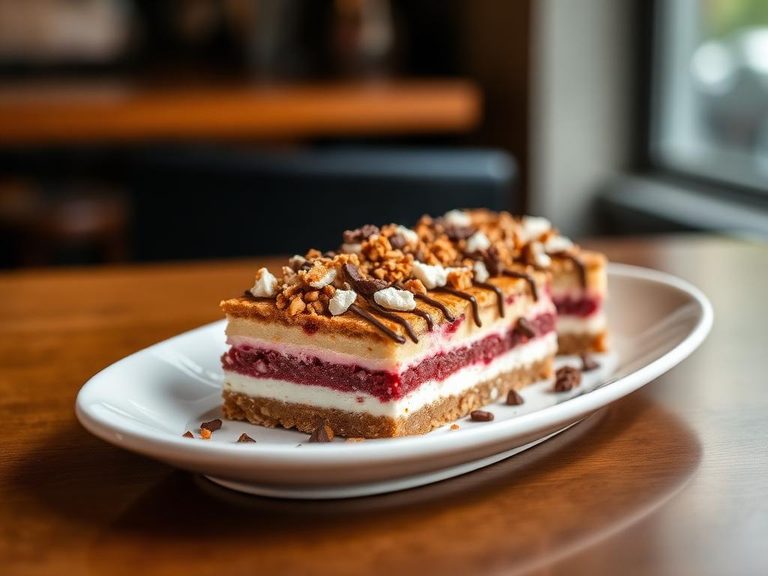
A dessert bar component is a foundational element used to build layered or filled dessert bars, such as the crust or base layer. It is typically made from a mixture of crushed cookies or graham crackers, melted butter, and sugar, pressed into a pan to form a solid base. This versatile component is a staple in American and Canadian home baking, serving as the starting point for countless sweet treats.
🍳 View the full Dessert bar component recipe →
🍽️ Nutrition at a glance
This component is high in carbohydrates and fat, primarily from the butter and sugar, with minimal protein. A typical serving (about 1/12 of a 9x13 inch pan) provides roughly 150-200 calories, offering quick energy but few essential nutrients.
Nutrition breakdown
| Calories | 280 kcal |
| Protein | 3 g |
| Carbs | 38 g |
| Fat | 13 g |
| Fiber | 1 g |
| Sugar | 24 g |
| Sodium | 120 mg |
| Iron | 1.2 mg |
| Calcium | 30 mg |
| Potassium | 80 mg |
| Vitamin A | 20 mcg |
| Vitamin C | 0 mg |
| Vitamin D | 0 mcg |
| Vitamin B12 | 0.1 mcg |
| Magnesium | 15 mg |
Per 1 bar (60 g) · estimated, varies by recipe
💡 What's interesting
Its cultural significance lies in its role as a 'blank canvas' for home bakers, allowing for endless creativity with toppings like cheesecake, fruit, or chocolate. Nutritionally, it's interesting that this simple, often no-bake base can structurally support and transform a wide variety of richer, more complex desserts.
🍽️ Related dishes



AI estimate may be inaccurate · Terms