

Snack Cake
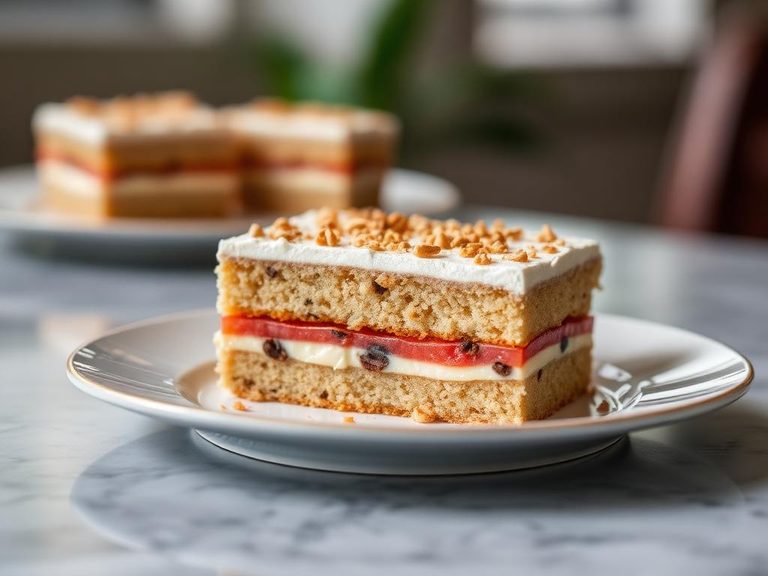
Snack Cake is a pre-packaged, individually portioned cake, typically a soft sponge or butter cake, often filled with cream, jelly, or fudge and coated in chocolate or a sweet glaze. Popular ingredients include flour, sugar, eggs, oil, and various flavorings like vanilla or cocoa. It originated in the United States in the mid-20th century as a convenient, shelf-stable treat for lunchboxes and on-the-go snacking.
🍳 View the full Snack Cake recipe →
🍽️ Nutrition at a glance
Snack Cakes are generally high in carbohydrates and fat, with a moderate amount of sugar, but are low in protein and essential nutrients like fiber, vitamins, and minerals. A typical serving (one cake, around 50-70 grams) provides roughly 200-300 calories.
Nutrition breakdown
| Calories | 210 kcal |
| Protein | 2.5 g |
| Carbs | 30 g |
| Fat | 9 g |
| Fiber | 0.5 g |
| Sugar | 18 g |
| Sodium | 160 mg |
| Iron | 1.5 mg |
| Calcium | 30 mg |
| Potassium | 50 mg |
| Vitamin A | 10 mcg |
| Vitamin C | 0 mg |
| Vitamin D | 0.2 mcg |
| Vitamin B12 | 0.1 mcg |
| Phosphorus | 40 mg |
Per 1 cake (50 g) · estimated, varies by recipe
💡 What's interesting
Culturally, Snack Cakes are a nostalgic icon of American convenience food, often associated with childhood and school lunches. Nutritionally, they are a classic example of an energy-dense, nutrient-poor food, designed for palatability and shelf stability rather than balanced nutrition.
🍽️ Related dishes
AI estimate may be inaccurate · Terms