

Cake, torte
Common food

Photo: Wikipedia
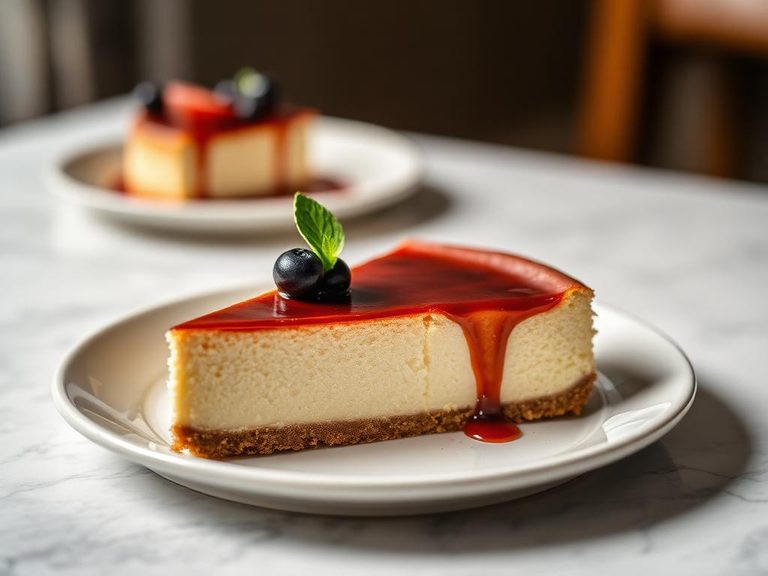
A rich, indulgent dessert typically made with layers of sponge, cream, and fruit or chocolate, offering a moist, tender crumb and a luxurious mouthfeel. Nutritionally, it's a concentrated source of energy, primarily from carbohydrates and fats, with a modest amount of protein.
Calorie split: 5% protein · 56% carbs · 39% fat
↓ Full nutrition💚 Why it's loved
People love cake for its comforting sweetness and the emotional connection to celebrations like birthdays and weddings. Its versatility allows for endless flavor and texture combinations, from light sponges to dense, fudgy tortes.
⚠️ Watch-outs & how to enjoy it better
Its high sugar and refined carbohydrate content can lead to rapid blood-sugar spikes, making it less suitable for those managing diabetes or insulin resistance. To enjoy it more mindfully, pair a slice with a source of protein (like Greek yogurt) or healthy fat (like nuts) to slow sugar absorption, and practice strict portion control.
Key benefits
- Quick energy source from carbohydrates
- Contains some protein for muscle maintenance
- Provides dietary fat for satiety
- Often includes small amounts of micronutrients from eggs and dairy
- Can be a source of psychological comfort and celebration
🍽️ Popular dishes





🌍 Where it's eaten
💡 Did you know?
The word 'cake' comes from the Old Norse word 'kaka', and the modern layered torte is believed to have originated in the 17th century in Vienna.
Full nutrition (USDA data · scales with serving)
| Water | 50.9 g |
| Energy | 241 kcal |
| Protein | 3.3 g |
| Total lipid (fat) | 10.4 g |
| Carbohydrate, by difference | 33.9 g |
| Fiber, total dietary | 0.90 g |
| Total Sugars | 19.1 g |
| Calcium, Ca | 94.0 mg |
| Iron, Fe | 1.0 mg |
| Magnesium, Mg | 9.0 mg |
| Phosphorus, P | 145 mg |
| Potassium, K | 85.0 mg |
| Sodium, Na | 273 mg |
| Zinc, Zn | 0.31 mg |
| Copper, Cu | 0.04 mg |
| Selenium, Se | 5.1 ug |
| Vitamin C, total ascorbic acid | 14.3 mg |
| Thiamin | 0.08 mg |
| Riboflavin | 0.13 mg |
| Niacin | 0.83 mg |
| Vitamin B-6 | 0.04 mg |
| Folate, total | 25.0 ug |
| Folic acid | 14.0 ug |
| Folate, food | 12.0 ug |
| Folate, DFE | 35.0 ug |
| Choline, total | 37.8 mg |
| Vitamin B-12 | 0.16 ug |
| Vitamin B-12, added | 0.00 ug |
| Vitamin A, RAE | 40.0 ug |
| Retinol | 39.0 ug |
| Carotene, beta | 6.0 ug |
| Carotene, alpha | 0.00 ug |
| Cryptoxanthin, beta | 2.0 ug |
| Lycopene | 0.00 ug |
| Lutein + zeaxanthin | 68.0 ug |
| Vitamin E (alpha-tocopherol) | 1.7 mg |
| Vitamin E, added | 0.00 mg |
| Vitamin D (D2 + D3) | 0.30 ug |
| Vitamin K (phylloquinone) | 7.6 ug |
| Alcohol, ethyl | 0.00 g |
| Caffeine | 0.00 mg |
| Theobromine | 0.00 mg |
Fat & fatty acid profile (per 100g)
| Fatty acids, total saturated | 3.0 g |
| SFA 4:0 | 0.07 g |
| SFA 6:0 | 0.04 g |
| SFA 8:0 | 0.02 g |
| SFA 10:0 | 0.05 g |
| SFA 12:0 | 0.06 g |
| SFA 14:0 | 0.22 g |
| SFA 16:0 | 1.8 g |
| SFA 18:0 | 0.62 g |
| Fatty acids, total monounsaturated | 3.7 g |
| MUFA 16:1 | 0.10 g |
| MUFA 18:1 | 3.6 g |
| MUFA 20:1 | 0.04 g |
| MUFA 22:1 | 0.00 g |
| Fatty acids, total polyunsaturated | 2.6 g |
| PUFA 18:2 | 2.3 g |
| PUFA 18:3 | 0.29 g |
| PUFA 18:4 | 0.00 g |
| PUFA 20:4 | 0.00 g |
| PUFA 20:5 n-3 (EPA) | 0.00 g |
| PUFA 22:5 n-3 (DPA) | 0.00 g |
| PUFA 22:6 n-3 (DHA) | 0.00 g |
| Cholesterol | 58.0 mg |
Amino acid profile (per 100g)
Estimated from Bread, pound cake type, pan de torta salvadoran — USDA does not publish this profile for Cake.
| Tryptophan | 0.09 g |
| Threonine | 0.16 g |
| Isoleucine | 0.24 g |
| Leucine | 0.54 g |
| Lysine | 0.15 g |
| Methionine | 0.18 g |
| Cystine | 0.06 g |
| Phenylalanine | 0.35 g |
| Tyrosine | 0.17 g |
| Valine | 0.33 g |
| Arginine | 0.18 g |
| Histidine | 0.10 g |
| Alanine | 0.29 g |
| Aspartic acid | 0.39 g |
| Glutamic acid | 2.2 g |
| Glycine | 0.23 g |
| Proline | 1.1 g |
| Serine | 0.38 g |
| Hydroxyproline | 0.00 g |
FAQ
Is cake considered a 'junk food'?
While often high in sugar and fat, cake isn't inherently 'junk.' It can be part of a balanced diet when enjoyed occasionally and in moderation, especially when homemade with quality ingredients.
How does cake differ from bread nutritionally?
Cake typically has a much higher sugar and fat content, leading to more calories per gram. Bread is usually lower in sugar and fat, providing more complex carbohydrates and often some fiber.
Can cake be part of a healthy diet?
Yes, in the context of overall dietary patterns. Focusing on smaller portions, choosing versions with less frosting, or pairing it with protein can make it a more balanced treat.
Nutrient density (calculated · NRF9.3)
Nutrient Rich Foods index: beneficial nutrients (protein, fiber, vitamins, minerals) minus saturated fat, added sugar & sodium, per 100 kcal.
NRF9.3 index — Fulgoni, Keast & Drewnowski, 2009. Computed from USDA nutrients.
Weight-loss friendliness (composite index)
Energy density 2.41 kcal/g · 5% calories from protein · 0.9 g fiber · 19.1 g sugar per 100 g.
Composite of energy density (Rolls et al., 1999), protein & fiber satiety, minus sugar. A calculated heuristic — ranks satiety-per-calorie, not a clinical measure.
Dietary load (calculated from USDA values)
Potential renal acid load. Positive = acid-forming, negative = alkaline-forming.
Sodium-to-potassium ratio: 3.21 (lower is better — aim for ≤ 1)
Sodium:potassium per WHO potassium guidance. Computed from USDA nutrients.