

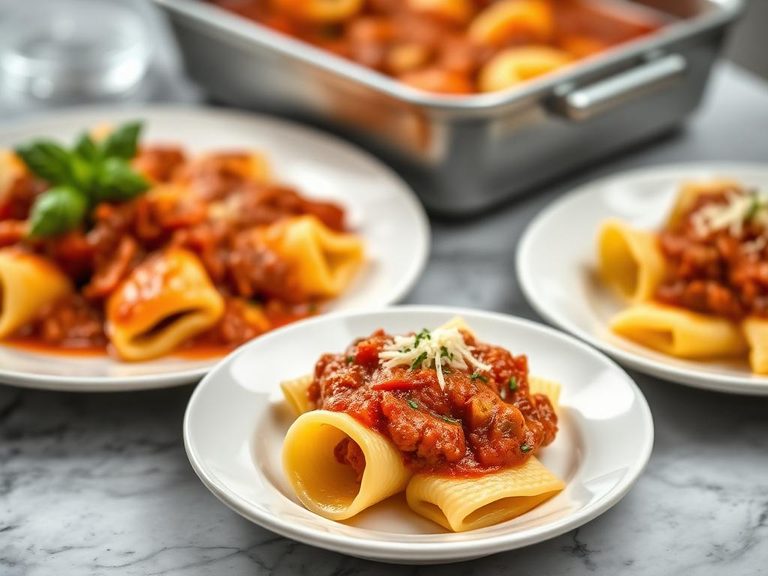
Tortellini, spinach-filled, with tomato sauce
Common food

Photo: Wikipedia
Tortellini, spinach-filled, with tomato sauce is a classic Italian pasta dish featuring small, ring-shaped pasta parcels stuffed with a savory spinach and cheese mixture, typically served in a simple, bright tomato sauce. The pasta has a tender, slightly chewy texture, while the filling offers a creamy, earthy contrast, all coated in the tangy, sweet notes of the tomato sauce. Nutritionally, it provides a moderate amount of protein and carbohydrates with a relatively low calorie count per 100g, making it a lighter yet satisfying meal option.
Calorie split: 15% protein · 53% carbs · 32% fat
↓ Full nutrition💚 Why it's loved
People love spinach-filled tortellini for its comforting, nostalgic flavor profile—the marriage of rich, cheesy pasta with a simple, vibrant tomato sauce feels both hearty and fresh. It's also cherished for its versatility, easily dressed up with added vegetables or proteins, and its deep roots in Italian culinary tradition, often associated with family meals and regional specialties.
⚠️ Watch-outs & how to enjoy it better
The dish can be high in sodium, especially from processed sauces and cheese, and the refined pasta may cause blood-sugar spikes for some. To counteract this, opt for a low-sodium tomato sauce, pair the dish with a side of non-starchy vegetables or a lean protein like grilled chicken to slow digestion, and practice portion control by sticking to a single serving. Those with gluten or dairy sensitivities should seek alternative versions or enjoy it occasionally.
Key benefits
- Good source of plant-based protein from spinach and wheat
- Provides dietary fiber for digestive health
- Contains lycopene from tomato sauce, an antioxidant
- Moderate calorie density supports portion control
- Offers iron and calcium from spinach and cheese filling
🍽️ Popular dishes
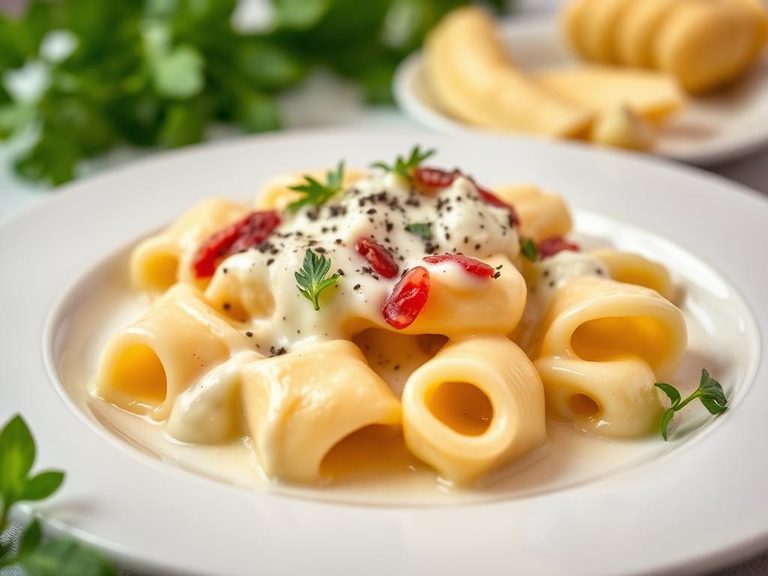
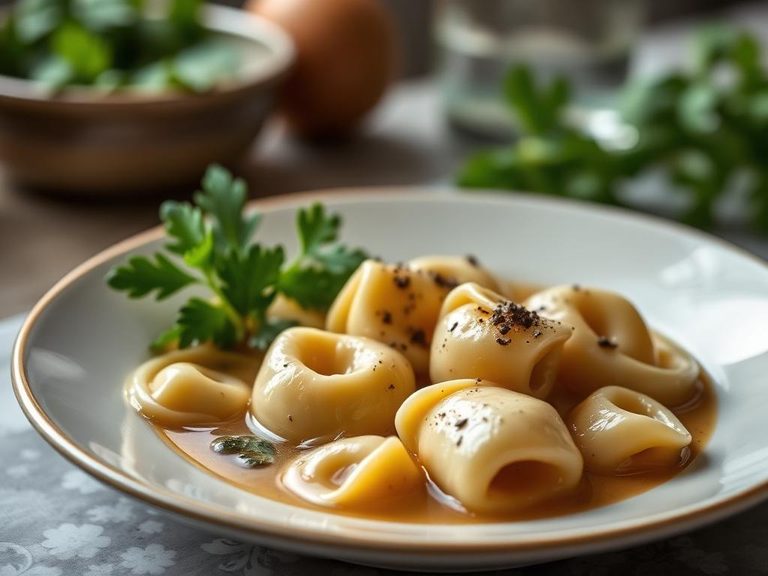
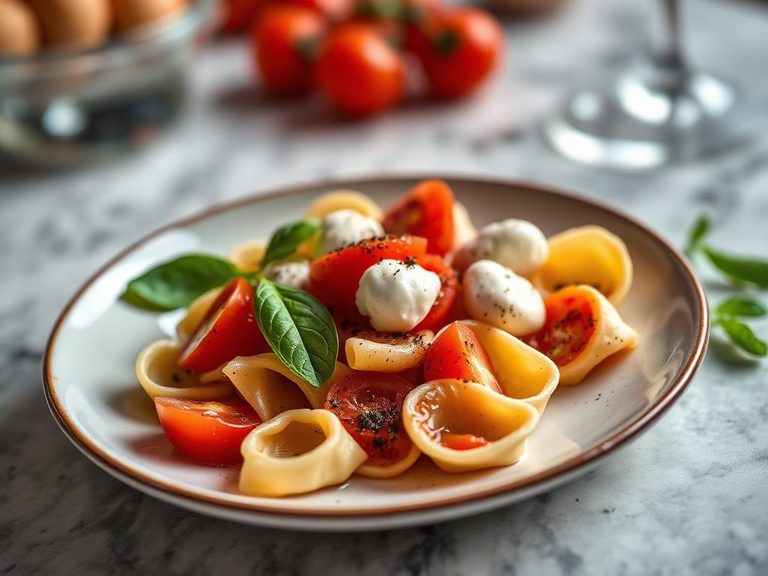
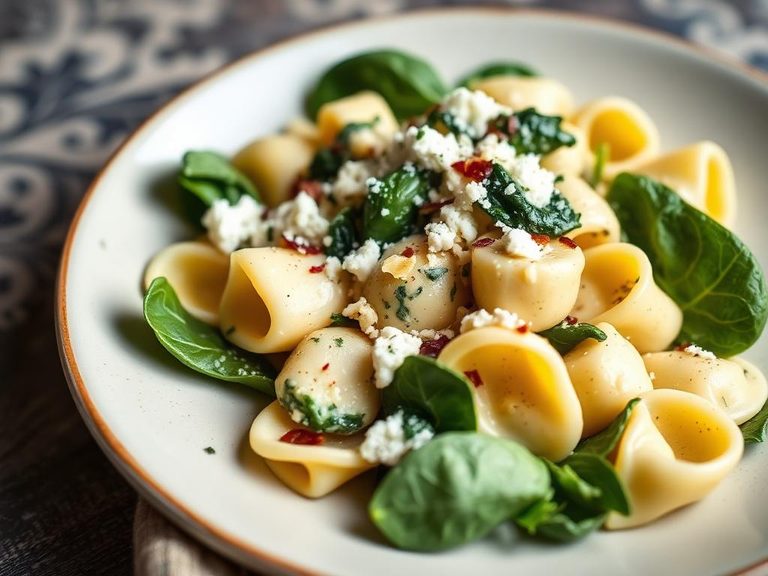
🌍 Where it's eaten
💡 Did you know?
Legend has it that tortellini was inspired by the navel of Venus, the Roman goddess of love, after a innkeeper in Bologna peeped through a keyhole and saw her belly button.
Full nutrition (USDA data · scales with serving)
| Water | 72.9 g |
| Energy | 121 kcal |
| Protein | 4.5 g |
| Total lipid (fat) | 4.4 g |
| Carbohydrate, by difference | 16.1 g |
| Fiber, total dietary | 1.2 g |
| Total Sugars | 1.3 g |
| Calcium, Ca | 44.0 mg |
| Iron, Fe | 1.2 mg |
| Magnesium, Mg | 26.0 mg |
| Phosphorus, P | 77.0 mg |
| Potassium, K | 145 mg |
| Sodium, Na | 596 mg |
| Zinc, Zn | 0.63 mg |
| Copper, Cu | 0.09 mg |
| Selenium, Se | 15.6 ug |
| Vitamin C, total ascorbic acid | 3.7 mg |
| Thiamin | 0.18 mg |
| Riboflavin | 0.14 mg |
| Niacin | 1.4 mg |
| Vitamin B-6 | 0.08 mg |
| Folate, total | 59.0 ug |
| Folic acid | 43.0 ug |
| Folate, food | 16.0 ug |
| Folate, DFE | 89.0 ug |
| Choline, total | 30.0 mg |
| Vitamin B-12 | 0.14 ug |
| Vitamin B-12, added | 0.00 ug |
| Vitamin A, RAE | 67.0 ug |
| Retinol | 31.0 ug |
| Carotene, beta | 430 ug |
| Carotene, alpha | 0.00 ug |
| Cryptoxanthin, beta | 2.0 ug |
| Lycopene | 2635 ug |
| Lutein + zeaxanthin | 829 ug |
| Vitamin E (alpha-tocopherol) | 0.84 mg |
| Vitamin E, added | 0.00 mg |
| Vitamin D (D2 + D3) | 0.20 ug |
| Vitamin K (phylloquinone) | 53.9 ug |
| Alcohol, ethyl | 0.00 g |
| Caffeine | 0.00 mg |
| Theobromine | 0.00 mg |
Fat & fatty acid profile (per 100g)
| Fatty acids, total saturated | 1.2 g |
| SFA 4:0 | 0.01 g |
| SFA 6:0 | 0.01 g |
| SFA 8:0 | 0.01 g |
| SFA 10:0 | 0.02 g |
| SFA 12:0 | 0.02 g |
| SFA 14:0 | 0.07 g |
| SFA 16:0 | 0.71 g |
| SFA 18:0 | 0.31 g |
| Fatty acids, total monounsaturated | 1.6 g |
| MUFA 16:1 | 0.06 g |
| MUFA 18:1 | 1.5 g |
| MUFA 20:1 | 0.01 g |
| MUFA 22:1 | 0.00 g |
| Fatty acids, total polyunsaturated | 0.98 g |
| PUFA 18:2 | 0.89 g |
| PUFA 18:3 | 0.08 g |
| PUFA 18:4 | 0.00 g |
| PUFA 20:4 | 0.01 g |
| PUFA 20:5 n-3 (EPA) | 0.00 g |
| PUFA 22:5 n-3 (DPA) | 0.00 g |
| PUFA 22:6 n-3 (DHA) | 0.00 g |
| Cholesterol | 32.0 mg |
FAQ
What is the difference between tortellini and tortelloni?
Tortellini are smaller, bite-sized pasta rings, while tortelloni are their larger counterparts, often about twice the size.
Can spinach-filled tortellini be frozen?
Yes, uncooked or cooked tortellini freezes well. Spread them on a baking sheet to freeze individually before transferring to a bag to prevent clumping.
Is the tomato sauce typically homemade or store-bought?
Both are common. Traditional preparations might use a simple sauce of crushed San Marzano tomatoes, garlic, and basil, while many enjoy the convenience of high-quality jarred sauces.
Nutrient density (calculated · NRF9.3)
Nutrient Rich Foods index: beneficial nutrients (protein, fiber, vitamins, minerals) minus saturated fat, added sugar & sodium, per 100 kcal.
NRF9.3 index — Fulgoni, Keast & Drewnowski, 2009. Computed from USDA nutrients.
Weight-loss friendliness (composite index)
Energy density 1.21 kcal/g · 15% calories from protein · 1.2 g fiber · 1.3 g sugar per 100 g.
Composite of energy density (Rolls et al., 1999), protein & fiber satiety, minus sugar. A calculated heuristic — ranks satiety-per-calorie, not a clinical measure.
Dietary load (calculated from USDA values)
Potential renal acid load. Positive = acid-forming, negative = alkaline-forming.
Sodium-to-potassium ratio: 4.11 (lower is better — aim for ≤ 1)
Sodium:potassium per WHO potassium guidance. Computed from USDA nutrients.