

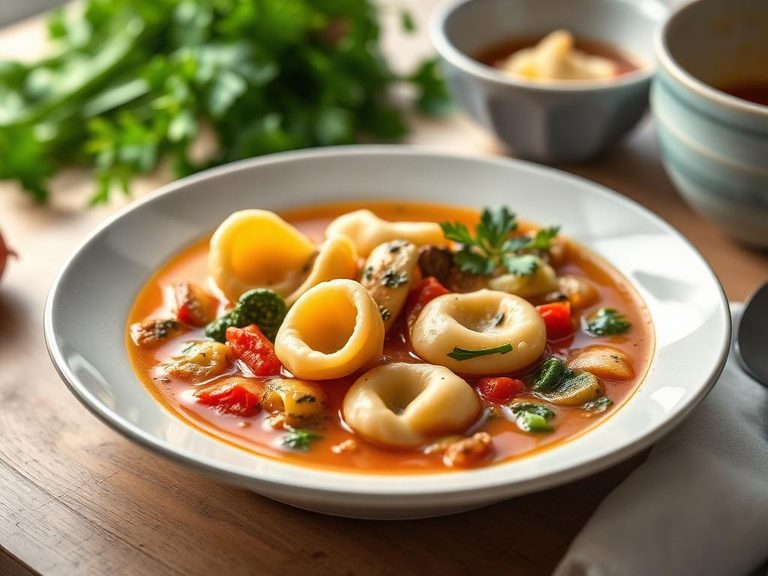
Tortellini, meat-filled, with tomato sauce
Common food

Photo: Wikipedia
Tortellini are small, ring-shaped pasta parcels, traditionally filled with a savory blend of meat like pork, prosciutto, and Parmesan, then folded into a distinctive navel-like shape. When served with a bright tomato sauce, they offer a delightful contrast between the tender, chewy pasta and the tangy, sweet sauce, creating a comforting and satisfying bite. Nutritionally, they provide a moderate calorie count with a decent protein boost from the meat filling, making them a balanced and flavorful meal option.
Calorie split: 20% protein · 47% carbs · 33% fat
↓ Full nutrition💚 Why it's loved
People love tortellini for its comforting, nostalgic flavor and the satisfying texture of the tender pasta and savory meat filling. Its versatility allows it to be enjoyed in broths, baked dishes, or simply with sauce, making it a beloved staple in Italian cuisine and a favorite for family meals.
⚠️ Watch-outs & how to enjoy it better
The dish can be high in sodium, especially with processed sauces or pre-packaged tortellini, which may concern those managing blood pressure. The refined pasta and tomato sauce can also cause blood sugar spikes for some individuals. To counteract this, pair the tortellini with a side of leafy greens or a drizzle of olive oil to add fiber and healthy fats, which can slow digestion and stabilize blood sugar levels. Opt for low-sodium sauce or make a homemade version to control salt content.
Key benefits
- Good source of protein from the meat filling, supporting muscle maintenance.
- Moderate calorie density, suitable for a satisfying yet controlled meal.
- Provides a balanced mix of carbohydrates and fats for sustained energy.
- Can be a quick, convenient meal when using pre-made or frozen varieties.
- The tomato sauce adds lycopene, an antioxidant associated with heart health.
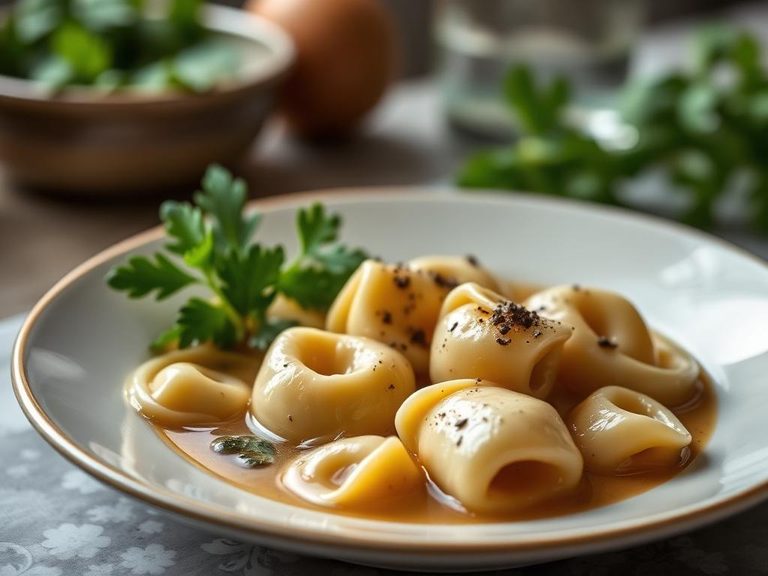
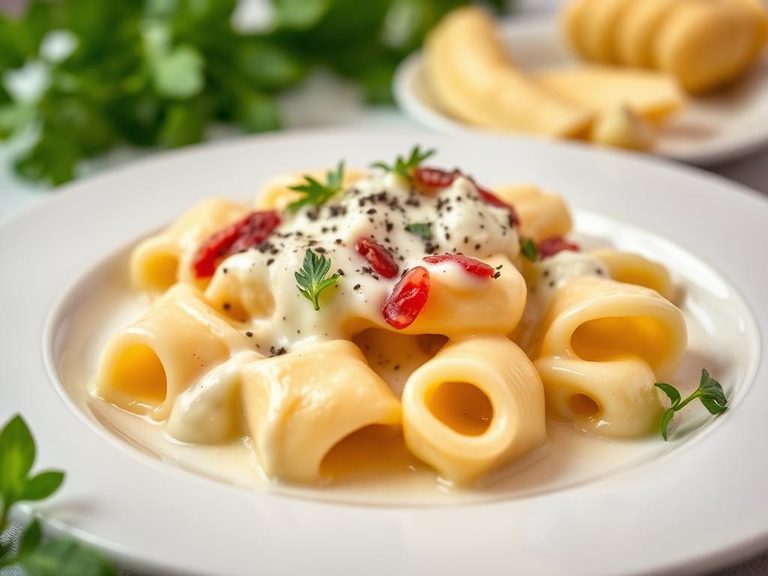
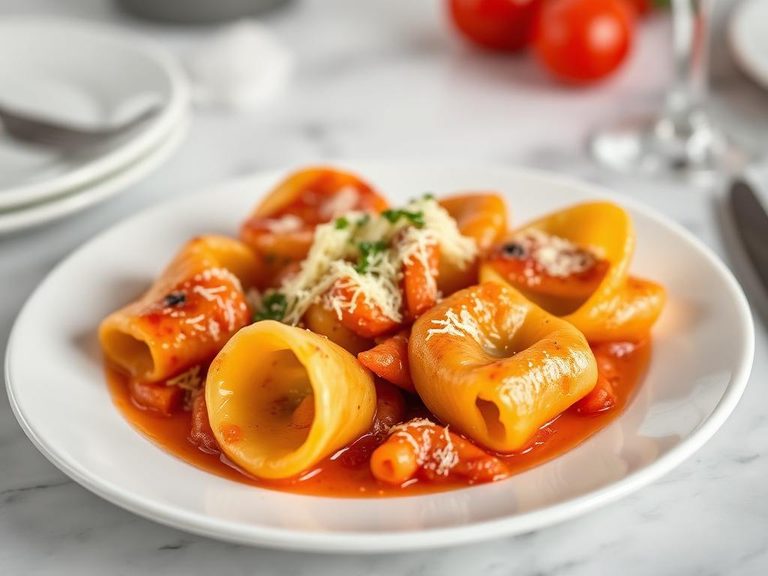
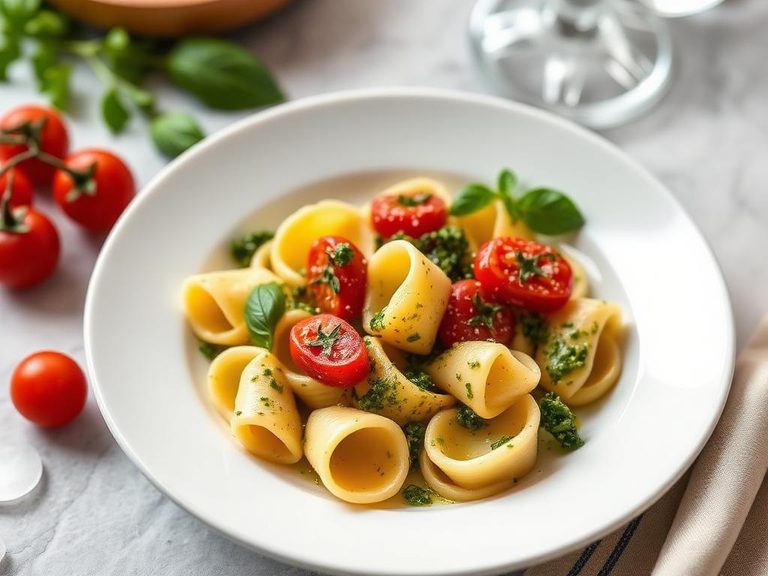
🍽️ Popular dishes
🌍 Where it's eaten
💡 Did you know?
Legend has it that tortellini were inspired by the navel of Venus, the Roman goddess of love, after a innkeeper in Bologna peeped through a keyhole and saw her navel, leading him to create a pasta shape in its likeness.
Full nutrition (USDA data · scales with serving)
| Water | 70.5 g |
| Energy | 134 kcal |
| Protein | 6.6 g |
| Total lipid (fat) | 4.9 g |
| Carbohydrate, by difference | 15.8 g |
| Fiber, total dietary | 1.0 g |
| Total Sugars | 1.3 g |
| Calcium, Ca | 38.0 mg |
| Iron, Fe | 1.2 mg |
| Magnesium, Mg | 19.0 mg |
| Phosphorus, P | 93.0 mg |
| Potassium, K | 124 mg |
| Sodium, Na | 618 mg |
| Zinc, Zn | 0.79 mg |
| Copper, Cu | 0.09 mg |
| Selenium, Se | 18.5 ug |
| Vitamin C, total ascorbic acid | 1.5 mg |
| Thiamin | 0.21 mg |
| Riboflavin | 0.14 mg |
| Niacin | 2.0 mg |
| Vitamin B-6 | 0.10 mg |
| Folate, total | 50.0 ug |
| Folic acid | 43.0 ug |
| Folate, food | 8.0 ug |
| Folate, DFE | 80.0 ug |
| Choline, total | 36.0 mg |
| Vitamin B-12 | 0.24 ug |
| Vitamin B-12, added | 0.00 ug |
| Vitamin A, RAE | 37.0 ug |
| Retinol | 31.0 ug |
| Carotene, beta | 63.0 ug |
| Carotene, alpha | 0.00 ug |
| Cryptoxanthin, beta | 1.0 ug |
| Lycopene | 2635 ug |
| Lutein + zeaxanthin | 39.0 ug |
| Vitamin E (alpha-tocopherol) | 0.65 mg |
| Vitamin E, added | 0.00 mg |
| Vitamin D (D2 + D3) | 0.20 ug |
| Vitamin K (phylloquinone) | 3.2 ug |
| Alcohol, ethyl | 0.00 g |
| Caffeine | 0.00 mg |
| Theobromine | 0.00 mg |
Fat & fatty acid profile (per 100g)
| Fatty acids, total saturated | 1.4 g |
| SFA 4:0 | 0.01 g |
| SFA 6:0 | 0.01 g |
| SFA 8:0 | 0.01 g |
| SFA 10:0 | 0.02 g |
| SFA 12:0 | 0.02 g |
| SFA 14:0 | 0.08 g |
| SFA 16:0 | 0.84 g |
| SFA 18:0 | 0.37 g |
| Fatty acids, total monounsaturated | 1.9 g |
| MUFA 16:1 | 0.08 g |
| MUFA 18:1 | 1.8 g |
| MUFA 20:1 | 0.01 g |
| MUFA 22:1 | 0.00 g |
| Fatty acids, total polyunsaturated | 1.0 g |
| PUFA 18:2 | 0.94 g |
| PUFA 18:3 | 0.07 g |
| PUFA 18:4 | 0.00 g |
| PUFA 20:4 | 0.01 g |
| PUFA 20:5 n-3 (EPA) | 0.00 g |
| PUFA 22:5 n-3 (DPA) | 0.00 g |
| PUFA 22:6 n-3 (DHA) | 0.00 g |
| Cholesterol | 40.0 mg |
FAQ
What is the difference between tortellini and tortelloni?
Tortellini are smaller, typically filled with meat, while tortelloni are larger and often filled with cheese or vegetables. The shapes are similar, but the size and filling distinguish them.
Can tortellini be made without meat?
Yes, vegetarian versions are common, filled with cheese, spinach, or mushrooms, offering a plant-based alternative while maintaining the classic shape and texture.
How long does tortellini take to cook?
Fresh tortellini usually cook in 3-5 minutes, while dried or frozen varieties may take 10-12 minutes. Always check the package instructions for precise timing.
Nutrient density (calculated · NRF9.3)
Nutrient Rich Foods index: beneficial nutrients (protein, fiber, vitamins, minerals) minus saturated fat, added sugar & sodium, per 100 kcal.
NRF9.3 index — Fulgoni, Keast & Drewnowski, 2009. Computed from USDA nutrients.
Weight-loss friendliness (composite index)
Energy density 1.34 kcal/g · 20% calories from protein · 1.0 g fiber · 1.3 g sugar per 100 g.
Composite of energy density (Rolls et al., 1999), protein & fiber satiety, minus sugar. A calculated heuristic — ranks satiety-per-calorie, not a clinical measure.
Dietary load (calculated from USDA values)
Potential renal acid load. Positive = acid-forming, negative = alkaline-forming.
Sodium-to-potassium ratio: 4.98 (lower is better — aim for ≤ 1)
Sodium:potassium per WHO potassium guidance. Computed from USDA nutrients.