

Tortellini, cheese-filled, meatless, with tomato sauce, canned
Common food

Photo: Wikipedia
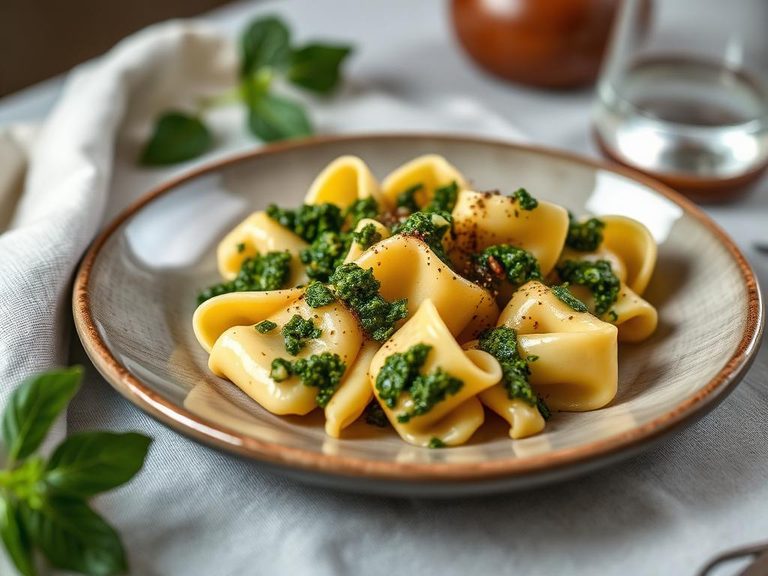
Canned, cheese-filled tortellini are pre-cooked, ring-shaped pasta pockets with a savory cheese filling, typically served in a simple tomato sauce. The pasta is soft and slightly chewy, while the filling offers a mild, creamy contrast to the bright, tangy sauce. Nutritionally, it's a light, low-fat option, providing a modest amount of protein and carbohydrates for a quick meal.
Calorie split: 15% protein · 70% carbs · 15% fat
↓ Full nutrition💚 Why it's loved
People love it for its comforting, familiar Italian-inspired flavor and the convenience of a ready-to-heat meal. The combination of soft pasta, creamy cheese, and tangy tomato sauce is a satisfying, nostalgic taste.
⚠️ Watch-outs & how to enjoy it better
The primary downside is its high sodium content from the canning process and sauce, which can be problematic for those monitoring salt intake. It's also relatively low in fiber and protein, which can lead to quicker hunger and potential blood-sugar spikes; pairing it with a side of vegetables or a lean protein can help balance the meal.
Key benefits
- Very low in fat (1.5g per 100g)
- Good source of quick energy from carbohydrates
- Provides a modest amount of protein (3.48g per 100g)
- Convenient, shelf-stable, and ready to eat
- Low calorie density (91 kcal per 100g)
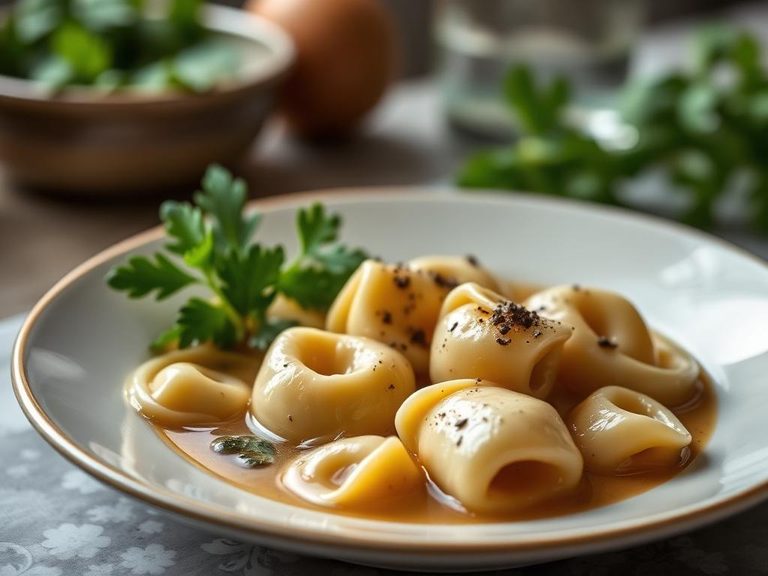
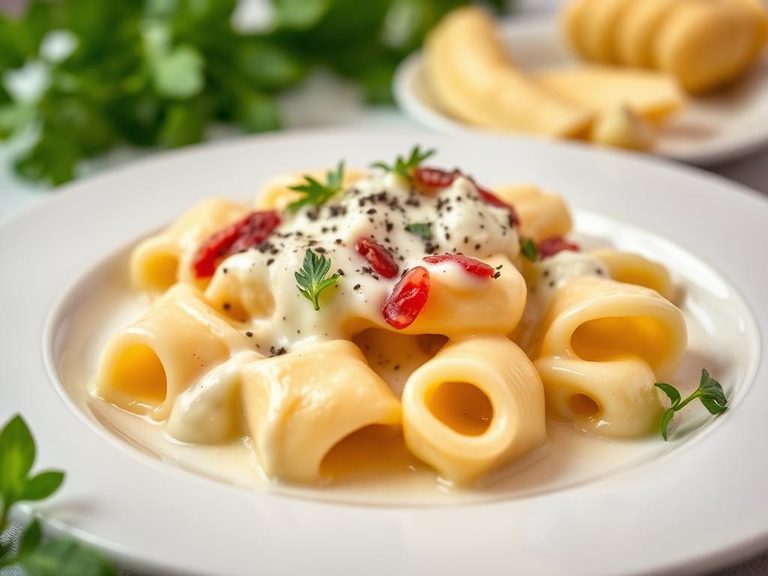
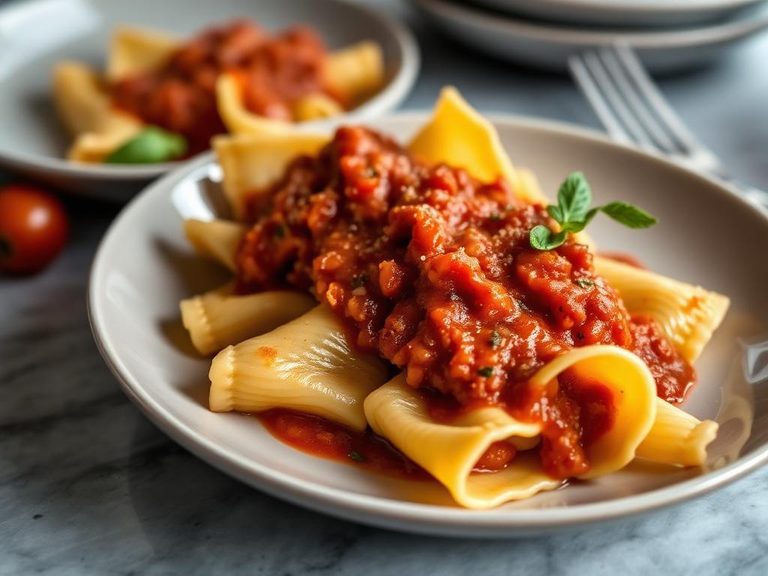
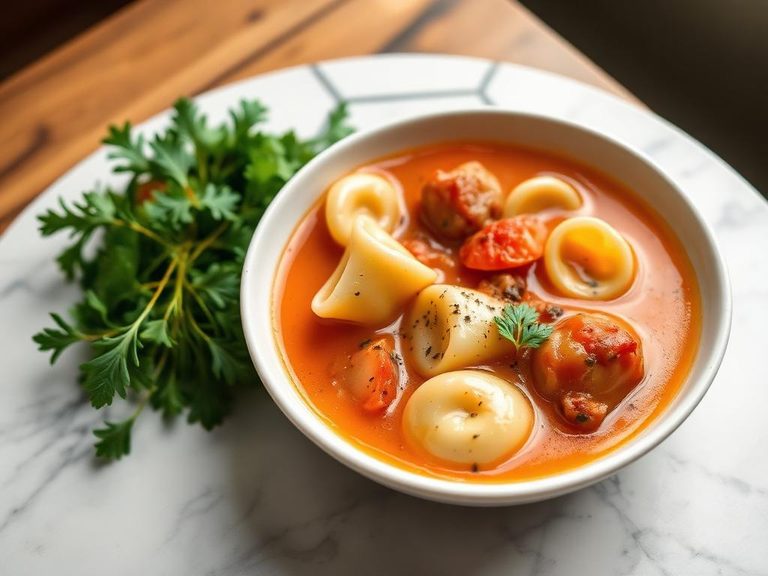
🍽️ Popular dishes
🌍 Where it's eaten
💡 Did you know?
The classic ring shape of tortellini is said to be modeled after the navel of Venus, the Roman goddess of love.
Full nutrition (USDA data · scales with serving)
| Water | 77.9 g |
| Energy | 91.0 kcal |
| Protein | 3.5 g |
| Total lipid (fat) | 1.5 g |
| Carbohydrate, by difference | 16.0 g |
| Fiber, total dietary | 0.80 g |
| Total Sugars | 1.7 g |
| Calcium, Ca | 27.0 mg |
| Iron, Fe | 0.66 mg |
| Magnesium, Mg | 12.0 mg |
| Phosphorus, P | 54.0 mg |
| Potassium, K | 39.0 mg |
| Sodium, Na | 305 mg |
| Zinc, Zn | 0.48 mg |
| Copper, Cu | 0.07 mg |
| Selenium, Se | 16.5 ug |
| Vitamin C, total ascorbic acid | 0.60 mg |
| Thiamin | 0.16 mg |
| Riboflavin | 0.07 mg |
| Niacin | 1.1 mg |
| Vitamin B-6 | 0.04 mg |
| Folate, total | 33.0 ug |
| Folic acid | 28.0 ug |
| Folate, food | 5.0 ug |
| Folate, DFE | 52.0 ug |
| Choline, total | 16.0 mg |
| Vitamin B-12 | 0.08 ug |
| Vitamin B-12, added | 0.00 ug |
| Vitamin A, RAE | 9.0 ug |
| Retinol | 8.0 ug |
| Carotene, beta | 17.0 ug |
| Carotene, alpha | 0.00 ug |
| Cryptoxanthin, beta | 0.00 ug |
| Lycopene | 440 ug |
| Lutein + zeaxanthin | 22.0 ug |
| Vitamin E (alpha-tocopherol) | 0.17 mg |
| Vitamin E, added | 0.00 mg |
| Vitamin D (D2 + D3) | 0.10 ug |
| Vitamin K (phylloquinone) | 0.40 ug |
| Alcohol, ethyl | 0.00 g |
| Caffeine | 0.00 mg |
| Theobromine | 0.00 mg |
Fat & fatty acid profile (per 100g)
| Fatty acids, total saturated | 0.54 g |
| SFA 4:0 | 0.01 g |
| SFA 6:0 | 0.01 g |
| SFA 8:0 | 0.01 g |
| SFA 10:0 | 0.01 g |
| SFA 12:0 | 0.01 g |
| SFA 14:0 | 0.05 g |
| SFA 16:0 | 0.34 g |
| SFA 18:0 | 0.10 g |
| Fatty acids, total monounsaturated | 0.41 g |
| MUFA 16:1 | 0.02 g |
| MUFA 18:1 | 0.39 g |
| MUFA 20:1 | 0.01 g |
| MUFA 22:1 | 0.00 g |
| Fatty acids, total polyunsaturated | 0.33 g |
| PUFA 18:2 | 0.30 g |
| PUFA 18:3 | 0.02 g |
| PUFA 18:4 | 0.00 g |
| PUFA 20:4 | 0.01 g |
| PUFA 20:5 n-3 (EPA) | 0.00 g |
| PUFA 22:5 n-3 (DPA) | 0.00 g |
| PUFA 22:6 n-3 (DHA) | 0.00 g |
| Cholesterol | 18.0 mg |
FAQ
Is canned tortellini fully cooked?
Yes, the pasta and filling are fully cooked during the canning process. It is safe to eat cold, but is typically heated before serving.
How does the nutrition compare to fresh or frozen tortellini?
Canned versions are often lower in calories and fat but significantly higher in sodium due to preservatives. Fresh or frozen may have a better texture and fewer additives.
Can I use the canned tomato sauce for other recipes?
Yes, the sauce is a basic, seasoned tomato sauce. It can be used as a quick base for pasta, pizza, or as a dipping sauce, though you may want to enhance its flavor.
Nutrient density (calculated · NRF9.3)
Nutrient Rich Foods index: beneficial nutrients (protein, fiber, vitamins, minerals) minus saturated fat, added sugar & sodium, per 100 kcal.
NRF9.3 index — Fulgoni, Keast & Drewnowski, 2009. Computed from USDA nutrients.
Weight-loss friendliness (composite index)
Energy density 0.91 kcal/g · 15% calories from protein · 0.8 g fiber · 1.7 g sugar per 100 g.
Composite of energy density (Rolls et al., 1999), protein & fiber satiety, minus sugar. A calculated heuristic — ranks satiety-per-calorie, not a clinical measure.
Dietary load (calculated from USDA values)
Potential renal acid load. Positive = acid-forming, negative = alkaline-forming.
Sodium-to-potassium ratio: 7.82 (lower is better — aim for ≤ 1)
Sodium:potassium per WHO potassium guidance. Computed from USDA nutrients.