

Tortellini, cheese-filled, meatless, with vinaigrette dressing
Common food

Photo: Wikipedia
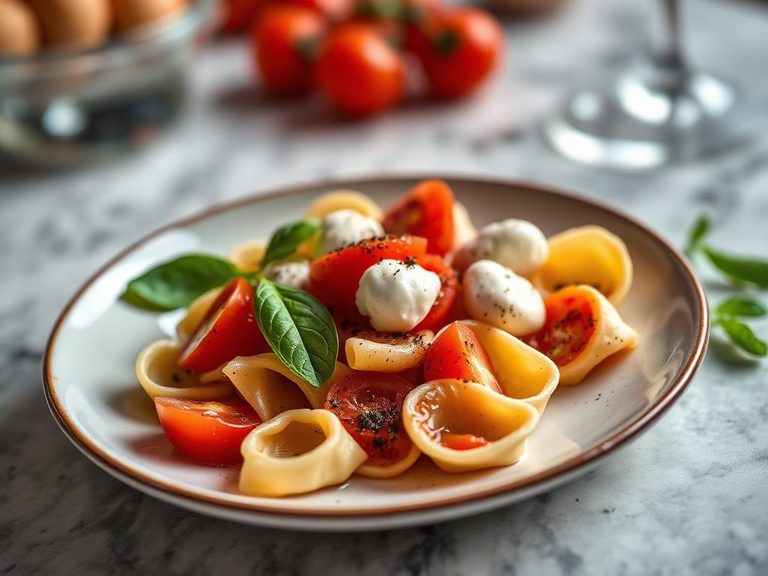
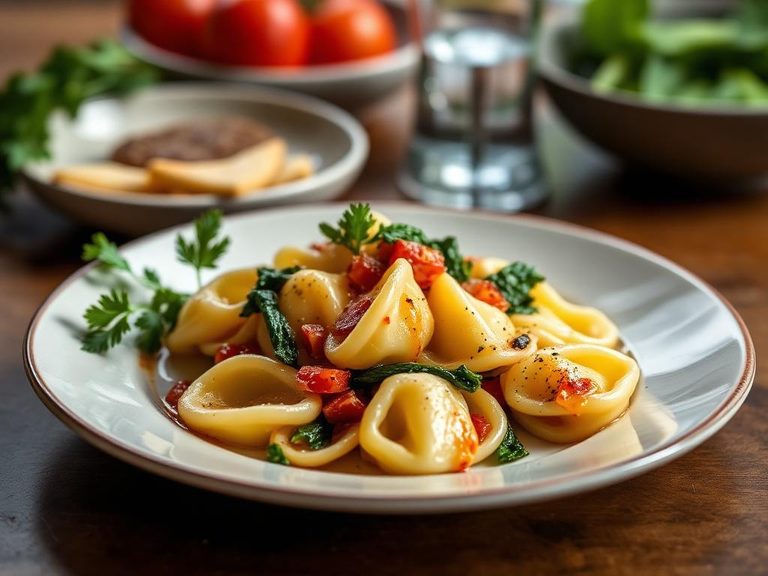
Cheese-filled tortellini are small, ring-shaped pasta parcels, traditionally made with a thin egg dough, stuffed with a savory blend of cheeses like ricotta and Parmesan. When dressed with a bright vinaigrette, the pasta's tender bite and rich, creamy filling are perfectly balanced by the dressing's tangy acidity. This meatless version provides a good source of protein and carbohydrates for a satisfying, energy-dense meal.
Calorie split: 13% protein · 39% carbs · 48% fat
↓ Full nutrition💚 Why it's loved
People adore cheese tortellini for the delightful contrast between the delicate pasta shell and the rich, savory cheese filling, a classic Italian comfort food. The addition of a vinaigrette elevates it from a simple dish to a bright, sophisticated salad or light meal, making it incredibly versatile for both warm and cold preparations.
⚠️ Watch-outs & how to enjoy it better
The pasta is a refined carbohydrate with minimal fiber, which can lead to a quicker rise in blood sugar compared to whole-grain alternatives. To counteract this, pair it with a substantial side of non-starchy vegetables (like a large spinach salad) or add a source of protein and fat (like grilled chicken or extra Parmesan) to slow digestion. Those watching sodium intake should be mindful, as both the cheese filling and vinaigrette can contribute significantly.
Key benefits
- Good source of protein for muscle maintenance.
- Provides quick energy from carbohydrates.
- Meatless option suitable for vegetarians.
- Vinaigrette adds flavor without heavy cream.
- Compact size makes for easy portion control.
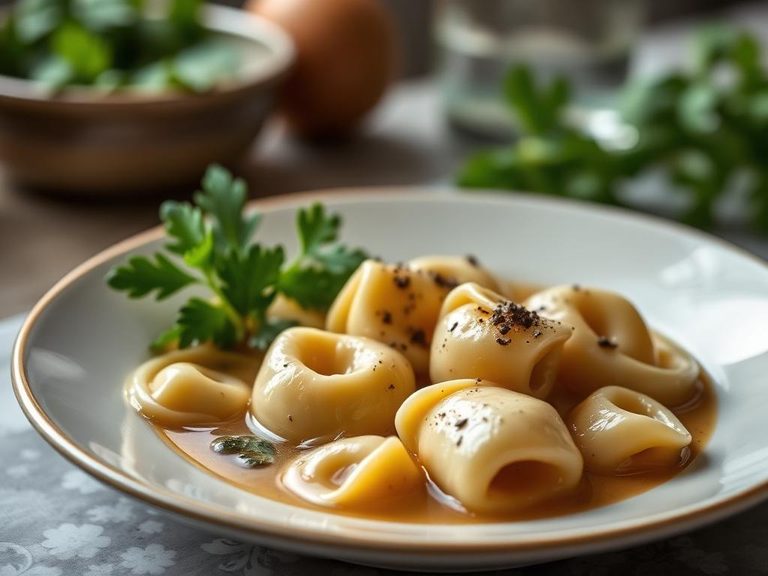
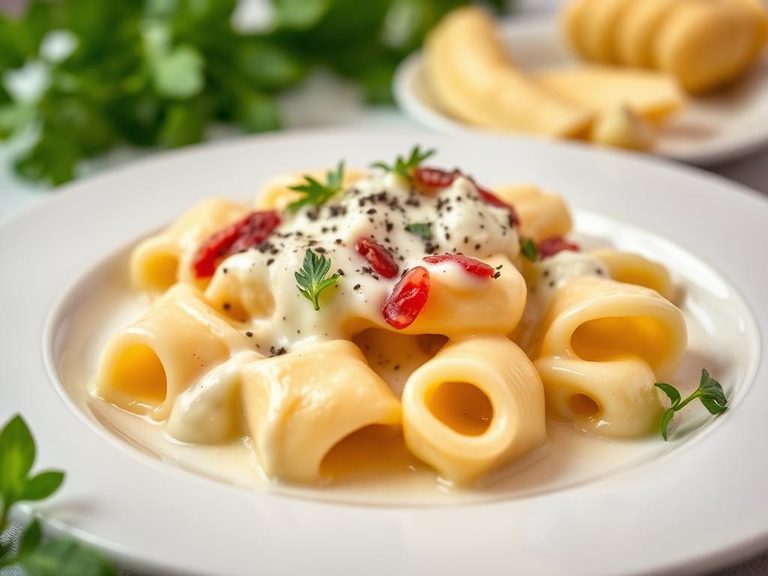
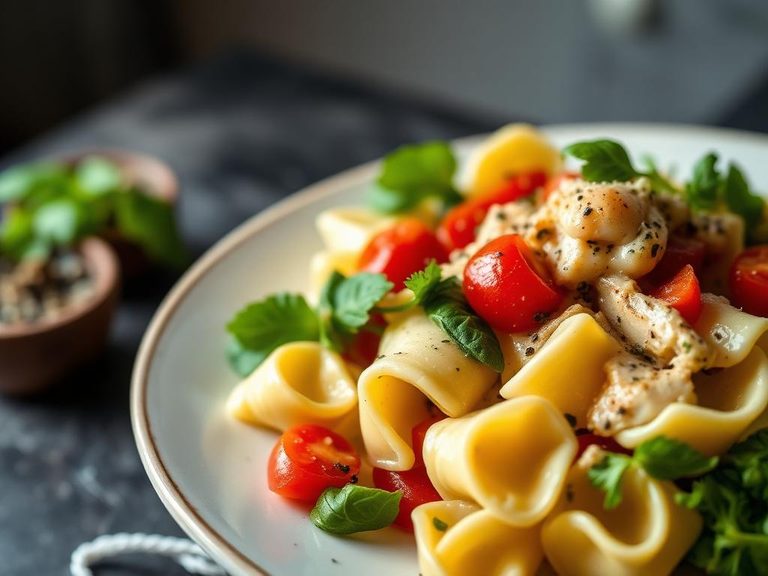
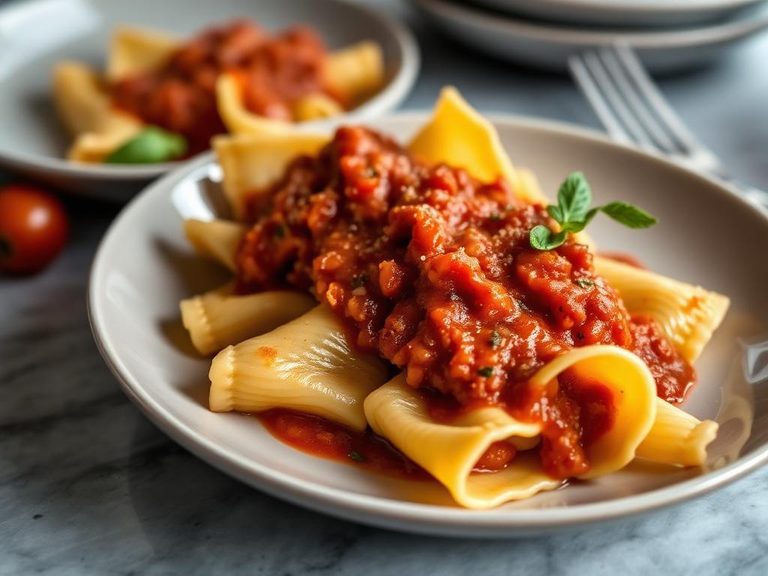
🍽️ Popular dishes
🌍 Where it's eaten
💡 Did you know?
Legend says tortellini were inspired by the navel of Venus, the goddess of love, as imagined by a lovesick innkeeper in Bologna.
Full nutrition (USDA data · scales with serving)
| Water | 62.4 g |
| Energy | 193 kcal |
| Protein | 6.2 g |
| Total lipid (fat) | 10.4 g |
| Carbohydrate, by difference | 18.8 g |
| Fiber, total dietary | 0.60 g |
| Total Sugars | 0.56 g |
| Calcium, Ca | 84.0 mg |
| Iron, Fe | 1.4 mg |
| Magnesium, Mg | 13.0 mg |
| Phosphorus, P | 101 mg |
| Potassium, K | 113 mg |
| Sodium, Na | 639 mg |
| Zinc, Zn | 0.52 mg |
| Copper, Cu | 0.04 mg |
| Selenium, Se | 9.5 ug |
| Vitamin C, total ascorbic acid | 0.20 mg |
| Thiamin | 0.18 mg |
| Riboflavin | 0.22 mg |
| Niacin | 1.3 mg |
| Vitamin B-6 | 0.05 mg |
| Folate, total | 32.0 ug |
| Folic acid | 20.0 ug |
| Folate, food | 12.0 ug |
| Folate, DFE | 46.0 ug |
| Choline, total | 46.8 mg |
| Vitamin B-12 | 0.24 ug |
| Vitamin B-12, added | 0.00 ug |
| Vitamin A, RAE | 63.0 ug |
| Retinol | 62.0 ug |
| Carotene, beta | 3.0 ug |
| Carotene, alpha | 1.0 ug |
| Cryptoxanthin, beta | 2.0 ug |
| Lycopene | 0.00 ug |
| Lutein + zeaxanthin | 76.0 ug |
| Vitamin E (alpha-tocopherol) | 0.82 mg |
| Vitamin E, added | 0.00 mg |
| Vitamin D (D2 + D3) | 0.40 ug |
| Vitamin K (phylloquinone) | 10.6 ug |
| Alcohol, ethyl | 0.00 g |
| Caffeine | 0.00 mg |
| Theobromine | 0.00 mg |
Fat & fatty acid profile (per 100g)
| Fatty acids, total saturated | 3.6 g |
| SFA 4:0 | 0.07 g |
| SFA 6:0 | 0.06 g |
| SFA 8:0 | 0.04 g |
| SFA 10:0 | 0.09 g |
| SFA 12:0 | 0.11 g |
| SFA 14:0 | 0.36 g |
| SFA 16:0 | 2.1 g |
| SFA 18:0 | 0.64 g |
| Fatty acids, total monounsaturated | 3.0 g |
| MUFA 16:1 | 0.12 g |
| MUFA 18:1 | 2.9 g |
| MUFA 20:1 | 0.01 g |
| MUFA 22:1 | 0.00 g |
| Fatty acids, total polyunsaturated | 3.0 g |
| PUFA 18:2 | 2.8 g |
| PUFA 18:3 | 0.17 g |
| PUFA 18:4 | 0.00 g |
| PUFA 20:4 | 0.02 g |
| PUFA 20:5 n-3 (EPA) | 0.00 g |
| PUFA 22:5 n-3 (DPA) | 0.00 g |
| PUFA 22:6 n-3 (DHA) | 0.00 g |
| Cholesterol | 79.0 mg |
FAQ
What is the main difference between tortellini and ravioli?
Tortellini are typically smaller and folded into a distinctive ring or navel shape, often stuffed with meat or cheese. Ravioli are larger, flat, square or round pasta pockets, also filled with cheese, meat, or vegetables.
Can I use a different dressing instead of vinaigrette?
Absolutely. While vinaigrette provides a classic tangy contrast, cheese tortellini also pair beautifully with cream-based sauces (like Alfredo), pesto, or a simple butter and sage sauce.
How do I prevent cheese tortellini from sticking together after cooking?
Drain them immediately after cooking, rinse briefly with cool water to stop the cooking process, and toss them with a small amount of olive oil or the dressing you plan to use. Do not let them sit in the cooking water.
Nutrient density (calculated · NRF9.3)
Nutrient Rich Foods index: beneficial nutrients (protein, fiber, vitamins, minerals) minus saturated fat, added sugar & sodium, per 100 kcal.
NRF9.3 index — Fulgoni, Keast & Drewnowski, 2009. Computed from USDA nutrients.
Weight-loss friendliness (composite index)
Energy density 1.93 kcal/g · 13% calories from protein · 0.6 g fiber · 0.6 g sugar per 100 g.
Composite of energy density (Rolls et al., 1999), protein & fiber satiety, minus sugar. A calculated heuristic — ranks satiety-per-calorie, not a clinical measure.
Dietary load (calculated from USDA values)
Potential renal acid load. Positive = acid-forming, negative = alkaline-forming.
Sodium-to-potassium ratio: 5.65 (lower is better — aim for ≤ 1)
Sodium:potassium per WHO potassium guidance. Computed from USDA nutrients.