

Jellies
Whole food · Sweets
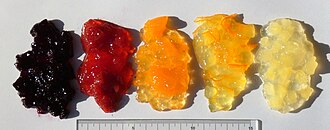
Photo: Wikipedia
Jellies are a clear, firm, and wobbly fruit preserve made from fruit juice, sugar, and pectin. They have a smooth, springy texture that melts in the mouth, delivering a burst of concentrated fruit sweetness. Nutritionally, they are almost entirely carbohydrate, with over 51g of sugar per 100g, providing quick energy but little else.
Calorie split: 0% protein · 100% carbs · 0% fat
↓ Full nutrition💚 Why it's loved
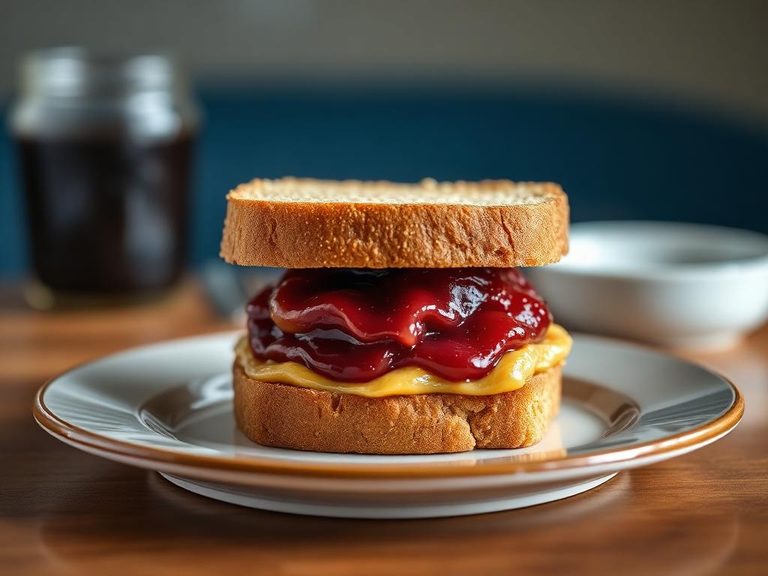
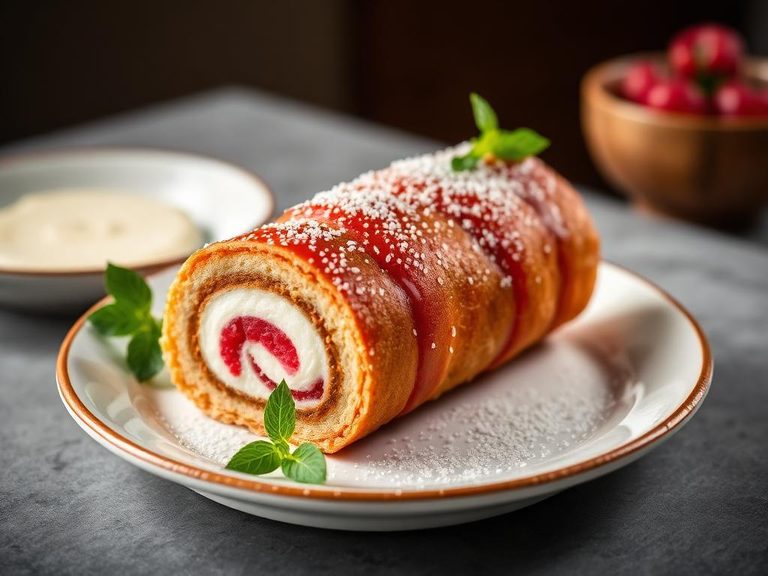
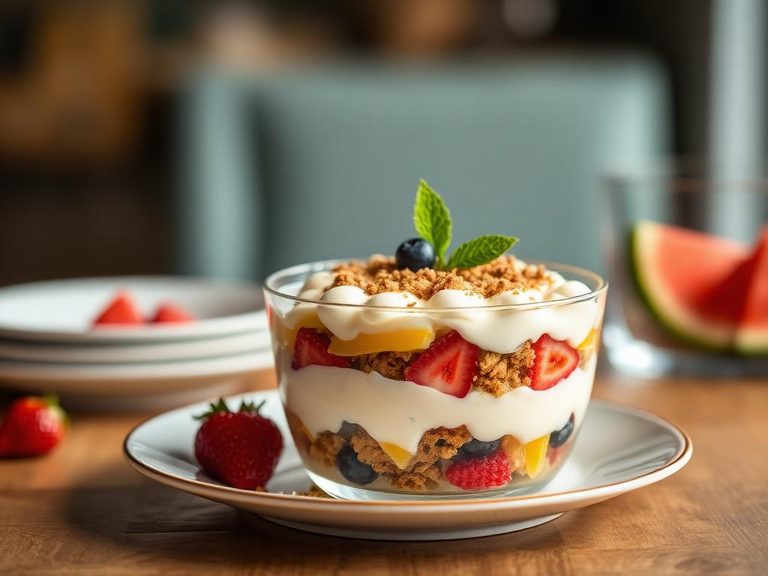
People love jellies for their pure, intense fruit flavor and satisfying, playful texture. They are a nostalgic comfort food, a staple for toast and pastries, and a key ingredient in classic desserts like jelly rolls and trifles.
⚠️ Watch-outs & how to enjoy it better
The extremely high sugar content can cause rapid blood-sugar spikes and is a concern for those managing diabetes or calorie intake. To counteract this, practice strict portion control (1-2 tablespoons) and always pair with a source of protein or fat, like on whole-grain toast with nut butter, to slow sugar absorption.
Key benefits
- Quick source of energy from simple carbohydrates
- Fat-free and very low in protein
- Long shelf life when properly sealed
- Versatile for both sweet and savory applications
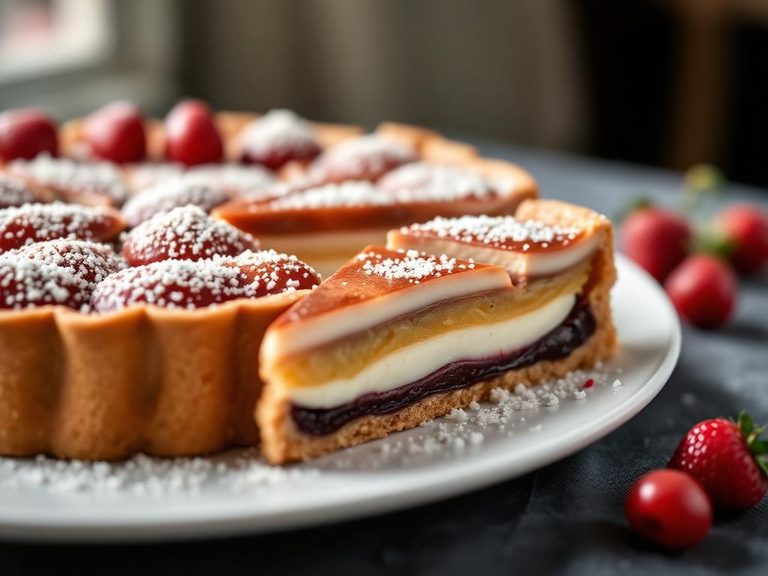
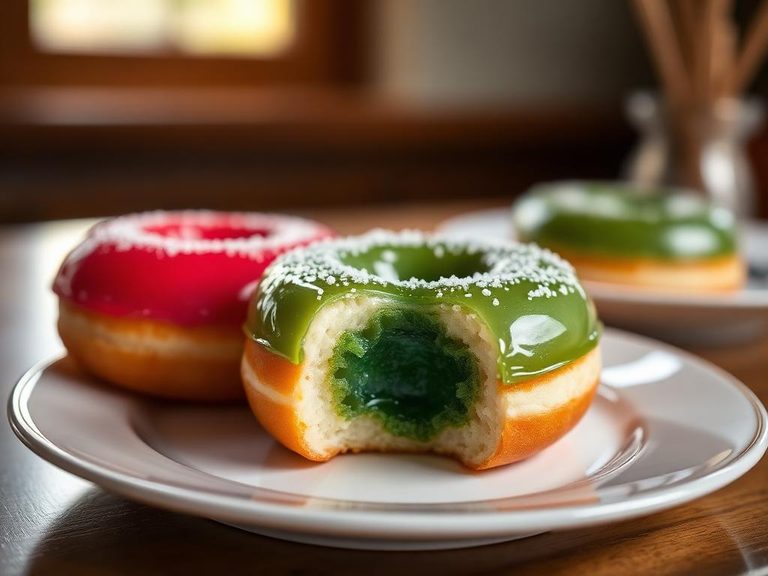
🍽️ Popular dishes

🌍 Where it's eaten
💡 Did you know?
The wobbly texture of jelly comes from pectin, a natural starch found in fruits. When heated with sugar and acid, pectin molecules form a mesh that traps liquid, creating the gel.
Full nutrition (USDA data · scales with serving)
| Water | 29.8 g |
| Energy | 266 kcal |
| Energy | 1115 kj |
| Protein | 0.15 g |
| Total lipid (fat) | 0.02 g |
| Ash | 0.12 g |
| Carbohydrate, by difference | 70.0 g |
| Fiber, total dietary | 1.0 g |
| Total Sugars | 51.2 g |
| Calcium, Ca | 7.0 mg |
| Iron, Fe | 0.19 mg |
| Magnesium, Mg | 6.0 mg |
| Phosphorus, P | 6.0 mg |
| Potassium, K | 54.0 mg |
| Sodium, Na | 30.0 mg |
| Zinc, Zn | 0.03 mg |
| Copper, Cu | 0.01 mg |
| Manganese, Mn | 0.13 mg |
| Selenium, Se | 0.40 ug |
| Fluoride, F | 73.0 ug |
| Vitamin C, total ascorbic acid | 0.90 mg |
| Thiamin | 0.00 mg |
| Riboflavin | 0.03 mg |
| Niacin | 0.04 mg |
| Pantothenic acid | 0.20 mg |
| Vitamin B-6 | 0.02 mg |
| Folate, total | 2.0 ug |
| Folic acid | 0.00 ug |
| Folate, food | 2.0 ug |
| Folate, DFE | 2.0 ug |
| Choline, total | 10.3 mg |
| Vitamin B-12 | 0.00 ug |
| Vitamin B-12, added | 0.00 ug |
| Vitamin A, RAE | 0.00 ug |
| Retinol | 0.00 ug |
| Carotene, beta | 3.0 ug |
| Carotene, alpha | 0.00 ug |
| Cryptoxanthin, beta | 0.00 ug |
| Vitamin A, IU | 5.0 iu |
| Lycopene | 0.00 ug |
| Lutein + zeaxanthin | 22.0 ug |
| Vitamin E (alpha-tocopherol) | 0.00 mg |
| Vitamin E, added | 0.00 mg |
| Tocopherol, beta | 0.00 mg |
| Tocopherol, gamma | 0.00 mg |
| Tocopherol, delta | 0.00 mg |
| Tocotrienol, alpha | 0.00 mg |
| Tocotrienol, beta | 0.00 mg |
| Tocotrienol, gamma | 0.00 mg |
| Vitamin D (D2 + D3), International Units | 0.00 iu |
| Vitamin D (D2 + D3) | 0.00 ug |
| Vitamin K (phylloquinone) | 0.30 ug |
| Alcohol, ethyl | 0.00 g |
| Caffeine | 0.00 mg |
| Theobromine | 0.00 mg |
Fat & fatty acid profile (per 100g)
| Fatty acids, total saturated | 0.01 g |
| SFA 4:0 | 0.00 g |
| SFA 6:0 | 0.00 g |
| SFA 8:0 | 0.00 g |
| SFA 10:0 | 0.00 g |
| SFA 12:0 | 0.00 g |
| SFA 14:0 | 0.00 g |
| SFA 16:0 | 0.00 g |
| SFA 18:0 | 0.00 g |
| Fatty acids, total monounsaturated | 0.00 g |
| MUFA 16:1 | 0.00 g |
| MUFA 18:1 | 0.00 g |
| MUFA 20:1 | 0.00 g |
| MUFA 22:1 | 0.00 g |
| Fatty acids, total polyunsaturated | 0.00 g |
| PUFA 18:2 | 0.00 g |
| PUFA 18:3 | 0.00 g |
| PUFA 18:4 | 0.00 g |
| PUFA 20:4 | 0.00 g |
| PUFA 20:5 n-3 (EPA) | 0.00 g |
| PUFA 22:5 n-3 (DPA) | 0.00 g |
| PUFA 22:6 n-3 (DHA) | 0.00 g |
| Cholesterol | 0.00 mg |
FAQ
What's the difference between jelly, jam, and preserves?
Jelly is made from strained fruit juice and is smooth and clear. Jam contains crushed or chopped fruit and is thicker and less uniform. Preserves have whole or large pieces of fruit in a syrup or jam.
Why does my homemade jelly not set?
The most common reasons are insufficient pectin, incorrect sugar ratio, or not cooking it to the proper temperature (220°F / 104°C at sea level). Using underripe fruit (higher in pectin) or adding commercial pectin helps.
Is jelly vegan?
Most commercial jellies are vegan. However, some traditional recipes or artisanal brands might use gelatin (animal-derived) for setting, or honey as a sweetener. Always check the ingredients list.
Nutrient density (calculated · NRF9.3)
Nutrient Rich Foods index: beneficial nutrients (protein, fiber, vitamins, minerals) minus saturated fat, added sugar & sodium, per 100 kcal.
NRF9.3 index — Fulgoni, Keast & Drewnowski, 2009. Computed from USDA nutrients.
Weight-loss friendliness (composite index)
Energy density 2.66 kcal/g · 0% calories from protein · 1.0 g fiber · 51.2 g sugar per 100 g.
Composite of energy density (Rolls et al., 1999), protein & fiber satiety, minus sugar. A calculated heuristic — ranks satiety-per-calorie, not a clinical measure.
Dietary load (calculated from USDA values)
Potential renal acid load. Positive = acid-forming, negative = alkaline-forming.
Sodium-to-potassium ratio: 0.56 (lower is better — aim for ≤ 1)
Sodium:potassium per WHO potassium guidance. Computed from USDA nutrients.