

Chocolate, dark, 45- 59% cacao solids
Whole food · Sweets

Photo: Wikipedia
This is a sophisticated, bittersweet chocolate bar where the cacao's deep, roasted notes take center stage, balanced by a subtle sweetness. Its texture is typically firm with a satisfying snap, melting slowly on the tongue to reveal complex fruity or earthy undertones. Nutritionally, it's a potent source of antioxidants and provides a significant energy boost from its healthy fats and carbohydrates.
Calorie split: 4% protein · 45% carbs · 52% fat
↓ Full nutrition💚 Why it's loved
People adore its complex, grown-up flavor profile that satisfies a sweet craving without being cloyingly sugary. It's incredibly versatile, enjoyed as a standalone treat, melted into sauces, or used to add depth to both sweet and savory dishes.
⚠️ Watch-outs & how to enjoy it better
Its high sugar and fat content can cause blood-sugar spikes and is calorie-dense, so portion control is key. To mitigate this, pair a square with a handful of nuts or a piece of fruit to add protein and fiber, slowing absorption. Those sensitive to stimulants should also be mindful of its caffeine and theobromine content.
Key benefits
- Rich in antioxidants like flavonoids.
- Provides a quick, sustained energy source from healthy fats.
- Contains minerals such as iron, magnesium, and copper.
- May support cognitive function and mood.
- Can be part of a balanced diet when enjoyed mindfully.
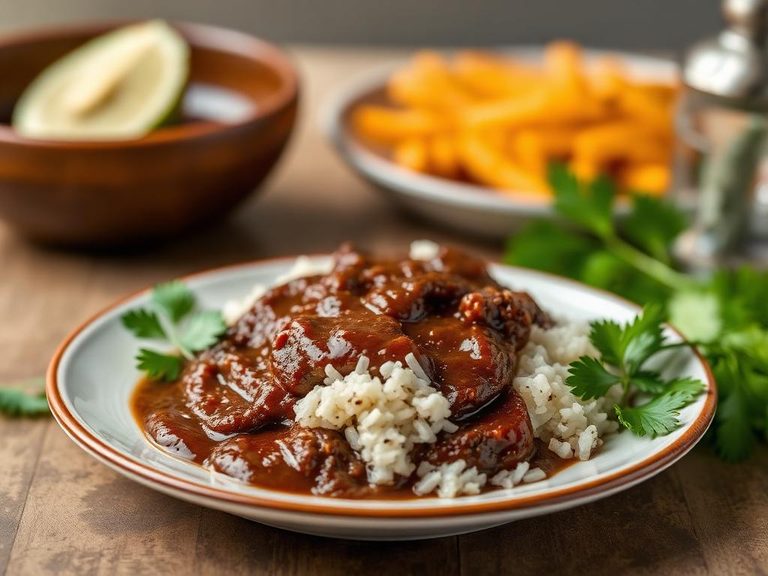
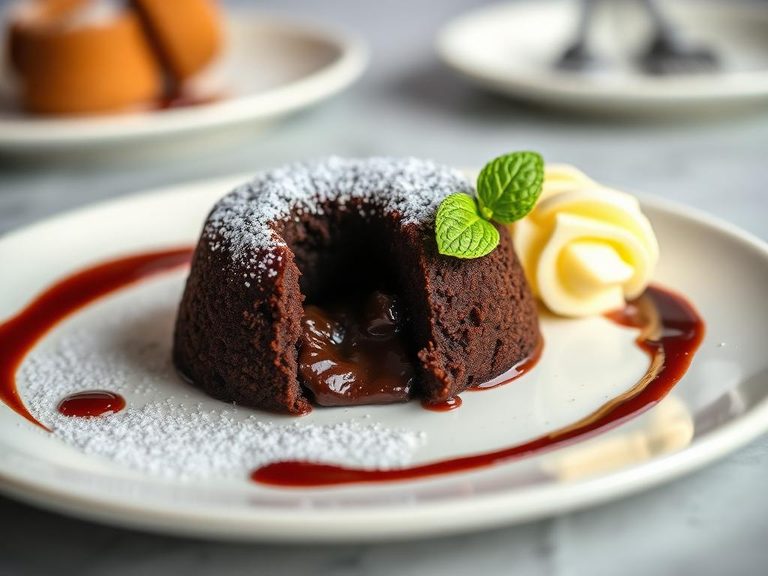
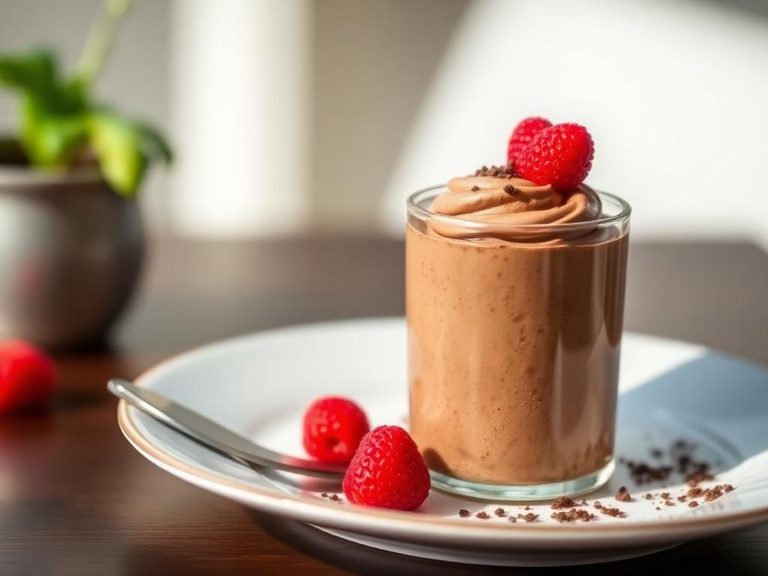
🍽️ Popular dishes

🌍 Where it's eaten
💡 Did you know?
The 'snap' sound when you break a good piece of dark chocolate is a direct indicator of proper tempering, a precise process of heating and cooling that aligns cocoa butter crystals for a glossy finish and firm texture.
Full nutrition (USDA data · scales with serving)
| Water | 0.97 g |
| Energy | 546 kcal |
| Energy | 2283 kj |
| Protein | 4.9 g |
| Total lipid (fat) | 31.3 g |
| Ash | 1.7 g |
| Carbohydrate, by difference | 61.2 g |
| Fiber, total dietary | 7.0 g |
| Total Sugars | 47.9 g |
| Sucrose | 46.3 g |
| Glucose | 0.00 g |
| Fructose | 0.00 g |
| Lactose | 1.6 g |
| Maltose | 0.00 g |
| Galactose | 0.00 g |
| Calcium, Ca | 56.0 mg |
| Iron, Fe | 8.0 mg |
| Magnesium, Mg | 146 mg |
| Phosphorus, P | 206 mg |
| Potassium, K | 559 mg |
| Sodium, Na | 24.0 mg |
| Zinc, Zn | 2.0 mg |
| Copper, Cu | 1.0 mg |
| Manganese, Mn | 1.4 mg |
| Selenium, Se | 3.0 ug |
| Thiamin | 0.03 mg |
| Riboflavin | 0.05 mg |
| Niacin | 0.72 mg |
| Pantothenic acid | 0.30 mg |
| Vitamin B-6 | 0.04 mg |
| Vitamin B-12 | 0.23 ug |
| Vitamin A, RAE | 2.0 ug |
| Carotene, beta | 26.0 ug |
| Carotene, alpha | 7.0 ug |
| Cryptoxanthin, beta | 1.0 ug |
| Vitamin A, IU | 50.0 iu |
| Lycopene | 0.00 ug |
| Lutein + zeaxanthin | 31.0 ug |
| Vitamin E (alpha-tocopherol) | 0.54 mg |
| Tocopherol, beta | 0.00 mg |
| Tocopherol, gamma | 6.4 mg |
| Tocopherol, delta | 0.34 mg |
| Tocotrienol, alpha | 0.00 mg |
| Tocotrienol, beta | 0.00 mg |
| Tocotrienol, gamma | 0.08 mg |
| Tocotrienol, delta | 0.00 mg |
| Vitamin K (phylloquinone) | 8.1 ug |
| Vitamin K (Dihydrophylloquinone) | 0.00 ug |
| Vitamin K (Menaquinone-4) | 0.10 ug |
| Caffeine | 43.0 mg |
| Theobromine | 493 mg |
Fat & fatty acid profile (per 100g)
| Fatty acids, total saturated | 18.5 g |
| SFA 4:0 | 0.06 g |
| SFA 6:0 | 0.04 g |
| SFA 8:0 | 0.03 g |
| SFA 10:0 | 0.09 g |
| SFA 12:0 | 0.08 g |
| SFA 14:0 | 0.26 g |
| SFA 15:0 | 0.03 g |
| SFA 16:0 | 7.6 g |
| SFA 17:0 | 0.07 g |
| SFA 18:0 | 9.8 g |
| SFA 20:0 | 0.31 g |
| SFA 22:0 | 0.05 g |
| SFA 24:0 | 0.03 g |
| Fatty acids, total monounsaturated | 9.5 g |
| MUFA 14:1 | 0.02 g |
| MUFA 15:1 | 0.00 g |
| MUFA 16:1 | 0.11 g |
| MUFA 16:1 c | 0.10 g |
| MUFA 17:1 | 0.00 g |
| MUFA 18:1 | 9.4 g |
| MUFA 18:1 c | 9.3 g |
| MUFA 20:1 | 0.02 g |
| MUFA 22:1 | 0.00 g |
| MUFA 22:1 c | 0.00 g |
| MUFA 24:1 c | 0.00 g |
| Fatty acids, total polyunsaturated | 1.1 g |
| PUFA 18:2 | 1.00 g |
| PUFA 18:2 n-6 c,c | 0.95 g |
| PUFA 18:2 CLAs | 0.03 g |
| PUFA 18:3 | 0.09 g |
| PUFA 18:3 n-3 c,c,c (ALA) | 0.09 g |
| PUFA 18:3 n-6 c,c,c | 0.00 g |
| PUFA 18:4 | 0.00 g |
| PUFA 20:2 n-6 c,c | 0.00 g |
| PUFA 20:3 | 0.00 g |
| PUFA 20:3 n-3 | 0.00 g |
| PUFA 20:3 n-6 | 0.00 g |
| PUFA 20:4 | 0.00 g |
| PUFA 20:5 n-3 (EPA) | 0.00 g |
| PUFA 22:4 | 0.00 g |
| PUFA 22:5 n-3 (DPA) | 0.00 g |
| PUFA 22:6 n-3 (DHA) | 0.00 g |
| Fatty acids, total trans | 0.11 g |
| Fatty acids, total trans-monoenoic | 0.09 g |
| TFA 16:1 t | 0.01 g |
| TFA 18:1 t | 0.08 g |
| TFA 22:1 t | 0.00 g |
| TFA 18:2 t not further defined | 0.02 g |
| Fatty acids, total trans-polyenoic | 0.02 g |
| Cholesterol | 8.0 mg |
| Stigmasterol | 25.0 mg |
| Campesterol | 11.0 mg |
| Beta-sitosterol | 66.0 mg |
Amino acid profile (per 100g)
Estimated from Syrups, chocolate, HERSHEY'S Sugar free, Genuine Chocolate Flavored, Lite Syrup — USDA does not publish this profile for Chocolate.
| Tryptophan | 0.04 g |
| Threonine | 0.11 g |
| Isoleucine | 0.11 g |
| Leucine | 0.17 g |
| Lysine | 0.14 g |
| Methionine | 0.03 g |
| Cystine | 0.03 g |
| Phenylalanine | 0.13 g |
| Tyrosine | 0.10 g |
| Valine | 0.17 g |
| Arginine | 0.16 g |
| Histidine | 0.05 g |
| Alanine | 0.13 g |
| Aspartic acid | 0.28 g |
| Glutamic acid | 0.42 g |
| Glycine | 0.13 g |
| Proline | 0.12 g |
| Serine | 0.12 g |
FAQ
How does 45-59% cacao differ from milk chocolate?
It has a much higher proportion of cocoa solids and less sugar and milk, resulting in a more intense, less sweet, and slightly bitter flavor with a firmer texture.
Is dark chocolate with this cacao percentage considered healthy?
It can be a healthier choice than milk chocolate due to higher antioxidants and less sugar, but it's still energy-dense. Enjoy it as an occasional treat within a balanced diet.
What does 'cacao solids' mean on the label?
It refers to the non-fat components of the cacao bean, including cocoa powder, which provide the chocolate's characteristic flavor, color, and antioxidants.
Nutrient density (calculated · NRF9.3)
Nutrient Rich Foods index: beneficial nutrients (protein, fiber, vitamins, minerals) minus saturated fat, added sugar & sodium, per 100 kcal.
NRF9.3 index — Fulgoni, Keast & Drewnowski, 2009. Computed from USDA nutrients.
Weight-loss friendliness (composite index)
Energy density 5.46 kcal/g · 4% calories from protein · 7.0 g fiber · 47.9 g sugar per 100 g.
Composite of energy density (Rolls et al., 1999), protein & fiber satiety, minus sugar. A calculated heuristic — ranks satiety-per-calorie, not a clinical measure.
Dietary load (calculated from USDA values)
Potential renal acid load. Positive = acid-forming, negative = alkaline-forming.
Sodium-to-potassium ratio: 0.04 (lower is better — aim for ≤ 1)
Sodium:potassium per WHO potassium guidance. Computed from USDA nutrients.