

Toaster Pastries, fruit, frosted (include apples, blueberry, cherry, strawberry)
Whole food · Baked Products

Photo: Wikipedia
A quintessential childhood staple, a frosted toaster pastry is a rectangular, pre-baked pie crust filled with a sweet, jam-like fruit paste and topped with a colorful, sugary glaze. The texture is a satisfying contrast: a crisp, flaky shell that softens when toasted, giving way to a sticky, intensely sweet interior. Nutritionally, it is a high-energy, carbohydrate-dense food, with over 70g of carbs and 31g of sugar per 100g, providing a quick but short-lived fuel boost.
Calorie split: 4% protein · 75% carbs · 21% fat
↓ Full nutrition💚 Why it's loved
People love the nostalgic comfort and the perfect balance of sweet, fruity filling and crunchy, frosted crust. It's a versatile snack that can be eaten on-the-go, toasted for a warm treat, or even used as a base for creative dessert hacks.
⚠️ Watch-outs & how to enjoy it better
The very high sugar and refined carbohydrate content can lead to a rapid blood sugar spike followed by a crash, making it a poor choice for sustained energy or for those managing blood sugar. It is also low in fiber and protein, which are key for satiety. To counteract this, pair it with a source of protein or healthy fat (like a handful of nuts, cheese, or Greek yogurt) and practice strict portion control, enjoying just one pastry instead of two.
Key benefits
- Provides rapid energy from simple carbohydrates
- Extremely convenient and requires minimal preparation
- Offers a consistent, familiar taste and portion control
- Long shelf life makes it a reliable pantry item
- Can be a quick source of calories in a time crunch
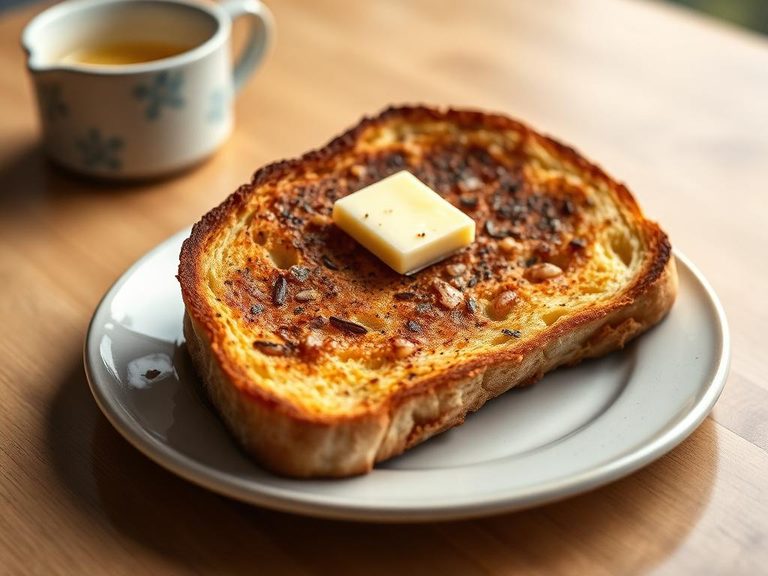
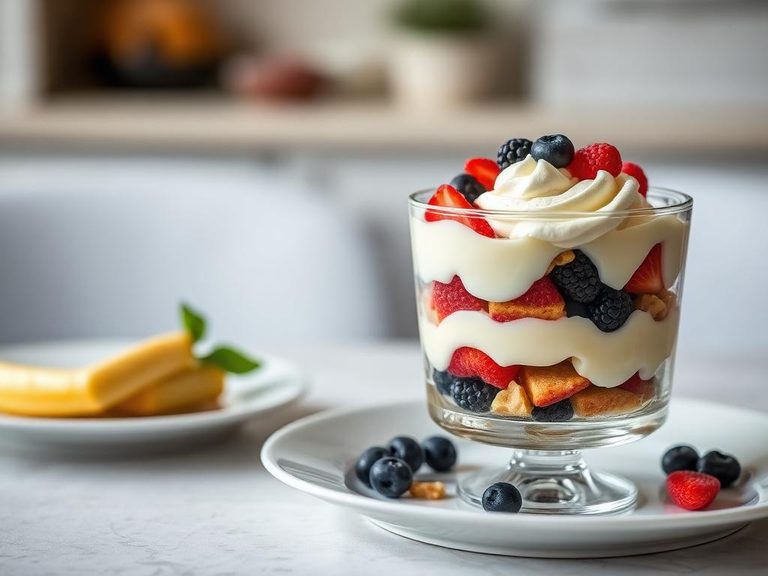
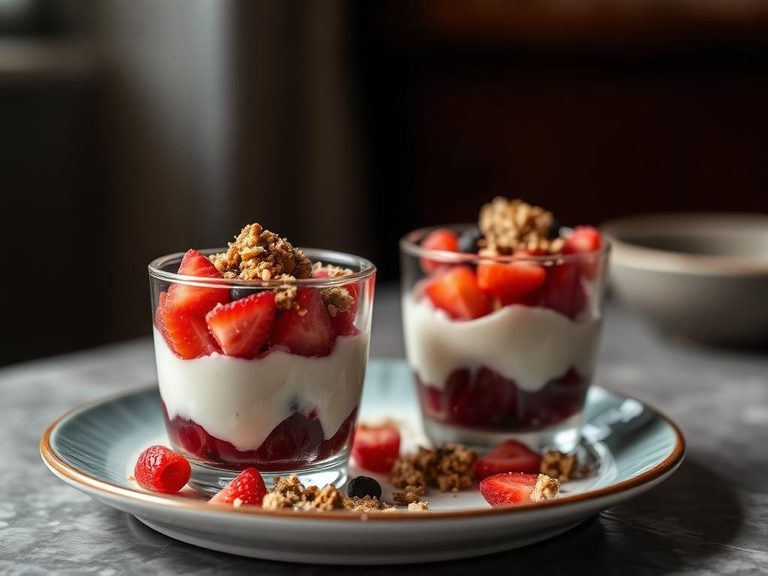
🍽️ Popular dishes


🌍 Where it's eaten
💡 Did you know?
The iconic fruit-filled pastry was originally developed in the 1960s as a shelf-stable, convenient breakfast alternative to toast, and its distinctive perforations were designed to prevent the pastry from puffing up too much during baking.
Full nutrition (USDA data · scales with serving)
| Water | 14.0 g |
| Energy | 385 kcal |
| Energy | 1609 kj |
| Protein | 4.0 g |
| Total lipid (fat) | 9.0 g |
| Ash | 1.1 g |
| Carbohydrate, by difference | 71.8 g |
| Fiber, total dietary | 1.8 g |
| Total Sugars | 31.0 g |
| Sucrose | 8.9 g |
| Glucose | 14.9 g |
| Fructose | 3.9 g |
| Lactose | 0.26 g |
| Maltose | 3.1 g |
| Galactose | 0.00 g |
| Starch | 29.6 g |
| Calcium, Ca | 12.0 mg |
| Iron, Fe | 4.3 mg |
| Magnesium, Mg | 11.0 mg |
| Phosphorus, P | 71.0 mg |
| Potassium, K | 86.0 mg |
| Sodium, Na | 311 mg |
| Zinc, Zn | 0.36 mg |
| Copper, Cu | 0.06 mg |
| Manganese, Mn | 0.32 mg |
| Selenium, Se | 3.4 ug |
| Vitamin C, total ascorbic acid | 0.00 mg |
| Thiamin | 0.52 mg |
| Riboflavin | 0.49 mg |
| Niacin | 6.2 mg |
| Pantothenic acid | 0.30 mg |
| Vitamin B-6 | 0.49 mg |
| Folate, total | 90.0 ug |
| Folic acid | 36.0 ug |
| Folate, food | 54.0 ug |
| Folate, DFE | 115 ug |
| Choline, total | 8.4 mg |
| Betaine | 21.0 mg |
| Vitamin B-12 | 0.01 ug |
| Vitamin B-12, added | 0.00 ug |
| Vitamin A, RAE | 202 ug |
| Retinol | 202 ug |
| Carotene, beta | 0.00 ug |
| Carotene, alpha | 0.00 ug |
| Cryptoxanthin, beta | 0.00 ug |
| Vitamin A, IU | 672 iu |
| Lycopene | 0.00 ug |
| Lutein + zeaxanthin | 52.0 ug |
| Vitamin E (alpha-tocopherol) | 0.74 mg |
| Vitamin E, added | 0.00 mg |
| Tocopherol, beta | 0.16 mg |
| Tocopherol, gamma | 3.3 mg |
| Tocopherol, delta | 1.1 mg |
| Tocotrienol, alpha | 0.17 mg |
| Tocotrienol, beta | 0.49 mg |
| Tocotrienol, gamma | 0.24 mg |
| Tocotrienol, delta | 0.08 mg |
| Vitamin D (D2 + D3), International Units | 0.00 iu |
| Vitamin D (D2 + D3) | 0.00 ug |
| Vitamin K (phylloquinone) | 19.4 ug |
| Vitamin K (Dihydrophylloquinone) | 0.00 ug |
| Alcohol, ethyl | 0.00 g |
| Caffeine | 0.00 mg |
| Theobromine | 0.00 mg |
Fat & fatty acid profile (per 100g)
| Fatty acids, total saturated | 3.1 g |
| SFA 4:0 | 0.00 g |
| SFA 6:0 | 0.00 g |
| SFA 8:0 | 0.00 g |
| SFA 10:0 | 0.01 g |
| SFA 12:0 | 0.01 g |
| SFA 14:0 | 0.05 g |
| SFA 15:0 | 0.01 g |
| SFA 16:0 | 2.6 g |
| SFA 17:0 | 0.01 g |
| SFA 18:0 | 0.39 g |
| SFA 20:0 | 0.03 g |
| SFA 22:0 | 0.02 g |
| SFA 24:0 | 0.01 g |
| Fatty acids, total monounsaturated | 2.2 g |
| MUFA 14:1 | 0.00 g |
| MUFA 15:1 | 0.00 g |
| MUFA 16:1 | 0.01 g |
| MUFA 16:1 c | 0.01 g |
| MUFA 17:1 | 0.00 g |
| MUFA 18:1 | 2.2 g |
| MUFA 18:1 c | 2.1 g |
| MUFA 20:1 | 0.02 g |
| MUFA 22:1 | 0.00 g |
| MUFA 22:1 c | 0.00 g |
| MUFA 24:1 c | 0.00 g |
| Fatty acids, total polyunsaturated | 3.4 g |
| PUFA 18:2 | 3.0 g |
| PUFA 18:2 n-6 c,c | 3.0 g |
| PUFA 18:2 CLAs | 0.01 g |
| PUFA 18:3 | 0.37 g |
| PUFA 18:3 n-3 c,c,c (ALA) | 0.36 g |
| PUFA 18:3 n-6 c,c,c | 0.01 g |
| PUFA 18:3i | 0.00 g |
| PUFA 18:4 | 0.00 g |
| PUFA 20:2 n-6 c,c | 0.00 g |
| PUFA 20:3 | 0.00 g |
| PUFA 20:3 n-3 | 0.00 g |
| PUFA 20:3 n-6 | 0.00 g |
| PUFA 20:4 | 0.00 g |
| PUFA 20:5 n-3 (EPA) | 0.00 g |
| PUFA 22:4 | 0.00 g |
| PUFA 22:5 n-3 (DPA) | 0.00 g |
| PUFA 22:6 n-3 (DHA) | 0.00 g |
| Fatty acids, total trans | 0.03 g |
| Fatty acids, total trans-monoenoic | 0.01 g |
| TFA 16:1 t | 0.00 g |
| TFA 18:1 t | 0.01 g |
| TFA 22:1 t | 0.00 g |
| TFA 18:2 t not further defined | 0.02 g |
| Fatty acids, total trans-polyenoic | 0.02 g |
| Cholesterol | 0.00 mg |
Amino acid profile (per 100g)
| Tryptophan | 0.07 g |
| Threonine | 0.10 g |
| Isoleucine | 0.13 g |
| Leucine | 0.28 g |
| Lysine | 0.14 g |
| Methionine | 0.07 g |
| Cystine | 0.10 g |
| Phenylalanine | 0.17 g |
| Tyrosine | 0.09 g |
| Valine | 0.15 g |
| Arginine | 0.13 g |
| Histidine | 0.07 g |
| Alanine | 0.12 g |
| Aspartic acid | 0.29 g |
| Glutamic acid | 1.4 g |
| Glycine | 0.15 g |
| Proline | 0.32 g |
| Serine | 0.23 g |
| Hydroxyproline | 0.00 g |
FAQ
Are toaster pastries a good breakfast food?
While popular, they are not nutritionally ideal for breakfast due to their high sugar and low protein/fiber content, which can lead to an energy crash. A breakfast with more protein and fiber will keep you full and focused longer.
How can I make them slightly healthier?
You can't change their base nutrition, but you can improve the meal by pairing one pastry with a protein source like eggs, nuts, or yogurt. Also, be mindful of the frosting—scraping some off can reduce sugar intake.
Why do they have holes in them?
The small holes, called 'docking holes,' allow steam to escape during baking, which prevents the pastry from puffing up into a dome and helps it maintain its flat, uniform shape for even toasting.
Nutrient density (calculated · NRF9.3)
Nutrient Rich Foods index: beneficial nutrients (protein, fiber, vitamins, minerals) minus saturated fat, added sugar & sodium, per 100 kcal.
NRF9.3 index — Fulgoni, Keast & Drewnowski, 2009. Computed from USDA nutrients.
Weight-loss friendliness (composite index)
Energy density 3.85 kcal/g · 4% calories from protein · 1.8 g fiber · 31.0 g sugar per 100 g.
Composite of energy density (Rolls et al., 1999), protein & fiber satiety, minus sugar. A calculated heuristic — ranks satiety-per-calorie, not a clinical measure.
Dietary load (calculated from USDA values)
Potential renal acid load. Positive = acid-forming, negative = alkaline-forming.
Sodium-to-potassium ratio: 3.62 (lower is better — aim for ≤ 1)
Sodium:potassium per WHO potassium guidance. Computed from USDA nutrients.