

Rice, brown, long-grain, raw (Includes foods for USDA's Food Distribution Program)
Whole food · Cereal Grains and Pasta
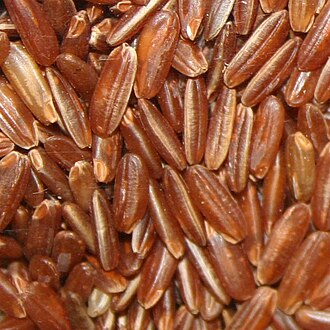
Photo: Wikipedia
Brown long-grain rice is a whole-grain staple with a chewy, nutty texture and a subtle, earthy flavor. Its intact bran layer gives it a satisfying bite and a light tan color, making it a heartier, more textured alternative to white rice. Nutritionally, it's a powerhouse of complex carbohydrates and dietary fiber, providing sustained energy.
Calorie split: 8% protein · 84% carbs · 8% fat
↓ Full nutrition💚 Why it's loved
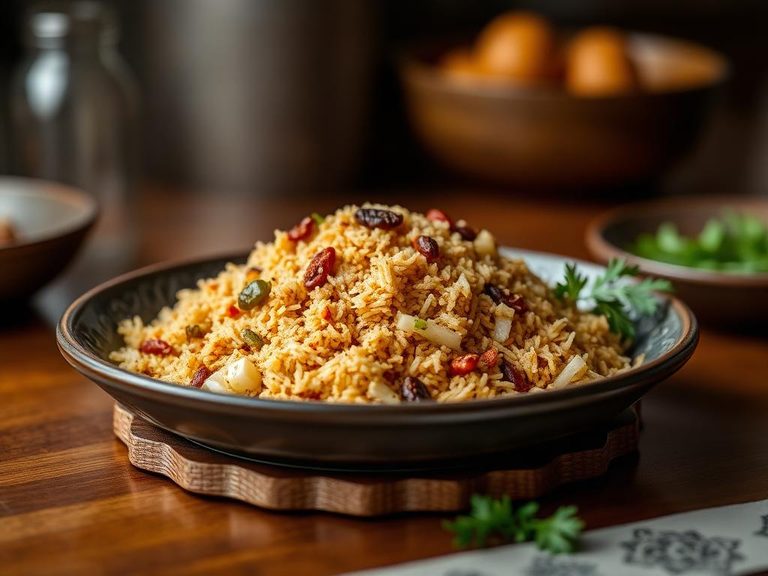
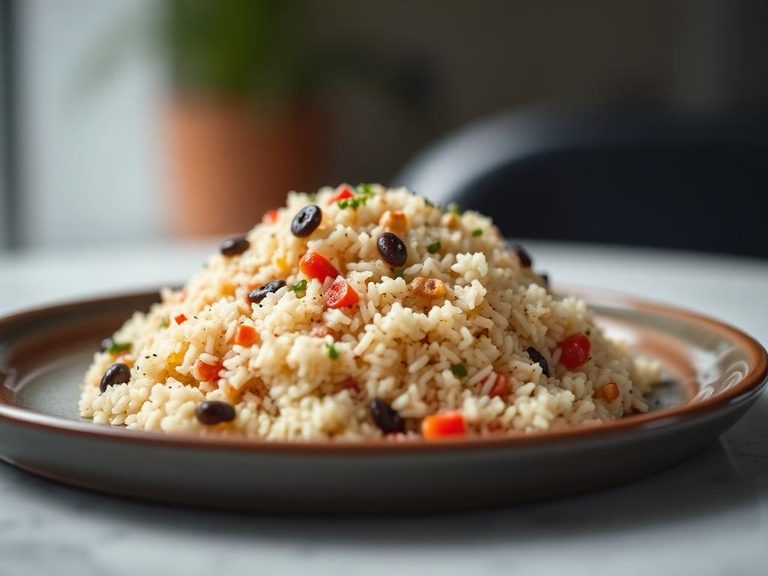
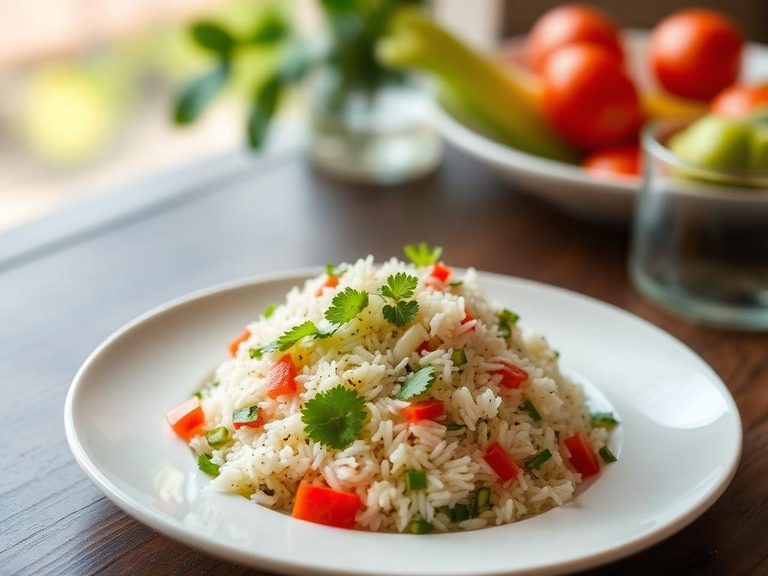
People love its robust, nutty flavor and chewy texture that adds substance to meals. It's celebrated for its versatility, serving as a nutritious base for everything from stir-fries and pilafs to salads and stuffed peppers.
⚠️ Watch-outs & how to enjoy it better
Its longer cooking time and chewier texture can be less appealing to those accustomed to softer, quicker-cooking white rice. To improve digestibility and reduce phytic acid (which can inhibit mineral absorption), soak the rice for 30 minutes before cooking. Pairing it with a source of protein (like beans or chicken) and healthy fat (like avocado or olive oil) can help balance its glycemic impact.
Key benefits
- High in fiber for digestive health and satiety
- Rich in manganese and selenium
- Source of plant-based protein
- Whole grain linked to reduced risk of type 2 diabetes
- Provides sustained energy due to low glycemic index
🍽️ Popular dishes
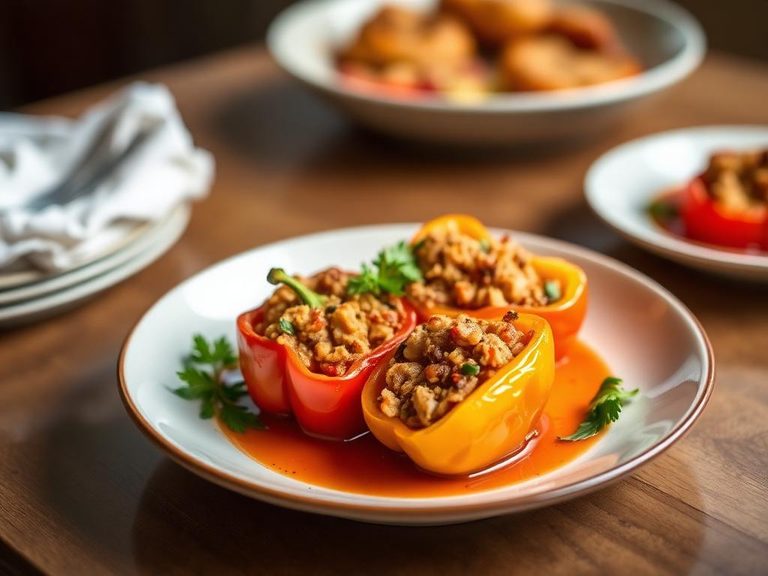
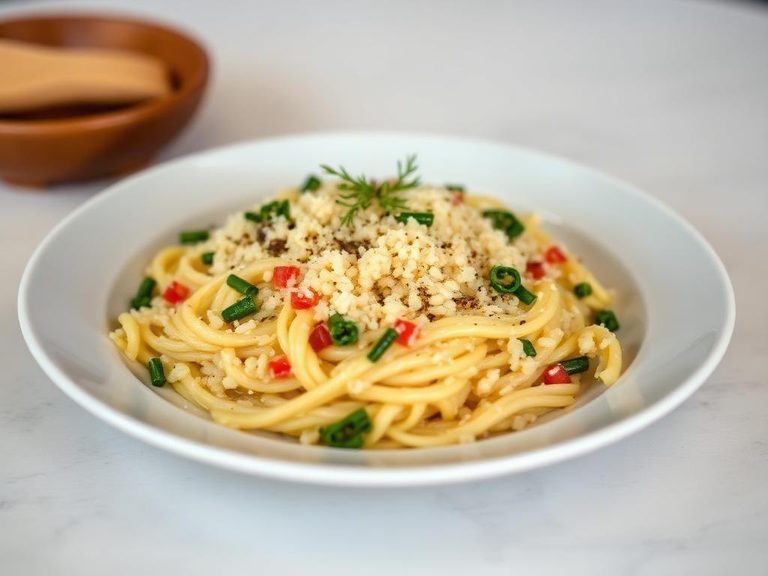
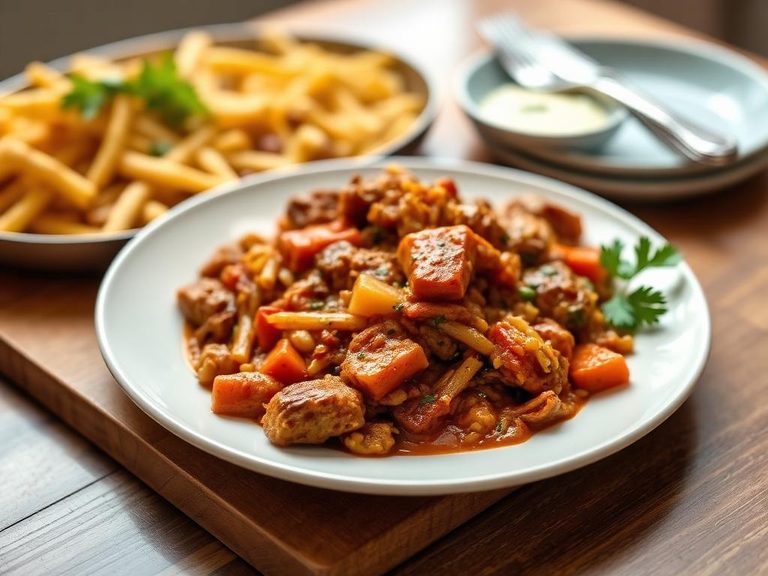
🌍 Where it's eaten
💡 Did you know?
The bran layer of brown rice is what makes it brown; it's removed to make white rice, which strips away most of its fiber, vitamins, and minerals.
Full nutrition (USDA data · scales with serving)
| Water | 11.8 g |
| Energy | 367 kcal |
| Energy | 1534 kj |
| Protein | 7.5 g |
| Total lipid (fat) | 3.2 g |
| Ash | 1.2 g |
| Carbohydrate, by difference | 76.3 g |
| Fiber, total dietary | 3.6 g |
| Total Sugars | 0.66 g |
| Sucrose | 0.66 g |
| Glucose | 0.00 g |
| Fructose | 0.00 g |
| Lactose | 0.00 g |
| Maltose | 0.00 g |
| Galactose | 0.00 g |
| Starch | 72.5 g |
| Calcium, Ca | 9.0 mg |
| Iron, Fe | 1.3 mg |
| Magnesium, Mg | 116 mg |
| Phosphorus, P | 311 mg |
| Potassium, K | 250 mg |
| Sodium, Na | 5.0 mg |
| Zinc, Zn | 2.1 mg |
| Copper, Cu | 0.30 mg |
| Manganese, Mn | 2.9 mg |
| Selenium, Se | 17.1 ug |
| Vitamin C, total ascorbic acid | 0.00 mg |
| Thiamin | 0.54 mg |
| Riboflavin | 0.10 mg |
| Niacin | 6.5 mg |
| Pantothenic acid | 1.1 mg |
| Vitamin B-6 | 0.48 mg |
| Folate, total | 23.0 ug |
| Folic acid | 0.00 ug |
| Folate, food | 23.0 ug |
| Folate, DFE | 23.0 ug |
| Choline, total | 21.5 mg |
| Vitamin B-12 | 0.00 ug |
| Vitamin B-12, added | 0.00 ug |
| Vitamin A, RAE | 0.00 ug |
| Retinol | 0.00 ug |
| Carotene, beta | 0.00 ug |
| Carotene, alpha | 0.00 ug |
| Cryptoxanthin, beta | 0.00 ug |
| Vitamin A, IU | 0.00 iu |
| Lycopene | 0.00 ug |
| Lutein + zeaxanthin | 0.00 ug |
| Vitamin E (alpha-tocopherol) | 0.60 mg |
| Vitamin E, added | 0.00 mg |
| Tocopherol, beta | 0.04 mg |
| Tocopherol, gamma | 0.19 mg |
| Tocopherol, delta | 0.00 mg |
| Tocotrienol, alpha | 0.44 mg |
| Tocotrienol, beta | 0.09 mg |
| Tocotrienol, gamma | 1.3 mg |
| Tocotrienol, delta | 0.06 mg |
| Vitamin D (D2 + D3), International Units | 0.00 iu |
| Vitamin D (D2 + D3) | 0.00 ug |
| Vitamin K (phylloquinone) | 0.60 ug |
| Vitamin K (Dihydrophylloquinone) | 0.00 ug |
| Vitamin K (Menaquinone-4) | 0.00 ug |
| Alcohol, ethyl | 0.00 g |
| Caffeine | 0.00 mg |
| Theobromine | 0.00 mg |
Fat & fatty acid profile (per 100g)
| Fatty acids, total saturated | 0.59 g |
| SFA 4:0 | 0.00 g |
| SFA 6:0 | 0.00 g |
| SFA 8:0 | 0.00 g |
| SFA 10:0 | 0.02 g |
| SFA 12:0 | 0.01 g |
| SFA 14:0 | 0.02 g |
| SFA 15:0 | 0.00 g |
| SFA 16:0 | 0.46 g |
| SFA 17:0 | 0.00 g |
| SFA 18:0 | 0.06 g |
| SFA 20:0 | 0.01 g |
| SFA 22:0 | 0.00 g |
| SFA 24:0 | 0.02 g |
| Fatty acids, total monounsaturated | 1.1 g |
| MUFA 14:1 | 0.00 g |
| MUFA 15:1 | 0.00 g |
| MUFA 16:1 | 0.00 g |
| MUFA 16:1 c | 0.00 g |
| MUFA 17:1 | 0.00 g |
| MUFA 18:1 | 1.0 g |
| MUFA 18:1 c | 1.0 g |
| MUFA 20:1 | 0.01 g |
| MUFA 22:1 | 0.00 g |
| MUFA 22:1 c | 0.00 g |
| MUFA 24:1 c | 0.00 g |
| Fatty acids, total polyunsaturated | 1.0 g |
| PUFA 18:2 | 0.97 g |
| PUFA 18:2 n-6 c,c | 0.97 g |
| PUFA 18:2 CLAs | 0.00 g |
| PUFA 18:3 | 0.03 g |
| PUFA 18:3 n-3 c,c,c (ALA) | 0.03 g |
| PUFA 18:3 n-6 c,c,c | 0.00 g |
| PUFA 18:3i | 0.00 g |
| PUFA 18:4 | 0.00 g |
| PUFA 20:2 n-6 c,c | 0.00 g |
| PUFA 20:3 | 0.00 g |
| PUFA 20:3 n-3 | 0.00 g |
| PUFA 20:3 n-6 | 0.00 g |
| PUFA 20:4 | 0.00 g |
| PUFA 20:5 n-3 (EPA) | 0.00 g |
| PUFA 22:4 | 0.00 g |
| PUFA 22:5 n-3 (DPA) | 0.00 g |
| PUFA 22:6 n-3 (DHA) | 0.00 g |
| Fatty acids, total trans | 0.00 g |
| Fatty acids, total trans-monoenoic | 0.00 g |
| TFA 16:1 t | 0.00 g |
| TFA 18:1 t | 0.00 g |
| TFA 22:1 t | 0.00 g |
| TFA 18:2 t not further defined | 0.00 g |
| Fatty acids, total trans-polyenoic | 0.00 g |
| Cholesterol | 0.00 mg |
Amino acid profile (per 100g)
| Tryptophan | 0.10 g |
| Threonine | 0.29 g |
| Isoleucine | 0.34 g |
| Leucine | 0.66 g |
| Lysine | 0.30 g |
| Methionine | 0.18 g |
| Cystine | 0.10 g |
| Phenylalanine | 0.41 g |
| Tyrosine | 0.30 g |
| Valine | 0.47 g |
| Arginine | 0.60 g |
| Histidine | 0.20 g |
| Alanine | 0.46 g |
| Aspartic acid | 0.74 g |
| Glutamic acid | 1.6 g |
| Glycine | 0.39 g |
| Proline | 0.37 g |
| Serine | 0.41 g |
FAQ
How does brown rice nutritionally compare to white rice?
Brown rice is a whole grain, retaining its bran and germ, which gives it significantly more fiber, B vitamins (like thiamine and niacin), and minerals (like magnesium and phosphorus) than refined white rice.
Why is brown rice sometimes recommended for blood sugar management?
Its intact fiber slows the digestion and absorption of its carbohydrates, leading to a more gradual rise in blood sugar compared to the rapid spike from white rice.
What is the best way to cook brown rice for a fluffy texture?
Rinse the rice, then use a 1:2 ratio of rice to water or broth. Bring to a boil, reduce to a simmer, cover tightly, and cook for about 40-45 minutes. Let it steam, covered, for 10 minutes off heat before fluffing with a fork.
Nutrient density (calculated · NRF9.3)
Nutrient Rich Foods index: beneficial nutrients (protein, fiber, vitamins, minerals) minus saturated fat, added sugar & sodium, per 100 kcal.
NRF9.3 index — Fulgoni, Keast & Drewnowski, 2009. Computed from USDA nutrients.
Weight-loss friendliness (composite index)
Energy density 3.67 kcal/g · 8% calories from protein · 3.6 g fiber · 0.7 g sugar per 100 g.
Composite of energy density (Rolls et al., 1999), protein & fiber satiety, minus sugar. A calculated heuristic — ranks satiety-per-calorie, not a clinical measure.
Dietary load (calculated from USDA values)
Potential renal acid load. Positive = acid-forming, negative = alkaline-forming.
Sodium-to-potassium ratio: 0.02 (lower is better — aim for ≤ 1)
Sodium:potassium per WHO potassium guidance. Computed from USDA nutrients.