

Restaurant, family style, fish fillet, battered or breaded, fried
Whole food · Restaurant Foods

Photo: Wikipedia
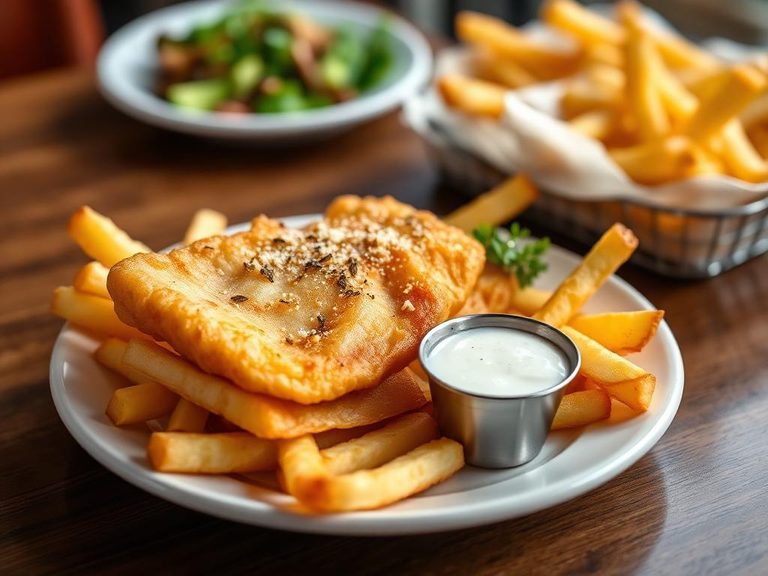
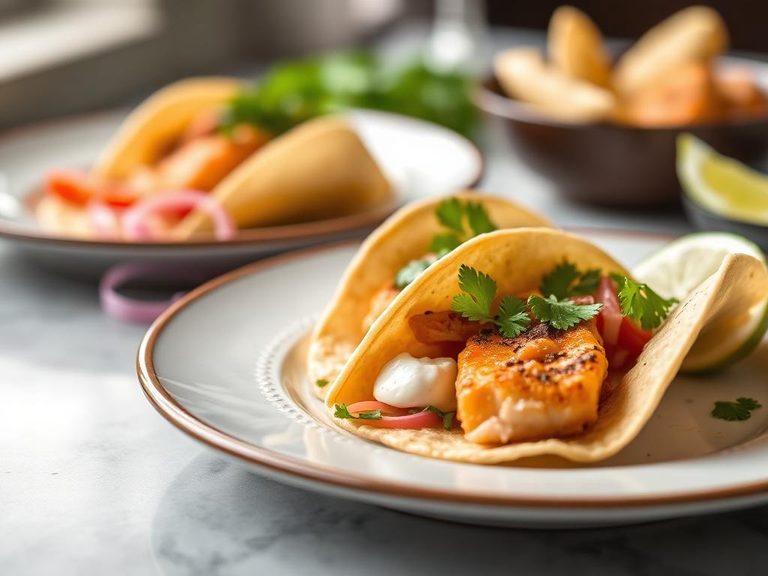
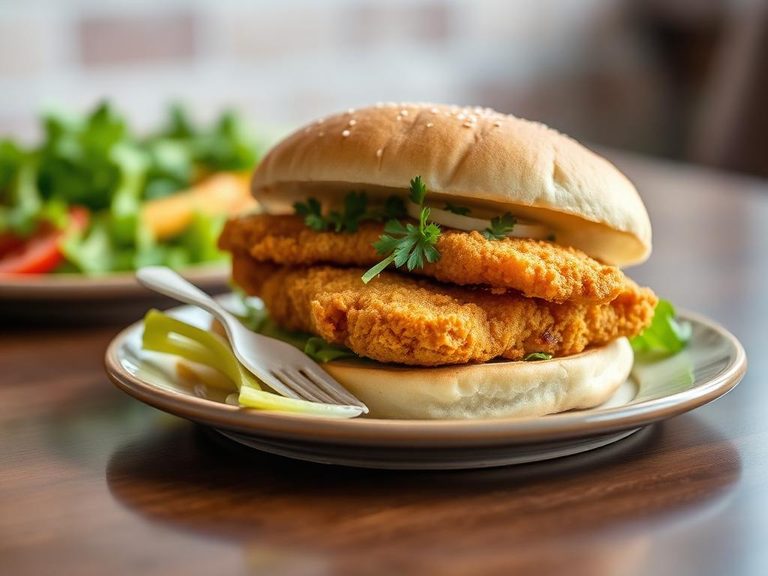
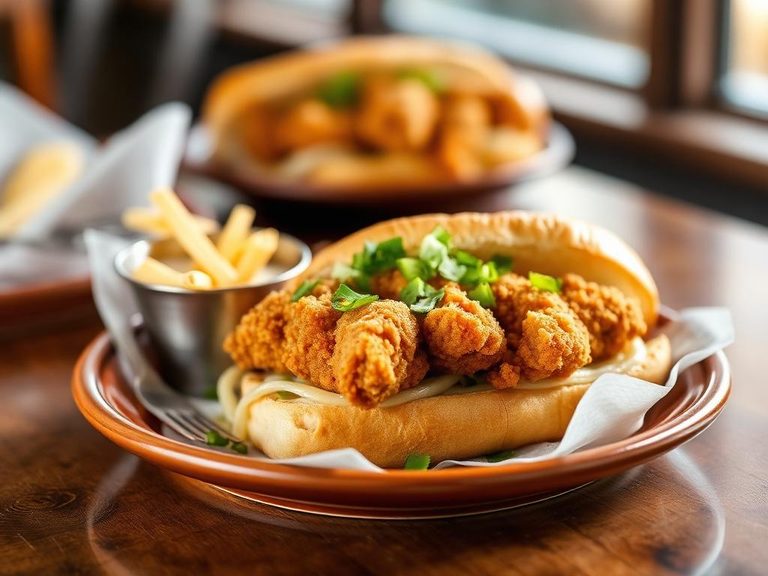
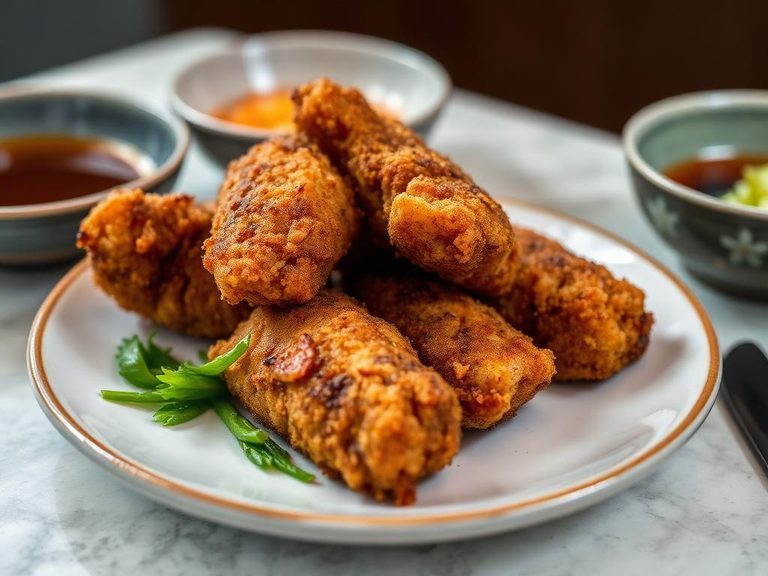
This is a classic comfort food: tender white fish fillets, coated in a crispy batter or seasoned breadcrumbs, then deep-fried to a golden, crunchy exterior. The texture is a delightful contrast between the shattering, savory crust and the moist, flaky fish inside. Nutritionally, it's a solid source of protein, but the frying process adds a significant amount of fat and calories compared to other cooking methods.
Calorie split: 25% protein · 31% carbs · 44% fat
↓ Full nutrition💚 Why it's loved
People adore the universal appeal of the crispy-on-the-outside, tender-on-the-inside texture, which makes it a crowd-pleaser for all ages. Its mild flavor makes it incredibly versatile, pairing perfectly with everything from tartar sauce and lemon to coleslaw and french fries in a classic 'fish and chips' setting.
⚠️ Watch-outs & how to enjoy it better
The primary downside is the high fat and calorie content from deep-frying, which can be a concern for those monitoring heart health or weight. The batter or breading can also cause rapid blood-sugar spikes, and it's a common dish to contain high sodium. To counteract this, pair it with a large, fiber-rich salad or steamed vegetables to slow digestion, practice strict portion control (e.g., one small fillet), and choose a vinegar-based sauce over creamy, high-fat dips.
Key benefits
- Excellent source of lean protein for muscle maintenance.
- Provides essential nutrients like selenium and B vitamins from the fish.
- The batter or breading can offer a quick source of energy from carbohydrates.
- A familiar and palatable way to encourage fish consumption, especially for children.
- Can be a good source of omega-3 fatty acids depending on the fish used.
🍽️ Popular dishes
🌍 Where it's eaten
💡 Did you know?
The tradition of coating fish in breadcrumbs before frying is often credited to 19th-century Jewish immigrants in London, who used it to create a 'kosher' version of the popular non-kosher fish and chips.
Full nutrition (USDA data · scales with serving)
| Water | 56.7 g |
| Energy | 219 kcal |
| Energy | 915 kj |
| Protein | 13.5 g |
| Total lipid (fat) | 10.8 g |
| Ash | 2.1 g |
| Carbohydrate, by difference | 16.9 g |
| Fiber, total dietary | 0.90 g |
| Total Sugars | 0.45 g |
| Sucrose | 0.10 g |
| Glucose | 0.25 g |
| Fructose | 0.00 g |
| Lactose | 0.00 g |
| Maltose | 0.10 g |
| Galactose | 0.00 g |
| Starch | 16.0 g |
| Calcium, Ca | 14.0 mg |
| Iron, Fe | 0.38 mg |
| Magnesium, Mg | 23.0 mg |
| Phosphorus, P | 207 mg |
| Potassium, K | 251 mg |
| Sodium, Na | 561 mg |
| Zinc, Zn | 0.39 mg |
| Copper, Cu | 0.04 mg |
| Manganese, Mn | 0.13 mg |
| Selenium, Se | 17.5 ug |
| Vitamin C, total ascorbic acid | 0.00 mg |
| Thiamin | 0.06 mg |
| Riboflavin | 0.10 mg |
| Niacin | 2.5 mg |
| Pantothenic acid | 0.36 mg |
| Vitamin B-6 | 0.23 mg |
| Folate, total | 17.0 ug |
| Folic acid | 0.00 ug |
| Folate, food | 17.0 ug |
| Folate, DFE | 17.0 ug |
| Choline, total | 53.7 mg |
| Vitamin B-12 | 1.2 ug |
| Vitamin B-12, added | 0.00 ug |
| Vitamin A, RAE | 3.0 ug |
| Retinol | 2.0 ug |
| Carotene, beta | 3.0 ug |
| Carotene, alpha | 0.00 ug |
| Cryptoxanthin, beta | 4.0 ug |
| Vitamin A, IU | 16.0 iu |
| Lycopene | 1.0 ug |
| Lutein + zeaxanthin | 74.0 ug |
| Vitamin E (alpha-tocopherol) | 0.94 mg |
| Vitamin E, added | 0.00 mg |
| Tocopherol, beta | 0.09 mg |
| Tocopherol, gamma | 4.4 mg |
| Tocopherol, delta | 1.7 mg |
| Tocotrienol, alpha | 0.02 mg |
| Tocotrienol, beta | 0.06 mg |
| Tocotrienol, gamma | 0.08 mg |
| Tocotrienol, delta | 0.00 mg |
| Vitamin D (D2 + D3), International Units | 15.0 iu |
| Vitamin D (D2 + D3) | 0.40 ug |
| Vitamin K (phylloquinone) | 0.10 ug |
| Alcohol, ethyl | 0.00 g |
| Caffeine | 0.00 mg |
| Theobromine | 0.00 mg |
Fat & fatty acid profile (per 100g)
| Fatty acids, total saturated | 1.9 g |
| SFA 4:0 | 0.00 g |
| SFA 6:0 | 0.00 g |
| SFA 8:0 | 0.01 g |
| SFA 10:0 | 0.01 g |
| SFA 12:0 | 0.01 g |
| SFA 14:0 | 0.02 g |
| SFA 15:0 | 0.00 g |
| SFA 16:0 | 1.2 g |
| SFA 17:0 | 0.01 g |
| SFA 18:0 | 0.57 g |
| SFA 20:0 | 0.03 g |
| SFA 22:0 | 0.03 g |
| SFA 24:0 | 0.01 g |
| Fatty acids, total monounsaturated | 2.3 g |
| MUFA 14:1 | 0.00 g |
| MUFA 15:1 | 0.00 g |
| MUFA 16:1 | 0.02 g |
| MUFA 16:1 c | 0.02 g |
| MUFA 17:1 | 0.01 g |
| MUFA 18:1 | 2.2 g |
| MUFA 18:1 c | 2.2 g |
| MUFA 20:1 | 0.05 g |
| MUFA 22:1 | 0.00 g |
| MUFA 22:1 c | 0.00 g |
| MUFA 24:1 c | 0.00 g |
| Fatty acids, total polyunsaturated | 5.3 g |
| PUFA 18:2 | 4.5 g |
| PUFA 18:2 n-6 c,c | 4.5 g |
| PUFA 18:2 CLAs | 0.01 g |
| PUFA 18:3 | 0.60 g |
| PUFA 18:3 n-3 c,c,c (ALA) | 0.56 g |
| PUFA 18:3 n-6 c,c,c | 0.05 g |
| PUFA 18:3i | 0.00 g |
| PUFA 18:4 | 0.00 g |
| PUFA 20:2 n-6 c,c | 0.01 g |
| PUFA 20:3 | 0.00 g |
| PUFA 20:3 n-3 | 0.00 g |
| PUFA 20:3 n-6 | 0.00 g |
| PUFA 20:4 | 0.01 g |
| PUFA 20:5 n-3 (EPA) | 0.05 g |
| PUFA 22:4 | 0.00 g |
| PUFA 22:5 n-3 (DPA) | 0.00 g |
| PUFA 22:6 n-3 (DHA) | 0.11 g |
| Fatty acids, total trans | 0.10 g |
| Fatty acids, total trans-monoenoic | 0.03 g |
| TFA 16:1 t | 0.00 g |
| TFA 18:1 t | 0.03 g |
| TFA 22:1 t | 0.00 g |
| TFA 18:2 t not further defined | 0.07 g |
| Fatty acids, total trans-polyenoic | 0.07 g |
| Cholesterol | 36.0 mg |
Amino acid profile (per 100g)
| Tryptophan | 0.15 g |
| Threonine | 0.46 g |
| Isoleucine | 0.64 g |
| Leucine | 1.1 g |
| Lysine | 1.2 g |
| Methionine | 0.40 g |
| Cystine | 0.18 g |
| Phenylalanine | 0.53 g |
| Tyrosine | 0.42 g |
| Valine | 0.72 g |
| Arginine | 0.84 g |
| Histidine | 0.33 g |
| Alanine | 0.78 g |
| Aspartic acid | 1.3 g |
| Glutamic acid | 2.2 g |
| Glycine | 0.65 g |
| Proline | 0.74 g |
| Serine | 0.51 g |
| Hydroxyproline | 0.00 g |
FAQ
What type of fish is typically used for battered or breaded fried fish?
Mild, white, and flaky fish is standard. Common choices include cod, haddock, pollock, tilapia, and catfish, as they have a neutral flavor that doesn't overpower the coating.
Is the batter or breading the main source of calories?
Yes, a significant portion. The coating acts like a sponge, absorbing oil during frying, which dramatically increases the fat and calorie count compared to the plain fish fillet itself.
Can I make a healthier version at home?
Absolutely. You can use an air fryer or oven-bake the breaded fillet with a light spray of oil to drastically reduce fat. Using whole-wheat breadcrumbs or a panko crust can also improve texture and add a bit more fiber.
Nutrient density (calculated · NRF9.3)
Nutrient Rich Foods index: beneficial nutrients (protein, fiber, vitamins, minerals) minus saturated fat, added sugar & sodium, per 100 kcal.
NRF9.3 index — Fulgoni, Keast & Drewnowski, 2009. Computed from USDA nutrients.
Weight-loss friendliness (composite index)
Energy density 2.19 kcal/g · 25% calories from protein · 0.9 g fiber · 0.5 g sugar per 100 g.
Composite of energy density (Rolls et al., 1999), protein & fiber satiety, minus sugar. A calculated heuristic — ranks satiety-per-calorie, not a clinical measure.
Dietary load (calculated from USDA values)
Potential renal acid load. Positive = acid-forming, negative = alkaline-forming.
Sodium-to-potassium ratio: 2.24 (lower is better — aim for ≤ 1)
Sodium:potassium per WHO potassium guidance. Computed from USDA nutrients.