Fish Fingers
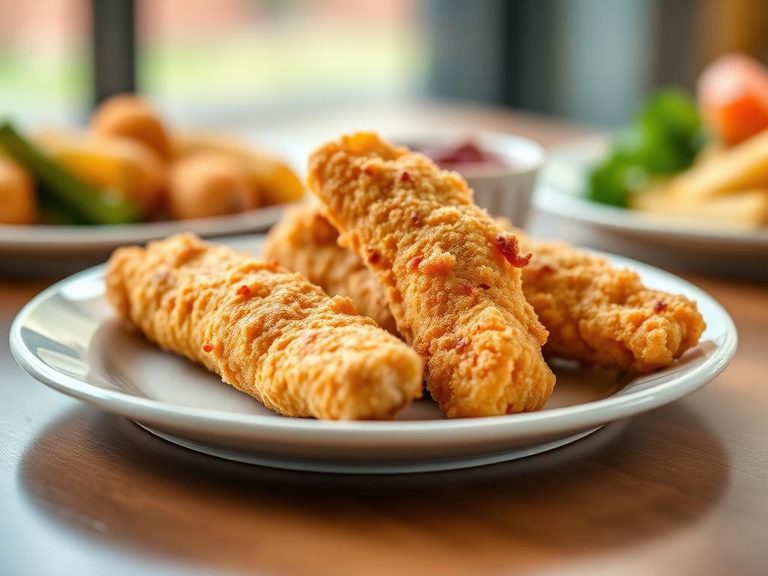
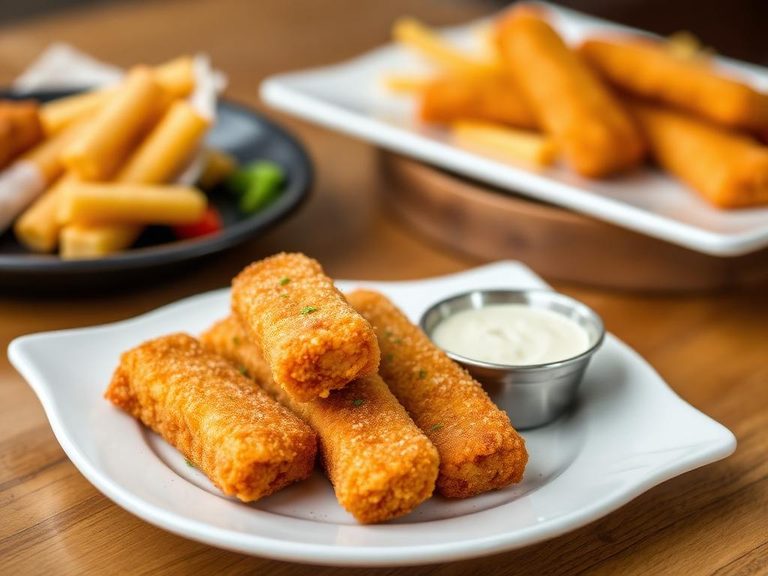
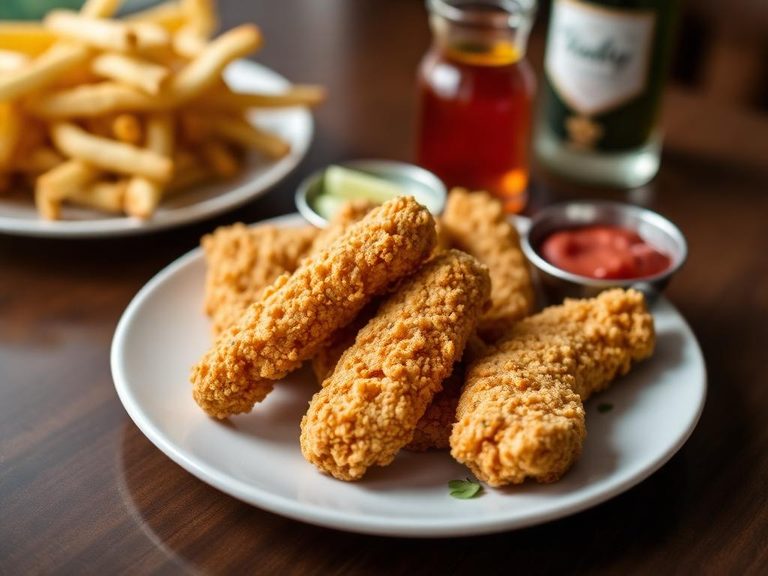
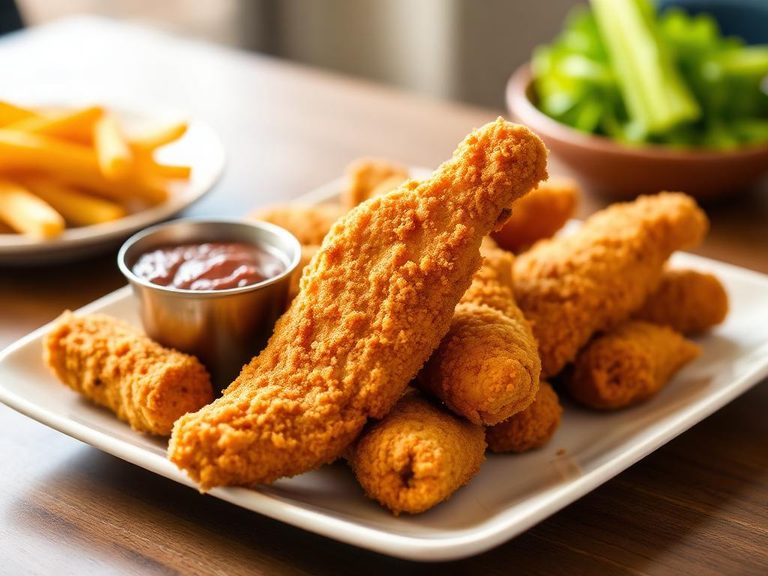
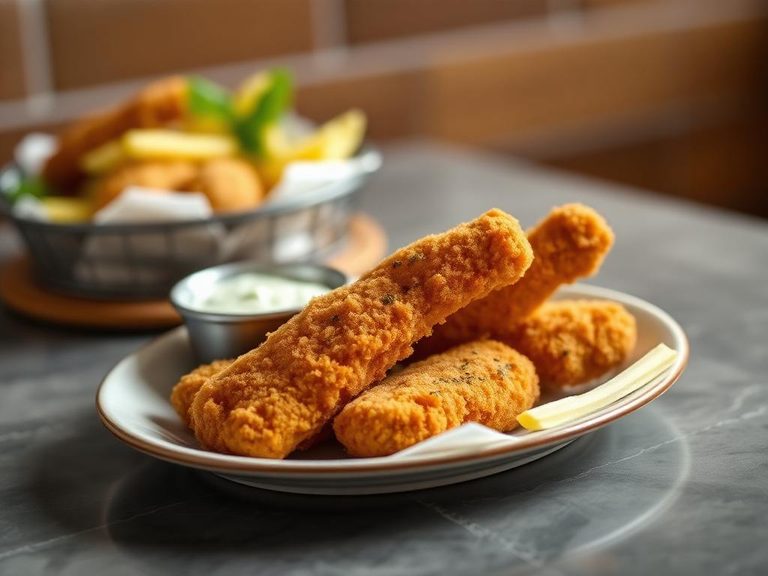
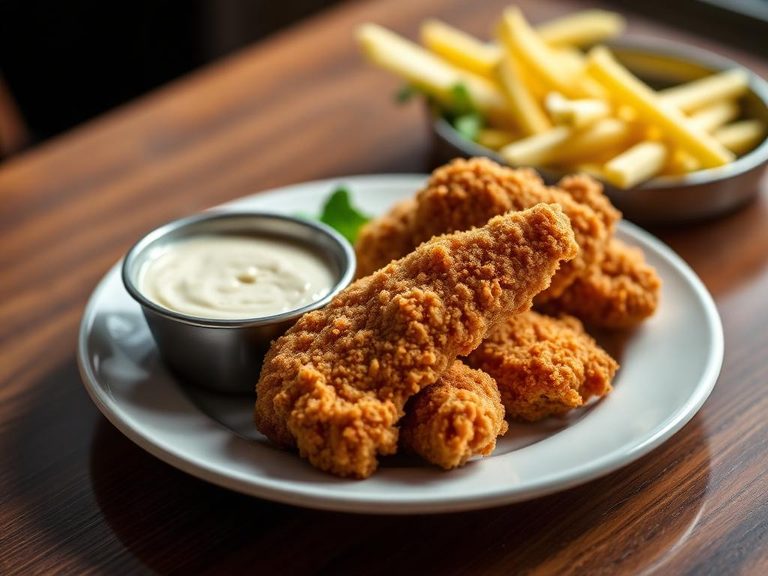
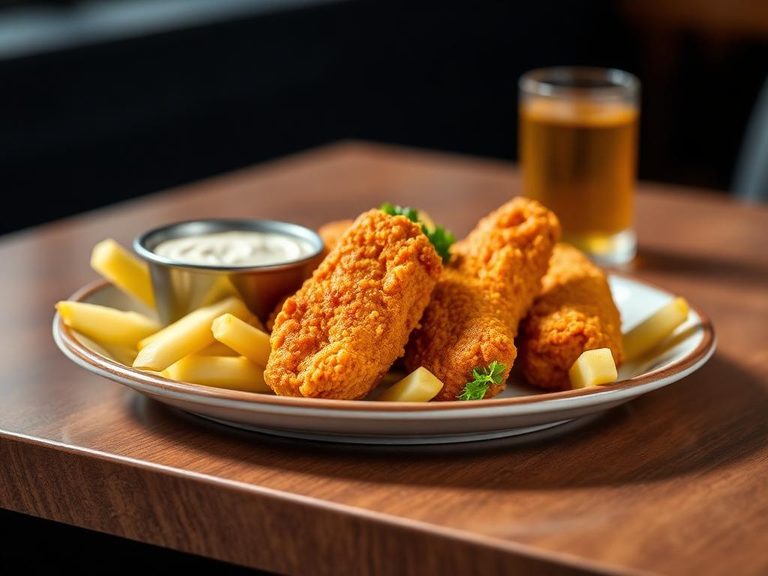
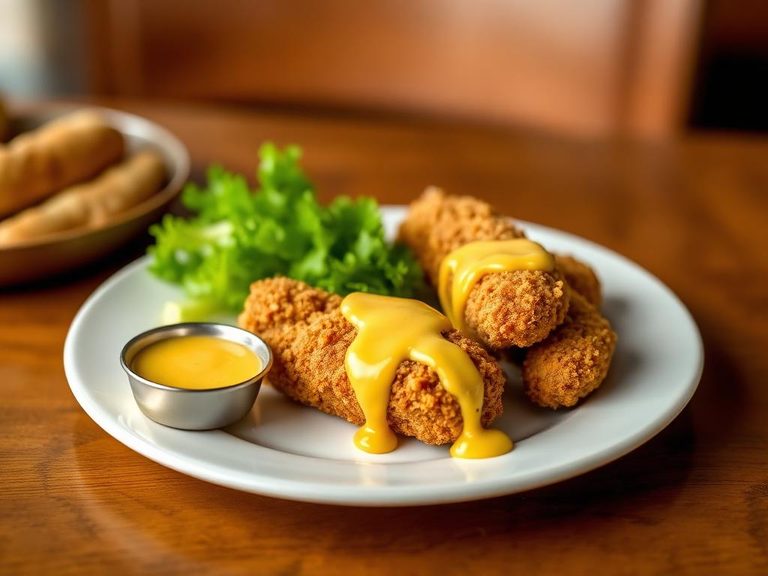
Fish fingers, also known as fish sticks, are a popular convenience food consisting of small strips of white fish coated in a crispy breadcrumb batter and typically deep-fried or baked. They are a staple in British households and are commonly served with chips (fries), peas, and tartar sauce.
🍽️ Nutrition at a glance
This dish is generally high in protein due to the fish content but also contains a significant amount of fat and carbohydrates from the breading and cooking method. A typical serving provides a good source of omega-3 fatty acids and vitamin B12, with a rough calorie estimate of 250-300 calories per serving.
Nutrition breakdown
| Calories | 320 kcal |
| Protein | 18 g |
| Carbs | 22 g |
| Fat | 18 g |
| Fiber | 1.5 g |
| Sugar | 1 g |
| Sodium | 480 mg |
| Potassium | 280 mg |
| Phosphorus | 180 mg |
| Vitamin B12 | 1.5 µg |
| Niacin (B3) | 3 mg |
| Selenium | 20 µg |
| Iron | 1.2 mg |
| Calcium | 30 mg |
| Vitamin D | 1 µg |
Per 5 pieces (150 g) · estimated, varies by recipe
💡 What's interesting
Fish fingers are a cultural icon in the UK, famously featured in the 1960s song 'Moldy Oldie' and a staple of children's menus, yet they are also enjoyed by adults as a nostalgic comfort food. Nutritionally, they offer a convenient way to include fish in the diet, though the breading can add extra calories and sodium.