

Tartar sauce
Common food

Photo: Wikipedia
Tartar sauce is a creamy, tangy, and slightly sweet condiment, typically made from mayonnaise mixed with finely chopped pickles, capers, and herbs. Its rich, smooth texture is punctuated by the briny crunch of pickles, creating a perfect counterpoint to fried or grilled foods. Nutritionally, it's a high-fat, calorie-dense sauce, with nearly all its energy coming from fat.
Calorie split: 2% protein · 26% carbs · 72% fat
↓ Full nutrition💚 Why it's loved
People adore tartar sauce for its bold, savory-tangy flavor that instantly elevates fried fish and seafood, cutting through richness with its creamy yet zesty profile. It's a beloved staple in coastal cuisines and a nostalgic comfort food for many.
⚠️ Watch-outs & how to enjoy it better
Its high fat and calorie content can be a concern for those monitoring intake, and the added sugar and potential for high sodium (from pickles/capers) may affect blood sugar or blood pressure. To counteract this, use it as a flavorful accent rather than a main component, pairing it with grilled (not fried) fish and a large portion of non-starchy vegetables.
Key benefits
- Adds significant flavor and moisture to lean proteins like fish.
- The fat content can help absorb fat-soluble vitamins from other foods.
- Provides a quick source of energy due to its high calorie density.
- Can make simpler, healthier dishes more palatable and satisfying.
🍽️ Popular dishes
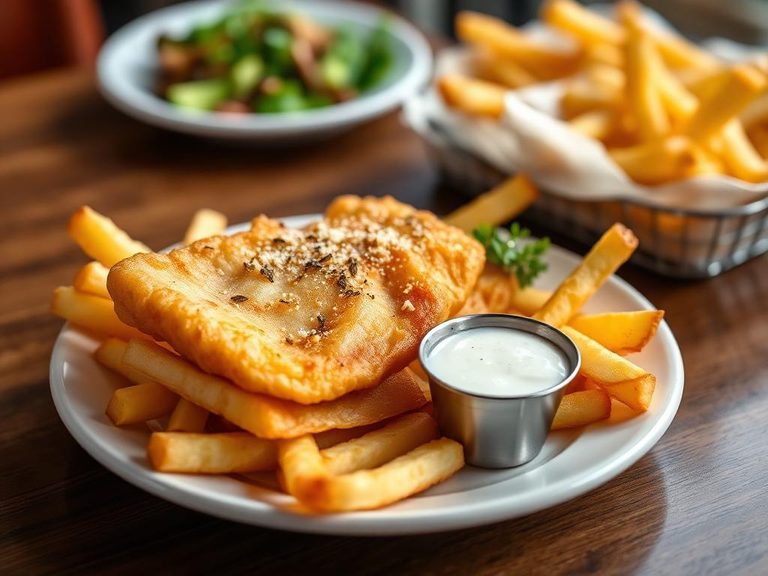
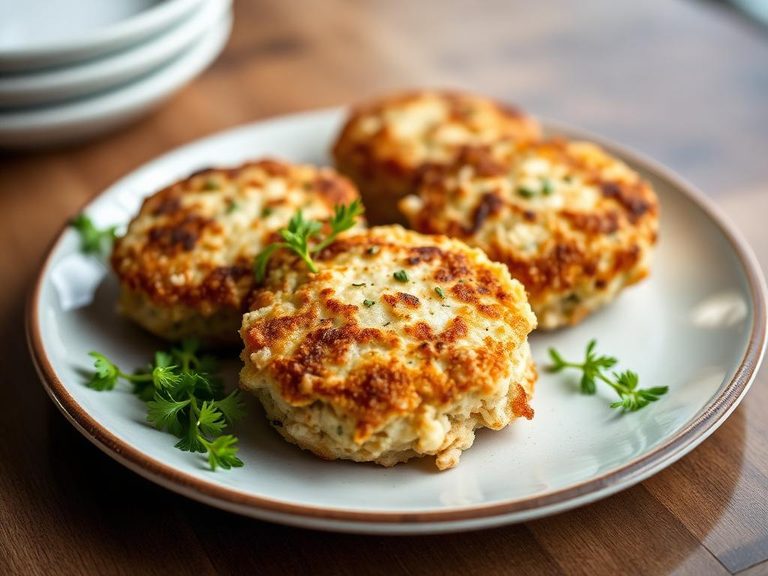
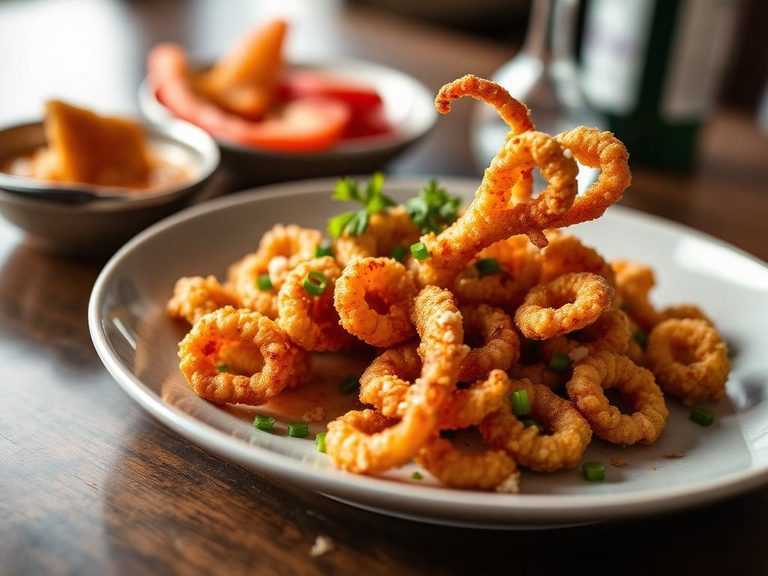
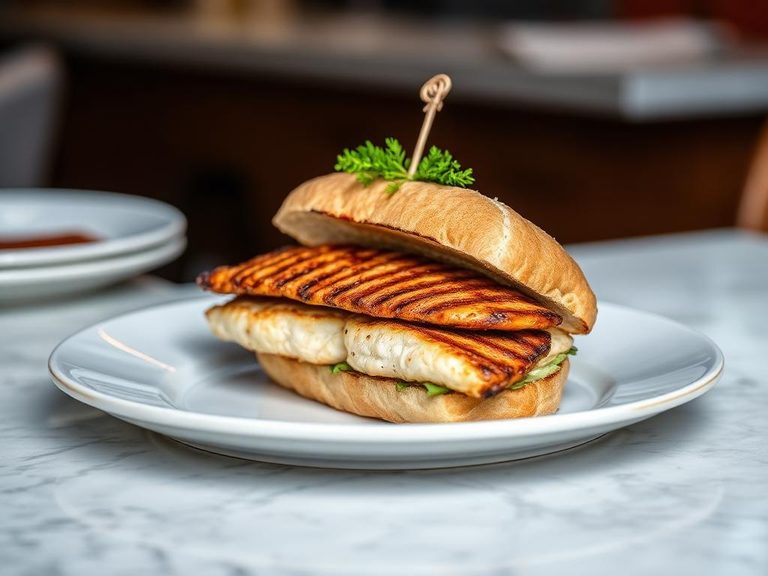
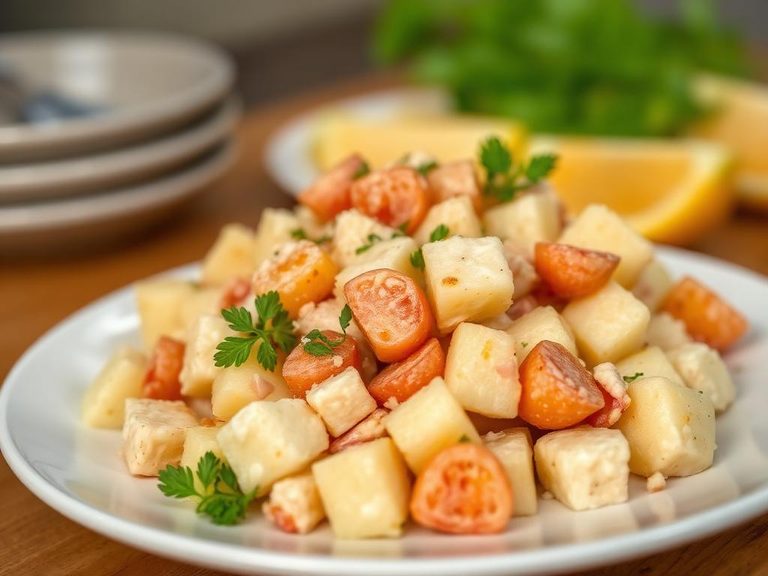
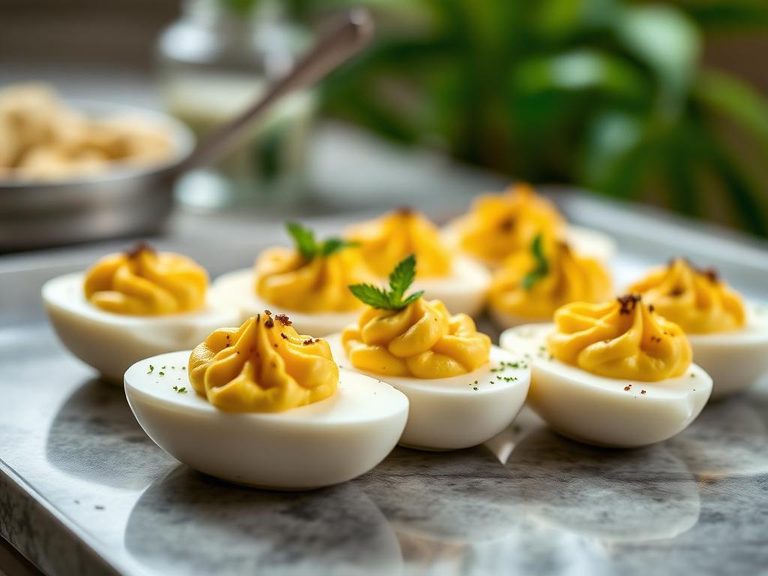
🌍 Where it's eaten
💡 Did you know?
The name 'tartare' is a misnomer; it has no connection to the Tartar people of Central Asia but likely originated from a French culinary term for a specific style of preparation.
Full nutrition (USDA data · scales with serving)
| Water | 67.0 g |
| Energy | 211 kcal |
| Protein | 1.0 g |
| Total lipid (fat) | 16.7 g |
| Carbohydrate, by difference | 13.3 g |
| Fiber, total dietary | 0.50 g |
| Total Sugars | 4.3 g |
| Calcium, Ca | 26.0 mg |
| Iron, Fe | 0.25 mg |
| Magnesium, Mg | 6.0 mg |
| Phosphorus, P | 17.0 mg |
| Potassium, K | 68.0 mg |
| Sodium, Na | 667 mg |
| Zinc, Zn | 0.12 mg |
| Copper, Cu | 0.02 mg |
| Selenium, Se | 0.90 ug |
| Vitamin C, total ascorbic acid | 2.3 mg |
| Thiamin | 0.02 mg |
| Riboflavin | 0.03 mg |
| Niacin | 0.09 mg |
| Vitamin B-6 | 0.04 mg |
| Folate, total | 5.0 ug |
| Folic acid | 0.00 ug |
| Folate, food | 5.0 ug |
| Folate, DFE | 5.0 ug |
| Choline, total | 8.0 mg |
| Vitamin B-12 | 0.02 ug |
| Vitamin B-12, added | 0.00 ug |
| Vitamin A, RAE | 11.0 ug |
| Retinol | 3.0 ug |
| Carotene, beta | 67.0 ug |
| Carotene, alpha | 15.0 ug |
| Cryptoxanthin, beta | 35.0 ug |
| Lycopene | 0.00 ug |
| Lutein + zeaxanthin | 55.0 ug |
| Vitamin E (alpha-tocopherol) | 1.7 mg |
| Vitamin E, added | 0.00 mg |
| Vitamin D (D2 + D3) | 0.00 ug |
| Vitamin K (phylloquinone) | 50.4 ug |
| Alcohol, ethyl | 0.00 g |
| Caffeine | 0.00 mg |
| Theobromine | 0.00 mg |
Fat & fatty acid profile (per 100g)
| Fatty acids, total saturated | 3.3 g |
| SFA 4:0 | 0.00 g |
| SFA 6:0 | 0.00 g |
| SFA 8:0 | 0.00 g |
| SFA 10:0 | 0.00 g |
| SFA 12:0 | 0.00 g |
| SFA 14:0 | 0.00 g |
| SFA 16:0 | 2.2 g |
| SFA 18:0 | 0.94 g |
| Fatty acids, total monounsaturated | 3.6 g |
| MUFA 16:1 | 0.00 g |
| MUFA 18:1 | 3.6 g |
| MUFA 20:1 | 0.04 g |
| MUFA 22:1 | 0.00 g |
| Fatty acids, total polyunsaturated | 9.0 g |
| PUFA 18:2 | 8.0 g |
| PUFA 18:3 | 1.1 g |
| PUFA 18:4 | 0.00 g |
| PUFA 20:4 | 0.00 g |
| PUFA 20:5 n-3 (EPA) | 0.00 g |
| PUFA 22:5 n-3 (DPA) | 0.00 g |
| PUFA 22:6 n-3 (DHA) | 0.01 g |
| Cholesterol | 7.0 mg |
FAQ
What is the main ingredient in tartar sauce?
The base is almost always mayonnaise, which is then mixed with chopped pickles (or relish), capers, and often lemon juice, herbs, and sometimes mustard.
Is tartar sauce gluten-free?
Typically yes, as its core ingredients are gluten-free. However, always check labels for added thickeners or cross-contamination if you have celiac disease.
Can I make a lighter version at home?
Absolutely. You can use Greek yogurt or a mix of yogurt and light mayo as a base, and increase the proportion of pickles and herbs for flavor without the extra fat.
Nutrient density (calculated · NRF9.3)
Nutrient Rich Foods index: beneficial nutrients (protein, fiber, vitamins, minerals) minus saturated fat, added sugar & sodium, per 100 kcal.
NRF9.3 index — Fulgoni, Keast & Drewnowski, 2009. Computed from USDA nutrients.
Weight-loss friendliness (composite index)
Energy density 2.11 kcal/g · 2% calories from protein · 0.5 g fiber · 4.3 g sugar per 100 g.
Composite of energy density (Rolls et al., 1999), protein & fiber satiety, minus sugar. A calculated heuristic — ranks satiety-per-calorie, not a clinical measure.
Dietary load (calculated from USDA values)
Potential renal acid load. Positive = acid-forming, negative = alkaline-forming.
Sodium-to-potassium ratio: 9.81 (lower is better — aim for ≤ 1)
Sodium:potassium per WHO potassium guidance. Computed from USDA nutrients.