

Pasta, gluten-free, corn and rice flour, cooked
Whole food · Cereal Grains and Pasta
This pasta is a light, slightly grainy alternative to wheat-based noodles, with a neutral flavor that readily absorbs sauces. It cooks to a tender, sometimes slightly chewy texture depending on the brand and cooking time. Nutritionally, it's a high-carbohydrate, low-fat option that provides a moderate amount of energy.
Calorie split: 7% protein · 87% carbs · 5% fat
↓ Full nutrition💚 Why it's loved
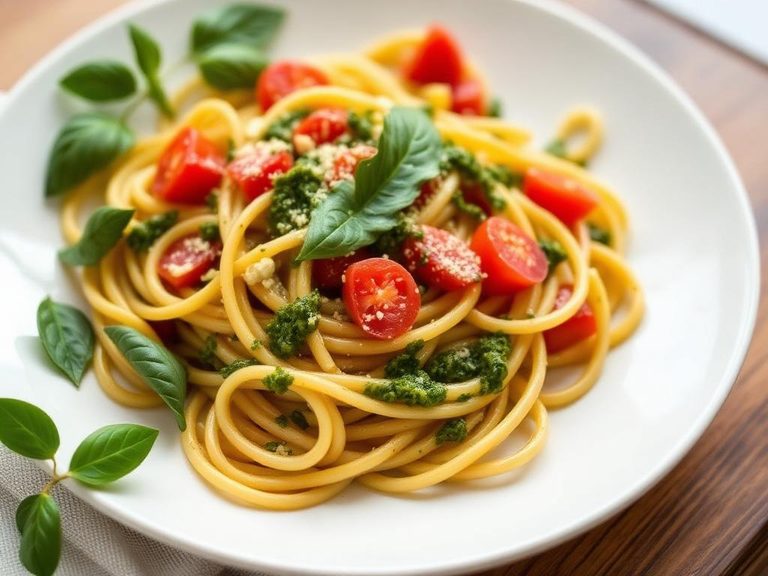
People love it for its ability to deliver the comforting, satisfying experience of pasta without the gluten. Its neutral taste makes it a fantastic canvas for bold flavors, from rich pesto to simple garlic and olive oil.
⚠️ Watch-outs & how to enjoy it better
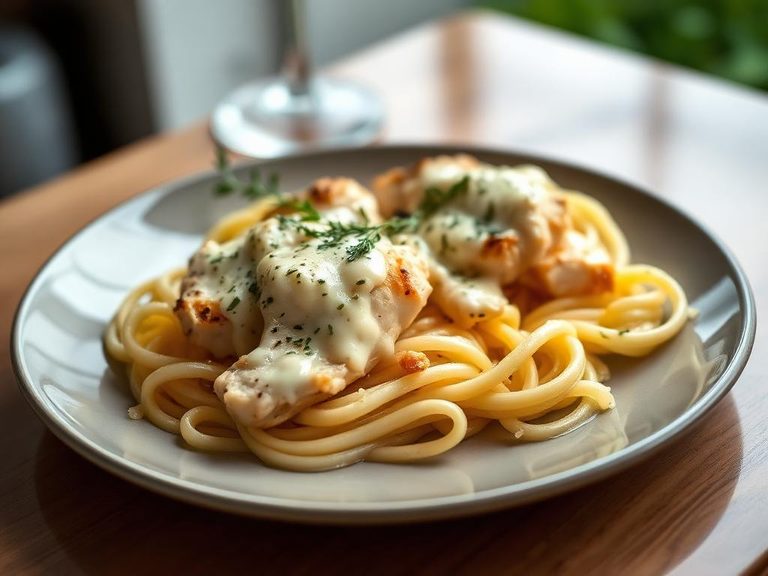
Its high carbohydrate content can lead to blood sugar spikes, so it's best paired with protein (like chicken or beans) and healthy fats (like olive oil or avocado) to slow digestion. Some find the texture less satisfying than wheat pasta, and it can become mushy if overcooked, so careful timing is key.
Key benefits
- Naturally gluten-free, safe for celiacs and gluten-sensitive individuals
- Good source of quick-release energy from complex carbohydrates
- Low in fat and contains no cholesterol
- Provides a small amount of dietary fiber
- Versatile base for a wide variety of sauces and dishes
🍽️ Popular dishes
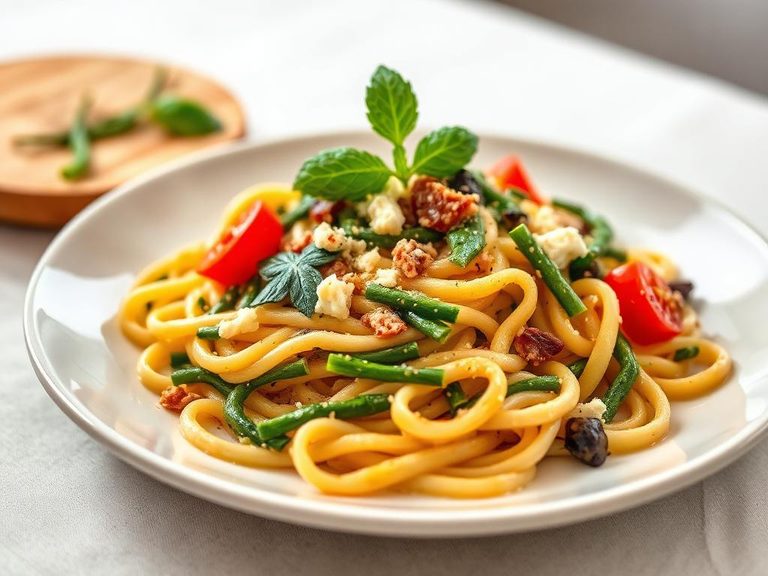
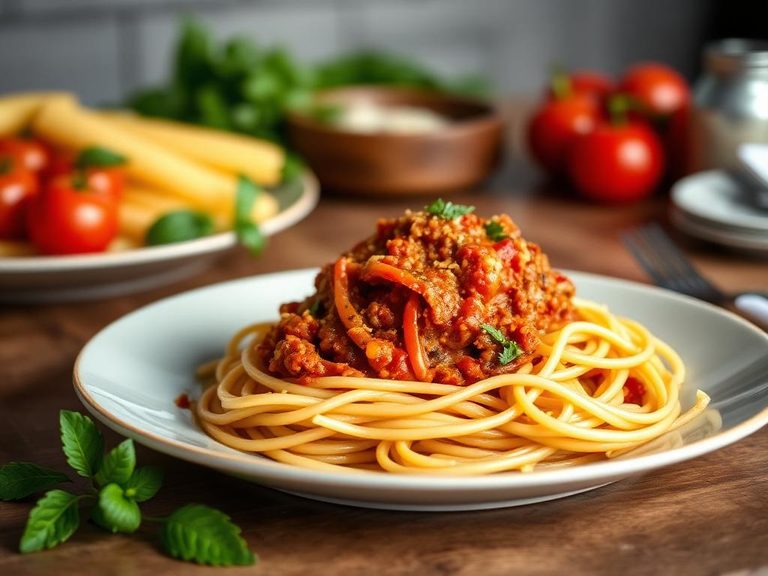
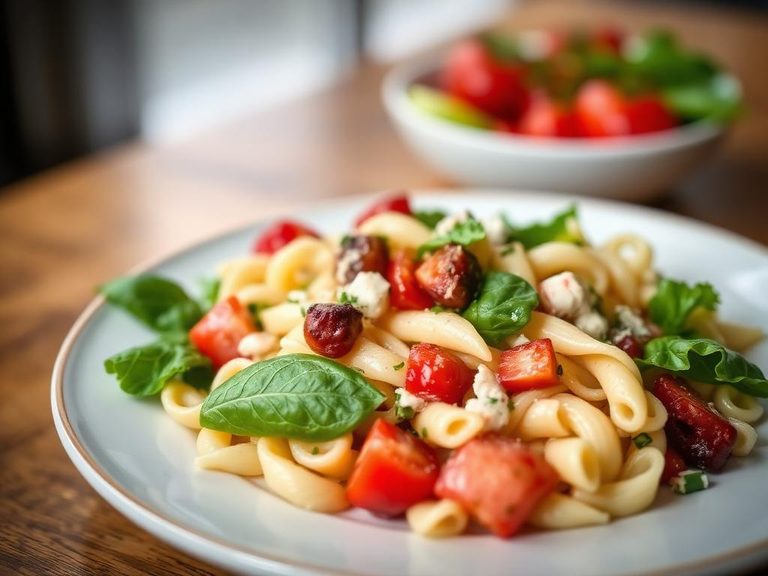
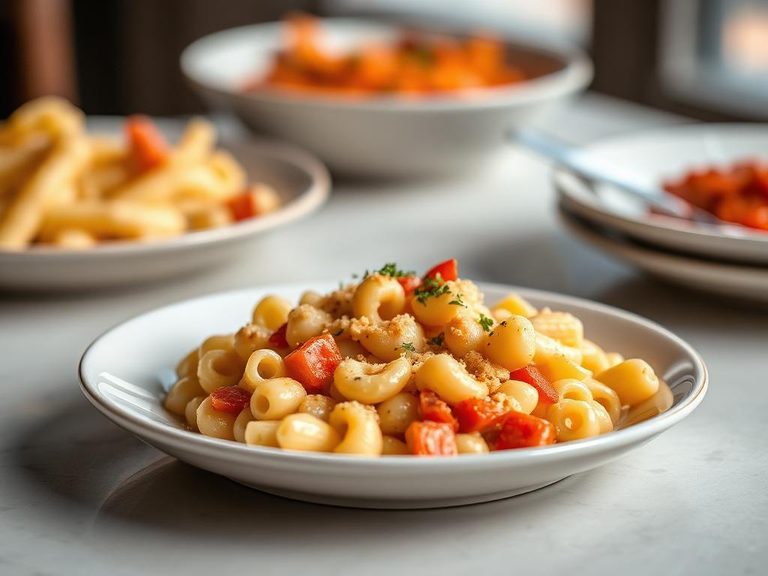
🌍 Where it's eaten
💡 Did you know?
Corn and rice flour pasta was developed primarily for the gluten-free market, but its roots trace back to traditional Asian rice noodles and Italian corn-based pastas like 'pizzoccheri' (though that uses buckwheat).
Full nutrition (USDA data · scales with serving)
| Water | 57.7 g |
| Energy | 179 kcal |
| Energy | 748 kj |
| Protein | 3.2 g |
| Total lipid (fat) | 1.0 g |
| Ash | 0.07 g |
| Carbohydrate, by difference | 38.0 g |
| Fiber, total dietary | 1.4 g |
| Total Sugars | 0.00 g |
| Sucrose | 0.00 g |
| Glucose | 0.00 g |
| Fructose | 0.00 g |
| Lactose | 0.00 g |
| Maltose | 0.00 g |
| Galactose | 0.00 g |
| Starch | 36.1 g |
| Calcium, Ca | 2.0 mg |
| Iron, Fe | 0.22 mg |
| Magnesium, Mg | 11.0 mg |
| Phosphorus, P | 33.0 mg |
| Potassium, K | 24.0 mg |
| Sodium, Na | 4.0 mg |
| Zinc, Zn | 0.27 mg |
| Copper, Cu | 0.02 mg |
| Manganese, Mn | 0.09 mg |
| Selenium, Se | 2.2 ug |
| Vitamin C, total ascorbic acid | 0.00 mg |
| Thiamin | 0.05 mg |
| Riboflavin | 0.08 mg |
| Niacin | 0.24 mg |
| Pantothenic acid | 0.14 mg |
| Vitamin B-6 | 0.04 mg |
| Folate, total | 4.0 ug |
| Folic acid | 0.00 ug |
| Folate, food | 4.0 ug |
| Folate, DFE | 4.0 ug |
| Choline, total | 1.7 mg |
| Vitamin B-12 | 0.00 ug |
| Vitamin B-12, added | 0.00 ug |
| Vitamin A, RAE | 4.0 ug |
| Retinol | 0.00 ug |
| Carotene, beta | 32.0 ug |
| Carotene, alpha | 21.0 ug |
| Cryptoxanthin, beta | 0.00 ug |
| Vitamin A, IU | 71.0 iu |
| Lycopene | 0.00 ug |
| Lutein + zeaxanthin | 539 ug |
| Vitamin E (alpha-tocopherol) | 0.00 mg |
| Vitamin E, added | 0.00 mg |
| Tocopherol, beta | 0.00 mg |
| Tocopherol, gamma | 0.00 mg |
| Tocopherol, delta | 0.00 mg |
| Tocotrienol, alpha | 0.00 mg |
| Tocotrienol, beta | 0.00 mg |
| Tocotrienol, gamma | 0.00 mg |
| Tocotrienol, delta | 0.00 mg |
| Vitamin D (D2 + D3), International Units | 0.00 iu |
| Vitamin D (D2 + D3) | 0.00 ug |
| Vitamin K (phylloquinone) | 0.00 ug |
| Alcohol, ethyl | 0.00 g |
| Caffeine | 0.00 mg |
| Theobromine | 0.00 mg |
Fat & fatty acid profile (per 100g)
| Fatty acids, total saturated | 0.15 g |
| SFA 4:0 | 0.00 g |
| SFA 6:0 | 0.00 g |
| SFA 8:0 | 0.00 g |
| SFA 10:0 | 0.00 g |
| SFA 12:0 | 0.00 g |
| SFA 14:0 | 0.01 g |
| SFA 15:0 | 0.00 g |
| SFA 16:0 | 0.11 g |
| SFA 17:0 | 0.00 g |
| SFA 18:0 | 0.03 g |
| SFA 20:0 | 0.00 g |
| SFA 22:0 | 0.00 g |
| SFA 24:0 | 0.00 g |
| Fatty acids, total monounsaturated | 0.26 g |
| MUFA 14:1 | 0.00 g |
| MUFA 15:1 | 0.10 g |
| MUFA 16:1 | 0.00 g |
| MUFA 16:1 c | 0.00 g |
| MUFA 17:1 | 0.00 g |
| MUFA 18:1 | 0.15 g |
| MUFA 18:1 c | 0.15 g |
| MUFA 20:1 | 0.00 g |
| MUFA 22:1 | 0.00 g |
| MUFA 22:1 c | 0.00 g |
| MUFA 24:1 c | 0.00 g |
| Fatty acids, total polyunsaturated | 0.33 g |
| PUFA 18:2 | 0.32 g |
| PUFA 18:2 n-6 c,c | 0.31 g |
| PUFA 18:2 CLAs | 0.00 g |
| PUFA 18:3 | 0.01 g |
| PUFA 18:3 n-3 c,c,c (ALA) | 0.01 g |
| PUFA 18:3 n-6 c,c,c | 0.00 g |
| PUFA 18:3i | 0.00 g |
| PUFA 18:4 | 0.00 g |
| PUFA 20:2 n-6 c,c | 0.00 g |
| PUFA 20:3 | 0.00 g |
| PUFA 20:3 n-3 | 0.00 g |
| PUFA 20:3 n-6 | 0.00 g |
| PUFA 20:4 | 0.00 g |
| PUFA 20:5 n-3 (EPA) | 0.00 g |
| PUFA 22:4 | 0.00 g |
| PUFA 22:5 n-3 (DPA) | 0.00 g |
| PUFA 22:6 n-3 (DHA) | 0.00 g |
| Fatty acids, total trans | 0.00 g |
| Fatty acids, total trans-monoenoic | 0.00 g |
| TFA 16:1 t | 0.00 g |
| TFA 18:1 t | 0.00 g |
| TFA 22:1 t | 0.00 g |
| TFA 18:2 t not further defined | 0.00 g |
| Fatty acids, total trans-polyenoic | 0.00 g |
| Cholesterol | 0.00 mg |
Amino acid profile (per 100g)
| Tryptophan | 0.02 g |
| Threonine | 0.10 g |
| Isoleucine | 0.10 g |
| Leucine | 0.45 g |
| Lysine | 0.16 g |
| Methionine | 0.07 g |
| Cystine | 0.07 g |
| Phenylalanine | 0.17 g |
| Tyrosine | 0.14 g |
| Valine | 0.10 g |
| Arginine | 0.15 g |
| Histidine | 0.09 g |
| Alanine | 0.24 g |
| Aspartic acid | 0.17 g |
| Glutamic acid | 0.54 g |
| Glycine | 0.10 g |
| Proline | 0.35 g |
| Serine | 0.16 g |
| Hydroxyproline | 0.00 g |
FAQ
Is this pasta healthier than regular wheat pasta?
It's not inherently healthier; it's a different nutritional profile. It's lower in protein and fiber than whole-wheat pasta but is essential for those avoiding gluten. Its healthiness depends on the overall meal and portion size.
Why does my gluten-free pasta get mushy?
Corn and rice flours lack gluten, the protein that gives wheat pasta its structure. Overcooking breaks down the starches quickly. Always cook it al dente, rinse with cool water after draining to stop cooking, and add it directly to your sauce.
Can I use this in any recipe that calls for regular pasta?
Yes, in most cases. It works well in baked dishes, salads, and with sauces. However, it may not hold up as well in very long, slow-cooked dishes like some traditional Italian ragùs where the pasta cooks in the sauce.
Nutrient density (calculated · NRF9.3)
Nutrient Rich Foods index: beneficial nutrients (protein, fiber, vitamins, minerals) minus saturated fat, added sugar & sodium, per 100 kcal.
NRF9.3 index — Fulgoni, Keast & Drewnowski, 2009. Computed from USDA nutrients.
Weight-loss friendliness (composite index)
Energy density 1.79 kcal/g · 7% calories from protein · 1.4 g fiber · 0.0 g sugar per 100 g.
Composite of energy density (Rolls et al., 1999), protein & fiber satiety, minus sugar. A calculated heuristic — ranks satiety-per-calorie, not a clinical measure.
Dietary load (calculated from USDA values)
Potential renal acid load. Positive = acid-forming, negative = alkaline-forming.
Sodium-to-potassium ratio: 0.17 (lower is better — aim for ≤ 1)
Sodium:potassium per WHO potassium guidance. Computed from USDA nutrients.