

Pasta, gluten-free, brown rice flour, cooked, TINKYADA
Whole food · Cereal Grains and Pasta
Tinkyada brown rice pasta is a gluten-free staple that cooks to a firm, satisfying al dente texture, closely mimicking traditional wheat pasta. Its mild, slightly nutty flavor from brown rice flour makes it a versatile canvas for a wide range of sauces. Nutritionally, it offers a solid source of complex carbohydrates and fiber with a notably low fat content.
Calorie split: 9% protein · 82% carbs · 10% fat
↓ Full nutrition💚 Why it's loved
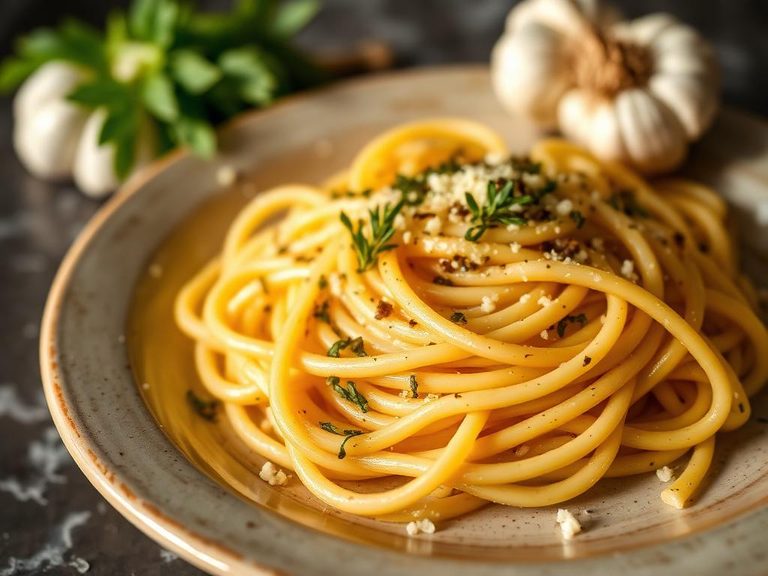
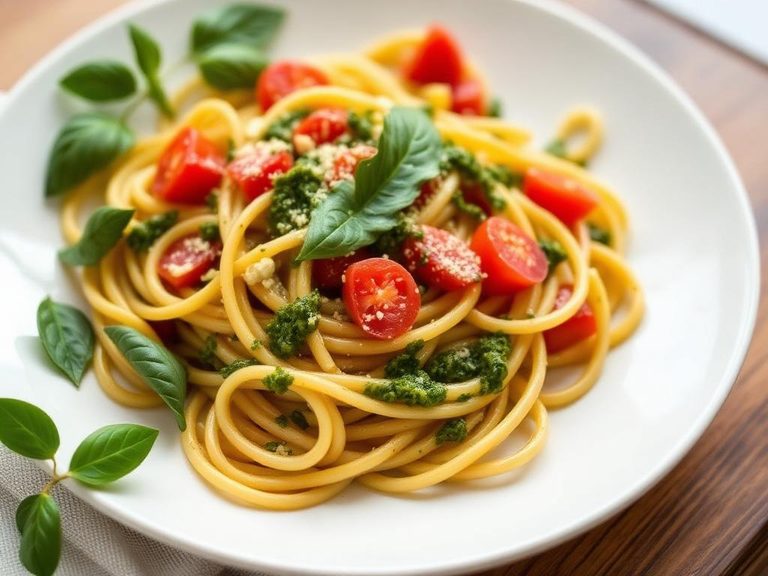
People love it for its impressive ability to hold its shape and texture during cooking, making it a reliable gluten-free alternative for classic pasta dishes. Its neutral flavor profile allows it to seamlessly absorb the flavors of everything from rich marinara to light olive oil and garlic.
⚠️ Watch-outs & how to enjoy it better
As a refined grain product, it can cause faster blood sugar spikes compared to whole-grain pastas. To counteract this, pair it with a source of protein (like chicken or beans) and healthy fat (like olive oil or avocado) to slow digestion. Those monitoring carbohydrate intake should practice portion control.
Key benefits
- Naturally gluten-free, suitable for celiac or gluten-sensitive diets.
- Good source of complex carbohydrates for sustained energy.
- Contains dietary fiber to support digestive health.
- Low in fat and contains no added sugar.
- Provides a plant-based protein option.
🍽️ Popular dishes
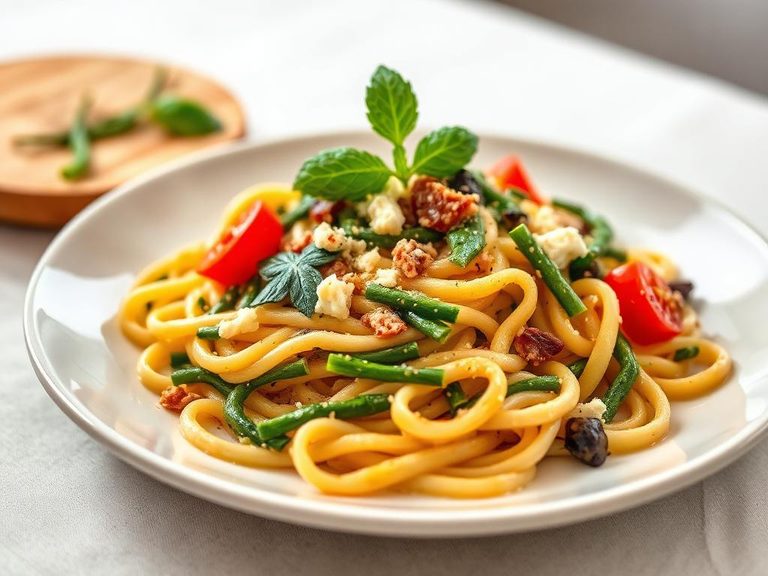
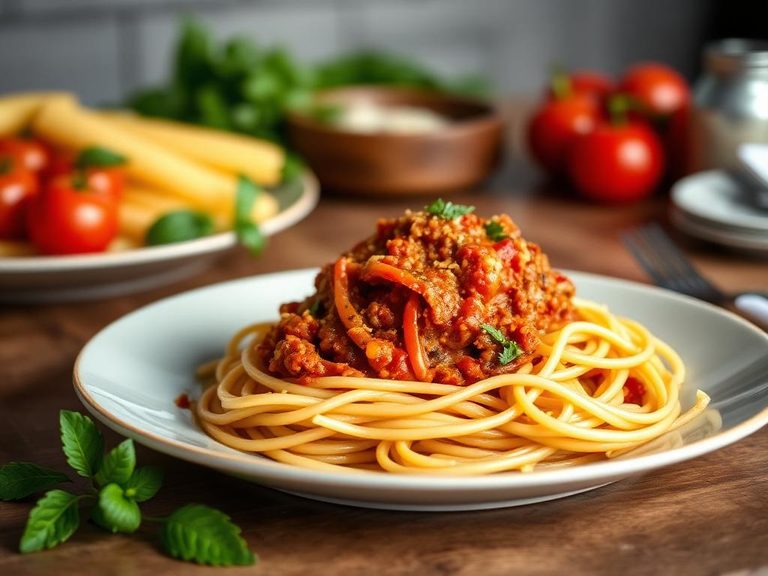
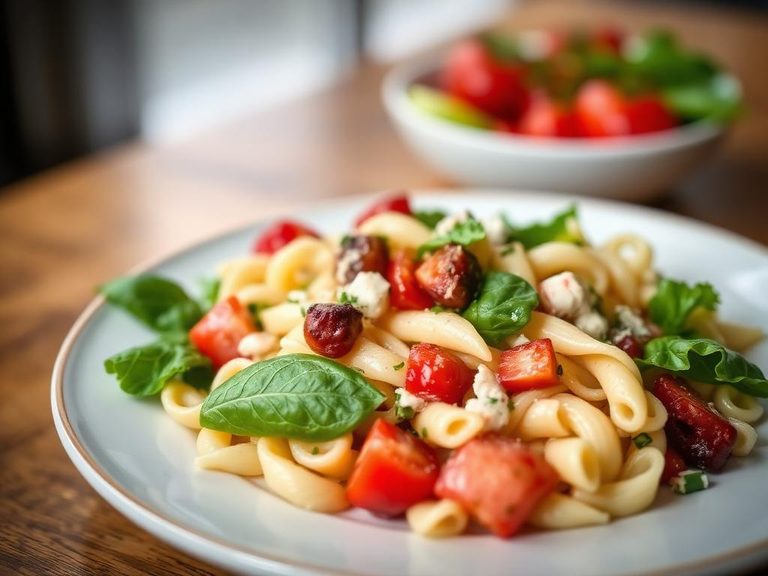
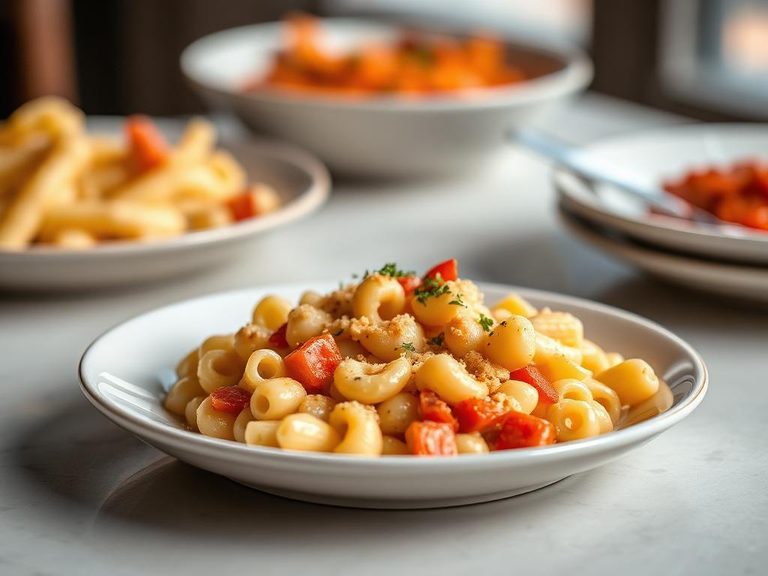
🌍 Where it's eaten
💡 Did you know?
Tinkyada is one of the few gluten-free pasta brands that uses a proprietary process to achieve a texture that is often cited as the closest to wheat pasta, preventing the common issue of becoming mushy or gummy.
Full nutrition (USDA data · scales with serving)
| Water | 62.3 g |
| Energy | 138 kcal |
| Energy | 577 kj |
| Protein | 3.5 g |
| Total lipid (fat) | 1.7 g |
| Ash | 0.38 g |
| Carbohydrate, by difference | 32.2 g |
| Fiber, total dietary | 1.7 g |
| Total Sugars | 0.00 g |
| Sucrose | 0.00 g |
| Glucose | 0.00 g |
| Fructose | 0.00 g |
| Lactose | 0.00 g |
| Maltose | 0.00 g |
| Galactose | 0.00 g |
| Starch | 31.0 g |
| Calcium, Ca | 5.0 mg |
| Iron, Fe | 0.53 mg |
| Magnesium, Mg | 36.0 mg |
| Phosphorus, P | 87.0 mg |
| Potassium, K | 25.0 mg |
| Sodium, Na | 4.0 mg |
| Zinc, Zn | 0.83 mg |
| Copper, Cu | 0.07 mg |
| Manganese, Mn | 1.2 mg |
| Selenium, Se | 11.1 ug |
| Vitamin C, total ascorbic acid | 0.00 mg |
| Thiamin | 0.10 mg |
| Riboflavin | 0.08 mg |
| Niacin | 1.5 mg |
| Pantothenic acid | 0.26 mg |
| Vitamin B-6 | 0.07 mg |
| Folate, total | 4.0 ug |
| Folic acid | 0.00 ug |
| Folate, food | 4.0 ug |
| Folate, DFE | 4.0 ug |
| Choline, total | 2.7 mg |
| Vitamin B-12 | 0.00 ug |
| Vitamin B-12, added | 0.00 ug |
| Vitamin A, RAE | 0.00 ug |
| Retinol | 0.00 ug |
| Carotene, beta | 0.00 ug |
| Carotene, alpha | 0.00 ug |
| Cryptoxanthin, beta | 0.00 ug |
| Vitamin A, IU | 0.00 iu |
| Lycopene | 0.00 ug |
| Lutein + zeaxanthin | 0.00 ug |
| Vitamin E (alpha-tocopherol) | 0.00 mg |
| Vitamin E, added | 0.00 mg |
| Tocopherol, beta | 0.00 mg |
| Tocopherol, gamma | 0.00 mg |
| Tocopherol, delta | 0.00 mg |
| Tocotrienol, alpha | 0.00 mg |
| Tocotrienol, beta | 0.00 mg |
| Tocotrienol, gamma | 0.00 mg |
| Tocotrienol, delta | 0.00 mg |
| Vitamin D (D2 + D3), International Units | 0.00 iu |
| Vitamin D (D2 + D3) | 0.00 ug |
| Vitamin K (phylloquinone) | 0.30 ug |
| Alcohol, ethyl | 0.00 g |
| Caffeine | 0.00 mg |
| Theobromine | 0.00 mg |
Fat & fatty acid profile (per 100g)
| Fatty acids, total saturated | 0.20 g |
| SFA 4:0 | 0.00 g |
| SFA 6:0 | 0.00 g |
| SFA 8:0 | 0.00 g |
| SFA 10:0 | 0.00 g |
| SFA 12:0 | 0.00 g |
| SFA 14:0 | 0.01 g |
| SFA 15:0 | 0.00 g |
| SFA 16:0 | 0.14 g |
| SFA 17:0 | 0.00 g |
| SFA 18:0 | 0.03 g |
| SFA 20:0 | 0.01 g |
| SFA 22:0 | 0.00 g |
| SFA 24:0 | 0.01 g |
| Fatty acids, total monounsaturated | 0.60 g |
| MUFA 14:1 | 0.00 g |
| MUFA 15:1 | 0.12 g |
| MUFA 16:1 | 0.00 g |
| MUFA 16:1 c | 0.00 g |
| MUFA 17:1 | 0.00 g |
| MUFA 18:1 | 0.46 g |
| MUFA 18:1 c | 0.46 g |
| MUFA 20:1 | 0.01 g |
| MUFA 22:1 | 0.00 g |
| MUFA 22:1 c | 0.00 g |
| MUFA 24:1 c | 0.00 g |
| Fatty acids, total polyunsaturated | 0.45 g |
| PUFA 18:2 | 0.43 g |
| PUFA 18:2 n-6 c,c | 0.43 g |
| PUFA 18:2 CLAs | 0.00 g |
| PUFA 18:3 | 0.01 g |
| PUFA 18:3 n-3 c,c,c (ALA) | 0.01 g |
| PUFA 18:3 n-6 c,c,c | 0.00 g |
| PUFA 18:3i | 0.00 g |
| PUFA 18:4 | 0.00 g |
| PUFA 20:2 n-6 c,c | 0.00 g |
| PUFA 20:3 | 0.00 g |
| PUFA 20:3 n-3 | 0.00 g |
| PUFA 20:3 n-6 | 0.00 g |
| PUFA 20:4 | 0.00 g |
| PUFA 20:5 n-3 (EPA) | 0.00 g |
| PUFA 22:4 | 0.00 g |
| PUFA 22:5 n-3 (DPA) | 0.00 g |
| PUFA 22:6 n-3 (DHA) | 0.00 g |
| Fatty acids, total trans | 0.00 g |
| Fatty acids, total trans-monoenoic | 0.00 g |
| TFA 16:1 t | 0.00 g |
| TFA 18:1 t | 0.00 g |
| TFA 22:1 t | 0.00 g |
| TFA 18:2 t not further defined | 0.00 g |
| Fatty acids, total trans-polyenoic | 0.00 g |
| Cholesterol | 0.00 mg |
Amino acid profile (per 100g)
| Tryptophan | 0.04 g |
| Threonine | 0.11 g |
| Isoleucine | 0.11 g |
| Leucine | 0.26 g |
| Lysine | 0.21 g |
| Methionine | 0.08 g |
| Cystine | 0.07 g |
| Phenylalanine | 0.17 g |
| Tyrosine | 0.15 g |
| Valine | 0.13 g |
| Arginine | 0.31 g |
| Histidine | 0.08 g |
| Alanine | 0.17 g |
| Aspartic acid | 0.29 g |
| Glutamic acid | 0.48 g |
| Glycine | 0.15 g |
| Proline | 0.15 g |
| Serine | 0.17 g |
| Hydroxyproline | 0.00 g |
FAQ
How does brown rice pasta differ nutritionally from regular wheat pasta?
Brown rice pasta is gluten-free and typically has a slightly higher fiber content than refined wheat pasta. It also has a different amino acid profile, being lower in gluten proteins. The glycemic index can be similar or slightly higher, so pairing with protein and fat is still recommended.
Is this pasta suitable for a low-carb diet?
No, it is not low-carb. With about 32g of carbohydrates per 100g (cooked), it is a carbohydrate-rich food. It is better suited for gluten-free, plant-based, or general healthy eating diets rather than strict low-carb or ketogenic plans.
What is the best way to cook it to avoid a mushy texture?
Cook it in a large pot of generously salted, boiling water. Stir occasionally to prevent sticking. Follow the package time closely, taste-testing a minute early for your desired al dente texture. Rinse briefly with cool water after draining if using in a cold pasta salad.
Nutrient density (calculated · NRF9.3)
Nutrient Rich Foods index: beneficial nutrients (protein, fiber, vitamins, minerals) minus saturated fat, added sugar & sodium, per 100 kcal.
NRF9.3 index — Fulgoni, Keast & Drewnowski, 2009. Computed from USDA nutrients.
Weight-loss friendliness (composite index)
Energy density 1.38 kcal/g · 10% calories from protein · 1.7 g fiber · 0.0 g sugar per 100 g.
Composite of energy density (Rolls et al., 1999), protein & fiber satiety, minus sugar. A calculated heuristic — ranks satiety-per-calorie, not a clinical measure.
Dietary load (calculated from USDA values)
Potential renal acid load. Positive = acid-forming, negative = alkaline-forming.
Sodium-to-potassium ratio: 0.16 (lower is better — aim for ≤ 1)
Sodium:potassium per WHO potassium guidance. Computed from USDA nutrients.