

Crackers, whole-wheat
Whole food · Baked Products

Photo: Wikipedia
Whole-wheat crackers are crisp, golden-brown discs or squares made from whole-wheat flour, offering a nutty, slightly sweet flavor and a satisfyingly crunchy texture. With 10.3g of fiber per 100g, they provide a substantial source of dietary fiber, supporting digestive health. Their robust, earthy taste makes them a versatile base for a wide range of toppings and dips.
Calorie split: 9% protein · 62% carbs · 28% fat
↓ Full nutrition💚 Why it's loved
People love them for their satisfying crunch and the way they act as a sturdy, flavorful vehicle for cheese, hummus, or spreads. Their mild, nutty profile makes them a go-to for both savory and sweet pairings, fitting seamlessly into casual snacking, appetizers, and charcuterie boards across many cultures.
⚠️ Watch-outs & how to enjoy it better
The high carbohydrate content (69.55g per 100g) can cause blood-sugar spikes if consumed in large quantities, especially for those managing diabetes. To mitigate this, pair them with protein or healthy fats (like cheese or avocado) and practice portion control. Some varieties may also contain added sodium, so checking labels is advisable for those monitoring salt intake.
Key benefits
- High in dietary fiber (10.3g per 100g)
- Good source of plant-based protein (10.58g per 100g)
- Provides complex carbohydrates for sustained energy
- Low in sugar (1.19g per 100g)
- Whole-grain content supports heart health
🍽️ Popular dishes

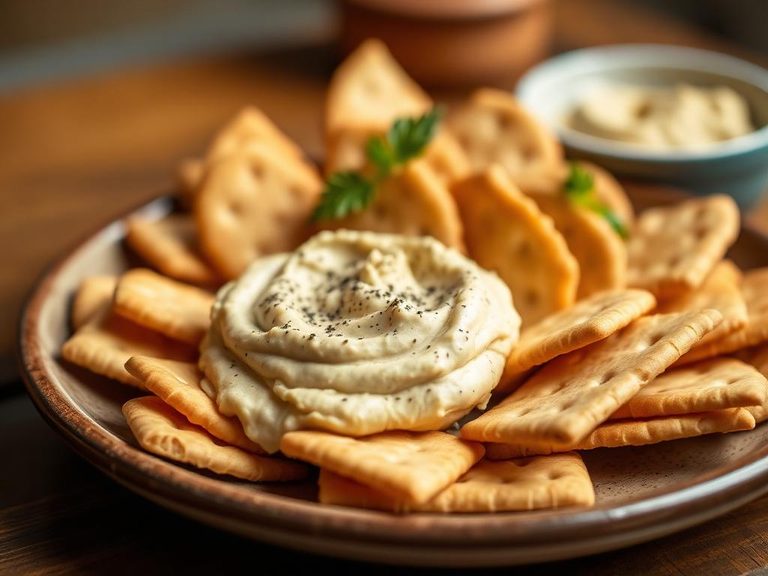
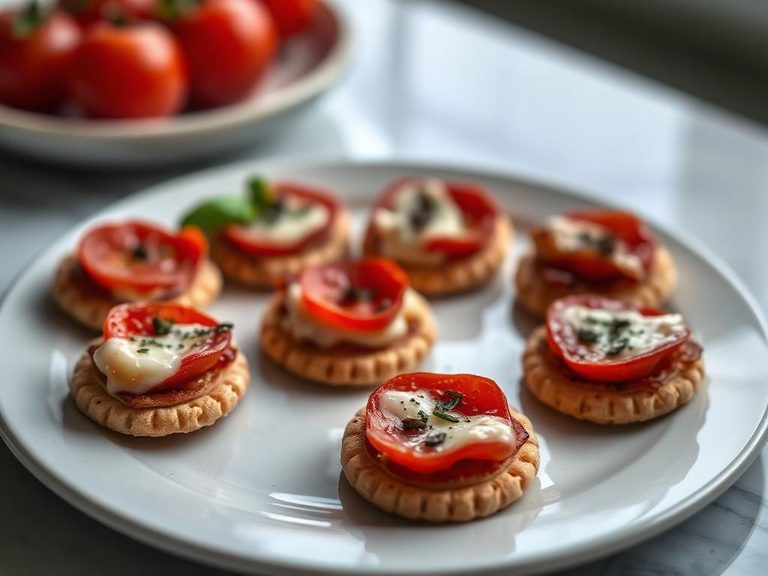

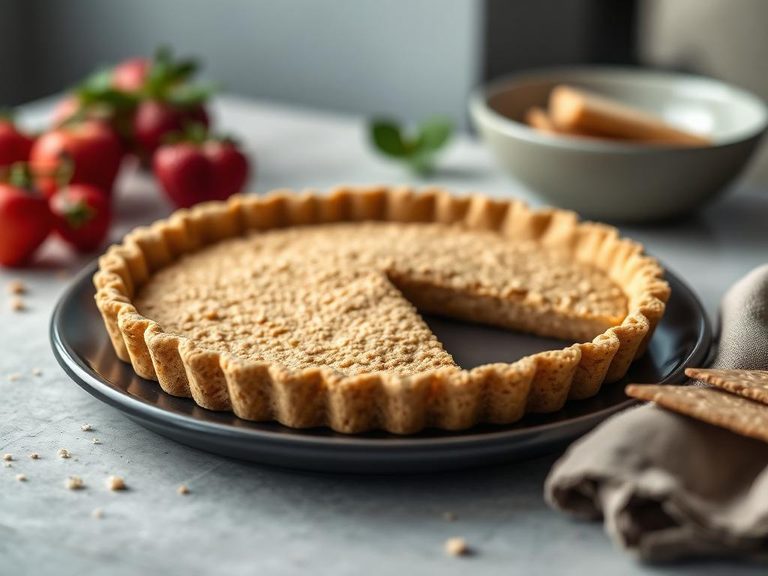
🌍 Where it's eaten
💡 Did you know?
The word 'cracker' originally referred to the 'crackling' sound made when the dough is baked, a term that dates back to the 14th century in English.
Full nutrition (USDA data · scales with serving)
| Water | 2.9 g |
| Energy | 427 kcal |
| Energy | 1786 kj |
| Protein | 10.6 g |
| Total lipid (fat) | 14.1 g |
| Ash | 2.8 g |
| Carbohydrate, by difference | 69.5 g |
| Fiber, total dietary | 10.3 g |
| Total Sugars | 1.2 g |
| Sucrose | 0.86 g |
| Glucose | 0.32 g |
| Fructose | 0.00 g |
| Lactose | 0.00 g |
| Maltose | 0.00 g |
| Galactose | 0.00 g |
| Starch | 57.0 g |
| Calcium, Ca | 36.0 mg |
| Iron, Fe | 3.3 mg |
| Magnesium, Mg | 110 mg |
| Phosphorus, P | 331 mg |
| Potassium, K | 345 mg |
| Sodium, Na | 800 mg |
| Zinc, Zn | 2.6 mg |
| Copper, Cu | 0.42 mg |
| Manganese, Mn | 2.2 mg |
| Selenium, Se | 10.1 ug |
| Vitamin C, total ascorbic acid | 0.00 mg |
| Thiamin | 0.18 mg |
| Riboflavin | 0.02 mg |
| Niacin | 4.6 mg |
| Pantothenic acid | 0.83 mg |
| Vitamin B-6 | 0.18 mg |
| Folate, total | 28.0 ug |
| Folic acid | 0.00 ug |
| Folate, food | 28.0 ug |
| Folate, DFE | 28.0 ug |
| Choline, total | 27.2 mg |
| Vitamin B-12 | 0.00 ug |
| Vitamin B-12, added | 0.00 ug |
| Vitamin A, RAE | 0.00 ug |
| Retinol | 0.00 ug |
| Carotene, beta | 0.00 ug |
| Carotene, alpha | 0.00 ug |
| Cryptoxanthin, beta | 0.00 ug |
| Vitamin A, IU | 0.00 iu |
| Lycopene | 0.00 ug |
| Lutein + zeaxanthin | 179 ug |
| Vitamin E (alpha-tocopherol) | 1.4 mg |
| Vitamin E, added | 0.00 mg |
| Tocopherol, beta | 0.21 mg |
| Tocopherol, gamma | 7.5 mg |
| Tocopherol, delta | 2.0 mg |
| Tocotrienol, alpha | 0.29 mg |
| Tocotrienol, beta | 0.00 mg |
| Tocotrienol, gamma | 0.00 mg |
| Tocotrienol, delta | 0.00 mg |
| Vitamin D (D2 + D3), International Units | 0.00 iu |
| Vitamin D (D2 + D3) | 0.00 ug |
| Vitamin K (phylloquinone) | 27.2 ug |
| Vitamin K (Dihydrophylloquinone) | 0.50 ug |
| Vitamin K (Menaquinone-4) | 0.00 ug |
| Alcohol, ethyl | 0.00 g |
| Caffeine | 0.00 mg |
| Theobromine | 0.00 mg |
Fat & fatty acid profile (per 100g)
| Fatty acids, total saturated | 2.1 g |
| SFA 4:0 | 0.00 g |
| SFA 6:0 | 0.00 g |
| SFA 8:0 | 0.00 g |
| SFA 10:0 | 0.00 g |
| SFA 12:0 | 0.00 g |
| SFA 14:0 | 0.01 g |
| SFA 15:0 | 0.00 g |
| SFA 16:0 | 1.4 g |
| SFA 17:0 | 0.01 g |
| SFA 18:0 | 0.58 g |
| SFA 20:0 | 0.04 g |
| SFA 22:0 | 0.04 g |
| SFA 24:0 | 0.01 g |
| Fatty acids, total monounsaturated | 3.2 g |
| MUFA 14:1 | 0.00 g |
| MUFA 15:1 | 0.00 g |
| MUFA 16:1 | 0.01 g |
| MUFA 16:1 c | 0.01 g |
| MUFA 17:1 | 0.01 g |
| MUFA 18:1 | 3.2 g |
| MUFA 18:1 c | 3.0 g |
| MUFA 20:1 | 0.03 g |
| MUFA 22:1 | 0.00 g |
| MUFA 22:1 c | 0.00 g |
| MUFA 24:1 c | 0.00 g |
| Fatty acids, total polyunsaturated | 6.9 g |
| PUFA 18:2 | 6.1 g |
| PUFA 18:2 n-6 c,c | 6.1 g |
| PUFA 18:2 CLAs | 0.01 g |
| PUFA 18:3 | 0.84 g |
| PUFA 18:3 n-3 c,c,c (ALA) | 0.83 g |
| PUFA 18:3 n-6 c,c,c | 0.01 g |
| PUFA 18:4 | 0.00 g |
| PUFA 20:2 n-6 c,c | 0.01 g |
| PUFA 20:3 | 0.00 g |
| PUFA 20:3 n-3 | 0.00 g |
| PUFA 20:3 n-6 | 0.00 g |
| PUFA 20:4 | 0.00 g |
| PUFA 20:5 n-3 (EPA) | 0.00 g |
| PUFA 22:4 | 0.00 g |
| PUFA 22:5 n-3 (DPA) | 0.00 g |
| PUFA 22:6 n-3 (DHA) | 0.00 g |
| Fatty acids, total trans | 0.20 g |
| Fatty acids, total trans-monoenoic | 0.17 g |
| TFA 16:1 t | 0.00 g |
| TFA 18:1 t | 0.17 g |
| TFA 22:1 t | 0.00 g |
| TFA 18:2 t not further defined | 0.03 g |
| Fatty acids, total trans-polyenoic | 0.03 g |
| Cholesterol | 0.00 mg |
Amino acid profile (per 100g)
| Tryptophan | 0.14 g |
| Threonine | 0.30 g |
| Isoleucine | 0.36 g |
| Leucine | 0.70 g |
| Lysine | 0.27 g |
| Methionine | 0.17 g |
| Cystine | 0.23 g |
| Phenylalanine | 0.48 g |
| Tyrosine | 0.19 g |
| Valine | 0.47 g |
| Arginine | 0.48 g |
| Histidine | 0.24 g |
| Alanine | 0.39 g |
| Aspartic acid | 0.54 g |
| Glutamic acid | 3.1 g |
| Glycine | 0.43 g |
| Proline | 1.0 g |
| Serine | 0.46 g |
FAQ
Are whole-wheat crackers healthier than regular crackers?
Yes, they typically contain more fiber, protein, and nutrients because they are made from whole grains rather than refined flour, which can help with satiety and digestion.
How should I store whole-wheat crackers to keep them fresh?
Store them in an airtight container in a cool, dry place to maintain their crispness and prevent them from becoming stale or absorbing moisture.
Can whole-wheat crackers be part of a weight-loss diet?
Yes, due to their high fiber content, they can help you feel full longer, but portion control is key since they are calorie-dense (427 kcal per 100g).
Nutrient density (calculated · NRF9.3)
Nutrient Rich Foods index: beneficial nutrients (protein, fiber, vitamins, minerals) minus saturated fat, added sugar & sodium, per 100 kcal.
NRF9.3 index — Fulgoni, Keast & Drewnowski, 2009. Computed from USDA nutrients.
Weight-loss friendliness (composite index)
Energy density 4.27 kcal/g · 10% calories from protein · 10.3 g fiber · 1.2 g sugar per 100 g.
Composite of energy density (Rolls et al., 1999), protein & fiber satiety, minus sugar. A calculated heuristic — ranks satiety-per-calorie, not a clinical measure.
Dietary load (calculated from USDA values)
Potential renal acid load. Positive = acid-forming, negative = alkaline-forming.
Sodium-to-potassium ratio: 2.32 (lower is better — aim for ≤ 1)
Sodium:potassium per WHO potassium guidance. Computed from USDA nutrients.