

Chicken tenders, breaded, frozen, prepared
Whole food · Meals, Entrees, and Side Dishes
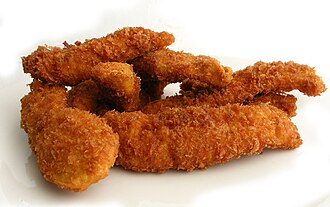
Photo: Wikipedia
Golden-brown, breadcrumb-coated strips of chicken breast, fried or baked to a satisfying crunch with a juicy, tender interior. The breading provides a savory, slightly salty crust that contrasts with the mild, lean meat. Nutritionally, it's a protein-dense option, offering nearly 15 grams of protein per 100 grams, but with a significant fat and carbohydrate contribution from the coating.
Calorie split: 24% protein · 25% carbs · 51% fat
↓ Full nutrition💚 Why it's loved
People adore the universal appeal of the crispy-on-the-outside, juicy-on-the-inside texture, and its role as a comfort food staple. It's a versatile canvas for dipping sauces and can be easily incorporated into salads, wraps, or served as a simple main.
⚠️ Watch-outs & how to enjoy it better
The breading and frying process can lead to high sodium and saturated fat content, potentially impacting heart health and blood pressure. To mitigate, opt for baked or air-fried versions, control portion size, and pair with a fiber-rich side like steamed broccoli or a vinegar-based slaw to slow digestion.
Key benefits
- High-quality protein source for muscle maintenance.
- Convenient and quick to prepare from frozen.
- A familiar, kid-friendly meal component.
- Can be a good source of niacin and B vitamins.
🍽️ Popular dishes
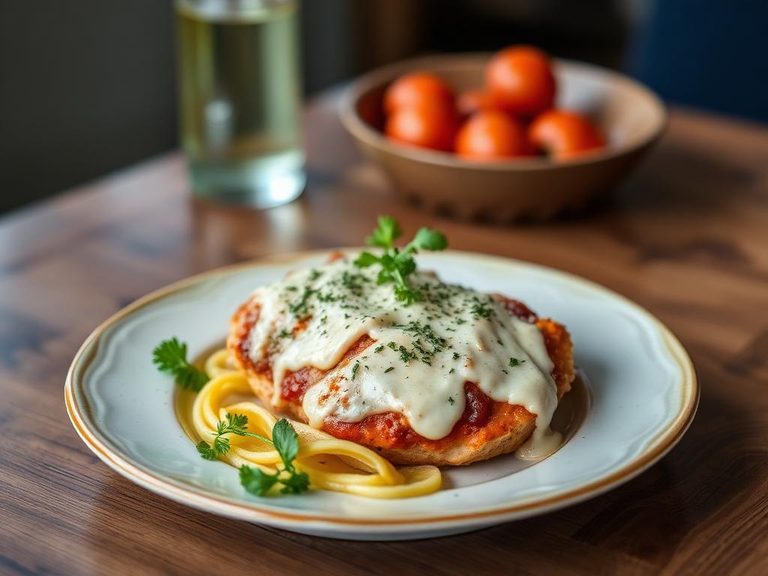

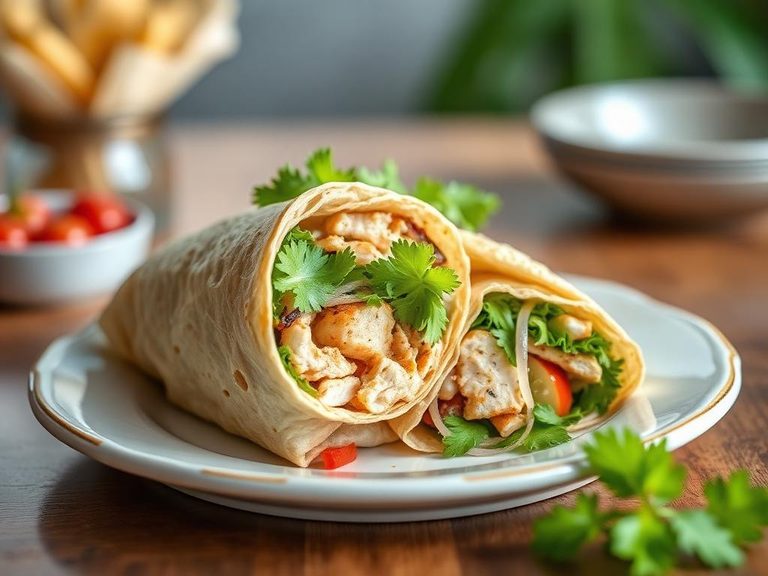
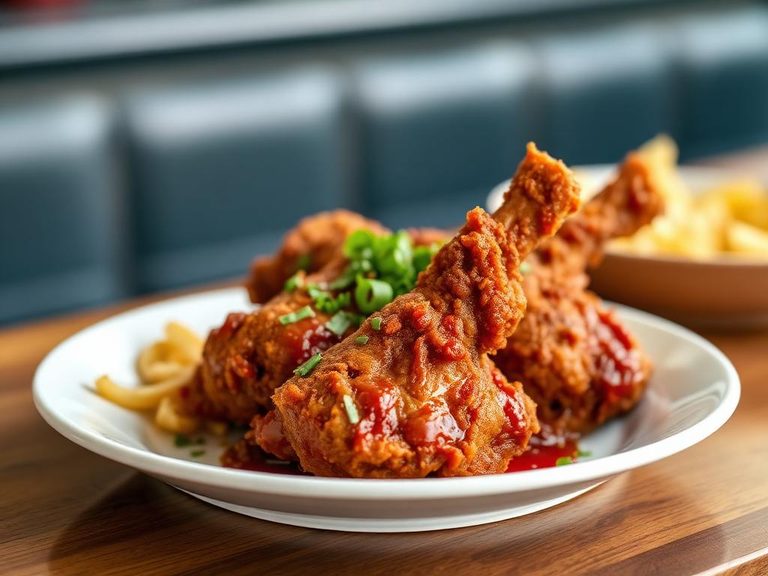
🌍 Where it's eaten
💡 Did you know?
The 'tender' is actually a specific, small muscle called the pectoralis minor, located underneath the main breast muscle, and is considered the most tender part of the bird.
Full nutrition (USDA data · scales with serving)
| Water | 54.8 g |
| Energy | 240 kcal |
| Energy | 1005 kj |
| Protein | 14.6 g |
| Total lipid (fat) | 13.6 g |
| Ash | 2.1 g |
| Carbohydrate, by difference | 14.9 g |
| Fiber, total dietary | 1.7 g |
| Total Sugars | 0.57 g |
| Sucrose | 0.33 g |
| Glucose | 0.12 g |
| Fructose | 0.00 g |
| Lactose | 0.00 g |
| Maltose | 0.12 g |
| Galactose | 0.00 g |
| Starch | 13.2 g |
| Calcium, Ca | 39.0 mg |
| Iron, Fe | 0.84 mg |
| Magnesium, Mg | 29.0 mg |
| Phosphorus, P | 200 mg |
| Potassium, K | 281 mg |
| Sodium, Na | 527 mg |
| Zinc, Zn | 0.61 mg |
| Copper, Cu | 0.09 mg |
| Manganese, Mn | 0.31 mg |
| Selenium, Se | 19.3 ug |
| Vitamin C, total ascorbic acid | 0.50 mg |
| Thiamin | 0.13 mg |
| Riboflavin | 0.06 mg |
| Niacin | 5.9 mg |
| Pantothenic acid | 0.65 mg |
| Vitamin B-6 | 0.34 mg |
| Folate, total | 28.0 ug |
| Folic acid | 7.0 ug |
| Folate, food | 20.0 ug |
| Folate, DFE | 33.0 ug |
| Choline, total | 46.2 mg |
| Betaine | 7.1 mg |
| Vitamin B-12 | 0.18 ug |
| Vitamin B-12, added | 0.00 ug |
| Vitamin A, RAE | 7.0 ug |
| Retinol | 5.0 ug |
| Carotene, beta | 9.0 ug |
| Carotene, alpha | 0.00 ug |
| Cryptoxanthin, beta | 7.0 ug |
| Vitamin A, IU | 40.0 iu |
| Lycopene | 0.00 ug |
| Lutein + zeaxanthin | 44.0 ug |
| Vitamin E (alpha-tocopherol) | 2.2 mg |
| Vitamin E, added | 0.00 mg |
| Tocopherol, beta | 0.13 mg |
| Tocopherol, gamma | 6.5 mg |
| Tocopherol, delta | 0.87 mg |
| Tocotrienol, alpha | 0.12 mg |
| Tocotrienol, beta | 0.00 mg |
| Tocotrienol, gamma | 0.56 mg |
| Tocotrienol, delta | 0.00 mg |
| Vitamin D (D2 + D3), International Units | 3.0 iu |
| Vitamin D (D2 + D3) | 0.10 ug |
| Vitamin K (phylloquinone) | 17.7 ug |
| Vitamin K (Dihydrophylloquinone) | 3.8 ug |
| Vitamin K (Menaquinone-4) | 6.6 ug |
| Alcohol, ethyl | 0.00 g |
| Caffeine | 0.00 mg |
| Theobromine | 0.00 mg |
Fat & fatty acid profile (per 100g)
| Fatty acids, total saturated | 2.4 g |
| SFA 4:0 | 0.00 g |
| SFA 6:0 | 0.00 g |
| SFA 8:0 | 0.00 g |
| SFA 10:0 | 0.01 g |
| SFA 12:0 | 0.01 g |
| SFA 14:0 | 0.03 g |
| SFA 15:0 | 0.00 g |
| SFA 16:0 | 1.8 g |
| SFA 17:0 | 0.01 g |
| SFA 18:0 | 0.46 g |
| SFA 20:0 | 0.04 g |
| SFA 22:0 | 0.03 g |
| SFA 24:0 | 0.02 g |
| Fatty acids, total monounsaturated | 4.1 g |
| MUFA 14:1 | 0.01 g |
| MUFA 15:1 | 0.00 g |
| MUFA 16:1 | 0.18 g |
| MUFA 16:1 c | 0.18 g |
| MUFA 17:1 | 0.01 g |
| MUFA 18:1 | 3.8 g |
| MUFA 18:1 c | 3.8 g |
| MUFA 20:1 | 0.07 g |
| MUFA 22:1 | 0.00 g |
| MUFA 22:1 c | 0.00 g |
| MUFA 24:1 c | 0.01 g |
| Fatty acids, total polyunsaturated | 6.2 g |
| PUFA 18:2 | 5.8 g |
| PUFA 18:2 n-6 c,c | 5.8 g |
| PUFA 18:2 CLAs | 0.01 g |
| PUFA 18:3 | 0.36 g |
| PUFA 18:3 n-3 c,c,c (ALA) | 0.34 g |
| PUFA 18:3 n-6 c,c,c | 0.02 g |
| PUFA 18:4 | 0.00 g |
| PUFA 20:2 n-6 c,c | 0.01 g |
| PUFA 20:3 | 0.01 g |
| PUFA 20:3 n-3 | 0.00 g |
| PUFA 20:3 n-6 | 0.01 g |
| PUFA 20:4 | 0.03 g |
| PUFA 20:5 n-3 (EPA) | 0.00 g |
| PUFA 22:4 | 0.01 g |
| PUFA 22:5 n-3 (DPA) | 0.00 g |
| PUFA 22:6 n-3 (DHA) | 0.00 g |
| Fatty acids, total trans | 0.06 g |
| Fatty acids, total trans-monoenoic | 0.02 g |
| TFA 16:1 t | 0.00 g |
| TFA 18:1 t | 0.02 g |
| TFA 22:1 t | 0.00 g |
| TFA 18:2 t not further defined | 0.03 g |
| Fatty acids, total trans-polyenoic | 0.03 g |
| Cholesterol | 36.0 mg |
Amino acid profile (per 100g)
| Tryptophan | 0.15 g |
| Threonine | 0.42 g |
| Isoleucine | 0.36 g |
| Leucine | 0.91 g |
| Lysine | 0.96 g |
| Methionine | 0.29 g |
| Cystine | 0.17 g |
| Phenylalanine | 0.47 g |
| Tyrosine | 0.36 g |
| Valine | 0.41 g |
| Arginine | 0.74 g |
| Histidine | 0.37 g |
| Alanine | 0.64 g |
| Aspartic acid | 1.1 g |
| Glutamic acid | 2.1 g |
| Glycine | 0.56 g |
| Proline | 0.86 g |
| Serine | 0.57 g |
| Hydroxyproline | 0.09 g |
FAQ
Are chicken tenders the same as chicken strips?
While often used interchangeably, 'chicken tenders' technically refer to the specific pectoralis minor muscle, while 'chicken strips' can be any part of the breast cut into strips.
What's the best way to reheat frozen chicken tenders to keep them crispy?
Avoid the microwave. Reheat in a preheated oven or air fryer at 375-400°F (190-200°C) for 8-12 minutes to restore crispness.
How can I make breaded chicken tenders healthier at home?
Use whole-wheat or almond flour for breading, bake or air-fry instead of deep-frying, and season with herbs and spices instead of relying on salt.
Nutrient density (calculated · NRF9.3)
Nutrient Rich Foods index: beneficial nutrients (protein, fiber, vitamins, minerals) minus saturated fat, added sugar & sodium, per 100 kcal.
NRF9.3 index — Fulgoni, Keast & Drewnowski, 2009. Computed from USDA nutrients.
Weight-loss friendliness (composite index)
Energy density 2.40 kcal/g · 24% calories from protein · 1.7 g fiber · 0.6 g sugar per 100 g.
Composite of energy density (Rolls et al., 1999), protein & fiber satiety, minus sugar. A calculated heuristic — ranks satiety-per-calorie, not a clinical measure.
Dietary load (calculated from USDA values)
Potential renal acid load. Positive = acid-forming, negative = alkaline-forming.
Sodium-to-potassium ratio: 1.88 (lower is better — aim for ≤ 1)
Sodium:potassium per WHO potassium guidance. Computed from USDA nutrients.