

Chicken, broilers or fryers, breast, skinless, boneless, meat only, with added solution, raw
Whole food · Poultry Products
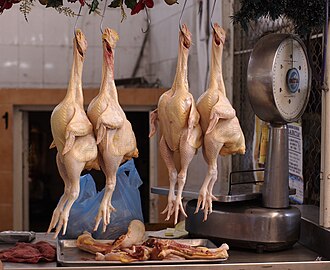
Photo: Wikipedia
This is the lean, white meat from the breast of a young chicken, prepared boneless and skinless, often with a small amount of added solution for moisture. It has a mild, clean flavor and a firm, slightly dense texture that becomes tender when cooked properly. Nutritionally, it's a powerhouse of high-quality protein with virtually no fat or carbohydrates.
Calorie split: 75% protein · 0% carbs · 25% fat
↓ Full nutrition💚 Why it's loved
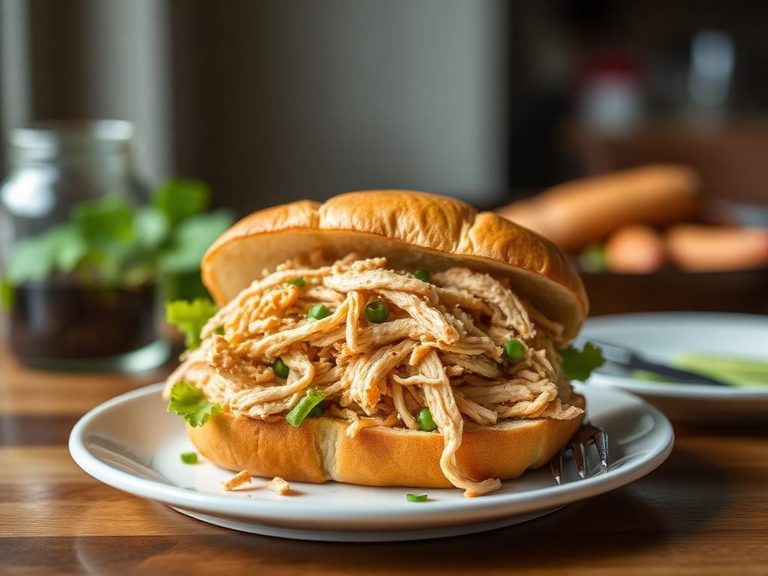
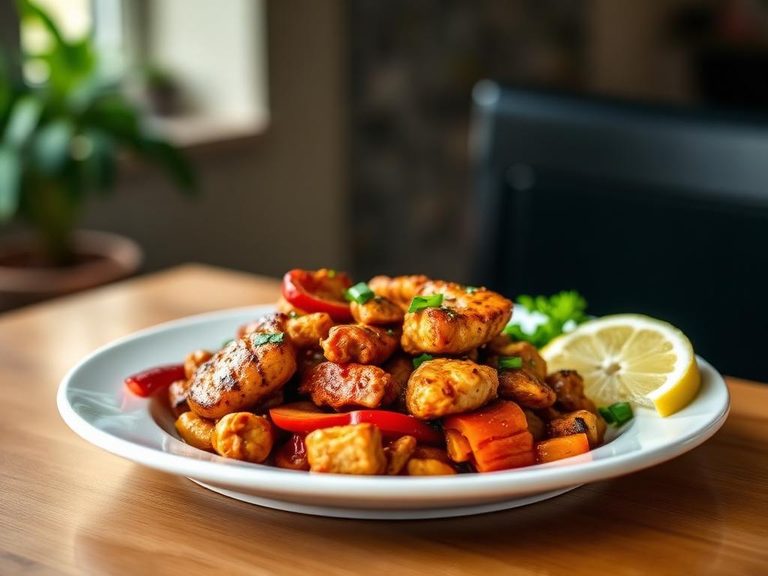
People love it for its incredible versatility and mild flavor, which acts as a perfect carrier for bold spices, marinades, and sauces from any cuisine. It's a reliable, quick-cooking staple that can be grilled, baked, stir-fried, or shredded for everything from salads to tacos.
⚠️ Watch-outs & how to enjoy it better
The primary downside is its tendency to become dry and tough if overcooked, which can make it unpalatable. To counteract this, use a meat thermometer to cook to exactly 165°F (74°C), marinate beforehand, or use moist-heat methods like poaching or braising. The 'added solution' can sometimes mean added sodium, so check labels if monitoring salt intake.
Key benefits
- Excellent source of lean, complete protein for muscle maintenance and growth
- Very low in fat and calories, making it ideal for weight management
- Naturally carbohydrate-free, suitable for low-carb and ketogenic diets
- Rich in essential nutrients like niacin, vitamin B6, and phosphorus
- A versatile, blank canvas for a wide variety of global seasonings and cooking methods
🍽️ Popular dishes

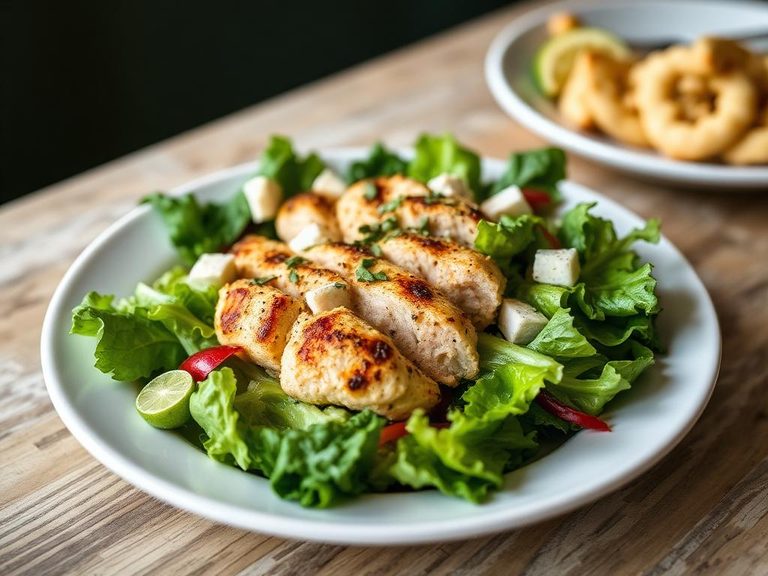
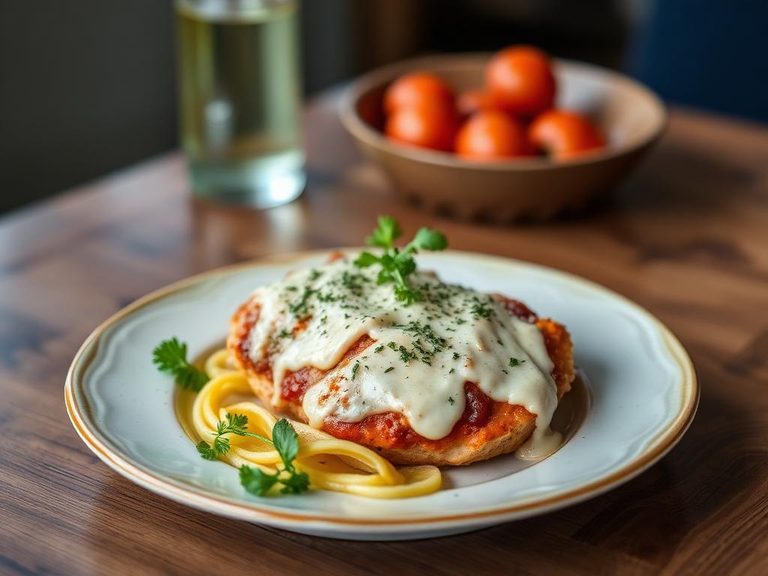
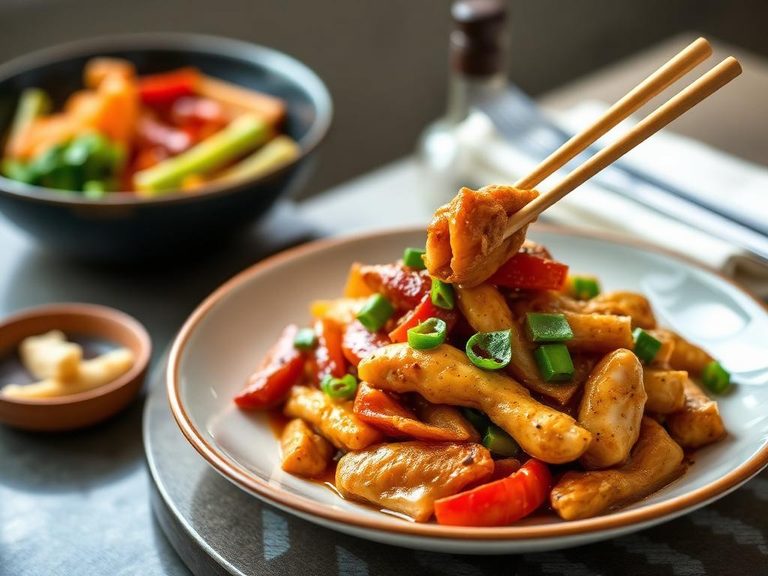
🌍 Where it's eaten
💡 Did you know?
The 'added solution' is often a mixture of water, salt, and sometimes broth or natural flavors, which can account for up to 15% of the product's weight to enhance juiciness and shelf life.
Full nutrition (USDA data · scales with serving)
| Water | 75.6 g |
| Energy | 108 kcal |
| Energy | 453 kj |
| Protein | 20.3 g |
| Total lipid (fat) | 3.0 g |
| Ash | 1.4 g |
| Carbohydrate, by difference | 0.00 g |
| Fiber, total dietary | 0.00 g |
| Total Sugars | 0.00 g |
| Calcium, Ca | 5.0 mg |
| Iron, Fe | 0.34 mg |
| Magnesium, Mg | 25.0 mg |
| Phosphorus, P | 198 mg |
| Potassium, K | 332 mg |
| Sodium, Na | 173 mg |
| Zinc, Zn | 0.63 mg |
| Copper, Cu | 0.03 mg |
| Manganese, Mn | 0.01 mg |
| Selenium, Se | 26.4 ug |
| Vitamin C, total ascorbic acid | 0.00 mg |
| Thiamin | 0.07 mg |
| Riboflavin | 0.13 mg |
| Niacin | 7.6 mg |
| Pantothenic acid | 1.2 mg |
| Vitamin B-6 | 0.76 mg |
| Folate, total | 8.0 ug |
| Folic acid | 0.00 ug |
| Folate, food | 8.0 ug |
| Folate, DFE | 8.0 ug |
| Choline, total | 74.2 mg |
| Betaine | 2.5 mg |
| Vitamin B-12 | 0.19 ug |
| Vitamin B-12, added | 0.00 ug |
| Vitamin A, RAE | 11.0 ug |
| Retinol | 11.0 ug |
| Carotene, beta | 0.00 ug |
| Carotene, alpha | 0.00 ug |
| Cryptoxanthin, beta | 0.00 ug |
| Vitamin A, IU | 36.0 iu |
| Lycopene | 0.00 ug |
| Lutein + zeaxanthin | 0.00 ug |
| Vitamin E (alpha-tocopherol) | 0.19 mg |
| Vitamin E, added | 0.00 mg |
| Tocopherol, beta | 0.00 mg |
| Tocopherol, gamma | 0.06 mg |
| Tocopherol, delta | 0.00 mg |
| Tocotrienol, alpha | 0.00 mg |
| Tocotrienol, beta | 0.00 mg |
| Tocotrienol, gamma | 0.00 mg |
| Tocotrienol, delta | 0.00 mg |
| Vitamin D (D2 + D3), International Units | 2.0 iu |
| Vitamin D (D2 + D3) | 0.00 ug |
| Vitamin D3 (cholecalciferol) | 0.00 ug |
| Vitamin K (phylloquinone) | 0.00 ug |
| Vitamin K (Dihydrophylloquinone) | 0.00 ug |
| Vitamin K (Menaquinone-4) | 10.5 ug |
| Alcohol, ethyl | 0.00 g |
| Caffeine | 0.00 mg |
| Theobromine | 0.00 mg |
Fat & fatty acid profile (per 100g)
| Fatty acids, total saturated | 0.55 g |
| SFA 4:0 | 0.00 g |
| SFA 6:0 | 0.00 g |
| SFA 8:0 | 0.00 g |
| SFA 10:0 | 0.02 g |
| SFA 12:0 | 0.00 g |
| SFA 14:0 | 0.01 g |
| SFA 15:0 | 0.00 g |
| SFA 16:0 | 0.38 g |
| SFA 17:0 | 0.00 g |
| SFA 18:0 | 0.12 g |
| SFA 20:0 | 0.00 g |
| SFA 22:0 | 0.00 g |
| SFA 24:0 | 0.00 g |
| Fatty acids, total monounsaturated | 0.67 g |
| MUFA 14:1 | 0.00 g |
| MUFA 15:1 | 0.00 g |
| MUFA 16:1 | 0.09 g |
| MUFA 16:1 c | 0.09 g |
| MUFA 17:1 | 0.00 g |
| MUFA 18:1 | 0.57 g |
| MUFA 18:1 c | 0.57 g |
| MUFA 20:1 | 0.01 g |
| MUFA 22:1 | 0.00 g |
| MUFA 22:1 c | 0.00 g |
| MUFA 24:1 c | 0.00 g |
| Fatty acids, total polyunsaturated | 0.38 g |
| PUFA 18:2 | 0.29 g |
| PUFA 18:2 n-6 c,c | 0.29 g |
| PUFA 18:2 CLAs | 0.00 g |
| PUFA 18:3 | 0.01 g |
| PUFA 18:3 n-3 c,c,c (ALA) | 0.01 g |
| PUFA 18:3 n-6 c,c,c | 0.00 g |
| PUFA 18:3i | 0.00 g |
| PUFA 18:4 | 0.00 g |
| PUFA 20:2 n-6 c,c | 0.01 g |
| PUFA 20:3 | 0.01 g |
| PUFA 20:3 n-3 | 0.00 g |
| PUFA 20:3 n-6 | 0.01 g |
| PUFA 20:4 | 0.04 g |
| PUFA 20:5 n-3 (EPA) | 0.00 g |
| PUFA 22:4 | 0.01 g |
| PUFA 22:5 n-3 (DPA) | 0.01 g |
| PUFA 22:6 n-3 (DHA) | 0.00 g |
| Fatty acids, total trans | 0.01 g |
| Fatty acids, total trans-monoenoic | 0.01 g |
| TFA 16:1 t | 0.00 g |
| TFA 18:1 t | 0.01 g |
| TFA 22:1 t | 0.00 g |
| TFA 18:2 t not further defined | 0.00 g |
| Fatty acids, total trans-polyenoic | 0.00 g |
| Cholesterol | 64.0 mg |
Amino acid profile (per 100g)
| Tryptophan | 0.25 g |
| Threonine | 0.89 g |
| Isoleucine | 0.97 g |
| Leucine | 1.6 g |
| Lysine | 1.9 g |
| Methionine | 0.51 g |
| Cystine | 0.21 g |
| Phenylalanine | 0.80 g |
| Tyrosine | 0.71 g |
| Valine | 1.0 g |
| Arginine | 1.3 g |
| Histidine | 0.74 g |
| Alanine | 1.2 g |
| Aspartic acid | 1.9 g |
| Glutamic acid | 2.9 g |
| Glycine | 0.87 g |
| Proline | 0.63 g |
| Serine | 0.75 g |
FAQ
What does 'with added solution' mean?
It means the chicken was injected or soaked in a liquid (typically water, salt, and sometimes flavorings) before packaging to increase moisture and weight. This can affect sodium content and cooking time.
How do I prevent it from drying out?
Avoid overcooking by using a meat thermometer (target 165°F/74°C). Marinating, pounding to even thickness, or using cooking methods like poaching or baking in a covered dish can also help retain moisture.
Is the nutritional value different from regular chicken breast?
The core nutrition (high protein, low fat) is very similar. The main difference is the added solution may slightly increase sodium and water content, so the calorie and protein density per gram might be marginally lower.
Nutrient density (calculated · NRF9.3)
Nutrient Rich Foods index: beneficial nutrients (protein, fiber, vitamins, minerals) minus saturated fat, added sugar & sodium, per 100 kcal.
NRF9.3 index — Fulgoni, Keast & Drewnowski, 2009. Computed from USDA nutrients.
Weight-loss friendliness (composite index)
Energy density 1.08 kcal/g · 75% calories from protein · 0.0 g fiber · 0.0 g sugar per 100 g.
Composite of energy density (Rolls et al., 1999), protein & fiber satiety, minus sugar. A calculated heuristic — ranks satiety-per-calorie, not a clinical measure.
Dietary load (calculated from USDA values)
Potential renal acid load. Positive = acid-forming, negative = alkaline-forming.
Sodium-to-potassium ratio: 0.52 (lower is better — aim for ≤ 1)
Sodium:potassium per WHO potassium guidance. Computed from USDA nutrients.